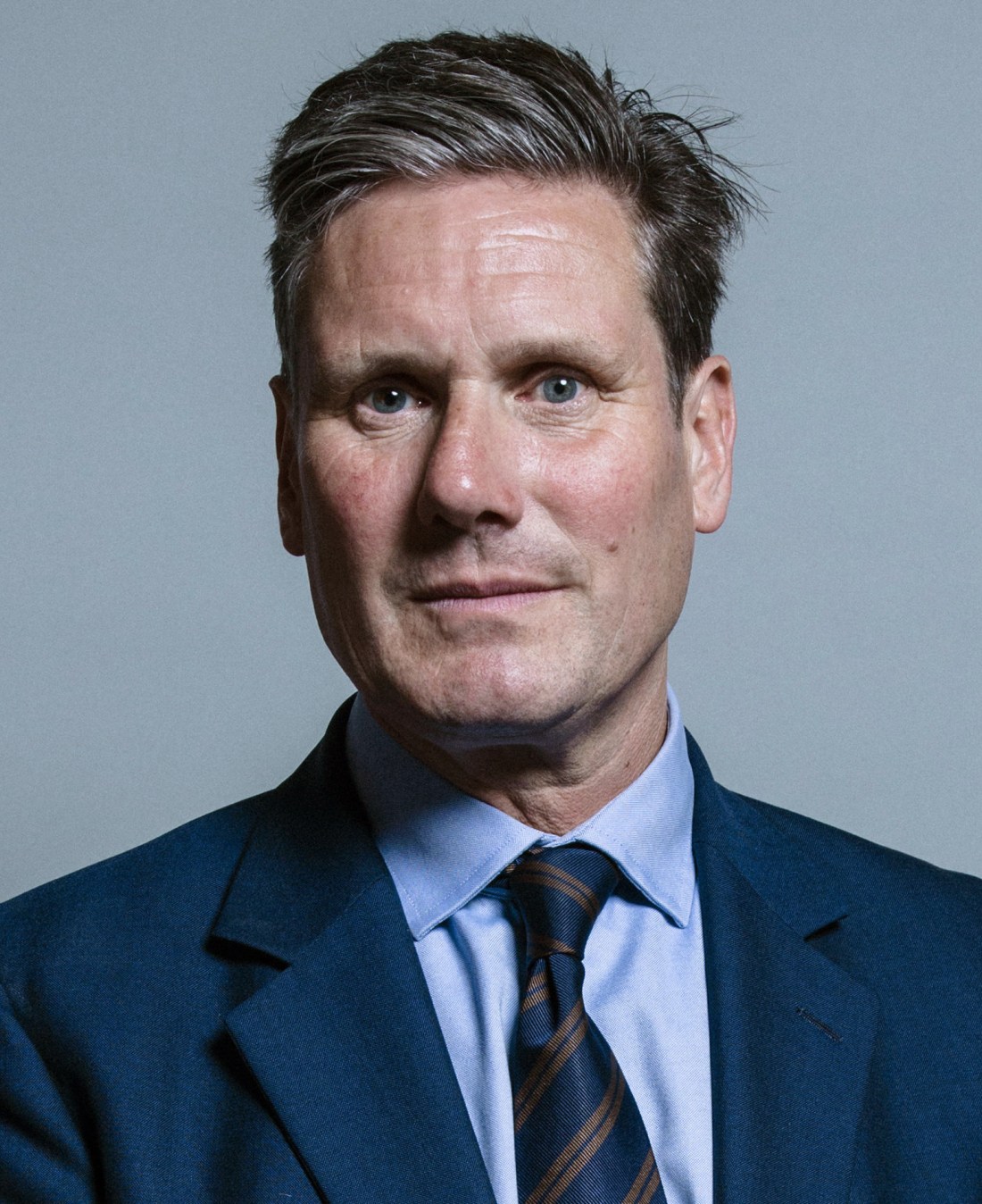
UK Labour – can they finally beat the Tories?

Labour in the UK currently has a double-digit lead in polls ahead of the Conservatives. The Polls immediately after the Truss/Kwarteng mini budget gave Labour their biggest lead ever, with a lead of 33% over the Tories. This has since fallen back to a 20% lead, still making Labour the strong favourites were an election to be called today. For this reason, there will be no election in the next year if the Conservatives have anything to do with it. The next election must be held at the latest in January 2025, and in all likelihood will be sometime in mid-2024. Given how terribly the Government has performed, it is hard to see how they could make it back even if the economy begins to recover.

However, just as one should never underestimate the UK Conservative Party as an electoral force, one also should never underestimate the UK Labour Party’s ability to clutch defeat from the jaws of history. It is just under two years ago that Labour under the current leadership of Keir Starmer lost the Hartlepool byelection, a so-called red-wall seat previously held by Labour since 1964. Much has happened since then but given how quickly things change in the current political climate, who knows what will be happening in 2024.

After the last UK election, I wrote a series of posts assessing why the UK Labour Party Lost. Shortly after this, a leaked report showed that factionalism was so bad within Labour that members of the Party head office tried to sabotage the 2017 election for the party as their favoured faction was not in charge. At the time few could see Labour making it back to power in 2024, with many predicting that Boris Johnson would be Prime Minister for the coming decade.

Writing those posts got me some interesting feedback. My post critical of the role of the ‘Blairite faction’ resulted in various Labour members associated with Progress and Labour First contacting me to say that I was obviously an insane Corbynista and dangerous. Later that day I posted another post critical of the role Momentum had played in the 2019 election, to which various supporters of the Corbyn loyal faction accused me of being a Blairite and a dangerous right winger. Whilst it was water off a ducks back to me, it showed how deeply divided and unwilling to engage all factions were at that time.

Starmer was elected Leader of the party in April 2020 having run on a platform of trying to bring the factions together. Specifically, Starmer’s campaign would continue the popular policies from Labour’s 2017 manifesto would be the ‘basis of the Party’s ‘foundational document’ for policy under his leadership. This recognised the fact that whilst Corbyn and the Momentum faction supporting him had become quite unpopular, the social democratic platform Labour ran on in 2017 was popular, more so than the party in itself. Now, in 2022, Starmer has said this document is being put to one side and instead the party will be “starting from scratch” leaving many to ask, what will Labour’s next policy manifesto look like?

The backdrop of course is the coronavirus pandemic and the economic chaos it has caused, followed by the Russian invasion of Ukraine. Added to this is the economic ineptitude of the Truss and Kwateng mini-budget has meant the UK find itself in a very difficult economic situation. The challenge for Labour now, is that it needs to be seen both as credible economic managers who can repair the damage caused by the current government, yet also present a programme that addresses growing inequalities. In particular, it needs to address the fact that most people under 40 in the UK are now significantly worse off financially than their parents were at that age. The younger voters who supported Labour in the 2017 ‘youthquake’, who were disproportionately disadvantaged after the last decade of austerity, are looking to the opposition to address the growing inequalities and to create a new social contract that works “for the many, not the few.”

It is not clear how the current Labour leadership will address this, with the prevailing thinking in the party now being that people on the left have nowhere else to go, and the priority for Labour now being to win former Tory voters over. The risk is that younger voters and voters on the left become disillusioned and stay at home, or cast a protest vote for The Greens or some other candidate. This may not seem a problem now, but if polls begin to narrow by 2024, stay-home or protest-left votes in a First Past the Post electoral system could be fatal in marginal constituencies.

The current Labour leadership wish to put as much daylight as possible between the Party now and the Corbyn years. This has meant distancing themselves from some of the more popular parts of the 2017 manifesto, including public ownership of rail, energy companies and other public services, despite most party members and the British Public favouring nationalisation in this area. Starmer and shadow chancellor Rachel Reeves have said such policies do not stack up against the Party’s fiscal rules. This could create tension for a future Labour Government. Internally, the Government would be fighting both the ‘soft’ and ‘hard’ left on these issues. Also, many voters, not only those who vote Labour, would become frustrated if the private companies continue to profit from a rail system that’s expensive and unreliable or an energy market that forces people into poverty.

At the same time, those on the left of Labour need to accept a few hard facts. The 2019 election defeat was a devastating loss caused in no small part by missteps, poor tactics and wrong policy calls by Corbyn, his advisors and Momentum. Also, Labour may have increased its vote considerably in 2017, but despite losing seats, the Tories also increased their overall percentage of the vote and got more votes than Labour.

Jeremy Corbyn’s suspension from the party has seen hundreds of members, including many branch chairs, have their membership also suspended for allowing motions of solidarity with Corbyn to be moved. Corbyn’s comments in response to the antisemitism report were ill-advised, but so too has been this clumsy night of the long knives against his supporters in the party. The party has suspended members or excluded them from MP selecton for sharing articles from proscribed organisations, mostly socialist. In the case of one Milton Keynes Councillor Lauren Townsend, she was blocked from standing as an MP for liking a tweet about Sturgeon testing negative for Covid-19, hardly an act of supporting a political rival. Labour also expelled filmmaker Ken Loach, maker of ‘I, Daniel Blake’, again for associating with proscribed organisations rather than actually belonging to them.

Corbyn has done himself absolutely no favours with his frankly idiotic position on Russia’s invasion of Ukraine, calling on the west to stop arming Ukraine and aligning with the Stop the War coalition’s position which appears more critical of NATO than Russia. This has now made it very easy for Starmer’s team to say that Corbyn will not have the whip restored. The left has now spent two years wasting energy trying to defend Corbyn and campaigning for him to get the whip restored. This absolutely plays into the hands of their opponents who now have good reason to expel leftists for not showing solidarity with Ukrainians.

Compare this to the US Democrats where Jo Biden’s former rival Bernie Sanders is now chair of the Senate Budget Committee, and a clear pact was made between the left and the moderate factions of the party to help beat Trump in 2020. Electoral politics is about building coalitions. The left in the UK needs to accept they alone do not have majority support and need to work with what they term the “soft left” and more centrist factions to win. The current Labour leadership need to ensure that the left still has a stake in Labour winning, and give enough to motivate the left to vote and campaign for Labour. In 2020 the Democrats learnt the hard lessons from 2016 when Sanders supporters were shunned by Hillary, resulting in many not supporting her campaign after the primaries and ultimately allowing Trump to win. In 2020, the Biden campaign made sure the left had a stake in a Democrat victory, and it paid off.

The fact is that to win elections, especially in a First Past the Post electoral system, a party needs to build a coalition of support. In 1997, UK Labour was able to build a coalition which in addition to the people who’d supported it throughout the Thatcher years, voters who’d supported the Thatcher project and its broad economic programme, but by the mid-1990s wanted something new, more socially liberal and slightly more moderate economically. This coalition held for three elections, but in 2010 many from this group of voters had drifted to the Lib Dems under Nick Clegg or back to the Conservatives under David Cameron who promised a more socially liberal and compassionate conservative party.

Starmer and the faction around want to build back the same coalition of voters they had in 1997. The problem is 25 years later, which included a decade of austerity, the voter demographics are more polarised and complex. The Conservative Party in 2022 has been forced to abandon Thatcher economics that Truss and Kwarteng tried to resurrect from the dead, and instead are now raising taxes, including for top income earners. The so-called centre-ground in politics is not the same as that in 1997. In fact, the term ‘centre’ is lazy political shorthand as if voters are easily categorised into ‘left’, ‘right’ and ‘centrists’ the latter swinging between the two and acting as king-maker. It has always been more complex than this, with people being more socially conservative on certain issues or economically liberal on others. The Brexit debate cut right across the old political divides with people across the spectrum, across class devices and cultural backgrounds being completely divided on the issue. A working-class voter in Hartlepool was not considered a swing voter until very recently, nor was an upper-middle-class voter in Kensington. Yet in the 2020s these voters will be part of the much larger ‘swing vote’ that will decide the next government.

Then there are the four nations of the United Kingdom. The majority of UK voters live in England, so inevitably this is where elections are won and lost. Historically, Labour has performed well in Scotland and Wales, with Northern Ireland having its own difficult history and different parties. Labour still performs well in Wales, having controlled the Welsh Senate since its creation in 1999. The 2021 deal between Welsh Labour and the Welsh nationalist party Plaid Cymru has been clever in securing broad support of support within the devolved government there.

The situation in Scotland is nowhere near as rosy. Traditionally, Scotland was a Labour stronghold, yet in the 2019 election, the party won only one seat up there. The Scottish National Party (SNP) have controlled the Scottish Parliament since 2007. There was a small amount of comfort for Labour in the 2022 local council elections where Labour came second to the SNP, but still a long way behind. Even the polls showing Labour with a 33% lead over the Tories nationally, had Labour was far behind the SNP in Scotland. Whilst support for independence hovers around the 50% mark in Scotland, it is consistently higher now than during the last independence referendum in 2014. The SNP have been clever to build a coalition of former Labour left voters and Scottish nationalists including some from the centre-right. By contrast, the various deals being done by Labour with the Conservatives and Lib Dems to stop the SNP risk doing more long-term harm to Labour’s chances in left-leaning Scotland.

For Labour, the strategy to win not only the next election but to start winning more often in the UK is to win over more English voters, as over 80% of the population live there. English voters have traditionally been small ‘c’ Conservative and large the ‘C’ Conservative Party usually do well, especially in the South outside of London. A wholesale return to Corbyn’s era politics is unlikely to shift this. In the short term, Labour with more of a 1997 flavour may win the next election, but it is not 1997, and very soon voters will grow restless.

English voters might be conservative but may see the need for economic reform so more people have opportunities. They will expect serious government interventions in housing, employment, education and transport. Already we have seen a Tory Government partially renationalise the railways, increase taxes to fund social care and lift Univeral Credit (the UK’s universal benefit), things the Tories would not have considered in the 1990s. The fact is society has changed. And in politics. you need to adapt. Traditionally the Conservative Party are much better at this than Labour. Whilst the Tories will probably now lose the next election, but, the size of their loss and Labour’s win will determine how long they spend in opposition. For Labour, winning more often will require nuisance and being adaptable. Yes, learn the important lessons from 1997, but know that times are now different and so too are policies and tactics. The left may not be strong enough to win, but they are still too big a block now to ignore and are more significant than in the 1990s. Like the Biden campaign, Starmer’s team will need to give the left something that means they can at least give grudging support. In turn, the left need to accept that a few important gains are better than none at all and the great cannot continue to be the enemy of the good or even the ok-ish.

The next election could well go to Labour, or at least be lost by the Tories due to their ineptness at running the country in the last few years. Labour’s internal problems have not gone away, it is just that the Conservative Party’s internal issues are now a lot worse and unusually for them have been aired in public. The opportunity for Labour is to build a winning coalition that helps them win not just the next election, but to start winning more than they lose.
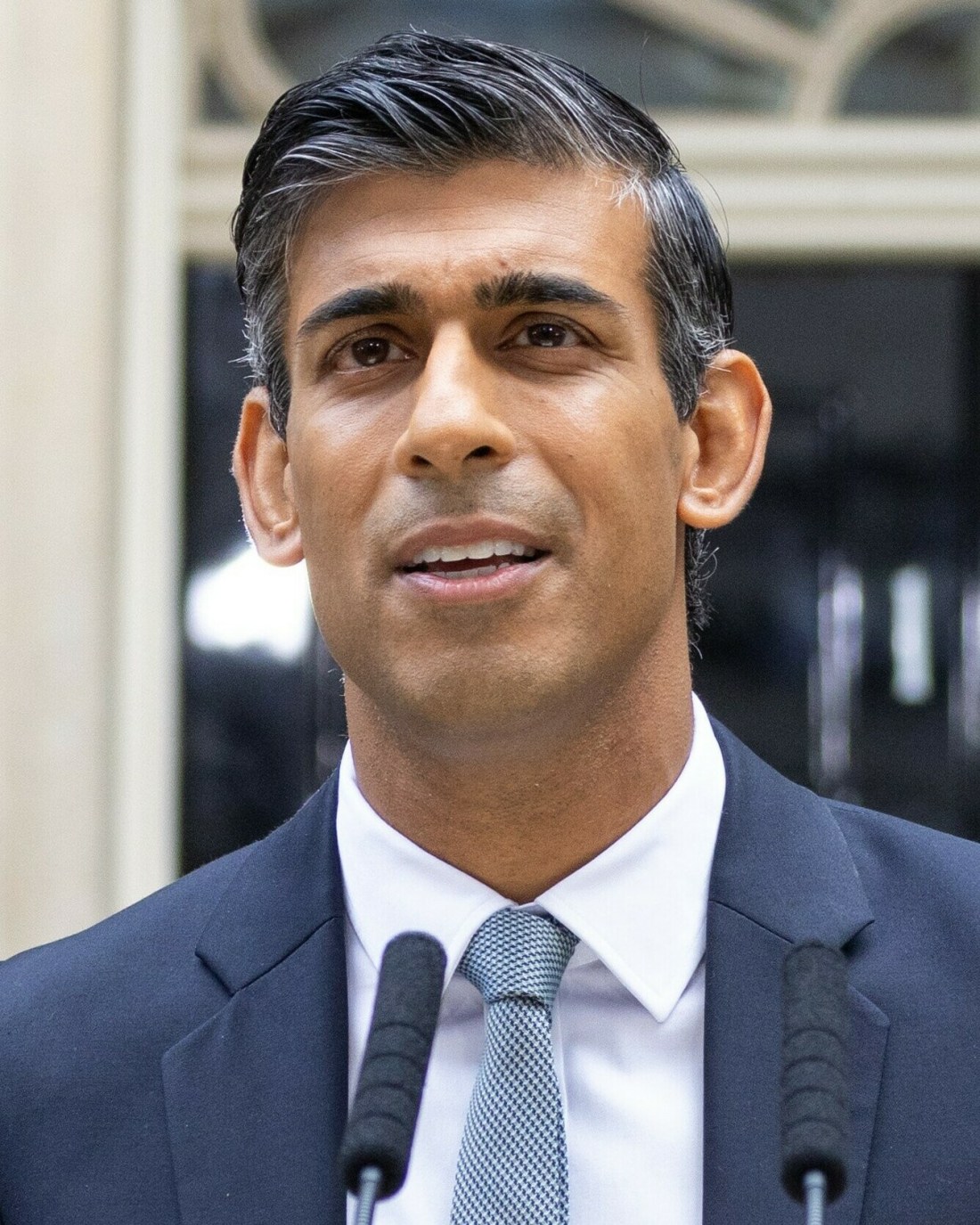
Can Rishi Sunak save the Conservative Government?

On October 25 2022 Rishi Sunak became the fifth leader of the Conservative Party since they came to power in 2010. Having lost the membership ballot in the summer, Tory MPs having seen the polls after the Mini Budget and facing the prospect of electoral annihilation, coalesced around Rishi Sunak and ensured he was the only person on the ballot. In short, MPs no longer trusted their party membership after the Liz Truss fiasco.

Following on from Party Gate, and the troubles the Conservative Party faced in 2022, Rishi Sunak will be hoping for a scandal-free year and an economy that starts to recover. It has not got off to a very good start, with Party Chair Nadhim Zahawi facing allegations of tax issues which will be investigated by the independent ethics advisor. Meanwhile, the economic outlook for Britain is weaker than expected.

When a new Prime Minister comes in and appoints a new Cabinet it is referred to as a “new government.” This wears somewhat thin when many of the “new” Cabinet Ministers have served in previous governments, many only a few weeks earlier. The likes of Michael Gove, Dominic Raab or Penny Mordant have served under previous Prime Ministers pursuing the same Conservative Party policies in Government. The Conservative Party were elected in 2019 on a Manifesto that the public expect them to implement. The accumulative issues of the last 12 years or the last 12 months have not disappeared with a change at Number 10.

25/10/2022. London, United Kingdom. Prime Minister Rishi Sunak arrives in Downing Street. Picture by Lauren Hurley / No 10 Downing Street

The Truss libertarian experiment, described by Paul Goodman editor at Conservative Home as the economic experiment, which blew the roof off the chemistry lab. The Conservatives, having learnt in 2017 that policies of austerity are electoral Kryptonite, now face the reality that small government libertarian policies much craved by many tory members, simply will not work. Sunak inherits a party bereft of ideas and vision and is now forced to increase taxes to pay down public debt and fund public services such as the NHS. Promises made in 2019 to cut taxes would have been difficult to implement before the pandemic, now they simply are not possible.

The longstanding problem with British politics, as other commentators have pointed out, there is an expectation of European levels of spending on public services, but a naive view that the country can also have American levels of taxation. This is a problem not just for the Conservative Government, but for the opposition who once in government will have the choice of increasing taxes or slashing public spending. My next blog post will address this issue further.

Brexit is adding to Britain’s economic woes. In 2021 the UK faced a 14% fall in trade with the EU. The new trade agreements have not offset this, with deals like the one signed with Singapore largely mirroring Singapore’s deal with the EU meaning no gain from leaving the single market. In the case of the Australian deal, the desire to quickly conclude negotiations resulted in terms less favourable to Britain. There is no appetite from any of the main political party’s to revisit the decision to leave the European Union and to date little evidence that another referendum would see a different outcome. However, this becomes an issue of economic management with many leading Conservative politicians having boasted that having left the EU, Britain could negotiate favourable trade deals with the rest of the world. There is little prospect of a Free Trade deal with the US and the geo-political situation means deals with China are also unlikely, and in both cases, it is unlikely any deal would be favourable to Britain. The Conservatives since 2016 have talked of the opportunities of Brexit, yet have delivered few. This may not be top of voters’ priorities right now, but certainly, for many businesses, including those who have supported and donated to the Tories in the past, this is a serious problem. This is not a problem Sunak or any Conservative leader is likely to fix without going back on earlier commitments and renegotiating terms with the EU.

The Conservative Party are the natural party of Government in Britain and is the most electorally successful party in Europe. One of their great strengths is internal unity and discipline, much more so than Labour who more often than not air their dirty laundry in public. In the last 18 months, internal infighting has dominated the Conservative Party and ground the government to a halt over the summer while they elected a new leader, only for the winner to resign and be replaced by the runner-up weeks later.

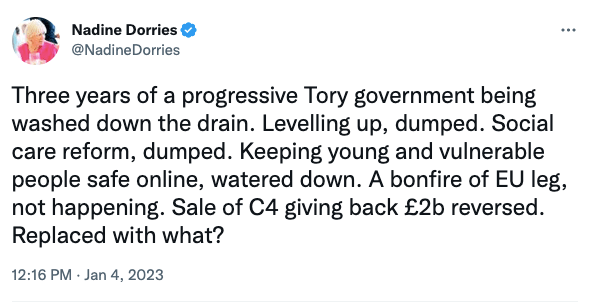
Sunak’s ascent to the top job has not reduced these internal divisions at all. The below tweet from former Minister and Conservative MP Nadine Dorries recently gives some idea of the simmering tensions within parliament:

The ‘Get Brexit Done’ coalition has fallen away with many former voters and supporters feeling disillusioned with the Tories’ performance in Government. Whereas in 2019, enough voters could get behind The Conservatives over Brexit, now there are fewer policies areas where the government have an advantage over the opposition. Attempts to attack Labour regarding recent union industrial actions have not landed so far. Many feel sympathy for striking nurses and feel health workers are not paid enough. Traditionally Rail workers get a bad rap for taking strike action without explaining their position to the public very well. RMT General Secretary Mick Lynch has been much stronger than his predecessors at making a case for his members. At the same time, with inflation above 10% many have sympathy with striking workers, and many more see the problem as poor economic management by the government even if they do not like unions going on strike. The current situation feels much more like the Ted Heath Conservative Government in 1973 than the Thatcher Government taking on the Miners Union a decade later.

It will be very difficult for the Conservative Party to win the next election. Certainly were an election held today the government will lose. But this is why there will be no election in 2023. In the best-case scenario, the economic situation is unlikely to improve until early 2024. Further to this, Sunak will want as much distance as possible from the Kwarteng Mini Budget, and this will take time. As well as an improved economy, the Tories will need to restore party unity both within their MPs and the broader party membership – who didn’t vote for Sunak.

A wedge issue, like Brexit, was in 2019, could help the Conservatives, but it is unclear what this would be. After 12 years in power, it is difficult to talk about ‘fixing the asylum system’ without it begging the question why haven’t you done so already? Slogans like a coalition of chaos about Labour and the SNP may have worked in 2015, but given the last year the Tories are in no position where they can accuse others of creating chaos. Certainly the 2017 slogan of strong and stable will not work again.

Despite everything that has happened, it would be a serious mistake to underestimate the British Conservative Party which has proven time and again to be an electoral force to be reckoned with. In England, where over 80% of British voters live, Tory is the default option in many parts of the country. The polarisation within Britain is high with tensions from the Brexit debate and ongoing calls for Scottish Independence still simmering. The Tories can certainly play these divisions to their advantage in the hope of winning support.

As the next post will discuss, Labour should be able to win the next election, but it is not a certainty yet. They have their own internal issues to resolve.

Jacinda Adern – How will her five years in power be remembered?

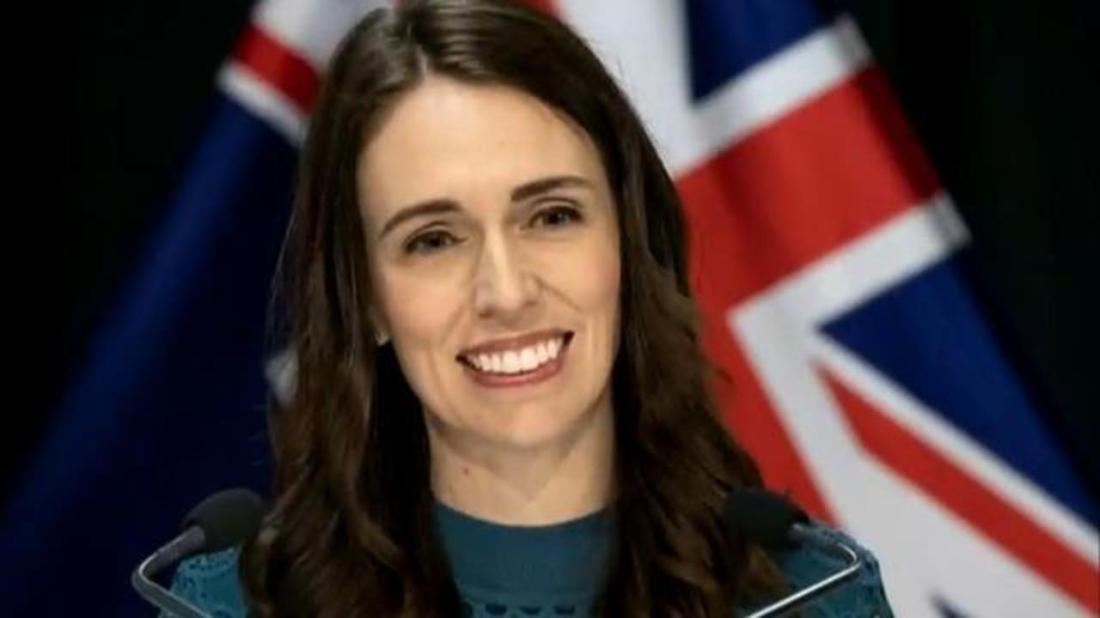
Last week people in New Zealand and around the world were shocked to hear that Jacinda Ardern had resigned as Prime Minister. An unexpected end to her extraordinary five years in this role. Her exit, like everything else she had done as a leader, was on her terms.

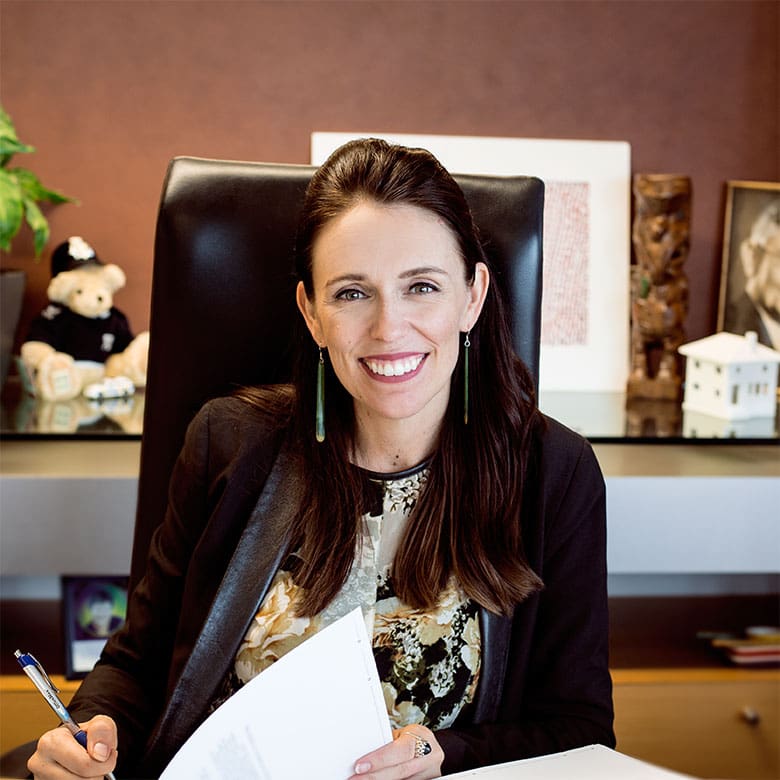
Jacinda Ardern has surprised people throughout her political career, not least when she took over as Labour Leader in August 2017. She took the New Zealand Labour Party from a long way behind in the polls to government in just a few weeks.

I first heard of Jacinda Ardern just after the 2008 election. Labour had just lost power after nine years in office. Ardern was one of the new MPs being touted as the future of the party. At that time I was not a party member, having left in 2002 and did not rejoin until 2013. Whilst I was hearing Jacinda’s name a lot, much of the noise was from the Wellington bubble and party insiders. It was only later that I, like most New Zealand voters was to see the political force she really was.

I first met Jacinda at Labour Leadership campaign hustings in Auckland in 2014. She was Grant Robertson’s running mate and I was the campaign manager for Andrew Little, who went on to narrowly win that leadership contest. We were standing outside this hustings event leafleting for our respective campaigns. I realised just before the meeting that my cell phone was about to die, so asked if I could borrow her charger. Unfortunately, she did not have one, and for the next 90 minutes, I nervously watched my phone’s battery bar decline.

Jacinda came in as a list MP, having unsuccessfully contested the safe Tory seat of Waikato in 2008. In 2011 and 2014 she ran in the Auckland Central electorate, which prior to 2008 had been considered a moderately safe Labour seat. Jacinda was unsuccessful both times and remained a list MP until 2017 when she won Helen Clark’s old electorate of Mount Albert. Shortly after this, she became Deputy Leader of the Party.

Up till this point, Jacinda only had limited support outside the political bubble in Wellington. She was a strong performer in parliament and from 2014 onwards had started getting some very good soft media building her brand as a relatable politician. But it was once she became deputy leader that her profile really began to grow. When polling started to show her personal support was ahead of the party leader, her promotion was only a matter of time.

In August 2017, just a few weeks out from the New Zealand General Election, Andrew Little resigned as party leader as it was clear that he was unlikely to win. A few days later Jacinda was elected leader. In the days that followed Labour’s polling numbers started to bounce. As the campaign wore on, National Party (the NZ Tory Party) Prime Minister Bill English, who had taken over the role only a few months earlier, began to sound rattled. By the time of the main leader’s debates, Jacindamania had taken hold.

Despite all this, it was still far from certain that Labour could win the election. After nearly a decade of polling behind the National Party, the last-minute polling surge still felt like it could still fall away again.

In my blog post from 2020, I described the last time I met Jacinda, just one day after she became the Leader of the Opposition:

A few weeks before leaving New Zealand, my friend Rob and I were in Burger Fuel on Cuba Street the hipster trendy part of Wellington. Piko was renting an office space in the old Wellington Trades Hall and we were doing painting and renovations of the space. In our crappy paint-covered work clothes we sat in Burger Fuel when Rob alerts me to who had just walked into the restaurant. 24 hours beforehand, Jacinda Ardern had replaced Andrew Little as leader of the Labour Party. We both knew Jacinda so said hello and talked about the Stand with Pike campaign we had been working on which Jacinda had pledged to support a few hours before. This slightly awkward conversation with the new leader of the opposition did not last long. None of us, I suspect even Jacinda, knew that in a few weeks’ time, she would achieve one of the greatest upsets in New Zealand’s political history and become Prime Minister

Jacinda Ardern’s Labour Government: Style over substance or a guiding light for progressive politics?

A few weeks later I moved to London. By the time I had left, the polls had narrowed and it looked as though the election would be close. I arrived in London on Monday 11 September, and that afternoon went down to New Zealand House in Haymarket to vote for the New Zealand Labour Party. Whilst I wanted NZ Labour to win, I still did not believe they would. As I watched the election results come in just under a fortnight later, it still seemed like the National Party would just hold on for another term. But a series of factors conspired, resulting in what is still one of the most surprising NZ political victories in living memory.

Social democratic values and policies are in fact far more aligned with the New Zealand public than the Tories. I believe the same is true in Britain, as I outlined in my blog posts on why the UK Labour Party lost the 2019 election. Yet in both countries, the Tories win more elections than they lose. In the years 2008 to 2017 when the NZ Labour Party were in opposition, Labour policy often had far more support than the Labour Party. For example, the Key Governments’ partial privatisation of state-owned assets in 2011 which Labour opposed. On that specific issue, polls showed public opposition to privatisation. Yet in 2011, National was easily reelected and Labour’s share of the vote declined.

Jacinda’s strength as a leader became apparent during the 2017 campaign. She was able to bridge the gap between policy and people’s perceptions. She convinced people that Labour values were aligned with their own, in a way that many of her predecessors simply had not. Her warmth, her strong communication style and her positivity gave a human face to centre-left politics, one that voters could relate to.

The results of the 2017 election were close, and whoever formed a government would need to form a multi-party coalition. Here again, Jacinda showed skill and strength by being able to build bridges with New Zealand First, a socially conservative centrist party, and the Green Party. This required compromises which disappointed much of Labour’s base, yet got Labour into Government so they could implement at least some of their policy agenda.

Over the last five years, Jacinda has held up as a model of progressive political leadership throughout the world. There are many examples of where she has shone as Prime Minister. The best example is her response to the Christchurch Mosque shooting in 2019:

Her statement immediately following the attack against the Christchurch Muslim Community was clear “they are us” , a clear condemnation of Islamophobia by a world leader. When Donald Trump asked what he could do to help Jacinda replied he could show “sympathy and love for muslim communities”

Jacinda and Gun Control

They are us. Three words to the Muslim world showed compassion, humanity and inclusion after an act of evil.

The New Zealand Government’s initial response to the pandemic in 2020 was another example of strong leadership. In crisis management, it is crucial that you quickly assess the relevant information and then act decisively. The decision to close the border and put in tough restrictions was not an easy thing to do, but it undoubtedly saved thousands of lives. Not least as the health system Labour inherited when they came to power in 2017 had been badly underfunded and under-resourced for a decade. After only 30 months in power, there had not been enough time to turn this around. The restrictions were tough both for people in NZ and for people like me living overseas and unable to return. Much as people may now blame Jacinda and the Labour Government for the tough restrictions, they might also want to consider the impact of National’s mismanagement of the health system for nearly a decade. This mismanagement of the health system left it vulnerable to collapse during the pandemic.

In October 2020, Arderns’s Labour Government won the biggest majority of any New Zealand government in half a century. Jacinda’s crisis management and clear communication during Covid, the Mosque shooting and the White Island eruption all contributed to this victory.

After Labour won its second term in office, I outlined some of the challenges the government would face:

The coming term will not be an easy one for Labour, as the COVID-19 pandemic continues to rumble on and the world plunges into the worst financial crisis in decades. On Saturday Labour were rewarded for their handling of the crisis so far, but the hard part is yet to come. On the one hand, they need to rebuild the NZ economy at a time when international tourism is dead and export markets are volatile. But even prior to this the New Zealand economy was unbalanced and in a precarious state. Its over-reliance on dairy exports has made it vulnerable if anything happens to this market and resulted in over-intensive dairy farming which has harmed the environment – not a good look for a country that brands itself as clean and green. It also faces growing inequality with significant growth in homelessness and poverty in recent years.

NZ election 2020: Labour win is a watershed moment in the country’s history

The above was a fairly accurate summary of the challenges Ardern’s government would face in its second term. What nobody expected at that time was the Russian invasion of Ukraine and the havoc this would cause the world economy, already severely strained by the pandemic. Governments around the world have struggled with this crisis, with New Zealand being no exception. In May 2022 I wrote the following:

In New Zealand, the opposition has been quick to blame the Labour Government in New Zealand for this, at a time when support for the government is falling fast. Having won a record majority in 2020 for their handling of the pandemic, Ardern’s government now faces a backlash over coronavirus restrictions and is taking the blame for current economic challenges. Commentary in the New Zealand media also tends to focus on inflation as a domestic issue, as such much of the commentary is often wide of the mark.

The politics of high inflation – can governments do anything?

At the start of 2022 there began to be a seachange in New Zealand politics. The Government’s handling of the pandemic had strong support in 2020 and for much of 2021. But as more and more people were vaccinated, and increasingly other countries lifted their travel and other Covid restrictions, public support began to wane. The protests outside the New Zealand parliament in 2022 were a minority of anti-vaccination campaigners. This group, inspired by the January 6 Capitol attack in Washington did not enjoy widespread support. But they demonstrated that the polarisation that other English-speaking democracies faced in recent years had reached New Zealand. Alt-right, anti-science and anti-government protests caused considerable disruption outside parliament in Wellington. Those opposed to the protest became frustrated that the police and government had not moved them on. By the time these protests ended on 10 March 2022, support for the government had taken a hit.

At the same time as these protests and a struggling economy, Jacinda faced a new leader of the opposition. In the lead-up to the 2020 election, National managed to go through three leaders in four months. By the time of the election, they were no longer seen as a credible opposition and suffered their worst election defeat in 18 years. In late 2021 National put forward a new leader, Christopher Luxon. A former CEO of Air New Zealand, Luxon came into parliament in 2020 and was immediately touted as a future leader. Whilst in no way a match for Ardern in terms of oratory or style, Luxon could credibly challenge the Government’s record on bread-and-butter issues like housing, economic management and its slow delivery on infrastructure projects such as light rail in Auckland. Whilst Luxon has trailed Ardern in preferred Prime Minister Polls, for nearly a year National had maintained a 5-7% lead over Labour. At the end of 2022, it felt like Ardern’s government would likely face an electoral loss in 2023.

Critics of Jacinda Ardern have been quick to say that her resignation now was a way of avoiding electoral loss later in the year. Others have pointed to the level of hate and vitriol that Ardern has had to put up with in recent years, including former NZ Prime Minister Helen Clark who said that “Jacinda has faced a level of hatred and vitriol which in my experience is unprecedented in our country.”

One Conservative Canadian politician, Michelle Rempel Garner argues that Justin Trudeau faced many of the same if not greater challenges to Jacinda Ardern in the last year, yet they were treated differently due to their respective genders.

Below is Jacinda Ardern’s resignation speech, I will leave the reader to decide for themselves what her reasons really are:

Jacinda Ardern, announcing her resignation as Prime Minister of New Zealand

It is too soon to say what Jacinda’s legacy will be. She will certainly be remembered for becoming a mother whilst being a world leader. For her presence on the world stage as a voice for feminism and progressive politics. She ushered in a generational and attitudinal change in New Zealand politics. While internationally she offered an alternative to the politics of Trump, Bolsonaro, Scott Morrison and Viktor Orban.

Ultimately, governments are measured on their longevity. Both in terms of how long they are in office, but also how long their policies remain in place. Jacinda Ardern’s legacy will be judged not only on Labour’s successes under her leadership but also on how well Labour performs after her resignation.

On Wednesday, New Zealand will have a new Prime Minister, Chris Hipkins, who will lead Labour into the October 14 General Election. Chris certainly has his work cut out for him over the next few months. That being said, the coming election is by no means a foregone conclusion. For all the challenges of the past five years, he inherits a government that has much to be proud of, not least Jacinda Ardern message of kindness, inclusion and positivity. To quote the outgoing Prime Minister, “bring it on.”

My email to Jacinda Ardern

Dear Jacinda

You probably will not remember me. I was the campaign manager for Andrew Little when he ran for Labour Leader back in 2014. The last time we met was in Burger Fuel on Cuba Street the day after you took over as Labour Leader in 2017. I was with my colleague from Piko and we were both covered in paint after doing work at our Trades Hall office. We certainly weren’t expecting to meet the future Prime Minister that evening.

I am emailing to say thank you for all that you have done, both in New Zealand and internationally since becoming Prime Minister. I now work as a Researcher in Westminster and I can say that you have earned the respect and admiration of politicians from all sides of the political divide over here in the last five years.

In particular, I wish to acknowledge the strong compassionate leadership you took after the Christchurch Mosque attack. Your simple statement “they are us” regarding Muslims living in Aotearoa had a profound impact and broke down barriers of hate and ignorance at a time when tensions were so high. I still tear up thinking about how important your showing humanity and compassion was at that dark time. Thank you.

Your government’s response to the coronavirus in 2020 was the right one and undoubtedly saved thousands of lives. Again, having lived through the UK response to this crisis, I and many others living here looked to the NZ response with considerable admiration.

The last couple of years has been difficult for governments throughout the world. The Ukraine invasion on the back of a global pandemic has seen inflation skyrocket everywhere. People understandably look to their elected representatives in difficult economic times and we know that the actions of the government can help or hinder economic recovery. But there is also much that is out of the hands of the nation-state. Where governments can have the most impact is on policies that help in the medium to long term. In the short term, options are quite limited and it is easy for our leaders to take the blame for things that are largely out of their control. The New Zealand government has managed this crisis better than many in the last 18 months. In years to come I hope this is recognised.

Your legacy as Prime Minister will be as someone who showed both strength and compassion in some of the most challenging times faced by any leader in modern times. On the world stage, you are rightly held up as a model of progressive political leadership, and I am certain this will continue into the future in whatever role you take on next.

Finally on a personal note, due to the coronavirus, I was only able to spend two weeks in Aotearoa during your time as Prime Minister. But as a Kiwi in London, I was proud of your leadership both of our party and of the country.

I wish you all the best for whatever comes next.

Kia Kaha me te pai katoa,

Nick Kelly

The Occupy Movement and the response to the 2008 financial crisis

As the world currently goes through a post-pandemic and Russian invasion of Ukraine fuelled economic crisis, it is interesting to reflect on the economic crisis of over a decade ago and how the public responded at that time.

After the 2008 financial crisis, despite predictions to the contrary at the time, there was a global shift to the right in the years that followed. Examples of this include the fall of the Brown Government to the Tory/Lib-Dem Coalition in the UK in 2010 or the Clark Labour Government being voted out in 2008. After some initial excitement about Obama’s election in 2008, the Republicans easily won the 2010 mid-terms. There were plenty of other examples across Europe, South Asia and South America of progressive or centre/centre-left governments falling.

Given the financial crisis exposed the failings of the banking sector and free market economics, it would seem strange at first that it was the political right who were the primary beneficiaries of this. In certain countries, incumbency was the issue where rightly or wrongly the party in power were blamed. The late 1990s and early 2000s were the height of the Third Way era, meaning many progressive governments had accepted and made little attempt to reverse the free market reforms of the 1980s. Whilst this position was electorally popular up to this point, by 2008 this position was not tenable. Meanwhile, the right was much quicker to pivot away from Laissez-faire to a more traditionally conservative position, raising concerns about immigration whilst claiming to be prudent economic managers. The politics of austerity were never popular where they were implemented. Yet, the argument that national debt is like household private debt where you just have to tighten your belt to get out of the red was not adequately challenged. That cutting social spending, holding down wages and other earnings and other such measures resulted in less money in the economy thus making the crisis worse became obvious, eventually. Yet in the early 2010s, many European Governments were implementing these sorts of policies.

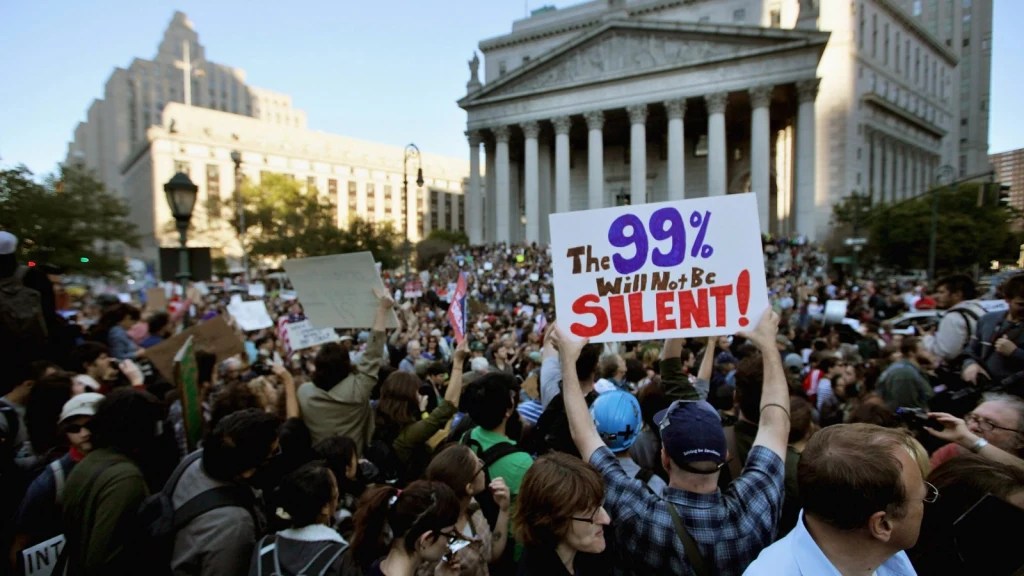
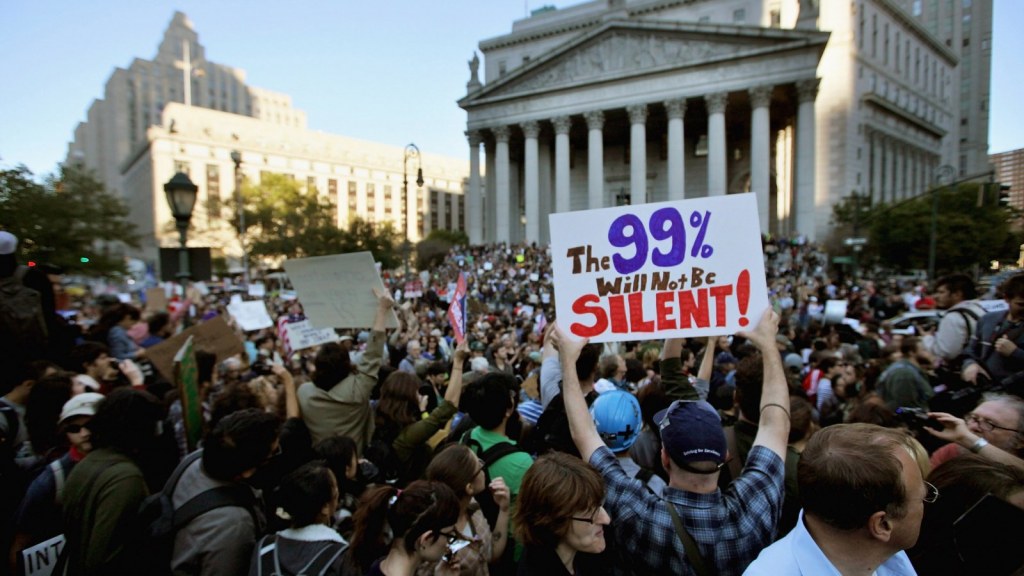
Above: Protesters in the Occupy Wall Street protests of 2011. One of the lasting legacies of this movement is the political slogan “we are the 99%” which continues to resonate with millions around the globe.

It was in this context that ‘Occupy Wall Street’, which quickly grew into the international Occupy Movement was born. Anger at banks being bailed out in the US whilst people’s homes were being repossessed and a feeling that the elected politicians had failed to stand up to Wall Street sparked this protest movement. The protests took inspiration from the Arab Spring protests in early 2011 which successfully brought down a handful of corrupt rulers in the region such as Muammar Gaddafi of Libya and Hosni Mubarak of Egypt amongst others.

Although there was some involvement of organised labour and other elements of the traditional left was involved, many more were not. In part, this was due to the reluctance of the main social democratic parties to be involved with such a movement, especially in the US when there was a Democrat in the White House. For many in the movement, there was a level of antipathy towards members of the political establishment, including those on the left.

As a friend of mine said to me a few times during the 2003 Iraq War protests “mass movements shoot up like a rocket, and subsequently fall like a stick.” Within a few months, the initial movement had dissipated. This was very similar to the late 1990s early 2000s anti-globalisation movement, the difference being that Occupy was responding to a serious financial crisis and failure of the global banking system. By contrast, anti-globalisation was reacting to the moral shortcomings of institutions such as the IMF or the World Bank and accused multi-national corporations of undermining democracy and self-determination, especially for those in less well-off nations.

It is interesting to look back now to see how both the anti-globalisation and the Occupy Wall Street movements influenced policy over the coming decade. Both were clear attempts to forge a new left in the post cold war era in response to the new right. On the surface, neither made any direct impact, with the free trade and the IMF agenda still rumbling on after the anti-globalisation protests in Seattle, Genoa and elsewhere. Likewise, the banking sector after 2008, took the government bailouts, the executives paid themselves bonuses and people paid the price, including mortgage foreclosures in the US. This contributed to the backlash against Obama during his presidency, as mentioned in an earlier blog post.

Ironically, the 2008 financial crisis saw the right move away from free market deregulation policies, in no small part as they had just failed on such a spectacular and global scale. The right became much more concerned with reducing debt through reducing government spending and other austerity policies. This is not inconsistent with free market ideology, more radical deregulation policies were not pursued with such vigour. With both the Brexit referendum in the UK and the rise of Trump in the US, the right began moving away from international trading blocks such as the EU or NAFTA. The claim by the anti-globalisation movement in the early 2000s was that the Neo-Liberal agenda wanted the free movement of capital, but not people. Certainly, in the case of Brexit, this was to see greater restrictions on both.

Not for the first time in history, the right took the sentiment of the anti-globalisation campaign and used it to pursue what is now termed a more ‘populist’ agenda. The UK Conservative Party winning “Red Wall”s seats in 2019 or Trump winning in the “rust belt” in 2016 were all in part due to this more ‘anti globalist’ agenda by the right. It also reflected that trying to openly pursue free market policies post-2008 was not going to work. Unlike the left, the right was as always quick to adapt to the changing environment.

The Occupy movement’s influence over politics in the 2010s is less obvious. Whilst the larger protests soon became much smaller, this movement did help shape the narrative of the left in the coming decade. The slogan “we are the 99%” stuck as did accusations of politicians serving the 1%. The surprising levels of support for Jeremy Corbyn’s Labour Party in 2017 and the rise of Bernie Sanders in the 2016 Democratic Primary owed something to this anti-corporate, anti-banking campaign of a few years earlier. More significantly, as the left needed to reinvent and reposition in the 2010s, this movement at least in part helped shift the centre-left parties towards a stronger anti-austerity and pro-public services position. The austerity light ‘moderate’ position some social democrats espoused in response to the financial crisis was never going to gain public support, especially when austerity was soon shown to have deepened rather than halted the economic crisis of the time.

Sudden mass movements may not instantly change the world. My friend’s analogy of the rocket becoming a falling stick may have been a good comparison. But maybe the falling stick in a small way did help change the course of history at least a little bit.

Democracy is on the Ballot – watershed US midterms this week.

On Sunday 30 October, a watershed run-off election was held in Brazil where former President Luiz Inácio Lula da Silva (Lula) narrowly defeated incumbent President Jair Bolsonaro 50.9% to 49.1%. There was a lot at stake in this election, not least the lungs of our planet, the Amazon forest. In the four years of Bosonaro’s presidency, more than 34,000 square km of the Amazon rainforest disappeared. The return of Lula to power in Brazil certainly will not fix everything, but another term of Bolsonaro would have been a devastating defeat in the fight against climate change.

On Tuesday 8 October, another critical election will take place, this time in the northern part of the Americas, the United States midterms where control of Congress and Senate will be determined, along with elections to State Legislatures and for State Governors.

Historically there are two common trends with mid-terms:

  1. Turnout is significantly lower than in presidential elections
  2. The party with control of the White House usually performs poorly

On point one, turnout has historically been lower for midterm elections. For example, in 2008 President Obama on a platform of hope won by a significant margin with a voter turnout of 57.1%. Two years later in the 2010 midterms, voter turnout was just 40.9% and the Republican Party took back control of Congress. This was at the height of the Tea Party movement pushing the Republican Party to the right. Much of Obama’s “hope” agenda was blocked by this newly energised rabid right-Republican Congress. Had everyone who came out to support Obama in 2008 once again returned to the polls 24 months later (and 22 months after his inauguration) he may well have achieved more.

But this is the second point, whichever party controls the White House, tends to do poorly in the mid-terms. The exception to this was President George W Bush in 2002, who the September 11 Terror attacks were able to keep control of both houses, a situation that continued until his second mid-terms in 2006. Most other Presidents, Regan, Bush Senior, Clinton and Trump all lost midterms to the other party.

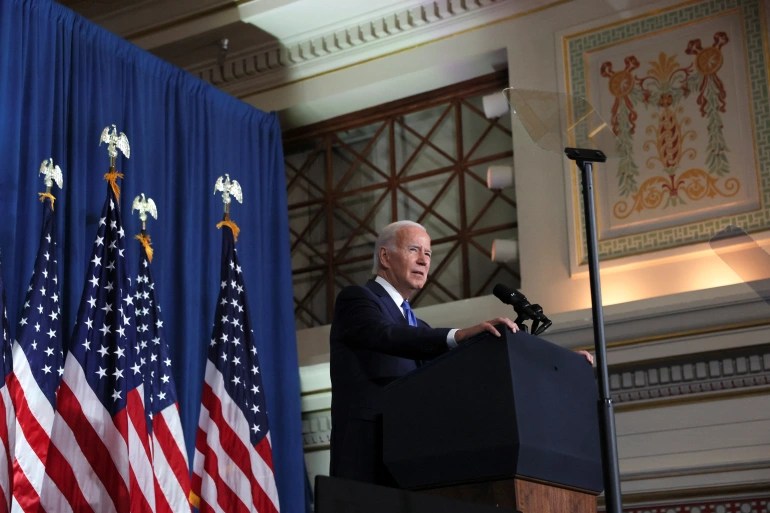
President Biden “Make no mistake, democracy is on the ballot for all of us”

The US Constitution is designed so that the LegislativeExecutive, and Judicial branches of the United States government are kept distinct in order to prevent abuse of power. Whilst there is much wrong with the US Constitution, the theory behind the separation of powers is a good one. The problem is, in a First Past the Post two Party system choices are limited. The temptation is to give whichever Party is not in control of the White House control of the Legislature as a check and balance. But what if that other Party ignored scientific advice during a pandemic causing death and misery to millions? What if this other Party is anti-democratic and refuses to accept it lost the previous election and encourages its supporters to turn to violence? What if, rather than being the ‘Grand Old Party’ of the Conservative American right, the Republican Party of 2022 has become a Party of deranged Trumpians where truth and evidence are out and hate-fuelled rhetoric is in vogue? Is allowing a party like this to control the legislative branch of government, either by voting for them or by staying at home really preventing “abuse of power”?

The Judicial branch of government should of course be separate from the Legislative and Executive branches, but is this really the case in the US? The decision in June 2022 to overturn the 1973 Roe v Wade Supreme Court decision, which legalised abortion throughout the United States, was the result of Republican Presidents appointing socially conservative judges and Republication Legislatures doing their best to block Democrat Presidents from appointing liberal ones, as Republican Senators did in 2016. Despite the fact that a majority of Americans oppose the decision to overturn Roe V Wade, manipulation of the constitution by the Republican Party has meant the Supreme Court has a socially conservative majority which can be used to undermine abortion rights in the US.

It is easy to be dishearted by the US political system, indeed I have previously argued in relation to Gun Control the following:

The United States is further held back by a Constitution that is cumbersome and difficult to change. Trying to bring about any sort of serious change to allow Gun Control in the US, something that polls suggest a majority of Americans support, would require a change to the Second Amendment of the US Constitution. How can the US Constitution be changed? It requires 2/3 support for a proposed constitutional amendment in both the Congress and Senate (see above about how these houses are NOT representative). On gaining this, it then needs to be approved by the legislature of 34 of the 50 US states and then ratified by 38 of the 50 states (again the smaller conservative states get a much greater say than larger ones). A full explanation of this can be seen here.

The US election – why sometimes voting for the lesser evil is right

In the above article I went on to mention Trump appointing anti-abortion Supreme Court Judges and that with the “country’s highest court is so clearly partisan, again a system protected by the constitution means one can have little confidence in this country’s justice system.”

Yet, as flawed and in desperate need of reform as the US political system is, it is still paramount that all eligible voters turn out to vote. The initial response from US voters to the Supreme Court decision appeared to be a backlash. In traditionally Republican voting states of Alaska and Kansas, Democrats made surprise gains. The coming mid-term elections could be an opportunity to send this message on a national level, but polls suggest there are several senate races which are tight and there is a projected national swing to Republicans. Of course, like all elections, there are many factors at play, but turnout will be a significant factor.

As already explained, mid-term elections generally go against sitting presidents. In the case of Biden, he faces low approval ratings due to the state of the economy, which is hurting incumbent governments globally and the lingering backlash from withdrawing troops from Afghanistan. Biden has a track record of being gaff-prone, often making silly comments and going off script. But in terms of delivery, in the last 22 months, the United States Government has done surprisingly well. Since January 2022, Democrats and the Biden Presidency have achieved the following

  • Rolled out the $1.9 trillion COVID relief deal, rolled out the COVID vaccine and got control of the virus unlike Biden’s inept predecessor
  • Got both Congress and Senate to approve the $1.2 trillion infrastructure package which drastically increased investment in the national network of bridges and roads, airports, public transport, national broadband internet, as well as waterways and energy systems.
  • Made serious commitments to stopping climate change and unlike his predecessor ordered all government agencies to immediately halt the financing of new international carbon-intensive fossil fuel projects, and instead work towards clean energy use.
  • Has reduced the US unemployment figure from 6.3% under Trump to 3.9% today.

The current cost of living crisis and high inflation are hurting the American people, and it is understandable that there is anger at the US Government and the political and economic system that has allowed this to happen. But allowing the Republican Party, in its current state to control the Legislative branch would be a terrible mistake.

Let’s be clear, we are not just talking about a typical centre-right political party, which let’s be honest tends to dominate in liberal democracies. Whilst the politics of serving the wealthy elites and opposing progressive reforms are distasteful enough, in 2022 the US Republican Party is an entirely different beast. Trump and his allies now control the Republican Party with many mid-term candidates now saying the 2020 election was “stolen” and dismissing the Congressional hearings into the January 6 insurrections as a “kangaroo court.”

Last week Nancy Pelosi’s husband was the victim of a violent attack, a symptom of the increasingly volatile mood in the United States. The intended target of the attack was Nancy Pelosi, the Speaker of the House of Representatives, something that should be quite shocking to anyone who supports democracy. The response from the Republican Party was a mixture of silence, baseless conspiracy theories or in the case of Donald Trump Jr, mockery.

Earlier this week, Bolsonaro supporters took to the streets of Brazil refusing to accept the election result. Bolsonaro initially made no comment on the loss and has only grudgingly accepted that Lula will be the next President. This is straight out of the Trumpian playbook and is incredibly dangerous and divisive. In the US, given historical trends in US midterms and recent polling, it is likely that the Republican Party will make gains. Yet there are already signs that if results do not go their way, several Trump-aligned Republican candidates cannot commit to accepting the election result. There is no evidence that 2022 was stolen, in fact, quite the contrary it was in fact Trump who threatened the Governor of Georgia and demanded he finds him votes and made other false allegations about the 2020 election. These false claims resulted in the violence in Washington on Six January 2021, and it is appalling that Republicans have learnt nothing from this shameful episode. This alone should be reason enough to turn out and vote next Tuesday.

These are deeply troubling times and the stakes could not be much higher. Mid-term elections are a time to send a signal. In response to Russia’s brutal invasion of Ukraine, Trump has described Putin’s actions as an “act of genius.” In light of this, what message does it send voting Trump-aligned Republicans in charge of Congress? Trump continues to deny he lost the 2020 election, or accept responsibility for his part in the violence on Capitol Hill on January 6 2021, should people who condone these actions be given a majority in the Senate? Given the recent decision to overturn Roe V Wade, should Republicans be allowed to control many state legislatures and block women’s right to choose?

At a campaign event last week President Biden said that in these mid-term elections “democracy is on the ballot”. This is absolutely true, and the outcome will be decided by those who show up to vote.

The politics of high inflation – can governments do anything?

Britons woke up to the news today that inflation in the UK has hit a 40 year high of 9%. Recent increases to power bills, fuel and groceries have in no small part driven this inflationary pressure and indications are that prices could increase further. The bank of England governor has called for wage restraint fearing that this could drive inflation even higher, though with the cost of living rising so quickly this call will likely fall on deaf ears. The recent losses in local body elections and lacklustre polling for Boris Johnson’s Conservatives is in part due to the rising cost of living. But is this all just a case of bad economic management by the Conservatives?

My usual reference point is comparing and contrasting the UK and New Zealand situations, having lived in both countries. New Zealand’s inflation rate is at a 30-year high hitting 6.9%. A friend in NZ recently asked if I could send petrol over from the UK as the cost had gone up too much over there, the joke soon fell flat when I told them how much a tank of petrol costs here in the UK. In New Zealand, the opposition has been quick to blame the Labour Government in New Zealand for this, at a time when support for the government is falling fast. Having won a record majority in 2020 for their handling of the pandemic, Ardern’s government now faces a backlash over coronavirus restrictions and is taking the blame for current economic challenges. Commentary in the New Zealand media also tends to focus on inflation as a domestic issue, as such much of the commentary is often wide of the mark.

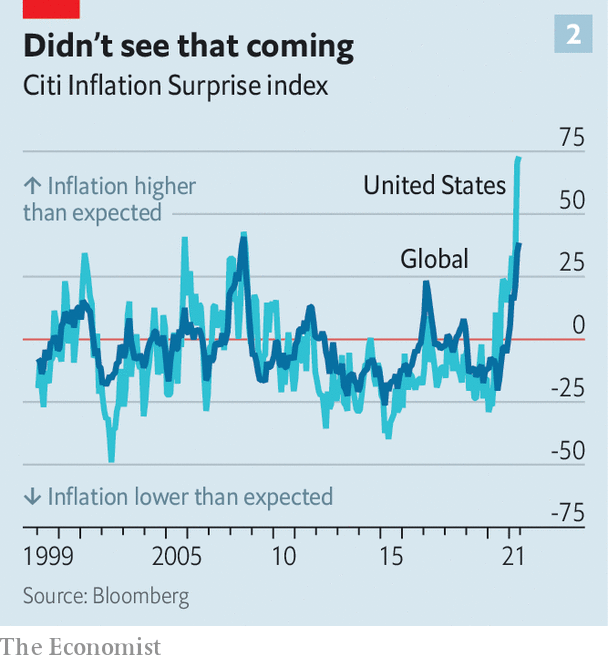
The above Bloomberg graph shows the global inflation rates spiking upwards in 2022

In Australia, the country goes to the polls for their first federal election since the pandemic. Whilst polling numbers are still fairly close there is a real possibility the right of centre Liberal Coalition Government led by Scott Morrison may lose, in no small part due to inflation and the rising cost of living. Whilst there are plenty of good reasons to vote out the Coalition government, not the least their inaction on climate change, like in Britain and New Zealand, is the cost of living increase in Australia really down to the federal government?

In the US, President Biden and the Democrat controlled House and Senate are facing an uphill battle in the November midterms against a Republican Party now very much aligned to Trumpian politics. For the Biden administration there appear to be few options to control inflation in the short term. I have previously blogged about the limitations of the US political system and it is no surprise that many Americans yet again feel frustrated. However, it is clear that this is not a crisis limited to any single nation-state, what we are dealing with is a global inflation problem.

At the start of the pandemic, I wrote a blog post outlining how there would be long lasting economic ramifications of this crisis. This, along with the Russian invasion of Ukraine is driving inflation and causing economic uncertainty. This is particularly challenging for much of Europe where there is a high level of reliance on Russian Oil and Gas and moves to end this reliance will see short term price hikes and energy shortages.

Previously, I have written about the importance of global governance and how our current global governance institutions are not up to the challenges we face in the 21st century. The current crisis illustrates this more than ever. At the current time, we turn to the nation-state and in democratic countries we as voters can hold our leaders to account for what happens, including economic management. In reality, how much can Jacinda Ardern, Boris Johnson, Scott Morrison, Ursula von der Leyen or Joe Biden or any other world leader do? When finance Ministers do the national budget each year, many of the key economic factors are determined by external factors, not by their government’s decisions. Likewise, we can beat up the Bank of England, the Reserve Bank in New Zealand or other central banks for not controlling inflation within the targets they have been set, but they did not cause a global pandemic, invade Ukraine or control many of the key drivers of international inflation at that time.

This is not to let governments off the hook, as they still have the power to mitigate the effect of high inflation. Governments have the power to reduce or remove sales taxes, regulate pricing or support people on low incomes through benefits or policies that help lift wages. On the global stage, finance ministers when they attend the yearly Davos meeting, or leaders who attend the G20 meetings, need to be doing more to develop a global economic strategy that can protect against these sorts of shocks. Further, they need to create global governance institutions that can ensure a stable global economy that delivers for everyone, not just now but into the future. This is what we should be demanding of our governments.

Back in the late 1990s and early 2000s the big push was for globalisation, which in reality was a push for removing tariffs and international market liberalisation. The anti-globalisation movement of the time often took the position that this agenda weakened the nation-state and undermined democracy. The problem, which neither side really understood, is that in a world where we for a long time have depended on international trade but also on the movement of people, relying on national governments to resolve this will inevitably fail. Margaret Thatcher, in the introduction to her memoir The Downing Street Years, claimed the following:

An internationalism which seeks to supersede the nation-state, however, will founder quickly upon the reality that very few people are prepared to make genuine sacrifices for it

Margaret Thatcher, The Downing Street years, page 11

Yes, in terms of consciousness people still hold nationalism and their own country in high regard. But where we increasingly see countries with governments of all different colours struggling to control the cost of living, at some point we must face the fact that an international response is required. People may not believe in current global governance institutions or be “prepared to make genuine sacrifices” for them. But they may do if these institutions were in fact giving people a better quality of life by controlling inflation and the cost of living. At the time of writing, this all seems somewhat academic, with there being little likelihood of an international response, other than some short term cooperation to control the immediate crisis without looking at the underlying long term problems. Yet it is clear that we will continue to face these economic challenges with tools that are ill-equipped to face the problems. Only a truly international response can create an economy that delivers for all.

The Russian invasion of Ukraine – an act of aggression

On February 24 2022 Russian President Vladimir Putin ordered the Russian military to invade Ukraine, a nation that declared independence from Russia on August 24 1991. This is not the first time in Ukraine’s 30 years of independence that the Russian Federation has attacked Ukraine, having annexed the Crimea region back in 2014. Vladimir Putin has made no secret of the fact that he believes Ukraine has been ruled by forces hostile to Russia. Whilst many were surprised by the Russian government’s decision to take this hostile action toward Ukraine, there were plenty of warning signs that this may happen.

It is not my view that war is inevitable, be it in Ukraine, Palestine, Syria or elsewhere. However, there are often only small windows of opportunity where a lasting peace can be built or negotiated. In the case of Russia and Ukraine, there have been plenty of warning signs over the last 30 years and potentially different responses to these may have produced a different result. What-if-isms are of little comfort or help to those now forced to flee Ukraine or those who are now staying to defend their homeland against Russian invasion.

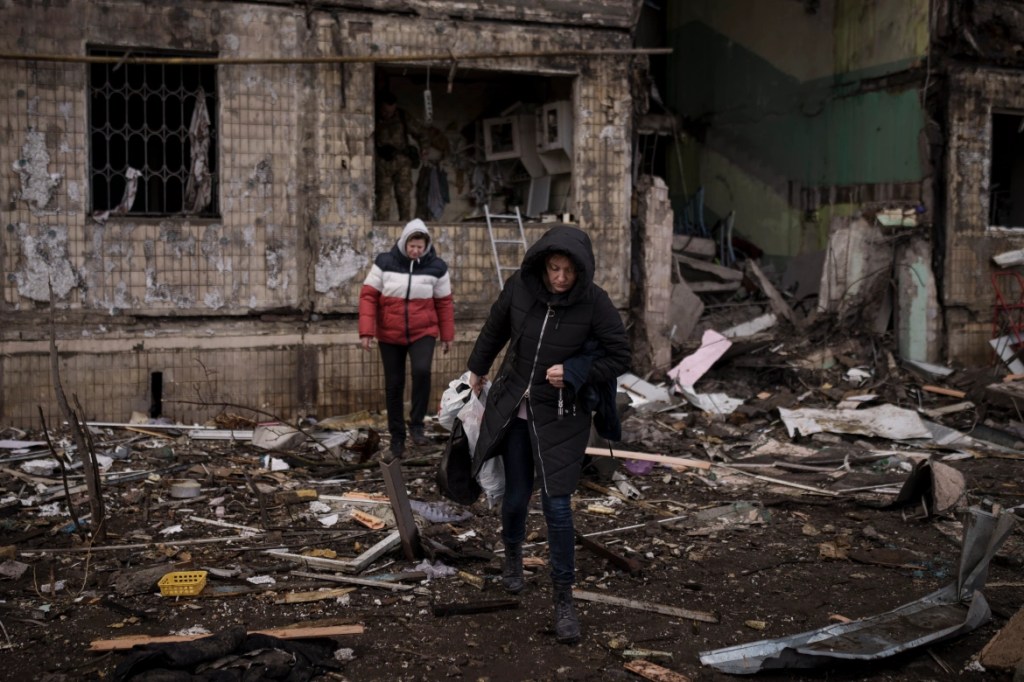
Residents remove their belongings from a destroyed building in Kyiv after it was hit by artillery shelling. [Felipe Dana/AP Photo]

Russia is the aggressor in this conflict. The targeting of civilians and shelling during a so-called Cease-Fire are acts committed by the Russian forces, and the US President is correct to call President Putin a ‘war criminal’. Those who justify or use moral equivocation by citing the presence of the far-right in Ukraine or that this was in response to NATO expansion miss the point. Yes, the far-right does have a presence in Ukraine and yes they also have joined the resistance to the current invasion. But the logic that this somehow justifies the Russian invasion is incredibly warped. For one, the war gives the far right in Ukraine space to recruit and win support by being part of the resistance. Secondly, if the correct response is for Russia to invade every European country that has an active far-right then very few nations are not at risk of invasion.

On the left, many are still influenced by the analysis of Lenin during the First World War and just before the 1917 Russian Revolution that in an inter-imperialist conflict socialists should be standing up to their own ruling class. During the First World War, there were strong arguments for working people not to align with the Tsar in Russia or other imperialist leaders in that conflict. It is dangerous to simply apply this idea to the current conflict without understanding that the context is different. There is a strong argument that people should be holding their own government or ‘ruling class’ to account during any situation like this. Ultimately, the decision to invade Ukraine was Russia’s, but there is still a question of what the governments and in particular NATO members could have done to help prevent this and what they can do now. Sadly, some on the left and drawn both bizarre and quite dangerous conclusions based on the premise that their role is to stick it to their own ruling class. Bizarrely, some socialists still mistake Russia to be some sort of socialist/anti-imperialist power, thinking that there is some residue influence of the 1917 revolution.

In my late teens, a became involved with radical left politics largely influenced by opposing the invasion of Afghanistan and later Iraq. I began studying the history of US foreign policy in places like Chile in 1973 or Iran in 1953. In 2001, just before the attack on the Twin Towers in New York, Australian journalist John Pilger released a documentary called The New Rulers of the World, which clearly outlined the role played by the US in installing the Suharto dictatorship in Indonesia. This in turn meant that country allowed western manufacturers to move production to that country where labour standards were very low and clothing and other items could be produced cheaply. Whilst Pilger has always been prone to being an evangelist for his cause and being a polarising figure, in the past, he has played an important role in highlighting the shortcomings of western governments. Pilger’s bizarre article written days before the Russian invasion is selective with which facts it includes and effectively paints President Putin and the Russian state as victims of Western propaganda. Pilger like many others on the left is so determined to expose their own ‘ruling class’ that they’ll downplay or ignore the countless human rights abuses committed by Russia under Putin’s leadership.

Many on the left, and some on the right or centre focussed their attention on NATO. The North Atlantic Treaty Organisation is a Cold War military alliance designed to stand up to the Soviet Union. After the end of the Cold War, there is a legitimate question as to whether this alliance should have continued. Many continued to be nervous about Russia, a nation that is resource-rich and historically has been very influential. It also does not have a strong history of democracy and instead has had a brutal history of state control both under Tsarism and later when it was the USSR. Certainly for the nations like Lithuania and Ukraine which were ruled by Russia for many years this nervousness is justified. Whether retaining the NATO alliance was the best way to counter this is a fair question. However, to say that the threat of Ukraine joining NATO provoked or even justified the Russian invasion is just wrong. Kier Starmer’s threat to withdraw the whip from any UK Labour MP who supported the Stop the War coalition who is calling for No NATO Expansion is an overreaction. That said, the optics of the coalition’s slogan are really bad. Whatever faults there are with NATO, it is Russia that has just invaded a sovereign country resulting in death, destruction and people being displaced. Trying to deflect from this is not a credible position at all.

The other argument put forward is moral equivalence, whereby people argue that the decision of the US and its allies to invade Iraq was just as bad so who are we to go criticising Russia. The decision to invade Iraq was wrong and few would still defend that action. That does not mean Britain or the US should not criticise Russia for what it is doing in Ukraine, if anything it places a greater responsibility on these governments to uphold human rights now. This is even more important when there is a real chance of forces more sympathetic to Russia taking power. Former US President Donald Trump continues to describe Vladimir Putin in glowing terms. Trump continues to exert considerable influence and control over the Republican Party, which currently stands a strong chance of gaining at least one house in the midterm elections later this year. In such a scenario there are no guarantees that the current pressure being applied to the Putin regime will hold up.

One of the problems has been the inconsistent approach to Russia since the end of the Soviet Union. The recent pressure for Roman Abramovich to sell Chelsea Football Club has brought to light some of the corrupt practices he and others used to make their fortune including the purchase of an oil company from the Russian government in a rigged auction in 1995. The UK allowed these characters to invest this ill-gotten gain into its economy, right up till earlier this year. When the current Russian regime attacked Chechnya in 1999, invaded Georgia in 2008, invaded Crimea and parts of Donbas in Ukraine in 2014 and engaged in a proxy war in Syria it was met with only mild responses including limited sanctions against Russia or mealy-mouthed speeches. Meanwhile, the city of London continued to be awash with ill-gotten money from Russia. That the current UK Prime Minister gave a peerage to Lord Lebedev, owner of two major UK newspapers and friend of Boris Johnson and other senior Conservatives despite security concerns being raised at the time indicates the level of influence Russian money now has in the UK.

Back when the Eastern block fell, the priority was to integrate them into global markets. This was of course at the end of the free market 80s when the naive view was that through economic liberalism democratic political reform would also occur. This may be a generous view, for many, access to Russian markets and resources was an opportunity for profit. Whilst opportunistically making money from this new market, the political response was to leave NATO intact and treat Russia as a potential foe. Whilst trying to impose Western-style democracy into Russia rather than letting the people of that country decide on their own future would have been an error, to assume that a country with a history of little else than totalitarian regimes would be quick to embrace liberal democracy, free speech and human rights was foolish. What the best approach would have been in hindsight is still unclear, but it seems to profit from post-soviet Russia whilst at the same time treating it as a potential military and political threat has not led to a good outcome.

The invasion that began just over two months ago will have a profound impact on global politics for many years. The conflict is unlikely to end quickly and will take a toll on everyone involved. In the end, it will likely result in a military defeat for Russia and humiliation for Putin. This could mean a much more volatile situation in dealing with a state that has a permanent seat on the UN security council and has nuclear weapons. Much of Europe currently relies on Russia for oil and gas and moving away from this will cause considerable economic upheaval. And Ukraine will take years to recover from this invasion even once the conflict has ceased.

How is Boris Johnson still in Number 10?

I answer the question posed in the title by returning to what I wrote on my blog when Alexander Boris de Pfeffel Johnson became Prime Minister in 2019:
Make no mistake, Boris Johnson has talent. He knows how to make a stirring speech and can tap into people’s hopes and fears as a politician My blog post written shortly after Johnson became UK Prime Minister
Now one might think being the Prime Ministers of the worlds fifth-largest economy requires a great deal more than this, and indeed it does. It requires a mixture of luck, animal cunning and being able to use both to maximum effect.
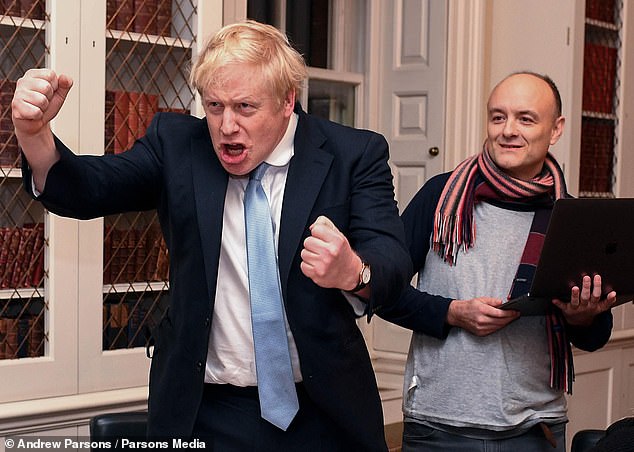
Above: Prime Minister Boris Johnson and former Chief Advisor Dominic Cummings
My last post in December outlined some of the issues the Conservative Government in the UK had been having in the latter half of 2021. Yet the position still seemed quite recoverable, indeed only a few months earlier, the former Red Wall constituency of Hartlepool had been won by the Conservatives. Local Elections in May 2021 also were very positive for the Tories. Things were bad by the end of 2021, very bad in fact, but it still did not seem fatal. 2022 was not the start of the year the government were hoping for. Despite repeated denials that there was party’s at 10 Downing Street during the lockdown, further evidence emerged that there were, including a photo showing the Prime Minister with staff sitting in the garden at 10 Downing Street having “a work meeting” where there was wine and cheese in May 2020, when social gatherings were illegal in the UK. This was at a time when people could not visit dying loved ones and the public were told not to socialise in this way. The investigation by Civil Servant Sue Gray found that there were “failures of leadership and judgment by different parts of Number 10 and the Cabinet Office” in allowing these events to occur, and then a number of these events are now being investigated by the Metropolitan Police. None of this was made better by the Prime Minister’s response that nobody had warned him that these parties were against the rules, rules that he had announced as Prime Minister in March 2020. Former Conservative Prime Minister John Major has said that Johnson broke the rules by holding these parties and believes he should resign. Others close to the Conservative Party including financial donors have also called on him to go. As Conservative polling takes a hit and MPs get increasingly restless, it is still a surprise to many that Johnson stays on. Indeed most other PM’s would have resigned by now. So why does Boris Johnson stay on and why do the Conservatives let him. For Johnson, he knows if he leaves office now, he’ll likely never return. Having only served in the role just over two and a half years and most of that time leading (badly) during a pandemic, he has to try and stay on. But why on earth do the Conservative Party let him? Because despite everything, including the quite serious long term damage to the reputation of the party and indeed of the United Kingdom, he is probably still their best chance of winning an election. Boris Johnson does not play by the normal political rules. Many claim Johnson uses the Trump playbook, and his election outcome in 2019 certainly benefited from Trump’s intervention which helped get the Brexit Party not to stand against the Conservatives in crucial leave voting constituencies, specifically the so-called Red-Wall. Yet Johnson plays by his own rules, which include fast and loose morals, including talk of beating up journalists. He has a level of confidence that has helped him get away with things other politicians simply would not. His clown reputation and building the brand “Boris”, the clown who got stuck on a zip wire at the 2012 London Olympics during his time as Mayor. Johnson won the London Mayoralty by seeing an opportunity, specifically that London voters were tired of Ken Livingston. Further, the clown reputation meant Johnson’s opponents underestimated him in not just one but two London Government elections. His ascent to the Conservative leadership was far from smooth, with his first attempt in 2016 being undermined by Michael Gove. His record as Foreign Secretary was also far from successful, especially regarding the Nazanin Zaghari-Ratcliffe issue. Yet his stance on Brexit, specifically undermining Theresa May’s attempts to negotiate a withdrawal agreement, paid off. He proved ruthless in his first few weeks as the leader, withdrawing the Tory whip from 21 MP Conservative MPs who would not back his Brexit plan, including his own brother. His decision to prorogue parliament when he could not get MPs to agree to a general election ultimately worked for him. Despite losing legal challenges to this prorogation, eventually, he got MPs to agree to an early election, winning the best result for the Conservative Party since 1983. His victory in 2019 was due to two things, tapping into the hopes and fears of those frustrated by attempts to thwart Brexit and a deeply divided opposition. His performances as an orator during this campaign were far from his best work, and despite arguable receiving fairly favourable press coverage during the campaign, felt the need to hide in a fridge to avoid doing a media interview days before the election. Those who in recent weeks, having previously supported Boris Johnson, now believe he is not fit to be prime minister seem to have only just worked out what he is really like when the signs have been there from the start. One of Johnson’s strengths throughout his career has been his ability to bring people in that can carry him. Dominic Cummings, loathsome as many may find him, was a driving force behind the Brexit campaign in 2016 and the 2019 Conservative election victory. There were of course plenty of others, including some who have been with him since he was mayor of London who has recently quit. The problem with being an advisor or a ‘back roomer’, is that ultimately the candidate will not always do what you wish they would. It is immensely frustrating to feel you are the brain behind the power, yet never to get credit, and worse to have your clever strategy ignored. The other issue Johnson faces is that despite his show of strength, for better or for worse, in getting Brexit done, he is not ideologically in step with much of the traditional Tory base. This in part explains his appeal to voters who traditionally have not voted Tory, certainly, this proved the case both in London and in the 2019 election. For many Conservatives, winning a strong majority and remaining in power was worth the compromise, even if it meant accepting a level of what the late Margaret Thatcher would have decried as corporatist policy. The recent decision to increase National Insurance has certainly tested the tolerance of many Conservatives who subscribe to the Thatcherite philosophy of low taxation and small government. As I have written earlier, social care has been a blight on the political landscape and one that neither Labour nor Conservative governments have adequately addressed. With demand for social care increasing, governments have been under pressure to increase funding. Both Blair’s New Labour and Cameron’s Conservative Governments lacked the political courage to increase taxes to pay for social care. Whilst there are strong arguments against the way the government have decided to increase taxes, specifically that rather than an across the board increase to National Insurance there were other options whereby the heaviest burden would have fallen on those best placed to contribute, nonetheless, an increase in taxation to pay for social care was inevitable. Any serious analysis of relying on the private sector and savings to address this need show this is not viable. Is it a coincidence that the announcement of the National Insurance increase in September 2021 happened just before the government and in particular Boris Johnson started having problems? It would be a mistake to think that the open civil war within the Conservatives under Theresa May was only about Brexit or that the 2019 election result put these to bed. It is quite clear that the stories of lockdown parties and other scandals have been disclosed by people within the government. Plenty of Tory MPs would be quite happy to see Johnson fall or to apply maximum pressure on him so he backs down on the National Insurance increase. Boris Johnson may not be a Thatcherite ideologically, but so far it does seem he is not for turning and understands that doing so would ultimately be more harmful. For small-government laissez-faire Tories, a leadership challenge may not serve them well. Were Johnson to go, the likely successor would be Rushi Sunak who talks free market but in practice has been one of the most interventionist Chancellors in modern times during the COVID-19 crisis. It is unlikely that Sunak as PM would reverse the National Insurance increase, given he has been its main advocate thus far. The rights favoured candidate, Liz Truss, is simply not credible. Boris Johnson remains Prime Minister of Great Britain and Northern Ireland. He does so, for now, due to the lack of a strong viable alternative within the Conservatives. Despite everything, he is still the leader most likely to help the party regain support, despite him now being severely damaged. Some in the Conservatives may be thinking it best to leave him in place at a time when the cost of living is increasing significantly when the May Council elections will likely not be good for the Conservatives (the particular boroughs having elections this year are less favourable to the Tories, but a backlash to “party gate” will likely play a role) and the National Insurance increase. Better to find a new leader nearer to the election. But this is a risky strategy, as the Prime Minister has damaged not just his reputation, but that of the Conservatives and the government he leads. His attempts at statesmanship during the Ukraine crisis may have helped him a little, but his reputation on the global stage is also tarnished by what has happened at home. Boris Johnson, should not on balance still be Prime Minister and in the long term, the Conservatives risk being severely punished for not removing him. But despite everything, he remains in post and still, we cannot write him off.

UK COVID-19 death toll hits 100,000 and The PM offers an insincere apology.

In late March 2020, the medical director of the NHS Stephen Powis said that keeping the UK COVID-19 death toll to under 20,000 would be a good result. Ten months later, almost to the day, the UK’s official death toll from COVID-19 hit 100,000, a few days after an Oxford University Study found that the UK had the worst daily death rate per capita for coronavirus in the world.

On Tuesday Prime Minister Boris Johnson said he was “deeply sorry” for every life that was lost. His apology was quickly followed by this statement:

I think on this day I should just really repeat that I am deeply sorry for every life that has been lost and of course as I was prime minister, I take full responsibility for everything that the government has done. We did everything we could to minimise suffering and minimise the loss of life and will continue to do so.

Boris Johnson addressing the nation Tuesday 26 January 2021

Back in May 2020, I wrote a blog which listed the many failings of the UK Governments handling of the crisis. The Prime Minister and his colleagues ignored scientific advise and allowed the virus to take hold throughout the population in February and March 2020. The Prime Minister, in particular, took pride in the fact that he planned to keep the country open even when most other European nations were going into lockdown. It was only when NHS hospitals were near breaking point that Britain followed other nations and implemented similar restrictions.

COVID-19: Boris Johnson 'deeply sorry' as over 100,000 coronavirus-related  deaths recorded in UK - kmfm
Above: Prime Minister Boris Johnson giving his address to the nation on Tuesday.

Probably the greatest failing by the Conservative Government in the fight against COVID-19 was not its response to the crisis but the decade of underinvestment in the country’s public health system. Sir Michael Marmot from the UK Institute of Health Equity published a damning report in December 2020 which highlighted that during the last decade of Conservative Government:

  • people can expect to spend more of their lives in poor health
  • improvements to life expectancy have stalled, and declined for the poorest 10% of women
  • the health gap has grown between wealthy and deprived areas 
  • place matters – living in a deprived area of the North East is worse for your health than living in a similarly deprived area in London, to the extent that life expectancy is nearly five years less.

The report also made clear that the above trends, in particular the health gap between wealthy and deprived areas, corresponds with data during the COVID-19 pandemic which found those from poorer parts of the UK were hit harder by the virus.

In May 2020 I posted a blog about the state of UK Social Care where for decades successive governments have failed to resolve the funding crisis, or indeed to build proper links between the health and social care systems. In October 2020 Amnesty International published its report As if Expendable which outlined how many older people were kicked out of hospitals and placed back into residential care homes, without first even being tested for COVID-19. This shameful action, along with not supplying social care providers adequate supplies of PEE was responsible for many thousands of deaths. The Amnesty report highlights that the UK Governments treatment of people in the social care system during this time breached both domestic and international law:

The UK is a state party to international and regional human rights treaties which require it to protect and guarantee fundamental human rights relevant to the concerns addressed in this report, including notably, the right to life, the right to highest attainable standard of physical and mental health, the right to non-discrimination – including on the grounds of age, disability or health status – the right not to be subjected to inhuman or degrading treatment.

As if Expendable, Amnesty International report 2020

Prime Minister Boris Johnson has yet to atone for what happened during the first wave of the COVID-19 pandemic in the social care sector. Whilst this was not just the fault of his government’s failure, his statement on Tuesday shows he still accepts no-fault and claims they did all they could to ‘minimise suffering’ and ‘loss of life’, a claim the Amnesty International report demonstrates is false.

On the issue of face masks, the UK Government lagged behind most many other nations, initially implying that these were not effective, only later to make them mandatory on public transport. The justification for this U-Turn is that by mid-2020 there was more scientific data, which is fine except many other nations applied this scientific advice much earlier. A Centres for Disease Control and Prevention paper published 2004 found that during the 2003 SARS outbreak that wearing a face mask frequently in public places, frequent hand washing, and disinfecting one’s living quarter were effective public health measures to reduce the risk for transmission. Nationalist Britain knows best self-confidence could well have been a factor in the UK Governments refusal to learn from international experience.

Another example of government arrogance in the UK during this crisis was the development of the track and trace system. Whilst most nations have struggled to develop an effective track and trace application, the UK managed to spend 22 billion pounds of public money on a system that did not work. In June 2020 Boris Johnson claimed in parliament that the UK was developing a “world beating” contact tracing system. After billions were given to private contractors, many with personal links to members of the government, the system was found to have failed as it relied on excel spreadsheets to record the data and resulted in 15,000 cases not being recorded in September and October 2020.

The failure to develop a functional track and trace system has led to one of the greatest policy failures that have contributed to England being in its third COVID-19 lockdown. Very few people would disagree that having schools closed and students having to learn remotely is negatively impacting on students. And most people can understand how difficult it is for any government to balance public health against long term educational outcomes. But when the Conservative-leaning paper The Telegraph runs the headline The biggest mystery in politics: why is Gavin Williamson still in a job? you know that the Education Secretary has performed poorly. The recent example where after Christmas schools reopened for one day in January before closing again due to high infection rates, despite the Scientific Advisory Group for Emergencies (SAGE) warning the UK Government on 22 December 2020 that with the new strain of COVID-19 leaving schools open was contributing to the rising infection rate. A poll conducted earlier this month found that 92% of teachers believe Gavin Williamson should resign as Education Secretary, which is hardly given surprising his abysmal performance in recent months.

Coronavirus: UK epidemic growing as R number goes above 1 - BBC News
The Above graph shows how COVID-19 infection rates rose sharply after UK schools reopened in September

Yet the blame for schools does not sit fully with the Government. Her Majesty’s loyal opposition can also take much of the blame for this fiasco. In April 2020, at the height of the first wave of coronavirus pandemic in the UK, newly elected Labour Party Opposition Leader Kier Starmer called on the Government to set out plans to end the lockdown. Starmer, former head of the Crown Prosecution Service and a QC would argue that he meant that there should be a plan which included contact tracing, social distancing guidelines and other measures to make it safe to reopen. But the optics of the call was pressuring the UK Government to lift restrictions and specifically calling on them to reopen schools. Unlike in a court of law, in politics, it is about the key message, not the detail buried on page 7 of the affidavit.

The Oppositions position on schools has been nearly as confusing and contradictory as the Governments. The Party, still recovering from its 2019 election loss (which I wrote several blogs about in early 2020), under a new leader was trying to rebrand, reposition and appeal to voters it had lost. This has not been helped by the internal factionalism (which I also blogged about in May 2020) and the party still not being clear where it sits politically and ideologically. In April 2020 shadow Education Secretary Rebecca Long-Bailey’s position was that schools should reopen when safe, a position that was consistent with the education unions. Shortly after this Long-Bailey was replaced as Education Secretary by Kate Green, who has been clear that she wishes to distance Labour from the education unions in an attempt to present the party as more ‘moderate’.

Green and Starmer’s position throughout this has been motivated by a policy of triangulation and policy by focus group whereby they are appealing to middle-class parents who want their kids back at school. Like the Tories, Labour’s position has been motivated by politics, not science. That former Conservative Health Secretary Jeremy Hunt called for schools to close earlier this month before the opposition is telling. Meanwhile the leader of the opposition was being grilled by media for his confusing position. Many believe that Green was appointed due to her loyalty to Starmer just as Williamson has kept his role due to loyalty to Boris Johnson. One would be more concerned if either appointment were based on ability as this would say a great deal about the capability of the other 648 MPs in the Commons if these two are the best and brightest on offer for education.

The issue of schools reopening is a personal one for me. In my blog earlier this month, I told of how my partner who works as a secondary school teacher in London caught COVID-19 and how we both spend Christmas and New Year recovering from the illness. When Greenwich Council tried to close schools in the borough due to skyrocketing infection rates, Education Secretary Gavin Williamson threatened legal action to keep the schools open. By this time, most schools in the area had a significant percentage of students sick, or in isolation having been in contact with someone infected. In many schools, pupils were sent home due to the number of teachers off sick with COVID-19. To argue that continuing with this situation is any better for secondary school students is nonsense.

Much of the concern over school closures is the impact on students’ grades. When the Government announced GCSE and A-level exams would be cancelled once again in 2021 this added to the anxiety. One of the issues here has been this Government’s shift towards having student grades mostly assessed through examinations. This style of assessment favours certain learners over others, as exams favour those with short term recall skills. Many other countries have moved away from a full examination model of assessment to a mix of exams and course work assignments during the year. But aside from implementing a poor education assessment model for students, the pandemic has highlighted the risk of placing so much emphasis on examinations as, if for whatever reason, these cannot go ahead, it becomes difficult to determine student grades. The UK Government’s position on education and assessment is blinkered and ideological, which has meant it struggled to come up with sensible pragmatic solutions to this problem during the crisis. Worse, the Education Secretary has demonstrated he lacks the intellectual rigour and leadership to address these issues.

A coherent and strong opposition would have easily made political mileage during this time, however to date, the opposition has opted for triangulation and timidity. The opposition MP who has made the clearest and most articulate statements regarding school closures during the pandemic has been Lisa Nandy the Shadow Foreign Secretary, who came a distant third in the 2020 UK Labour leadership contest. What Nandy had to say was hardly earth-shattering, merely that the Government needed to get testing and track and trace working properly before it would be safe to reopen schools. To be fair, Starmer, Green and Long-Bailey probably also thought they were saying the same thing, but what people heard was quite different.

Prime Minister Johnson’s non apology on Tuesday was an insult to the British public. Yes, this was a difficult crisis and all governments have made some mistakes at this time. But the UK has done particularly badly and the statement on Tuesday shows he has learnt nothing. The Conservatives won the 2019 election with the sizeable majority that they did largely due to Brexit (see my blog post immediately after the 2019 UK election) and divisions within the opposition. Boris Johnson is not a strong leader and in this crisis, he has proved to be woefully inept. It is well known that Johnson likes to compare himself to former Conservative Prime Minister Winston Churchill, in which case the COVID-19 pandemic has been his Gallipoli.

At a time when the country is in its third lockdown, when over 100,000 people have died, when the economy is in recession and the number of jobless is set to rise, few now are looking to the next election which will likely be held in 2024. Yet that still motivates leaders of the UK’s two main political parties. Polling numbers in recent months have been fairly close between Labour and the Conservatives. Where polling has been much more consistent is in Scotland, where the SNP maintain a strong lead heading into the Scottish Parliament’s election on 6 May 2021. Support for Scottish independence also maintains a strong lead and as I predicted in my blog post nearly a year ago this issue continuing to feature prominently on the political agenda, despite fierce opposition from political leaders in London. Without a doubt, independence campaigners in Scotland, as well as Northern Ireland and Wales, continue to win support for their independence calls on the back of the UK Governments inept handling of this crisis.

There is however hope on the horizon. The Governments rollout of the COVID-19 vaccinations will hopefully in time slow the movement of the virus to a point where current restrictions can be lifted. It is a wonder of modern science that within a year of COVID-19 emerging that scientists, including those at Oxford University, have developed a vaccination. Despite concern by some about the speed with which this has been released, the evidence so far is that widespread vaccination will stop the spread and save thousands of lives. Credit where credit is due, the UK Government have been quick off the mark to get this vaccine available to the most vulnerable with the aim of immunising as many people as possible over the next year. And to the oppositions credit, they have supported the Government on the vaccine rollout.

There is still a long way to go until this crisis ends and the Government have a lot to answer for badly mishandling things to date. The Prime Ministers apology on Tuesday did not cut the mustard and was an insult to the families of those who have died. Lessons from the mistakes over the last year need to be learnt and with this, the Prime Minister needs to cut the bombast and bravado and instead learn humility and humbleness. The successful rollout of the COVID-19 vaccine will be essential not only for ending the crisis but also for rebuilding trust in public trust British state after it has managed this pandemic so badly.