The Iraq War

I remember when the first Gulf War happened in 1991. Though only young I recall the 5 months from the invasion of Kuwait. The conflict was being talked up, and became inevitable. At the time I didn’t realise Saddan Hussein had been supported and armed by the US up till 1990 during the Iraq/Iran war (I was 8 at the time). It wasn’t till some years later that I understood what had happened to the Kurds after the 1991 conflict, or the crippling sanctions that hurt ordinary people while the regime thrived.


In November 2000 I was studying for my economics exam (which I passed), but became distracted by the US Presidential election. This was the night Al Gore won the most votes but Bush Junior won the electoral college. A later recount in Florida and legal action failed to overturn this result despite later evidence that indeed Al Gore had won the state of Florida and that he, not Bush should have been in the White House.

A Bush presidency made the prospect of an invasion of Iraq inevitable. At least that was the general consensus. The 2001 September 11 attacks had nothing to do with Iraq, yet were used as an excuse. As was highly questionable intelligence which in 2016 was found to be flawed information.

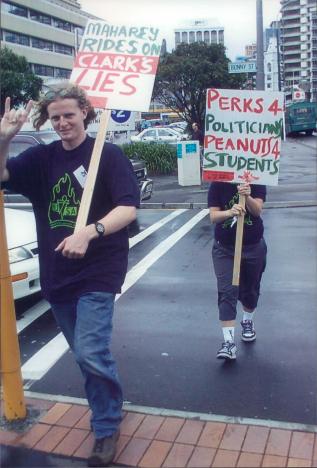
In 2003 I was the Campaigns Officer on the Victoria University of Wellington Students’ Association (VUWSA). In the weeks leading up to university started there were a number of protests in Wellington and throughout the world. I recall one protest on Saturday 15 February 2003. We called a midday rally and had organised a small march against the any attack on Iraq. We expected maybe a couple of hundred people to show up. When over 5000 people arrived at the small park we were meeting at we suddenly faced some logistical issues. I recall vetern activist Jim Delahunty turning to me and saying “this is a good problem to have.”

Anti War protest April 2003
One of the many Anti Iraq War protests held in early 2003 in Wellington

At the first Initial General Meeting of the Students’ Association in 2003 we put the Iraq War on the agenda. It had been some years since students had really taken a position on an international issue like this, so we weren’t sure how it would go. The meeting was one of the best attended General meetings in years, and the venue at max capacity. From memory only 2-3 people voted against the anti war motion.

Peace Action Wellington became the coalition group in Wellington Organising against the war. We held regular protest marches, rallies, occupations and other events throughout 2003.

TV reports on Iraq War Protests in 2003

Notable events during the year were the ANZAC Day protests where I and a number others laid an anti-imperialist wreath, an act which caused no small amount of controversy. Another was when the US Ambassador came to speak on campus, and student activists shut down the event so he was unable to speak. I and other activists then were filmed by local and international TV crews burning US flags (8 years later when I finally travelled to the US I was concerned I may not be let in, I was).

As a socialist activist and friend of mine Dougal McNeill said of the protests later: “mass movements shoot up like a rocket, and fall like a stick.” Out of the anti war movements in Wellington, and internationally a layer of activists were politicised and went on to do other things. But the movement itself, or at least the mass protests didn’t last that long. Though opposition to the Iraq invasion continues to be very widespread.

Album 2 scans (27)
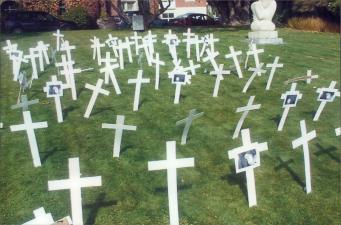
2003 Vic Uni protest against the Iraq War. Crosses were placed on the Hunter lawn to represent those killed in conflict. A letter was sent to the Student Magazine Salient the following week asking why we’d used crosses to represent the dead in predominately Muslim Country – the letter was signed “Cat Stevens”

This is not to say that the 2003 protests against the Iraq Invasion achieved nothing. Bush and Blair were probably never going to change their minds about the invasion. But the strong public opposition helped create the space where the New Zealand (Labour) Government broke with its traditional US, UK  and Australian allies and didn’t send combat troops. Internationally the Iraq war did impact on domestic politics, and continues to today. In the US, Obama’s 2008 election pledge to pull troops out of Iraq almost certainly helped get him elected. 8 years later Trump claimed the Iraq invasion was one of the worse decisions ever made, despite him personally supporting it in 2003.  In the UK, Blair’s legacy never recovered. Today even Labour MP’s sympathetic to the Blair project like Chuka Umunna say the invasion of Iraq was wrong.

The Iraq invasion removed Saddam Hussein, but life for people in Iraq did not improve. The rise of Isis, horrific terror attacks on civilians, extreme poverty and political and economic instability have continued Iraq’s suffering for the last 15 years. Further, this invasion contributed to the wider instability in the Middle East and growing hostility towards the West. The invasion of Iraq was wrong, and has caused long term harm. Bush and Blair’s legacy will forever be tarnished by this act, and deservedly so.

I am proud that I was part of the global opposition to this invasion, and would do so again.


University and Student Politics

For those lucky enough to attend university, the experience is often in their formative years. For me as an 18 year old from Upper Hutt, attending university was both an exciting and slightly daunting prospect. Its no secret that I had struggled through secondary school, and my grades by no means guaranteed me university entrance. But I wanted to go. My parents and most of my extended family had attended. And I had dreams of what I could do as a student political activist. So I studied hard, pushed myself and did my final school exams. On a family holiday, in Thames Coromandal in January 2001, I called the exam hotline and to find out my results.found out how I. When my family asked how I’d done I replied that I only got two C’s (the minimum for university entrance is 3 C’s). After a moments awkward silence I replied “and got three B’s.”

Fast forward 5 years to 2006. I’d been elected President of the Students’ Association, representing 20,000 student at my university as their association leader. I was managing roughly 30 staff, a million dollar budget, sitting on the university governance board and was the public face of the elected student executive.

Somewhere along the way I also gained a university degree.

Album 2 scans (31)
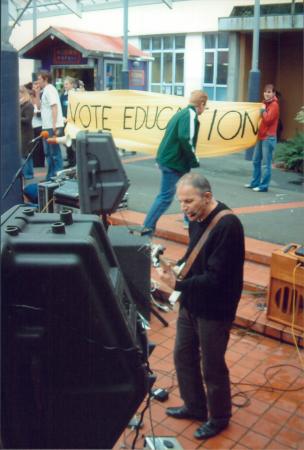
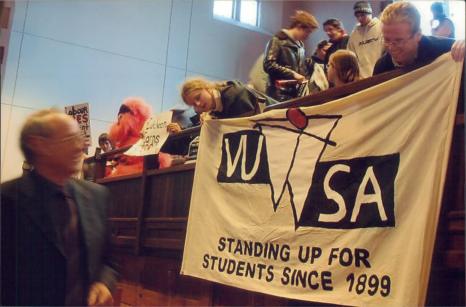
Tim Beaglehole (later University Chancellor) inspects the VUWSA banner held up by Jeremy Greenbrook and I, 2003 student fee protest.

My time as an undergraduate took me from being a long haired pimply teenager with an occasional tendency for cross dressing and a bogan rock obsession, to being a leader, a out the box thinker and a someone who had the courage of his convictions. From being turfed out of the labour party and engaging in more leftist politics, effigy and flag burnings, university registry occupations, mass anti war protests and even a couple of arrests (no charges), they were a colourful few years.

Album 2 scans (1)
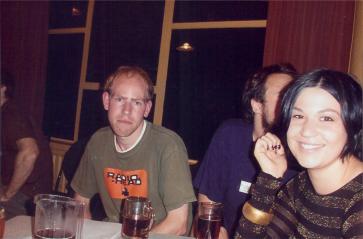
2002 Salient Editor Max Rashbrooke and 2003 VUWSA President Catherine Belfield-Haines enjoying a beer at Eastside, the student bar.

But university wasn’t just about being a political activist. I represented students on faculty boards and committees. I was a class representative supporting students having difficulties during their studies. In 2005 I ran the university foodbank, helping a number of students in serious financial need. I also helped organise a number of student orientation events, seeing a number of world class acts perform on campus (possibly even enjoying a beer or two with some of the performers).


Album 2 scans (21)
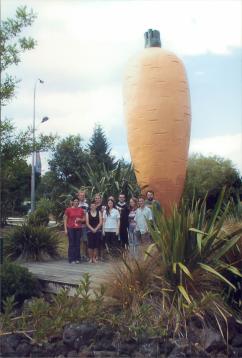
2003 VUWSA Exec retreat. Having our photo with the Ohakune Carrot

The next few posts in the ‘why’ series of this blog are going to be about my time and university.

Below are some of the reports and items in Salient and other publications during my time at University, specifically while I was on the Students’ Association Executive:

2003: VUW students vote against invasion of Iraq

Student Representative Council (SRC), an explanation

Nick TV Interview: 2004 TV report on University Library Services

Handbook Diary Blurb: Welfare Vice President

President’s Column: Happy New Year

President’s Column: And we’re off

President’s Column: No more fees

Salient reports on ‘The Mighty Starlet’ getting clamped

President’s column: Successes

President’s Column: Interesting Times

Salient report on Student Job Search being kicked out of the student union building

President’s Column: Where did all the protests go?

Salient report on constitutional changes

Salient Report: Student leaders speak for tenancy bill

President’s column: Freedom of press

Salient report on campus redevelopment

President’s Column: Should VUWSA be politically neutral

Salient report on me getting a haircut

President’s Column: Australs and Politics

President’s Column: 123 and a bit…

Media release: students suffer still

Salient Report: University blocked from raising fees by 10%

Salient report: University try by raise fees to 10% again

President’s Column: Survey’s and Blogs

President’s Column: Universal Truths

Fees debate – My view on users pays

Fees debate: Vice Chancellor Pat Walsh defends the university position

President’s Column: VUWSA Budget

Salient report on financial review

Salient report on bar prices

Salient report on student levy increase

President’s Column: The deed is done, nearly.

Salient: What is the right wing?

Salient report on student fees forum

President’s Column: Victories and Uncertainties

Salient report on fee increases

Salient report on executive turnover

President’s Column: I love student politics

Truce between university and VUWSA declared

President’s Column: VUWSA Presidency

Salient Mayoral election survey 2007

Open letter on VUWSA change proposal

Salient report on my (very brief) trespass from the university.

2005 VUWSA Annual Report

2006 VUWSA Annual Report

2012 VUWSA AGM minutes


Walk 5 Bloomsbury and Holborn

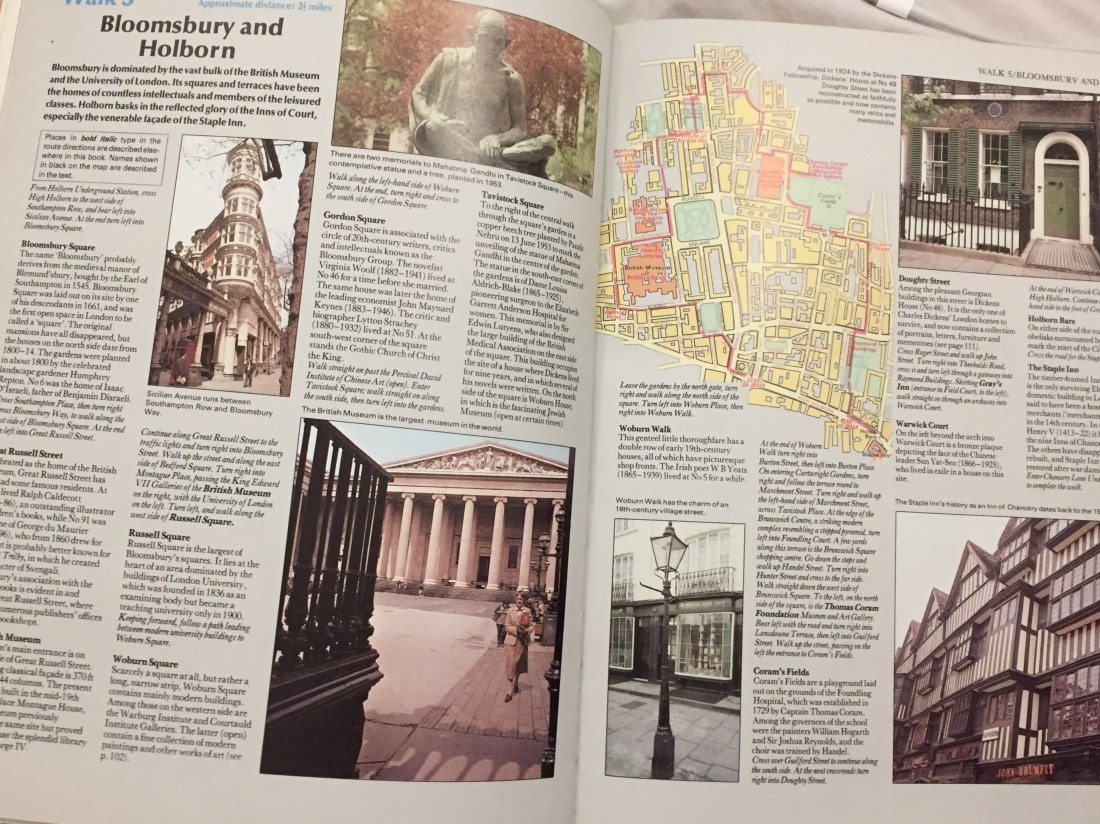
I completed the 5th of my 12 1980s AA guide walking tours of London on 25 March 2018:

IMG_0471

This walk started at Holborn Station and took me to Bloomsbury square, which according to the guide book “derives from the medieval manor of Blemund’sbury.”

The tour then took me down Great Russell Street past one of my favourite museums:

The British Museum
The British Museum, you can spend all day there and still only see half of it.

The tour then took me to Russell Square, the largest of the Bloomsbury squares and surrounded by London University.

Russell Square
Statue of Francis Duke of Bedford, 18th century Whig politician

After this the tour took me to Gordon Square, associated with a number of 20th century writers such as Virginia Woolf. House number 46 was home of 20th century economist John Maynard Keynes:

Next stop was Tavistock Square. Here I found statues for Mahatma Gandhi and Virginia Woolf:

From here I continued through the streets of Bloomsbury:

The tour then took me to Coram’s Field, the grounds of the Foundling Hospital established in 1729.

The tour then took me down Doughty Street and past the formers residence of Charles Dickens:

After this the tour took me past Gray’s Inn

Finally the tour ended at the Holborn Bars, where the silver griffins mark the start of the City of London.

The Rolling Stones

I consider it an objective truth, the Rolling Stones are the greatest rock n roll band in human history.

In 2006 when I was Student President at Victoria University I wrote the following in the column in Salient:

And finally…THE ROLLING STONES ARE COMING TO WELLINGTON!

The Rolling Stones are the greatest rock and roll band in human history, and on April 18th they are playing in Wellington. This will probably be one of the last chances we get to see these legends (though people have been saying this for about 30 years). Should be an absolute cracker….

And an absolute cracker they were.

A week later Keith Richards suffered a serious head injury in Fiji and fears were the world may never see him or the stones perform again. Thankfully this wasn’t the case.

Fast forward 12 years, and this is still the case.

On Friday 25 May, at the London Stadium, I for the second time in my life saw the greatest rock n roll band in human history. Now in their mid 1970s these guys still rock hard. Jagger has all the moves, and the band still play mean rock n roll.

These were the photos. If you want to view the clips I took from the gig you can see them on my Facebook Page (if you are a Stones fan, I’ll add you as a friend…if not what is wrong with you?!?!).

Who knows whether this will be the last time I see the Stones. I hope not. One hopes that medical science has found a way to make the remaining band members immortal (sadly we lost Brian Jones 49 years ago). Maybe they can just keep endlessly touring the globe playing their classics.

But in case this is not to be, then do yourself a favour and go see the Rolling Stones while they are still touring.

Walk 4 Mayfair

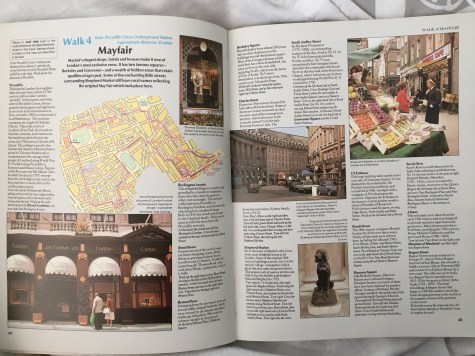
This is the 4th in my series of London walks from my 1980s London guidebook. This walk took me around Mayfair. 30 years later I did this walk on 17/2/2018, this is what I found…

IMG_0328

Above: Walk 4 in the 1980s AA London guidebook. Mayfair.

Te walk commends in Piccadilly. According to the guide book the famous London thoroughfare takes its name from a form of 17th century ruff or collar called ‘piccadil.’ From here the walk took me to Burlington Arcade and Bond Street

Above Burlington House and Arcade 

Little has changed of this area of London in 30 years. Elegant Clothing and jewellery shops with fairly expensive price tags.

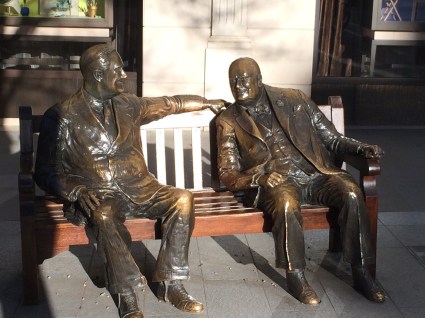
IMG_6979Above: This bronze statue of FDR sitting on a park bench with Churchill was unveiled in 1995 on Bond Street.

The walk then took me to Berkeley Square. According to the guide book ‘most of the Georgian houses which stood here have been demolished, but some survive on the westside, including Number 45 Which was the home of Clive of India.

Above, Berkeley Square and Clive of India’s house. 

Next the walking tour takes me to Charles Street, full of 18th century houses. The Iconic ‘I am the only Running Footman’ pub is on this street.

Above: The Footman pub and Charles Street.

The walk then took me through Shepherd Market through to South Audley Street.

Above: Number 1 South Audley Street.

Above: South Audley Street. Right Mayfair Hotel.

The tour then took me the US Embassy. In early 2018 this embassy has moved from its long standing home in Grosvenor Square to Vauxhall. President Trump believes this move is to a lousy location and described it as the “Bush Obama.” Grosvenor Square now has a statue of Ronald Reagan in front of the old embassy building, Reagan was President at the time of the guidebooks publication. It also has the London memorial to the September 11 terrorism attacks of 2001.

Above Grosvenor Square: Ronald Reagan, Franklin D Roosevelt and the September 11 Memorial. 

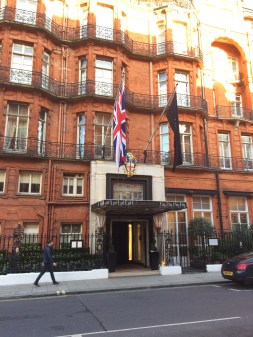
Next the walk took me to Brook Street past Claridges.

IMG_6998

Above Claridges.

Of Brook Street the guide book also noted that “The 18th century composer Handel lived at number 25 for over thirty years.” It also mentioned that Handel wrote most of his works at this address. However Handel was not the only notable resident at this address…

Above: Number 25 Brook Street has now been turned into a Museum. The former residence of Jimmy Hendrix and Handel. The Handel museum has been open for a few years, the Hendrix floor was opened up in 2017. In the 1980s they just had a blue sign on the door, and only for Handel. 

After a spending a bit of time at the Handel and Hendrix residence, I continued the walk onto Hanover Square.

Above William Pitt and Hanover Square

The walk them took me down Savile Row and Albany court through to Regent Street, described by the guide book as “one of the finest shopping streets in the world, at the expense of some of the greatest architecture”

Above: Regent Street.

English council elections

I’ve refrained thus far from commenting too much on here about English politics. Having moved to the country in September I felt it appropriate to sit back and observe for a bit. But having just gone through and voted in the recent council elections I have a few observations.

London_local_elections_2014.svg

Above: Map of the 2014 London Council election results.

Firstly unlike New Zealand, in the UK councils are very much more party political. So councils have Labour, Conservative or Lib Dem majorities. This is a refreshing change from New Zealand. There you get 10 candidates tell you how much they love Upper Hutt, and if you’re lucky their opinion on fluoride in the drinking water. Ultimately you have no idea what these candidates stand for, and many just don’t bother voting as a result.

The downside to Party Political council elections is that the media interest is primarily what the impact of local council elections on national politics. This has included projections for how many seats each party would get in the House of Commons based on these results, despite the fact that not all councils were up for re-election. More importantly, while some will be voting on party lines, many others are likely to vote on local issues. Someones vote in council elections may not reflect how they would vote in a general election.

Many are saying that Labour did not perform as well as expected in the council elections, both in London and Nationally. Some are now saying that the country has reached “peak Corbyn.”  Ex spin doctor for Tony Blair Alastair Campbell believes Labour are “a long way from power” (though of course Campbell is still struggling with the fact that it is no longer 1997 and his era of politics is long gone).

The response to this by Labour and Momentum has been that they actually had a successful election. The counter argument is that this was best election result for Labour in England since 1971. The issue was that target councils such as Chelsea and Kensington were held by the Conservatives despite that councils handling of the Grenfell Tower fire. Polls earlier in the year did show a Conservative loss in Chelsea and Kensington was possible. Labour and specifically Momentum talked up the prospect of Labour winning this council, along with Westminster and Wandsworth. The reality is these councils have been Tory strong holds since the 1960s, so building expectations that Labour could win there was optimistic. Also the Conservatives clearly campaigned hard to retain this and neighbouring Westminster Council.

The other factor is the First Past the Post voting system. In Wandsworth Labour won slightly more votes than the Conservatives, but the Conservatives retained control of that council. In Richmond the Liberal Democrats won over 70% of seats with fewer than half the votes. Apart from the Electoral Reform Society there has been little comment about this. A better electoral system would help achieve better representation and results that actually reflect the will of the people. Hopefully this changes for future elections.

I know a few people who ran in these elections, from various Parties. To those who were successful, congratulations. To those who were unsuccessful, well done for putting yourself forward. Local Government serves an important role in our communities, its important that people get involved.

Radical Socialism

In an earlier post I wrote about my expulsion and later re-joining of the New Zealand Labour Party. I’ve also written about ideology and some of the limitations this can cause. I have experience of this, as in the years following me leaving Labour, I became active in the radical socialist movement.

So to put this into context, in 2002-03 the Iraq war resulted in a global mass movement built. At this time I was elected to the student executive (a subject for a future post) and was also becoming a union delegate on the cleaning site I was working on. The late 1990s anti globalisation movement had lost some of its initial steam, but anti capitalist and certainly anti neo liberal politics and ideas were still being discussed at university. To me and many of my friends at the time, the third way Labour Government was on the wrong side of these issues, and something more radical was needed.

I first became aware of the Anti Capitalist Alliance in 2002, shortly after it formed. It was a coalition of a couple of other smaller socialist groups, and ran a couple of candidates in that years NZ general election. The grouping had a 5 point platform:

The five-point policy platform of the Workers Party is as follows:

  1. Opposition to all New Zealand and Western intervention in the Third World and all Western military alliances.
  2. Secure jobs for all with a living wage and a shorter working week.
  3. For the unrestricted right of workers to organise and take industrial action and no limits on workers’ freedom of speech and activity.
  4. For working class unity and solidarity – equality for women, Maori and other ethnic minorities and people of all sexual orientations and identities; open borders and full rights for migrant workers.
  5. For a working people’s republic

After a few months of flatting with one of its members (who in 2003 arrested at a Wellington anti war protest for throwing his lunch at Australian PM John Howard), I eventually joined the group.

I became a regular contributor to the organisations paper The Spark writing about my time as a cleaner and various critiques of the government such as this one demanding equality for same sex couples during the 2004 Civil Union debate. This also meant many cold Saturday mornings selling the paper on the streets of Wellington and Porirua (often hungover).

In 2004 I ran for Mayor of Upper Hutt against incumbent Wayne Guppy. And in 2007 I was one of a number of candidates to run unsuccessfully against Mayor Kerry Prendergast.

By 2008 the Anti Capitalist Alliance had changed its name to the Workers Party, a somewhat generous description of the tiny socialist group. It gained 500 signatures allowing it to appear on the ballot nationally in the 2008 general election (NZ has Proportional Representation, thus party’s with over 500 members can run as a party on the national ballot as well as standing local candidates).

The ideological debates within the groups were about Trotskyism verses Maoism, and peoples assessments over Russia and China. These historical debates always interested me, but I generally entered them usually to wind others up rather than seeing them as the pressing issue of the day. Other debates such as whether New Zealand was a junior imperialist state or a semi colony of the US was more somewhat more interesting, as it was assessing the current state of the NZ economy. I also enjoyed studying volume 2 of Karl Marx’s capital addressing the Tendency of the rate of profit to fall, a theory that many economists on the left and the right of the political spectrum believe explains why the post war boom and subsequent neo liberal policies were implemented from the late 1970s onwards.

On the issue of revolution verses reform, or working within the parliamentary established structures or outside of them was always a big questions. While my time in Labour and subsequent views leaned me heavily towards creating change outside of parliament, looking back I wasn’t consistent on this. For most of my time in radical socialist groups I was an elected student representative, working within the university structures to achieve change. Later I was elected a union president and representative. While both involved encouraging members to become active and pressure for change, both roles also involved working within the system. I later realised the revolution/reform, working inside or outside the system dichotomy was a false and limiting one.

Eventually the inevitable happened with small socialist groups, and those who have seen the Life of Brian know how this goes down. My then girlfriend (soon to be ex) and I ended up leaving the group in 2009. A rather long polemic ghost written by me was issued by Jasmine, you can read it here, but I don’t recommend it. The organisation became dysfunctional, and I certainly don’t claim to have been totally in the right. In the end it was a group built on 19th century ideology, and unsurprisingly this didn’t work out. The group disappears not long after I left.

The global financial crisis of 2008 was I think the end of it for me. Capitalism had ended up in another crisis due to its own inherent flaws. The free market that had been trumpeted as the ideological way by the right had to be abandoned as governments bailed out the banks. Yet left and socialists politics went into decline rather than growth after this crisis. Yes the banks and markets had failed. But socialist idea’s, while perhaps providing some useful analysis did not have much to offer during this.

So I was a radical socialist. Do I regret it? It was an experience I learnt from, so why would I regret it. By taking part in radical politics many dismiss you as a nutter, and years later some still view me in this light. This is disappointing. Yes some of the positions I took at the time were (literally) out of left field. But sometimes radical or out there ideas can be right. Blindly following ideology is limiting, but so is totally dismissing someone who has these ideas and everything they say as “nuts.”


Walk 3 St James

The third in this series of London walks using a 1980s AA guide book takes us to St James. So Trafalgar Square, Pall Mall and all that stuff. Its rather good.

2E38B231-48AC-4431-A28A-9CF24D9DE619

Above: Walk 3 St James, Done February 11 2018

The walk commences in Trafalgar Square, outside the National Gallery.

IMG_6930

Above: Statue of George Washington outside the National Gallery. 

Then around the block past the National Portrait Gallery to Leicester Square. The Guide book says a ‘Statue of of Shakespeare in the centre.’ Also ‘Cinemas abound in this area.’ Probably fewer cinema’s 30 years on, but this is still the place to get cheap tickets to shows.

IMG_6932

Above: Shakespeare, allegedly didn’t write all of his plays.

Following this the tour took me past New Zealand House in Haymarket and down Pall Mall. Eventually I ended up at the Duke of York’s Column – the geeza marched his 10,000 men up the hill and down again. The guide informs me that these same men had to pay for his memorial.

Above: Top left  – NZ House, Top right and bottom – The Duke of York Column.

The tour then took me past Carlton House Terrace, a collection of nice 17th century houses.

Above: Carlton House Terrace and surrounds.

The tour then took me to Jermyn Street. I had recently purchased some shirts in Canery Wharf which said were from Jermyn Street. I was pleased to wander around and window browse the area. Some great old shops and interesting old church in the Street.

Above: Jermyn Street.

Above: Piccadilly Arcade off Jermyn Street.

Next I headed down St James Street. According to the 1980s guide book “many of the best known gentlemen’s clubs in London are situated in this genteel street.” I did not enter any ‘gentlemen’s clubs’, especially after recent controversies. In stead I continued down to the Stable Yard.

Above: Left – St James Street, Centre Left – Berry Bros and Rudd, wine merchants, Centre right – St James Palace, Right – Cleveland Row.

After this my 1980s guide wanted to take me to the Stable Yard, the system of interlocking courts between St James Palace, Lancaster House and at the time of publication the Queen Mothers residence Clarence House. On attempting to take this route I was greeted by a polite but serious looking police officer holding a semi-automatic weapon. I showed him my guide book and he did a wee smile and said “yes you used to be able to walk through here, but not anymore.” Given this I elected to deviate from the guide books recommended tour and took another entrance to St James Park.

IMG_6950

Above: To the right of the stop sign was the police officer.

Above: St James Park

Following a nice walk through St James Park, I proceeded onto the Banqueting Hall which is part of the old Palace of Whitehall.

Above: Top Left – Whitehall, with a London Eye peeping out the top (not there in 1987), Top right and bottom left – A man on a horse, Right centre and bottom: The Banqueting Hall.

Finally the Walk 3 Tour concluded back at Trafalgar Square.

IMG_6962

Above: The Admiralty Arch separating Trafalgar Square from The Mall.  

Hope – A powerful but dangerous tool.

Hope is one of the most galvanising and powerful emotions. It is the thing that has driven some of our greatest achievements as a species. It has kept people alive in times of despair and sorrow. It has driven movements for social change, such as the abolition of slavery and the civil rights movement. Hope is essential. Without it, humanity cannot move forward.

But when hope is lost, it can be utterly devastating. Worse it can result in other powerful emotions, ones that drive people not to do good, but ill.

It is now a decade since the rise of Barack Obama in the 2008 US Presidential Primary. After 8 years of the Bush administration, American liberals and much of the world were very cynical about US politics. At the start of the presidential primary, the likely Democrat nominee was Hilary Clinton, who like her husband Bill was seen as Republic Lite. Chicago Lawyer and Senator Barack Obama surprised many in the political class through his upset victory in the primary.

Obama offered hope. He ran on a platform of improving health care, closing Guantanamo Bay, improving labour (labor in the US) rights and being a genuinely reformist president. The first since the Reagan years. In short, Obama offered hope to the poorest, disenfranchised and alienated sectors of American society who’d been ignored for decades.

When elected president later that year, the Democratic Party also held majorities in both houses. He was the first Democrat President to achieve this since the 1970s. This wasn’t to last long.

Weeks into his presidency the financial crises were really starting to bite. Banks, having been bailed out by the US government, proceeded to pay their executives bonuses and foreclose on working people who couldn’t pay their mortgages. Meanwhile, Obama’s economic team was packed with Wall Street insiders.

His big achievement in his first term, and in fact his presidency was healthcare. He did more than any other president to pursue this cause. However, the Republicans fought him every step of the way. The end product was very much a compromised Obama Care package, which low to middle-income Americans had to pay the cost of.

For most of Obama’s time in office, he faced a hostile Republican Party from 2010 had a majority in Congress and eventually also in the Senate. However early in his presidency, he didn’t help himself. One of Obama’s criticisms of the previous Bush administration was the way it tried to force Congress and Senate to support the President’s legislation. During the health care reforms in 2009, Obama at first tried to find a compromise with Republicans and wanted to respect the independent powers of both houses. Very noble. Politically inept. The Bush administration knew how to drive a policy agenda, and used this to its full advantage after 9/11. By contrast, Obama’s respect for the constitution, gave Republicans space to have a go.

I regard Obama as the best US President in my lifetime (I was born in the 80s during the Reagan era). On Gun Control for example I think he did the best he could. He was ultimately a disappointing President. Obama promised hope and intended to deliver that through the US political system. The problem is, that system is flawed. He gave people hope in a political system which couldn’t deliver on the promise.

We all know what happened next. Hope turned to Anger. Donald Trump’s call to drain the Swamp in Washington resonated. Both Democrat Bernie Sanders and Republican Trump surprised commentators with their rise in support. Both talked of a broken political system, a message that clearly resonated with large sections of the American public.

America isn’t the only country where people have been offered hope, only to be bitterly disappointed. This little ditty about Nick Clegg, former Liberal Democrat leader in the UK shows similar frustration in a politician who in 2010 had given much hope for change. Recent Italian elections saw the crushing defeat of the Democratic Party, which only a few years earlier had won on a promise of hope.

The reality is that hope is a very powerful tool to use on an election campaign. Nothing motivates people to head to the ballot box like the hope that their lives may get better. But nothing will turn people off politics more than having this hope dashed. Worse it can drive people to the politics of anger and hate, which sadly the world is seeing more and more of.

In politics, and life generally people should be offered hope. But this hope needs to be real. If you give people hope in something, you need to be able to see it through. Giving people hope, only to disappoint later is cruel, damaging and irresponsible. To give people hope and then deliver, is by contrast one of the most positive and powerful things you can do as a human.

Walk 2: Buckingham Palace and Westminster Cathedral

This is the second in my series of walks out of my 1980s AA guidebook to London.

I did the second walk on 19 January 2018, a cold but sunny winter day in London. The theme for this walk is Monarch and Religion.

walk 2.jpg

This walk commenced the Queens inner city residence, Buckingham Palace. Neither she nor Phil invited in for a cuppa (very rude). I was able to walk past and see the Royal Mews where the queens carriage and horses are kept.

Above: The Royal Mews

Next to this was the Queens Gallery. I had a quick look in the gift shop

Above: Items in the gift shop at the Queens Gallery. The style didn’t quite fit the decor of my London place. 

After walking down the Birdcage Walk, leading me to the Wellington Barracks. The Chapel and museum were closed to the public that day, so I took a photo and moved along.

Above: Wellington Barracks

After this my 1980s guide book sent me to Queen Anne’s Gate, a ‘quite close built in 1704. Lord Palmerston used to live at number 20, and Lord Haldane at number 28. Queen Anne has a statue outside number 13.

IMG_6842

Above: Anne outside number 13.

After this we head to Broadway. Not quite the glitz and glamour of the New York version, somewhat more utilitarian and functional. The main site here is the 1920s built London Transport Headquarters.

IMG_6843

Above: London Transport HQ. In 2015 London Underground were due to vacate the building and move the Headquarters to the Olympic Park in Stratford. The building was to be converted into city apartments, but Transport for London still occupy the space and the planning permission to convert to housing expires this year. Watch this space. 

The next stop on walk 2 was Caxton Hall, a former registry office, and was once the most fashionable venue for out of church weddings.

Above: Caxton Hall – fancy registry office.

Further down Caxton Road is the former site of he Blewcoat school. Since 1987 when the guide book was published, the building was refurbished and is now a clothing store.

Above: Blewcoat School

After this, the 1987 guide book suggested I stop at the Albert Tavern. Well its still there so who was I to argue…

Above: The Albert Tavern had their own Bitter, pretty nice drop too. 

Then I realised I had skipped a bit. Grey Coat Hospital, a charity school founded in 1698

Above: Grey Coat Hospital 

The final leg of the tour took me through the inner London streets on the way to the final stop.

Above: The streets of London

Final stop, Westminster Cathedral. Catholic Church built between 1895 and 1903 in the Byzantine-style. It certainly stands out, and is very different to other Cathedrals you see in the British Isles.

Above: Westminster Cathedral. Also me inside a church, a very rare occurrence.

Walk number 2 started with monarch and finished with religion. Neither have changed much since the 1980s guide book was published. I guess both are conservative institutions that rarely change, even if they should.