VUWSA President – realities of leadership

I was elected Victoria University of Wellington Students’ Association (VUWSA) President at the end of 2005. This was two days before the New Zealand General Election where the 5th Labour Government were elected for the third and final time. Students had played an important role in this election, with Labour promising interest free students loans which in a close election helped them across the line. Student fees were still going up each year, and student debt was nearing $10 Billion NZ. The promise was a start, but fundamentally user pays were still in place.

Coming in as a student president the year after a general election, and after a modest win, it was always going to be a challenge. My attention as student leader quickly turned to internal matters both within the University, and within the students’ association.

A major win was resolving a 40+ year ownership dispute of the student union building. From this VUWSA became a central player in the university redevelopment where over the following half a decade the campus hub was significantly developed and improved.

I sat on the University Council, the governance board of Victoria University as one of the two student representatives. My earlier interactions with the University Council had mostly been when disrupting fee setting meetings or other similarly heated situations. Despite the many misgivings of the University Council members, I soon established a positive and constructive relationship with all members of the Council. As a result we were able to advance a number of issues affecting students ranging from academic issues through to student welfare.

Album 2 scans (244)
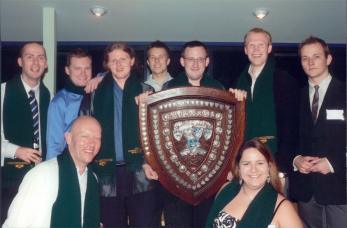
The 2006 University Sports awards. In 2006 Vic won the University Games. Photo taken with the University Shield, October 2006.

The biggest challenge I faced however was internally. The executive were quite young and generally inexperienced, even by student association standards. Further the internal issues of the association really came to the fore that year. The Student Association levy had remained at the same level for nearly 2 decades. In that time Victoria University had expanded from 1 campus to 4. Further the Students’ Association had increased the welfare and advocacy services it provided to students, as user pays had meant there was greater need than in the past.

In addition to this the students’ associations budget setting process was inadequate. A zero budget system had been established a few years earlier, whereby elected representatives would built the whole budget from scratch each year. Nice idea, but when 2/3 of the cost were fixed and when the exec turnover was high this meant budgets often weren’t set in a timely manner meaning control of spending was a challenge.


In September 2006 I launched a financial review of the students’ association. As part of this I got a motion through a general meeting (on the 2nd attempt) to increase the membership levy, and for it to be inflation adjusted from then on after. I also got in a auditing firm to do a financial review of the organisation. Thirdly I started the process of having a proper management structure within the association – something that wasn’t completed until 2009. Up till then the Student President had been the employer, the financial leader and general manager of the Students’s Association. They also had to represent 20,000 students and be the student rep on the University Council. Looking back I didn’t do too badly given I was 23. But the reality was it was too much, and the association needed proper management.

2006 wasn’t an easy year, and I had been forced to make some difficult decisions. The longstanding tension between myself and Labour and its activists continued to be an issue. This came to a head at the end of 2006 when I ran for re-election as Vic Labour ran a candidate against me, and won. I felt I had done my best, and believed what Labour did was align with the right to score a political point. Maybe they did? But the reality was I lost that election.

Losing an election hurt. And it did knock me for awhile. But in time I came to accept the result. One of the things I do look back on with pride is that after losing I kept working really hard till the end of the year. While at the time the animosity between myself my successor was fairly high, a few years later we were to become friends and of course both members of the Labour Party. Further I look back at the year that Geoff Hayward had as VUWSA President and saw he faced many difficulties of his own. Geoff also failed to win a second term at the end of 2007, and I suspect like me he grateful of when looking back later.

I loved my time on the student executive. I am proud of what I and the people I served with achieved, and what my successors continue to achieve today. The skills I learnt as a student representative have served me well in the roles that have followed. And I made a number of life long friends from across the political spectrum, including those who at the time I considered adversaries. I didn’t want to leave at the end of 2006. But it was time. And there were new challenges awaiting…


Student Union Building

One of the things that make for strong students’ association is the services they provide. Specifically things like clubs and on campus events throughout the year which contribute to the student culture.

The heart of the student culture is and should be the student union buildings and facilities. These will generally include student bar and cafes, the common room and club spaces, gymnasiums and sports fields and various other social spaces.

Not all these services are necessarily owned by students associations. Quite often the institution and the student association will do joint ventures and share the cost of building and maintaining these services. This is great. However when you do business there is one important thing to remember – sign contracts and keep records.

The Victoria University Student Union Building opened in 1961. Victoria University contributed about a quarter of the costs, the Students’ Association contributed about 1/3, and the rest came from alumni and other community investment. These figures are rough, as records were not kept. Further no deed or agreement about ownership was signed. The assumption at the time was that the students’ association would manage most of the day to day operations, but this was vague and not written down. Before long disagreements started…

By the late 1990s things had really become ugly. With treats of Voluntary Student Membership (VSM) from the government, the university started asserting it should have full control of the student union complex and services. This resulted in the students association losing control of the bar and beer prices soaring, an ugly tug of war between the university as the students’ association over control of clubs and countless other disputes.

When I was elected to the student exec in late 2002, I saw this as one of the key issues facing the students’ association. Most of my colleagues felt the same way. In 2004 VUWSA President Amanda Hill really brought things to the fore during her term by threatening to take legal action against the university. In 2005 there was a change of Vice Chancellor, who started an informal dialogue with VUWSA about trying to find a resolution. In early 2006 a negotiating team of myself as VUWSA President, Dave Guerin (1993 VUWSA President) and Mark Thomas (former exec member and 1996 National Party candidate for Wellington Central ) were on the VUWSA negotiating team. On the university side Jenny Bentley the Campus Facilities Manager and Victoria Healy the university lawyer. These negotiations were very professional and I still believe the compromise we came to has served students well in the years that followed. Personally I learnt a great deal from these negotiations, something that was to become very useful in later life.

The solution was a Deed of Strategic Partnership set up a governance structure between VUWSA and VUW, where the university and the students’ association had two representatives – and a chair agreed by both parties would be appointed.

My President’s column just before we signed the Deed of Strategic partnership summarised things. A week later the deed was signed, and the student magazine reporters enjoyed some free alcohol, but did also see the significance of the deed. I also had a bit to say about this in the 2006 VUWSA Annual Report.

As a result of this the VUWSA and the VUWSA Trust, were able to support the University in its plans to revive the campus facilities. A few years later when I returned to campus to complete my postgraduate degree, I enjoyed a campus with far nicer facilities and better protected from the Wellington southerlies than those we endured a few years earlier.

There were many people involved bringing an end to that 45 year ownership and governance dispute. I was certainly pleased to have played a part in helping bring it to an end.

Walk 7: The Strand and Covent Garden

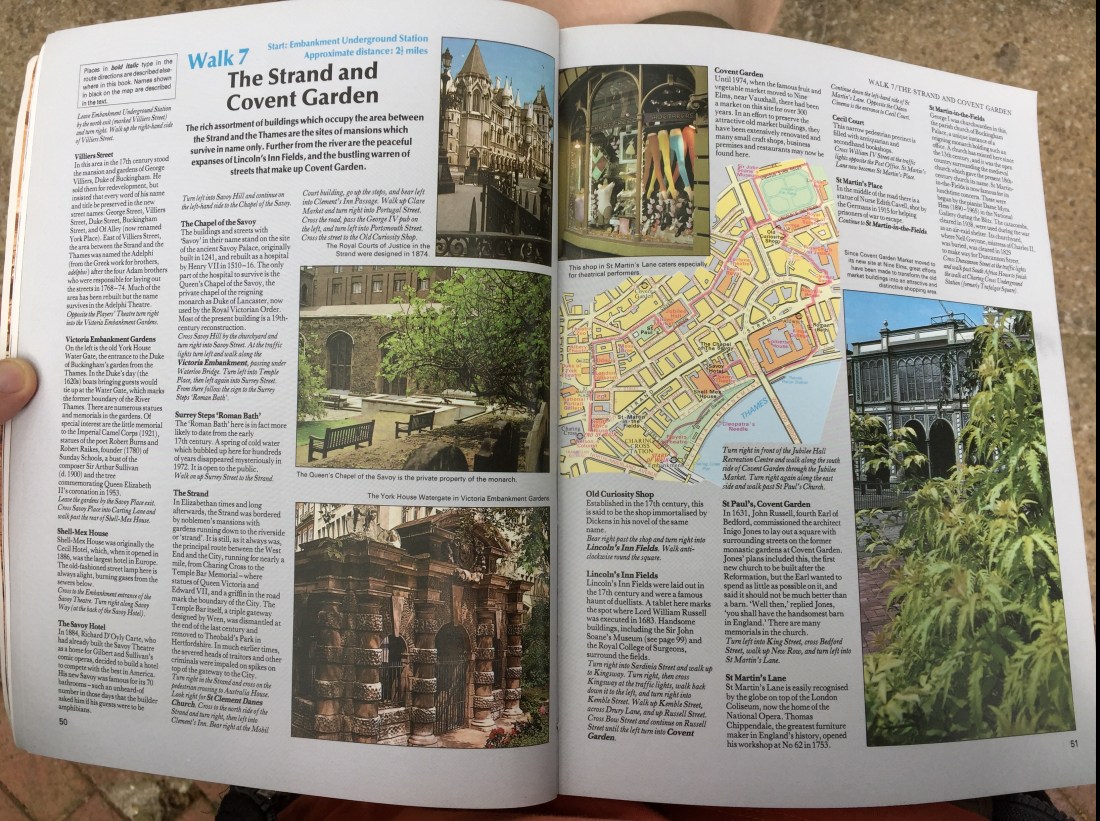
Walk number 7 in the 1980s AA guide book took me to Covent Garden and the Strand. I did this walk on the afternoon of Sunday 13 May, 2018.

1980's AA Guide
The Strand and Covent Garden

The walk commences at Embankment Underground Station. From there I walked up VIlliers Street names after George Villeiers the Duke of Buckingham. From here I turned right into the Victoria Embankment Gardens.

This garden located on the north bank of the Thames is a great place for a stroll on a warm spring afternoon. Full of old statues and well arranged gardens, lots of people come here to sit outside and enjoy the sun (tis a rear thing in London, especially during those winter months.

After a wander through the house the walk took me past the Shell-Mex House. From here we headed past the Savoy Hotel, famous as the home for Gilbert and Sullivan’s comic operas.

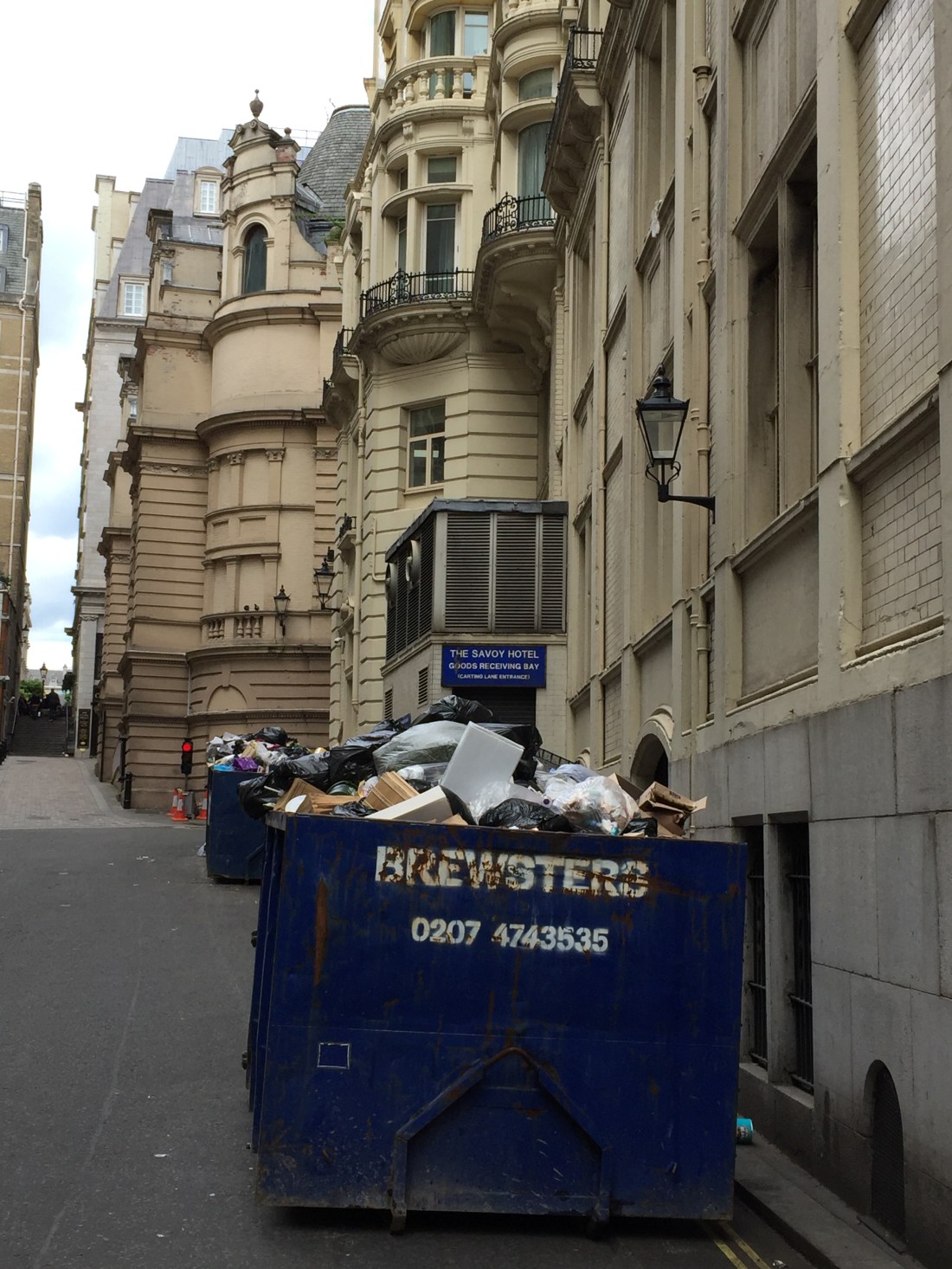
The Savoy Hotel
And its elegant surroundings

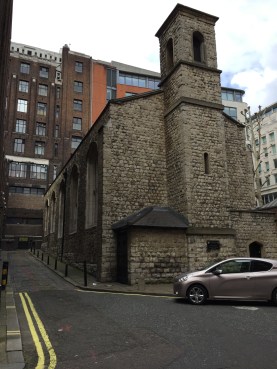
From here the walk took me past the Chapel of Savoy, the site of the ancient Savoy Palace. Rebuilt by Henry VII in 1510-16 as a hospital, now the only part that survives is the Queens Chapel.

IMG_0360
Queens Chapel of the Savoy.

From here I walked up to the Roman Baths, which according to the book more likely date from the early 17th century. Unfortunately they were closed at the time I walked past.

IMG_0361
Roman Bath on Surrey Street. Unfortunately the National Trust locked the gate.

From here the walk took me to The Strand and then past St Clement Dames Church.

IMG_0362
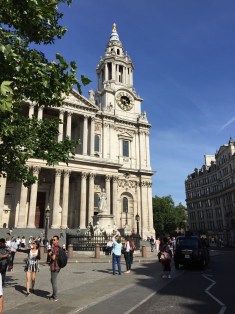
St Clement Danes Church

The next landmark on the walk is the Old Curiosity Shop, immortalised by the Charles Dickens Novel of the same name.

From here I proceeded to Lincoln’s Inn Fields, laid out in the 17th century and according to the guide book a famous haunt for duellists (I saw none during my walk). This is also the spot where Lord William Russell was executed in 1683.

IMG_0365
Lincoln’s Inn Fields

After this the walk took me to Covent Garden. According to the 80s guide book, until 1974 this had been a famous fruit and vegetable market for over 300 years. The book talked about how the old buildings had been renovated and were then filled with craft shops and restaurants. In 2018 it is one of the main tourist craft markets and restaurant areas in London.

After stopping for a coffee and a bite to eat, I headed down St Martin’s Lane. This took my past the National Opera and the London Coliseum with the globe on top.

IMG_0369
London Coliseum with the globe on top

The walk then took me down St Martins Lane and past the famous St Martins in the Fields opposite Trafalgar Square. St Martins is now no longer near any fields, but when first build in the 13th century it was in open country surrounds.

The walk then took me to Charring Cross, and this is where walk 7 ended.

IMG_0370
Above: statue for Nurse Edith Cavell in St Martin’s Place. Cavell in during the First World War for helping prisoners of war escape. Bottom right: a child attempting planking.


Blogs and the political establishment

Being in the thick of student politics in the mid 2000s, I was around just at the very beginning of social media. From about 2003-2004 onwards, the big trend was the emergency of blogs. Ironically I wasn’t a great fan of them as my Presidents Column in Salient of 7/8/2006 outlined.

On reflection my distain wasn’t in fact for blogs. My weekly presidents’ column was published online in a blog format, thus I was using the medium to attack the medium. My distain came from operating in Wellington, New Zealand’s capital city, where the political establishment operated in an isolated bubble. In student politics, I loved being in a position where I could be a voice for change or do good. What I despised was the irrelevant gossip and manoeuvring that inevitably follows when you are near the seat of power, ie parliament.

It wasn’t that I had a particular thin skin. Having had the record for being called a c%#t in the Salient’s letters to the editor one year, to then go on and get re-elected to the executive showed me that the (usually unanimous) comments from random dickheads mattered little. What annoyed me was the time wasted when others indulged them, or made random attention seeking idiots feature writers or gave them some other platform. If this were just student politics then fine. But I could tell then and still see today, that much of the political debate in Wellington supposedly at a national political level is little more than the gossip and nonsense of a club. This sadly, sums up much of the political journalism, social media and blogging from Wellington.

This is by no means unique to Wellington. I very clearly see similar such bubbles exist in London, Canberra, Washington, Paris, Ottawa and in most capital cities in democracies. And worse, people know this. They’ve known for years that politics is an elite club.

One of the reasons that the people in these clubs are still struggling to understand Trump, Brexit or even the relative rise of Corbyn and Bernie Saunders is that many people outside the bubble are sick of the bubble. In fact there are people who are quite happy to vote for extremes on either side of politics, just to wipe the smug look off people the smug establishment.

The fact is people who don’t live in the world of the political chit chat, or endlessly read the inane political blogs like this one may view the world differently. The world views of people outside the bubble are not only valid, they actually are often more informed than those in it. People in the bubble to will claim to know what is happening “on the ground.” Yet something like Brexit or the Trump election hits, and those in the bubble are shocked.

My experience during my student politics years was to be labelled mad, looney, extremist, idealistic and unrealistic. Many of those positions I took at the time such as free tertiary education are now government policy in New Zealand. Democracies work well when voters are given a genuine choices and can be part of serious debates about the future of our society. When this reverts to name calling and pettiness by those who would rather protect their position in the club, this undermines democracy.

VUWSA Campaigns

In 2003 and 2004 I was the Campaign’s Officer at the Victoria University Students’ Association. The big campaigns over those two years were student fees, and in 2003 the US led invasion of Iraq.

However I ran and was involved in a number of other campaigns over the two years I held the campaigns role. I remained active in student campaigns in the two years following when I was Welfare Vice President (2005) and Students’ Association President (2006).

In 2003 we reestablished the Student Representative Council meetings. These had earlier been abolished in 1989. These were essentially lunch time forums where students could debate and vote on issues. From 2003 onwards we were to debate and vote on issues ranging from homelessness, GE foods, taxation, employment rights, recycling, legalising marijuana and my favourite naming a toilet bowl after a politician hated by many students.

We ran campaigns on a number of these issues. I was regularly leaflet dropping lecture halls or doing poster runs around the campuses for upcoming events. At the same time I was spending many evenings and weekends selling lefty magazines or other radical activism. It was fun, but looking back I could have taken a bit more time out to go to party’s or enjoy student life (not that I didn’t engage in quite a bit of that as well). My marks in the years 2003 to 2005 probably suffered from almost never attending class. Remarkably I still passing everything I enrolled in. During one campaign I had a history assignment due, the result was I submitted a History book review for a book I’d never read and passed with a B (and they say academic standards have slipped).

In 2004 the right on campus organised and pulled a bunch of members to an SRC meeting. This was to highlight how easy it was for a small group to get numbers and pass a bunch of resolutions. Members of the National and Act party managed to pass motions supporting users pays education, tax cuts and a particularly amusing motion in support of capitalism as “making money will help you pay off your student debt.” Most of the motions passed were later repealed (of course). On the day many of the progressive students tried to call a quorum count to stop the meeting – I very strongly opposed this and insisted that the meeting proceed and that the right be given free speech and democracy. Later members of the young National Party bought me beer at the student bar for this stance (from memory I declined the beer and my mate grabbed it).

This highlighted the weakness of weekly meetings. They were great for creating debates and in conjunction with stalls could create a carnival atmosphere (when it wasn’t a freezing southerly). But it became clear that better measures were needing for enhancing democracy. In 1997-98 VUWSA had trialled lecture meetings, whereby elected class representatives polled students on issues quickly before class. In 2006 we trailed this again, successfully getting a few thousand students to opposing raising international student fees that year.

Album 2 scans (115)
2004 VUWSA President looking nervous during the 2004 Destiny Church counter rally.

A couple of campaigns that really made an impact during my time on the student exec were prostitution law reform and the civil union bill. The former legislation change was supported by the women’s group on campus and a number of students signed petitions and made submissions to parliament in support of the change. The Civil Union bill in 2004 became quite a big campaign in New Zealand, after the conservative Destiny Church organised various rallies against the country. In August 2004 a few thousand Destiny Church members came to Wellington to protest against same sex couples having rights. The queer community, students and social justice activists united to organise a counter rally, called ‘Love does not discriminate.’ We organised a number of other events throughout that year before the bill was successfully passed. 8 years later the NZ parliament legalised same sex marriage, by then opposition to this change had greatly diminished.

These were great campaigns to be apart of, and at the time I really felt like I was doing what I loved. I still look back with pride at what campaigns like ‘love does not discriminate’ achieved. However the key thing I learnt during this time is not to be a hyper activist, and the importance of winning wider public support and bringing people along with you. Its easy when you are passionate about something to throw lots of energy into campaigns or causes. But you can substitute yourself for a mass movement, and building those takes time. Its also important to listen to opposing views, and even be prepared to change your mind.

Startlet in Parliament
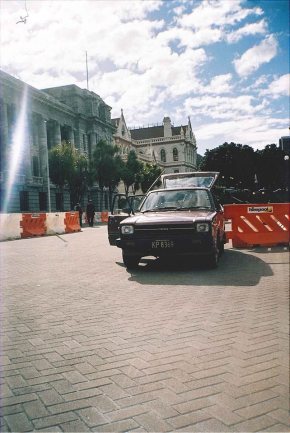
My car The Mighty Starlet, was a regular attendee at protests in Wellington while I was Campaigns Officer. Usually carrying people and gear. This photo taken in Parliament Grounds in Wellington 2004.

Ali Jameel’s – Pocket Squares

Following on from my blog about the Iraq War, thought I’d share a post from someone who has far greater insight into the conflict than I. My friend Ali Jameel recently posted on his blog a post called Pocket Squares. I have reposted this below:

Pocket Squares

On the 6th of August 1990, following the Iraqi invasion of its neighbor Kuwait, the United Nations Security Council imposed sanctions against Iraq’s old regime which was close to a total financial and trade ban. This lasted for 13 years. The aim of the sanctions was to force Iraq to withdraw from its neighbor, compensate for everything, and get rid of any weapons of mass destruction. The sanctions were elaborated at the end of the war in 1991 and included the ban of trade.

Obviously, this sanction only affected civilians and when I say ONLY I mean who else would be affected by any sort of punishment? The old regime? They were living the same, maybe even better. The people who were supporting them? Of course not. Only the normal population had their life destroyed and dreams crushed. People can argue over the politics and motivations of sanctions but in the end it killed thousands of people who had nothing to do with the old politics and they didn’t even support old regime but ended up used as hostages.

War can take dreams away from a nation, a small family starting new life, young people planning for their future, from someone who wants to be an artist or dancer; but, there is always that small hope that can make a huge difference deep inside.

This post’s story is about what I collected when I was teenager. Every one of us used collect something when growing up. I knew people collected toys cars, some collected stones and I collected two things: Toto surprise eggs and napkins.

Growing up, napkins weren’t something we would get and use on an everyday bases, let alone throw away. My family – my grandmother, aunt, and mother – used to cut old clothes to use them as napkins. I had a proper fabric one which I remember I got for the first day of Eid. For some reason I started to collect napkins. I remember I had a fancy one that was red on the edges with flowers in the middle. When we would go visiting our relatives and when they had napkins I would take one and put it in my pocket without using it.

I still have that habit, whenever I see a nice unique one in a restaurant or at a friend’s place… Actually, the other day I was with my friends having a BBQ in the sunshine and my friend brought these yellow napkins. My first reaction was; “are we going to use these?” He looked at me and said; of course, that’s what it’s for, which triggered me to tell him them the story which inspired me to write this post.

Now, I have started collecting pocket squares made of fancy materials like silk. I will wear pocket squares with everything. With smart jackets, casual jackets; when I wear a shirt I will just wrap it around my neck or tie it on my wrist.

I think during conflict, we look for these small little things, sometimes  not even made from fabric, but paper, that can make you feel safe and give you hope that life is still safe and you forget about all the dark clouds that are covering your dreams. My dreams led me from paper napkins to silk pocket squares. Maybe others went from toy cars to real ones. At the end of the day war cannot stop what we are passionate about.

Next time when you see a unique napkin or pocket square that you think tells a story, think about me and take it, keep it until you see me to give it to me or just go to your closest post office and post it to me.

8 pm4 pm92 pm7

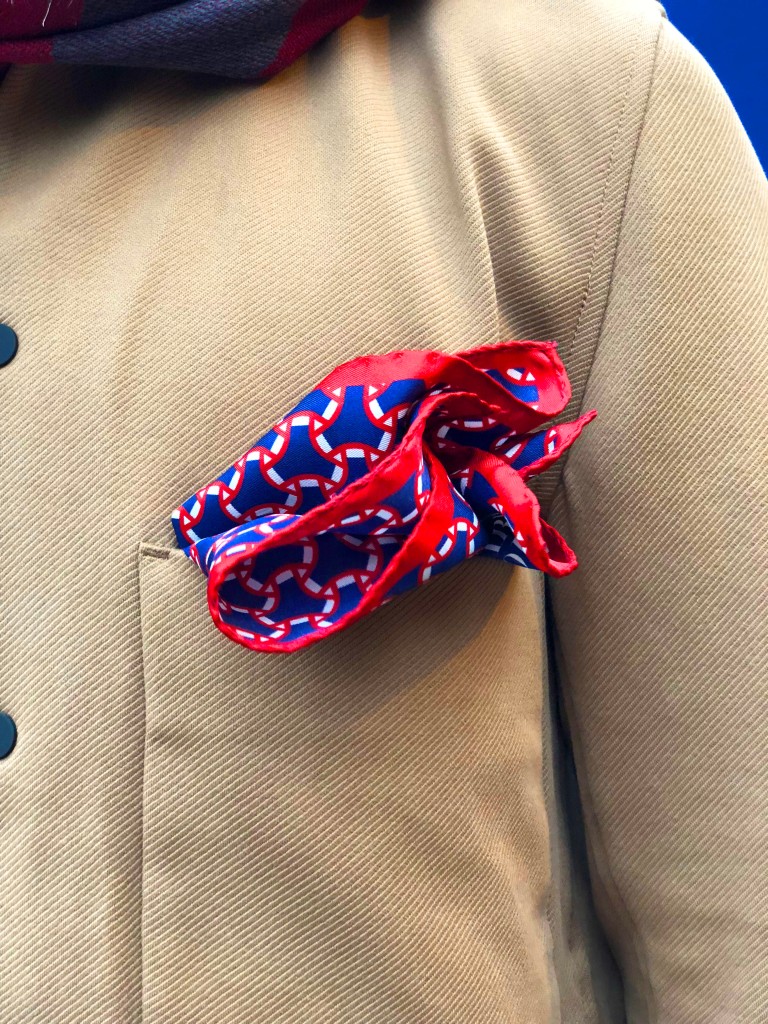
Pocket Squares – Fariba Soltani – https://www.faribasoltani.com; Jacket – COS; Trousers – Zara


Walk 6 Soho

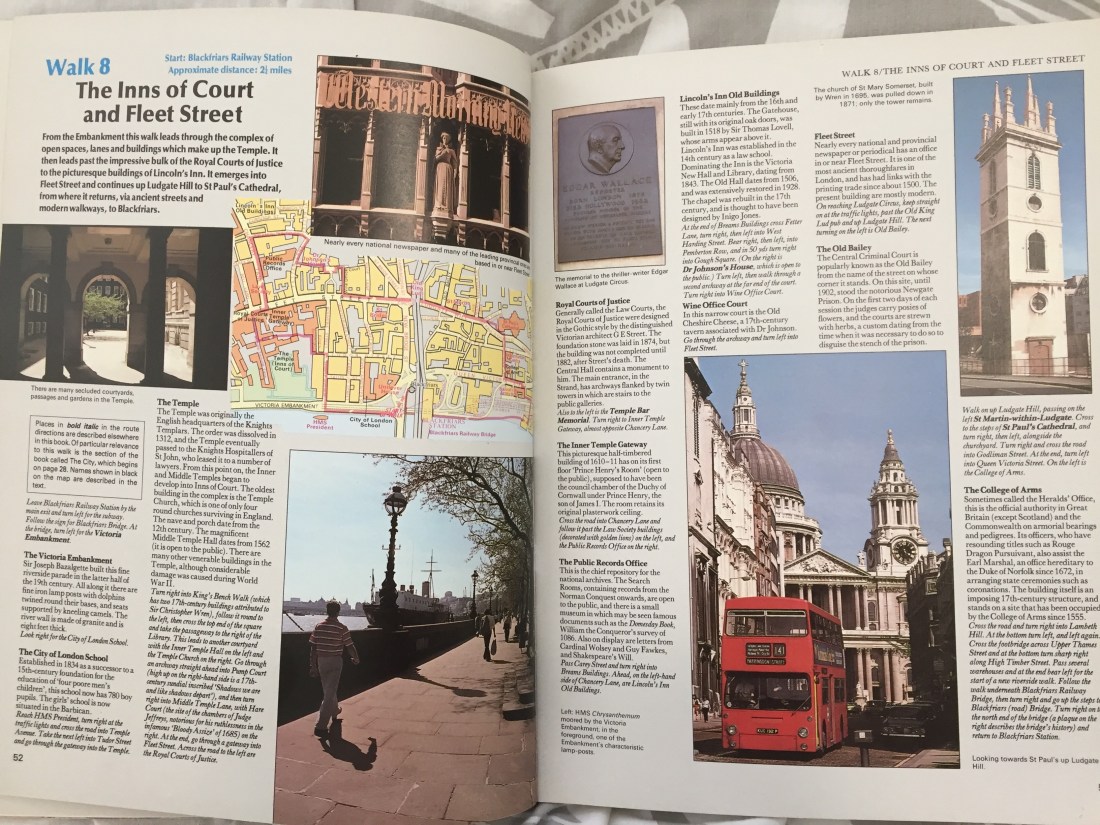
This 6th walk from my 1980’s guidebook is around a neighbourhood the book claims “suffers from its reputation for shadiness.” Soho. I did this walk on Saturday 5 May 2018.

IMG_0302
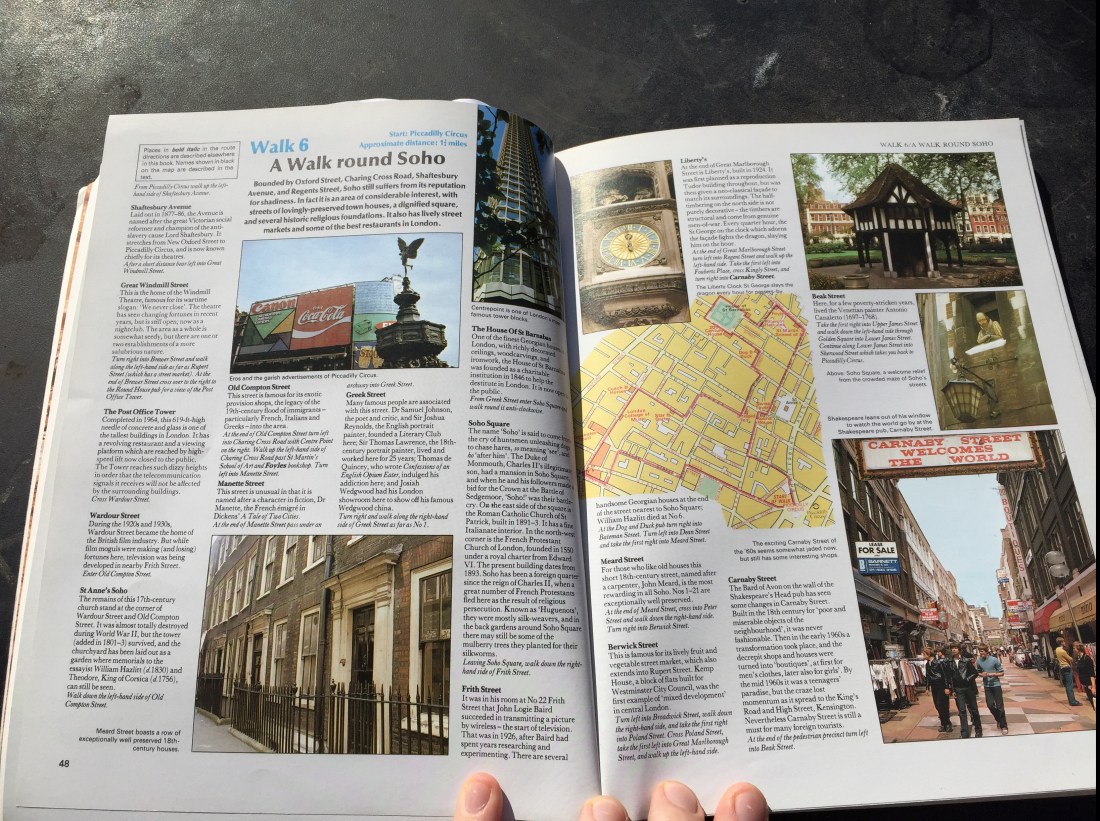
Outline of walk 6 in the 1980’s AA guidebook

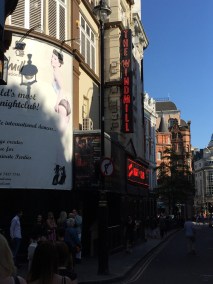
The walk commenced at Piccadilly Circus and continued up Shaftsbury Avenue, names after the anti slavery champion and Victorian reformer Lord Shaftesbury. Then the book took me to Great Windmill Street

IMG_0303
The Windmill theatre famous for its wartime slogan “we never close.”

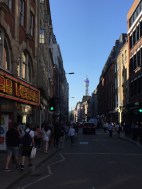
According to the book this had become a nightclub by the 1980s. In 2018 this appears to still be the case. The tour then took me to Brewer street for a view of ‘The Post Office Tower.’ Thirty years later this is now the BT tower, built in 1964 it was in the 1980s one of the tallest buildings in London and had a revolving restaurant at the top. In 2018 there are many other buildings in London that rival this tower for height. The revolving restaurant closed in the 1980s, presumably just after the book was published. Now for meals with a view you go to the Gherkin, The ShardThe Walkie Talkie Building or countless other roof top bars and restaurants.

IMG_0304
Post of Post Office (now BT) Tower

From here the walk took me to St Anne’s, a 17th Century Church almost completely destroyed during the Blitz in World War 2. The remains including the tower built 1801-03 still remain.


From here the walk took me down Old Compton Street, Manette Street and Greek Street (where Piko Consulting UK is registered).


From here I walked past The House of St Barnabas, Georgian house and home of the charitable institution formed in 1846 to help the destitute in London.


From here the walk continued onto the iconic Soho Square. The name Soho is said to come from the cry of huntsmen unleashing dogs to chase hares, so meaning ‘see,’ and ho ‘after him’.

IMG_0309
Soho Square

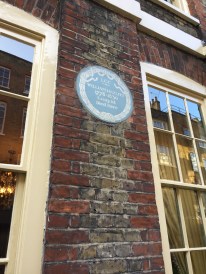
After this I continued down Frith Street, the street where John Baird successfully transmitted a picture by wireless in 1926 – which led to the invention of television. Essayist William Hazlitt died at number 6.
IMG_0312
William Hazlitt died here 1830.

The walking tour then heads down Meard Street and onto Berwick Street.


Then I headed to Liberty in Great Marlborough Street. Built in 1924, the timbers on the north side of the building are from genuine men-of-war.


From here the tour took me to Carnaby Street, famous for boutique fashion houses in the 1960s. By the 1980s the booked seemed to think Carnaby Street was somewhat passé. In 2018, the street still seemed to be a popular place to shop and hangout.


From here the book took me back to Piccadilly Circus where the tour ended.

IMG_0326
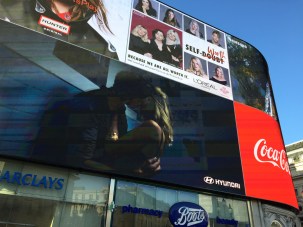
The Bright lights of Soho

Student Fees

One of the big policies the NZ Labour Party took into the 2017 election was to start reintroducing free education. Labour in the UK took a similar policy into their 2017 election, which is thought to have contributed to the “youth quake” which saw young voters turn out and vote for Labour in that election.
In both cases this represented a significant policy U-turn for both Labour Party’s. In New Zealand user pays education really began when Labour Party Education Minister Phil Goff significantly increased fees 1990. The next National Government in 1992 increased the student loan scheme, which charged interest on money students borrowed even while they were studying. In the UK user pays tertiary education was introduced by the Blair Labour government.

In 2003 Labour had just begun its 2nd term in office. In its first term from 1999 to 2002 Labour had promised to cut the cost to students of tertiary education, and subsequently froze fees at their 1999 rate. In 2002 the promise was watered down to “keep education affordable.” What this really meant was, “allow institutions to increase fees by 5% a year.”

Just as the anti war protests were starting to tail off, the government budget announced the fee Maxima scheme allowing institutions to increase fees within the Maxima. This would be our next campaign on campus.

Institutions had been lobbying for the ability to increase fees since the 1999 freeze. Labour had failed to increase funding to tertiary institutions, citing the money they’d wasted on marketing and other waste. It was true that competition between tertiary institutions had caused significant waste. But even were this to stop, governments still needed to increase funding rather than passing increasing costs onto students.

In September 2003 the Victoria University Council attempted to hold a meeting to increase fees. The University Council decided to meet at 8am on a Friday morning thinking no student would be awake on time…wrong! The Education Action Group  I was responsible for as the VUWSA Campaigns Officer managed to successfully disrupted this meeting. Students’ Association hired a marquee and encouraged students to stay overnight (using the slogan ‘if that’s what it takes we’ll stay all night’). The university council tried to meet, but had to cancel due to the noise from students.

ALA083~1
Nick Kelly, Jasmine Freemantle (VUWSA Women’s Rights officer 2002, VUWSA President 2009 and Scott Trainor VUWSA Activities Officer during the October 2003 occupation of the Hunter Council Chamber protesting fee increases at Victoria University

A fortnight later the university attempted to reconvene, this time on a Thursday afternoon and again were unable to proceed. However they moved to another private room and passed the fee increases. As a result a number of us occupied the University Council chamber over night. The next day were decided to leave and regroup. At 3pm the next afternoon, a much bigger crowd of students returned to the Hunter Council Chamber having heard that fees had increased. The response from the University was to call in the police – who sent a number of vans and about 50 officers to remove us. The Vice Chancellor, Stuart McCutcheon who had been targeted by our campaign with charts of ‘sack McCutcheon’ came in surrounded by a number of cops telling us we had 15 minutes to leave, which after some deliberation we did.

10 minutes after leaving a large order of Hell’s Pizza arrived, intended to feed the crowd of occupying students. A number of us ate nothing but pizza for the next week.

The following week was full of protests and actions on campus. The same week Massey also had fee setting resulting in similar protests. At Vic we famously burnt an effigy of the Vice Chancellor, using my fathers 1970s brown suit.

Album 2 scans (29)
At the end of 2003 I ran to re-election as VUWSA Campaigns Officer. As part of my election speech I burnt the Governments Education White Paper. I was re-elected with an increased vote.

The following year, 2004, fee setting protests happened again. The University were far more prepared and had the Hunter Council chamber pretty well locked down prior to the meeting. A year later in 2005 they held the meeting out at a satellite campus out of term time. Despite this we still managed to muster a decent crowd both years. Further the issue of fee increases and student debt remained on the political agenda.

We were able to win a few victories during these years. In 2004 The Massey University Council in Palmerston North voted not to increase student fees, a move described by Education Minister Trevor Mallard as “a bad management decision” (quote from the September 2005 NZUSA Conference at Christchurch College of Education). This no increase result came from a strong campaign to by students in the city, getting support of the local council and community leaders. The following year the government replaced Council members who had voted against the increase, with members who would and did in subsequent years.


In the 2005 election opinion polls were very close. Labour really needed to pull one out of the hat to win a third term. In May 2005 a thousand strong protest march was led by Student President Jeremy Greenbrook supported by myself and others demanding the government invest in tertiary education. A few weeks later the government were to respond, announcing in their 2005 manifesto that there would be no interest on student loans not only while students were studying (which had been introduced by Labour in 1999) but for all graduates living in New Zealand. The student and graduate vote probably was one key factor in Labour being elected for a third term.

Album 1 scans (48)
2005 Education Minister Trevor Mallard telling Vic Uni staff and students “there will be more money for education this budget, but not for you.” Weeks later the government announced interest free student loans.

The strange thing about a win is that it can then be hard to get people energised to keep pushing. In 2006, the year I was Student President at Victoria University, and in the 2-3 years following  fee protests smaller and far less vocal. We still continued to make the case for free education as this 2006 feature column demonstrates. And the new VUW Vice Chancellor Pat Walsh didn’t fundamentally disagree. In both 2005 and 2006 Victoria University along with a number of others applied to the Tertiary Education Commission to get an exemption from the 5% fee maxima and wanted increases of up to 10%. These applications were declined.

In Labour’s final term it began increasing eligibility to student allowances. However this would be short lived once the global financial crisis hit and then there was a change of government. National had been clear from the outset that tertiary education was not a priority for funding. True to their word, they invested very little in the sector over the next 9 years. Further they introduced a number of other damaging policies such as removing elected staff and student reps, and introducing Voluntary Student Membership (VSM) in an attempt to weakening the student movement.

Album 2 scans (146)
Me on a New Zealand University Students’ Association (NZUSA) organised march to parliament in January 2004.
Album 1 scans (3)
Veteran Kiwi punk rock legend Chris Knox plays at an education rally at Victoria University, May 2005.

In 2016 Labour announced it would introduce 3 years free tertiary study. As often happened in Labour’s 9 years in opposition from 2008 to 2017, they announced a detailed policy which few people read. The initial media announcement was ok, but the follow through was quite poor. It seemed like this was a fairly decent policy that would never be implemented. However 18 months later, during the election campaign Labour surprised everyone by getting its house in order. New leader, new campaign materials, and amongst other things a clear commitment to free education. And much to many people’s surprise, they won.

User pays was never a good idea. The argument about tertiary education being a private good is pretty unconvincing when there are shortages of a number of qualified graduates. The argument that graduates are paid higher so can pay back the loans may have once been true, but now graduate pay rates are often barely above the living wage. Further Student debt ballooned from 3 billion in 1999 to around 10 billion in 2006 while I was VUWSA President, and kept growing after that. Further, in the economy we are moving into, having a well educated population is essential. Removing barriers to this like crippling student debt is essential.

The Iraq War

I remember when the first Gulf War happened in 1991. Though only young I recall the 5 months from the invasion of Kuwait. The conflict was being talked up, and became inevitable. At the time I didn’t realise Saddan Hussein had been supported and armed by the US up till 1990 during the Iraq/Iran war (I was 8 at the time). It wasn’t till some years later that I understood what had happened to the Kurds after the 1991 conflict, or the crippling sanctions that hurt ordinary people while the regime thrived.


In November 2000 I was studying for my economics exam (which I passed), but became distracted by the US Presidential election. This was the night Al Gore won the most votes but Bush Junior won the electoral college. A later recount in Florida and legal action failed to overturn this result despite later evidence that indeed Al Gore had won the state of Florida and that he, not Bush should have been in the White House.

A Bush presidency made the prospect of an invasion of Iraq inevitable. At least that was the general consensus. The 2001 September 11 attacks had nothing to do with Iraq, yet were used as an excuse. As was highly questionable intelligence which in 2016 was found to be flawed information.

In 2003 I was the Campaigns Officer on the Victoria University of Wellington Students’ Association (VUWSA). In the weeks leading up to university started there were a number of protests in Wellington and throughout the world. I recall one protest on Saturday 15 February 2003. We called a midday rally and had organised a small march against the any attack on Iraq. We expected maybe a couple of hundred people to show up. When over 5000 people arrived at the small park we were meeting at we suddenly faced some logistical issues. I recall vetern activist Jim Delahunty turning to me and saying “this is a good problem to have.”

Anti War protest April 2003
One of the many Anti Iraq War protests held in early 2003 in Wellington

At the first Initial General Meeting of the Students’ Association in 2003 we put the Iraq War on the agenda. It had been some years since students had really taken a position on an international issue like this, so we weren’t sure how it would go. The meeting was one of the best attended General meetings in years, and the venue at max capacity. From memory only 2-3 people voted against the anti war motion.

Peace Action Wellington became the coalition group in Wellington Organising against the war. We held regular protest marches, rallies, occupations and other events throughout 2003.

TV reports on Iraq War Protests in 2003

Notable events during the year were the ANZAC Day protests where I and a number others laid an anti-imperialist wreath, an act which caused no small amount of controversy. Another was when the US Ambassador came to speak on campus, and student activists shut down the event so he was unable to speak. I and other activists then were filmed by local and international TV crews burning US flags (8 years later when I finally travelled to the US I was concerned I may not be let in, I was).

As a socialist activist and friend of mine Dougal McNeill said of the protests later: “mass movements shoot up like a rocket, and fall like a stick.” Out of the anti war movements in Wellington, and internationally a layer of activists were politicised and went on to do other things. But the movement itself, or at least the mass protests didn’t last that long. Though opposition to the Iraq invasion continues to be very widespread.

Album 2 scans (27)
2003 Vic Uni protest against the Iraq War. Crosses were placed on the Hunter lawn to represent those killed in conflict. A letter was sent to the Student Magazine Salient the following week asking why we’d used crosses to represent the dead in predominately Muslim Country – the letter was signed “Cat Stevens”

This is not to say that the 2003 protests against the Iraq Invasion achieved nothing. Bush and Blair were probably never going to change their minds about the invasion. But the strong public opposition helped create the space where the New Zealand (Labour) Government broke with its traditional US, UK  and Australian allies and didn’t send combat troops. Internationally the Iraq war did impact on domestic politics, and continues to today. In the US, Obama’s 2008 election pledge to pull troops out of Iraq almost certainly helped get him elected. 8 years later Trump claimed the Iraq invasion was one of the worse decisions ever made, despite him personally supporting it in 2003.  In the UK, Blair’s legacy never recovered. Today even Labour MP’s sympathetic to the Blair project like Chuka Umunna say the invasion of Iraq was wrong.

The Iraq invasion removed Saddam Hussein, but life for people in Iraq did not improve. The rise of Isis, horrific terror attacks on civilians, extreme poverty and political and economic instability have continued Iraq’s suffering for the last 15 years. Further, this invasion contributed to the wider instability in the Middle East and growing hostility towards the West. The invasion of Iraq was wrong, and has caused long term harm. Bush and Blair’s legacy will forever be tarnished by this act, and deservedly so.

I am proud that I was part of the global opposition to this invasion, and would do so again.


University and Student Politics

For those lucky enough to attend university, the experience is often in their formative years. For me as an 18 year old from Upper Hutt, attending university was both an exciting and slightly daunting prospect. Its no secret that I had struggled through secondary school, and my grades by no means guaranteed me university entrance. But I wanted to go. My parents and most of my extended family had attended. And I had dreams of what I could do as a student political activist. So I studied hard, pushed myself and did my final school exams. On a family holiday, in Thames Coromandal in January 2001, I called the exam hotline and to find out my results.found out how I. When my family asked how I’d done I replied that I only got two C’s (the minimum for university entrance is 3 C’s). After a moments awkward silence I replied “and got three B’s.”

Fast forward 5 years to 2006. I’d been elected President of the Students’ Association, representing 20,000 student at my university as their association leader. I was managing roughly 30 staff, a million dollar budget, sitting on the university governance board and was the public face of the elected student executive.

Somewhere along the way I also gained a university degree.

Album 2 scans (31)
Tim Beaglehole (later University Chancellor) inspects the VUWSA banner held up by Jeremy Greenbrook and I, 2003 student fee protest.

My time as an undergraduate took me from being a long haired pimply teenager with an occasional tendency for cross dressing and a bogan rock obsession, to being a leader, a out the box thinker and a someone who had the courage of his convictions. From being turfed out of the labour party and engaging in more leftist politics, effigy and flag burnings, university registry occupations, mass anti war protests and even a couple of arrests (no charges), they were a colourful few years.

Album 2 scans (1)
2002 Salient Editor Max Rashbrooke and 2003 VUWSA President Catherine Belfield-Haines enjoying a beer at Eastside, the student bar.

But university wasn’t just about being a political activist. I represented students on faculty boards and committees. I was a class representative supporting students having difficulties during their studies. In 2005 I ran the university foodbank, helping a number of students in serious financial need. I also helped organise a number of student orientation events, seeing a number of world class acts perform on campus (possibly even enjoying a beer or two with some of the performers).


Album 2 scans (21)
2003 VUWSA Exec retreat. Having our photo with the Ohakune Carrot

The next few posts in the ‘why’ series of this blog are going to be about my time and university.

Below are some of the reports and items in Salient and other publications during my time at University, specifically while I was on the Students’ Association Executive:

2003: VUW students vote against invasion of Iraq

Student Representative Council (SRC), an explanation

Nick TV Interview: 2004 TV report on University Library Services

Handbook Diary Blurb: Welfare Vice President

President’s Column: Happy New Year

President’s Column: And we’re off

President’s Column: No more fees

Salient reports on ‘The Mighty Starlet’ getting clamped

President’s column: Successes

President’s Column: Interesting Times

Salient report on Student Job Search being kicked out of the student union building

President’s Column: Where did all the protests go?

Salient report on constitutional changes

Salient Report: Student leaders speak for tenancy bill

President’s column: Freedom of press

Salient report on campus redevelopment

President’s Column: Should VUWSA be politically neutral

Salient report on me getting a haircut

President’s Column: Australs and Politics

President’s Column: 123 and a bit…

Media release: students suffer still

Salient Report: University blocked from raising fees by 10%

Salient report: University try by raise fees to 10% again

President’s Column: Survey’s and Blogs

President’s Column: Universal Truths

Fees debate – My view on users pays

Fees debate: Vice Chancellor Pat Walsh defends the university position

President’s Column: VUWSA Budget

Salient report on financial review

Salient report on bar prices

Salient report on student levy increase

President’s Column: The deed is done, nearly.

Salient: What is the right wing?

Salient report on student fees forum

President’s Column: Victories and Uncertainties

Salient report on fee increases

Salient report on executive turnover

President’s Column: I love student politics

Truce between university and VUWSA declared

President’s Column: VUWSA Presidency

Salient Mayoral election survey 2007

Open letter on VUWSA change proposal

Salient report on my (very brief) trespass from the university.

2005 VUWSA Annual Report

2006 VUWSA Annual Report

2012 VUWSA AGM minutes