Labour’s House of Lords Reform – good, but kicking out 80 year olds is age discrimination.

For the last four years I have worked in the House of Lords. I admit that initially I was sceptical as to the value of an unelected chamber, especially one which still included hereditary peers.

My views have changed since. No, not out of self interest (the Lords is not my primary source of income), but through seeing up close the value add having of having a second chamber with people who are subject matter experts scrutinising legislation. Many Lords are not partisan, and those that are quite often speak independently from their party on policy matters they are experts in. The Committee Reports are of a considerably higher standard than that of the Commons, or indeed of most UK think tanks.

This being said, I do believe the House of Lords is in serious need of reform. Just over a year ago I posted my view on the Gordon Brown report on constitutional reform. While I agree with his recommendations for greater devolution in to regions in England, and strengthening the powers of governments in Wales, Scotland and Northern Ireland, I disagreed with his recommendations for the Lords.

Firstly, he proposes changes to the Lords, but recommended no changes to the Commons. Replacing antiquated and unrepresentative First Past the Post Electoral System with Mix-Member Proportional (as used in Germany and New Zealand) would do far more to improve politics in Westminster than any changes to the Lords.

Secondly, his proposal to create an elected chamber representative of the nations and regions of the UK could just create another House of Commons. Alternatively, it might give disproportionate power to smaller nations as a way of heading off independence campaigns. Neither of these options would in themselves improve Westminster functions.

Labour’s election manifesto commitments regarding Lords reform are overall quite sound. In 2024, hereditary Lords is indefensible. While some of the hereditary Peers make decent contributions in the Lords, as a point of principle hereditary titles must cease.

Labour have also committed to reviewing the appointments process in response to the current Government stacking it with supporters who should never have been admitted. There are too many members of the Lords, which is something a more robust appointment process can help address.

Where Labour’s proposal has gone seriously wrong is to force members of the Lords to retire at the age of 80. The last act of the previous Labour Government was to pass the Equalities Act 2010 which outlawed age discrimination at work. This law change is something Labour can be truly proud of as is seriously tackled ageism in the workplace. It is disappointing then, that Labour would force peers to retire at 80.

Many Lords over the age of 80 make important contributions, are articulate, work hard and should not be removed due to the number of birthdays they’ve had. An example is Sally Greengross, who I mentioned in my recent Newsroom article. She delayed Chemotherapy so she could put forward amendments to the Domestic Abuse Act supporting older victim survivors of abuse. Labour Peer Lord Alf Dubs, is in his 90s and is a tireless campaigner for the rights of refugees and migrants. Dubs himself came to the UK as a Jewish refugee as a child during the Second World War. Are Labour really going to kick out people like Alf Dubs?

I would hope, a pragmatic solution can be found whereby those who remain active and want to stay members of the Lords can do so.

Life peerages is something that needs reviewing, especially for those who rarely contribute in the Lords. But discriminating against someone based on the number of birthdays they’ve had is not the way to do this.

Do the EU elections matter in Britain?

Last weekend the EU elections saw a significant increase in support for the populist/alt-right in European elections.

I deliberately avoid using the term far-right. It would be too simplistic and inaccurate to paint a picture of Europe re-living the 1930s and entering fascism. It is not.

The actual result was that across the EU bloc, the centre-right maintained control. But in Germany, France, Belgium, Italy, Austria and various other countries the populist right increased their share of the vote. They are not a majority but a significant bloc in the European Parliament. A bloc that could destabilise the EU.

This is significant for two reasons.

One, these ‘populists’ do not agree on very much. They disagree on the issue of supporting Ukraine or on whether to reform or break up the EU.

Two, the rise in support for the populist right in the EU elections, collates with their increased support for these parties at national polls. The last three European countries I visited (Italy, Netherlands, and Portugal) all elected governments with alt-right parties playing significant roles shortly after I visited. I was gaining a complex but remembered that I had never been to Hungary and it’s been years since I visited Austria, both nations where the populist right won at the ballot box.

Why did Macron dissolve parliament and call an election for the end of the month? Possibly he is banking on tactical voting against Le Pen’s National Rally Party in the second round of voting. A high-risk strategy, and one where Macron’s centrist Renaissance Party risk being wiped out.

Why do we not see a similar right of the populist alt-left? Green Parties did make some gains in Europe last week, but to say the green movement is populist left is inaccurate. Some sections of it are, but much of the green movement in Europe, as in other democracies is mainstream and often part of the political establishment. Green politics are mainstream and as such get tarred with the same brush as other mainstream parties. Moreover, they are often the target of alt-right politician’s wrath.

Given the UK is no longer in the EU, will these results impact the coming UK election?

One recent poll had Nigel Farage’s Reform party level pegging with the Conservatives at 18%. The same rejection of mainstream politics and a desire for governments to be stronger on immigration has fuelled support for these parties in Europe, is also helping the Reform Party in the UK. Farage, who played a leading role in campaigning for Britain to leave the EU is now openly trying to replace the Conservative Party as the main right-of-centre party in UK politics. If this sounds far-fetched, it is what the alt-right has already achieved in France, Italy, Portugal and various other European nations in recent years.

While not being talked about much on the campaign trail, Labour if elected will seek to renegotiate the deal with Europe. The UK will not rejoin the single market, in the short term at least, but closer alignment is on the cards. Under the current EU leadership, this will be challenging, but not possible. The growing populist-right bloc does make things more unpredictable.

The right of the political spectrum is going through a significant transformation. The European elections are the latest example of populism gaining at the expense of the old mainstream parties. While Labour is likely to win the 2024 UK election, polls suggest the rise in the populist right is a European trend Britain is following.

Underrepresented London

On Thursday 02 May 2024 Londoners will vote in the Greater London Authority (GLA) and London Mayoral Elections. This important election will set the direction for this major conurbation in the South-East of England. This city has been politically and economically dominant over the rest of the British Isles for much of the last 2,000 years, but it would be fair to say the capital has had a rocky few years.

In this year’s mayoral election, the choice is between the incumbent Labour Mayor Sadiq Khan, and Trump-supporting Conservative Susan Hall. Unlike previous GLA elections, this election will use the First Past the Post electoral system due to Conservative Government changes to the electoral laws. Voters will also be required to bring ID, a move no doubt designed to suppress voter turnout by non-Tory voters.

The significance of London to the UK economically

The London Metropolitan area generates around 1/3 of the UK’s GDP. For those living outside of London, there is considerable resentment that politicians and bankers hoard wealth in the city and do not share this wealth with the rest of the country. The counter-argument to this is that when London generates 1/3 of the UK’s GDP it must receive proper investment.

The London economy is often viewed as quite separate from the rest of the UK. Certainly, when the UK was a member of the EU, the connection between London and other European cities was stronger than that with regional cities like Sheffield or Liverpool – though there are clearly strong links between these cities and London.

Other parts of the UK, such as the north of England will complain about lack of investment and jobs in their region. This becomes a self-fulfilling prophecy when all the money and jobs are in London – this is more likely to be where new businesses and employment are created. On the other hand, does all GDP generated in London stay in London? Or does quite a bit of it get used to support different parts of the UK?

While there can be no doubt that there is considerable money and wealth in London, there is also deprivation and poverty. While London might generate 1/3 of the UK’s GDP, its residents are not all reaping the rewards of this wealth.

London Politics

The population of Greater London in 2019 was around 8.9 million, or around 12.5% of the total UK population. It is by far the most culturally diverse city in the UK. It also is one of the most cosmopolitan cities in Europe.

There is a general feeling of frustration in London. This frustration is directed at the Mayor, GLA, and the government in Westminster. In my earlier blog post on the Uxbridge by-election in mid-2023 I discussed some of the challenges London faces with the introduction of the Ultra Low Emissions Zone (ULEZ), where to ensure the capital has clean air people were being charged for driving older polluting vehicles in the city. That this has been introduced during the worst cost of living crisis in decades has made things very difficult for people who rely on cars to get to work, particularly in the outer suburbs of London. It is worth noting that 46% of London households have no vehicle, and this rate is even higher for those living in zones 1-3 where public transport is more reliable.

But the frustrations go beyond ULEZ. London is a city that voted overwhelmingly ‘Remain’ in 2016, whereas England as a whole the UK nation most supportive of leaving the European Union. In a city with considerable links to Europe, and where the banking sector is a major part of London’s economy, the anger and frustration at the Brexit result continue to simmer eight years after the referendum.

There has been valid criticism in the past that power is too centrally located in and around Whitehall, thus by default political decisions tended to favour London. There is certainly some evidence that this has occurred, at least historically. However, there is also evidence that Londoners often do not benefit and at times are forgotten by policy-makers.

While most MPs and civil servants would spend a significant portion of their week in London, only 73 of the 650 MPs in the House of Commons represent London Constituencies. Labour tends to dominate politics in London. Labour or centre-left candidates have won four of the six London Mayoral elections since 2000. At the 2019 election, while there was a national swing to the Conservative Party, Labour elected 46 Labour 20 Conservative MPs. Labour controls 23 of the 30 Borough Councils in London.

By contrast, the Conservative Party has historically dominated politics in England. And with 80% of the UK’s population living in England, and by winning there, the Conservatives have dominated Westminister and British Politics. UK politics is often dominated by Tory Shires and rural areas and towns in the south of England. The Brexit result in 2016 illustrated that having a London-dominated campaign will likely cause a backlash from voters in other parts of England.

It is not just through Party allegiance or issues like EU membership London is out of step with the rest of England. The fact is that London is perceived as wealthy and affluent. Other parts of the UK have struggled, especially ex-coal mining areas in Wales and the North of England. In these areas where public transport and other key infrastructure is poor, there is little patience for the Government investment in London.

Though not is all that it seems with regards to London. The Levelling-Up agenda has been sold as a programme to invest in these left-behind communities which desperately need infrastructure, industry and jobs. Yet many do not realise, that a not insignificant amount of Levelling-Up funding has also been spent on deprived parts of Greater London.

The high price of living in London

There is money in London. People who live within the M25 earn more. But, they spend considerably more for the privilege of living in Capital City. Increasingly people are being forced out of the city, with many former East London residents now moving to commuter counties like Essex and Kent. The cost of housing has skyrocketed in the last 20 years, meaning once affordable middle-class properties in Zone 2 and 3 of London are now worth over a million pounds. Properties in my suburb of Deptford are being advertised as starter homes with a price tag of £500k. Given most lenders require a 20% deposit, these properties are out of reach of most people living in the area.

So people end up in the rental market. According to Zoopla, the average monthly rent in London as of April 2024 is £2,121. Council tax, internet, water and energy bills are usually on top of this and have increased significantly in the last two years. The average monthly income after tax is £2,902.50. This means most renters spend well over 2/3 of their income on rent and utility bills, with other costs like train fares and groceries many are left with very little disposable income each month.

The demand for council housing or other genuinely social rent homes (rent that is based on levels of income) is high and this cannot be met by local authorities. People can wait for years for social housing. Worse, the condition of many council estates in many parts of London is bad.

People wanting to start a family are understandably leaving London due to these costs, while others are deciding not to have children due to the expense and pressure of living in the capital. There are likely to be school closures across London in the coming years due to these factors. This in turn will potentially drive more families out of the city.

London is increasingly becoming a city where urban professionals work every hour they can to survive. For the unemployed or those on low incomes, living in this city is nye-on impossible. My own experience of moving to London in 2017 was not easy. Finding decent work in London takes time and the set-up costs of moving to the city were extreme. While for me part of this was moving from New Zealand, for people moving from other parts of the UK to London they face many of these same challenges. It is very easy to get into considerable debt or to face hardships. Yes, moving to London is a choice, but it is the UK’s capital and economic centre so continues to be where many of the work opportunities are.

Infrastructure in London

One of the key narratives around the Levelling-up strategy is that it is to improve infrastructure in parts of England that traditionally have missed out. It is hard to argue that a decent rail network between Manchester and Liverpool should not be a key priority for transport investment.

London has received transport investment with the Cross Rail/Elizabeth line which opened in 2022. Though arguable much of the benefit of this line was for people outside of London in places like Reading who are now connected to the London network.

However, one of the key challenges in London is investing in the existing network. An example of this is the Bakerloo line. The current rolling stock on this line was purchased in 1972 and was due for replacement in 2008. It is now 16 years past its best-before date, and the line is now at risk of critical failure as a result. There are also strong arguments that this line should now be extended from its current final stop in Elephant and Castle, South East through to Hayes via Old Kent Road, Lewisham and Catford. A campaign was recently launched called Back the Bakerloo with the support of Borough Councils throughout Greater London.

The challenge for projects like this is that the Central Government at this time will be reluctant to bankroll major projects in London. They can underwrite any loans for the Greater London Authority, but even here, with the current state of Government finances and debt, this could be challenging.

Devolution of power to the Greater London Authority

One of the big challenges faced by the Greater London Authority is that it only receives a fraction of the tax collected in London. In New York roughly 50% of taxes collected go to the city authority, and in Tokyo over 70%. In London, that figure is under 10%. This is why during the pandemic the London Mayor had to go cap in hand to the Conservative Government (a Government most Londoners did not vote for) and ask them to bail out Transport for London due to the fall in passenger numbers during lockdown. The Government insisted that passenger fares in London increase, something Mayor Sadiq Khan has promised not to do. This was clearly political game-playing and is all too common when it comes to local government finances.

The implementation of ULEZ suffered similar political game-playing. When it was implemented, the London Mayor had asked the government to support a vehicle scrappage scheme just as it had done in the West Midlands where Conservative Mayor Andy Street has held office since 2017. If the Greater London Authority had stronger devolutionary powers and a greater share of London’s tax revenue a much better scrappage scheme could have been introduced.

Of course, the history of London Government and Westminister has been marred in conflict. In 1986 the Thatcher Government famously abolished the Greater London Council in response to the policies of left-wing Mayor Ken Livingston. Most people across the political spectrum would now agree this was a foolish decision and the current Greater London Authority was created by the Blair Government in 2000. However, there remains a power imbalance in favour of Whitehall and the government. The Greater London Authority and Borough Councils in London are not given sufficient powers to serve their local community. This challenge is not dissimilar to that faced by local leaders in other parts of the country. Whereas in Manchester or West Midlands, there is general recognition of the need for greater self-determination, not so for Greater London.

Reasons to be Cheerful

It would be easy to conclude that the picture is fairly gloomy given the challenges facing London. In addition to those mentioned, its Police force the Metropolitan Police has a poor reputation, while knife crime continues to plague London.

But London remains the cultural, political and economic capital of the UK. It does still have many strong leaders who will advocate for the city. Further, the challenges facing London like the housing crisis are becoming harder to ignore.

Sadiq Khan’s re-election pledges include free school meals for all primary school kids in London, building 40,000 new social houses and implementing rent controls. Khan also plans to continue his agenda to tackle air pollution in the city to improve public health and reduce greenhouse emissions in the capital. These are good practical measures to help people living in London.

The report authored by Gordon Brown in late 2022, recommends greater devolution in regions of England. It is highly likely that if Labour are elected to government this year, they will look to implement this part of the Gordon Brown report. This may include greater powers to the GLA.

Should a Conservative Party mayor be elected this week, or at some point in the future, the issue of devolution will not go away. Susan Hall or other City Hall Conservatives will not appreciate being dictated to by the government, especially if Labour are in power. Further, the Levelling-up agenda by the Conservative Government has included commitments to the devolution of power to local authorities. While there may be arguments on the details, both major UK political parties agree in principle that greater devolution is a good thing, including for London.

Greater London will not have an easy time over the next decade. The problems listed above are coming to a head fast and cannot be ignored for long. Things need to change in London, and it is reasonable to assume things will change over the next few years.

The politics of high inflation – can governments do anything?

Britons woke up to the news today that inflation in the UK has hit a 40 year high of 9%. Recent increases to power bills, fuel and groceries have in no small part driven this inflationary pressure and indications are that prices could increase further. The bank of England governor has called for wage restraint fearing that this could drive inflation even higher, though with the cost of living rising so quickly this call will likely fall on deaf ears. The recent losses in local body elections and lacklustre polling for Boris Johnson’s Conservatives is in part due to the rising cost of living. But is this all just a case of bad economic management by the Conservatives?

My usual reference point is comparing and contrasting the UK and New Zealand situations, having lived in both countries. New Zealand’s inflation rate is at a 30-year high hitting 6.9%. A friend in NZ recently asked if I could send petrol over from the UK as the cost had gone up too much over there, the joke soon fell flat when I told them how much a tank of petrol costs here in the UK. In New Zealand, the opposition has been quick to blame the Labour Government in New Zealand for this, at a time when support for the government is falling fast. Having won a record majority in 2020 for their handling of the pandemic, Ardern’s government now faces a backlash over coronavirus restrictions and is taking the blame for current economic challenges. Commentary in the New Zealand media also tends to focus on inflation as a domestic issue, as such much of the commentary is often wide of the mark.

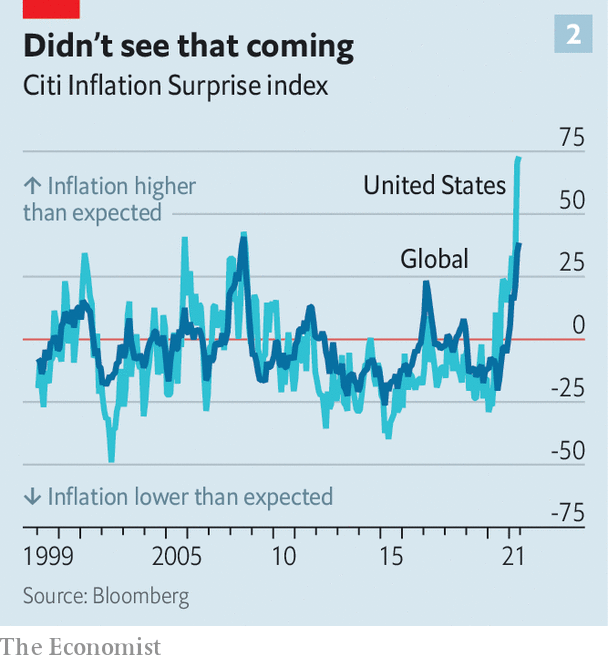
The above Bloomberg graph shows the global inflation rates spiking upwards in 2022

In Australia, the country goes to the polls for their first federal election since the pandemic. Whilst polling numbers are still fairly close there is a real possibility the right of centre Liberal Coalition Government led by Scott Morrison may lose, in no small part due to inflation and the rising cost of living. Whilst there are plenty of good reasons to vote out the Coalition government, not the least their inaction on climate change, like in Britain and New Zealand, is the cost of living increase in Australia really down to the federal government?

In the US, President Biden and the Democrat controlled House and Senate are facing an uphill battle in the November midterms against a Republican Party now very much aligned to Trumpian politics. For the Biden administration there appear to be few options to control inflation in the short term. I have previously blogged about the limitations of the US political system and it is no surprise that many Americans yet again feel frustrated. However, it is clear that this is not a crisis limited to any single nation-state, what we are dealing with is a global inflation problem.

At the start of the pandemic, I wrote a blog post outlining how there would be long lasting economic ramifications of this crisis. This, along with the Russian invasion of Ukraine is driving inflation and causing economic uncertainty. This is particularly challenging for much of Europe where there is a high level of reliance on Russian Oil and Gas and moves to end this reliance will see short term price hikes and energy shortages.

Previously, I have written about the importance of global governance and how our current global governance institutions are not up to the challenges we face in the 21st century. The current crisis illustrates this more than ever. At the current time, we turn to the nation-state and in democratic countries we as voters can hold our leaders to account for what happens, including economic management. In reality, how much can Jacinda Ardern, Boris Johnson, Scott Morrison, Ursula von der Leyen or Joe Biden or any other world leader do? When finance Ministers do the national budget each year, many of the key economic factors are determined by external factors, not by their government’s decisions. Likewise, we can beat up the Bank of England, the Reserve Bank in New Zealand or other central banks for not controlling inflation within the targets they have been set, but they did not cause a global pandemic, invade Ukraine or control many of the key drivers of international inflation at that time.

This is not to let governments off the hook, as they still have the power to mitigate the effect of high inflation. Governments have the power to reduce or remove sales taxes, regulate pricing or support people on low incomes through benefits or policies that help lift wages. On the global stage, finance ministers when they attend the yearly Davos meeting, or leaders who attend the G20 meetings, need to be doing more to develop a global economic strategy that can protect against these sorts of shocks. Further, they need to create global governance institutions that can ensure a stable global economy that delivers for everyone, not just now but into the future. This is what we should be demanding of our governments.

Back in the late 1990s and early 2000s the big push was for globalisation, which in reality was a push for removing tariffs and international market liberalisation. The anti-globalisation movement of the time often took the position that this agenda weakened the nation-state and undermined democracy. The problem, which neither side really understood, is that in a world where we for a long time have depended on international trade but also on the movement of people, relying on national governments to resolve this will inevitably fail. Margaret Thatcher, in the introduction to her memoir The Downing Street Years, claimed the following:

An internationalism which seeks to supersede the nation-state, however, will founder quickly upon the reality that very few people are prepared to make genuine sacrifices for it

Margaret Thatcher, The Downing Street years, page 11

Yes, in terms of consciousness people still hold nationalism and their own country in high regard. But where we increasingly see countries with governments of all different colours struggling to control the cost of living, at some point we must face the fact that an international response is required. People may not believe in current global governance institutions or be “prepared to make genuine sacrifices” for them. But they may do if these institutions were in fact giving people a better quality of life by controlling inflation and the cost of living. At the time of writing, this all seems somewhat academic, with there being little likelihood of an international response, other than some short term cooperation to control the immediate crisis without looking at the underlying long term problems. Yet it is clear that we will continue to face these economic challenges with tools that are ill-equipped to face the problems. Only a truly international response can create an economy that delivers for all.