Mr Bates vs The Post Office

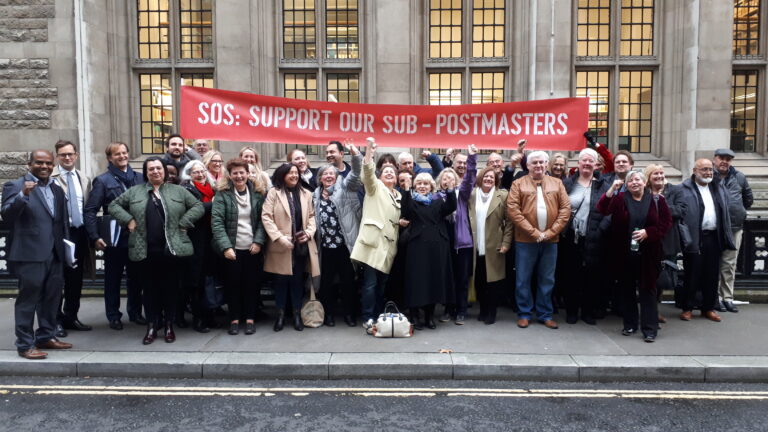
Many question the value of the performing arts and drama. At the start of 2024, the ITV drama Mr Bates vs The Post Office did what journalists, politicians and broader civil society have failed to do over the last 25 years. It raised public awareness of the injustice faced by the postmasters employed by Post Office Limited. Many postmasters, forced to use the Horizon computer system were falsely accused of stealing post office money. In fact, Horizon, built and maintained by Fujitsu, was faulty and produced inaccurate reports.

There is much more to say about the twists and turns of this case, too long for one blog post. It is better to watch the ITV drama to get a decent overview. Needless to say in the 6 and a half years I have lived in London, the Horizon Post Office scandal has featured regularly in the news. While some convictions were eventually overturned, many still await justice. It has taken an ITV drama to force the Government and the Post Office into action.

Three broader issues arise from this case:

  1. Justice delayed is justice denied
  2. The need for greater accountability of big tech companies
  3. The worrying precedent of overturning convictions through legislation

Point one is fairly self-explanatory. Many of the postmaster convictions date back to the early 2000s. Yet many are waiting years to get their day in court to clear their name. This is not unusual. For those impacted by the contaminated blood scandal, where people were given contaminated blood in the 1970s and 1980s, many are still waiting for adequate compensation. Another is the Hillsborough disaster where a football stand collapsed killing 79 people and injuring 766. It took many families 30+ years for compensation for the crime, and in that case, the subsequent police cover-up. Horizon and the contaminated blood scandals were state-initiated corporate crimes, and Hillsborough was a state-facilitated corporate crime. In all three examples, many of those affected have died before receiving a penny of compensation.

On point two, this is a growing problem. In a week where Mark Zuckerburg at a US Senate hearing was forced to apologise to families whose children had been harmed online, the calls for greater regulation of tech companies are growing. Increasingly social media platforms will find themselves regulated. But the big tech companies providing the software organisations like post offices now rely on to function, remain largely unpoliced. This is because by and large, they are the only ones who really understand how their programmes work. We rely on them as the experts, which makes it hard to scrutinise or regulate. When the Horizon produced false reports and Fujitsu said it was the postmasters, the Post Office struggled to prove otherwise (though made little attempt at doing so either). Some were expressing concern about Horizon as early as 1999, yet proving the issues or finding replacement software proved near impossible. Even after the ITV drama, in 2024 the Post Office is still using Horizon, though promise it will be replaced later this year.

The Government’s response to this has been to pass legislation quickly that overturns all convictions related to the Horizon scandal. Given how overloaded the court system is, it would take many more years to hear all the cases. In an election year, this would not be acceptable to voters. But this sets a worrying precedent. Firstly, whilst a great many of those convicted during the Horizon scandal were innocent, in all likelihood were will be some who were not.

On point three, governments overruling the courts is never a good thing. The independence of the judiciary is crucial in a democracy so that the rule of law is not undermined by the government of the day for political gain. This is what makes the UK Government’s latest efforts to overturn the Rwanda ruling through legislation so concerning. It is a slippery slope to what is happening in Hungary under Prime Minister Vicktor Orban where courts will now be directly overseen by the government. Similar policies have been pursued by hard-right governments in Poland and India.

The postmaster legislation is not doing this. It is a well-intentioned action aimed at fixing a longstanding injustice. But it could set a precedent for future governments to overturn other court decisions, and over time undermine the independence of the judiciary. If this happens, the legacy of the postmaster-horizon scandal will be felt for many more years to come.

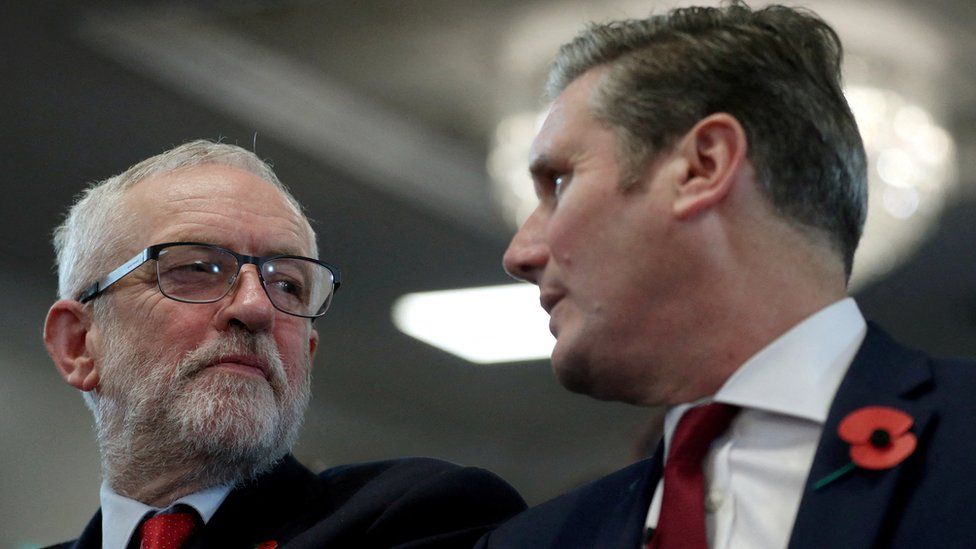
Jeremy Corbyn was not fit to be Prime Minister. But is Starmer?

It is said that there is a thin line between bravery and stupidity. Posting a link to my blog post which said that Jeremy Corbyn was not fit to be Prime Minister, to the ‘Labour London Left’ WhatsApp group. I will leave it to the reader to decide which one that was.

The full quote is below:

The 2017 election proved there was significant support for social democratic policies (eg national care service, public ownership of rail, electricity, water etc, and funding public services properly). But weak leadership on Brexit, failure to respond properly on antisemitism and now his appalling position on the Russian Invasion of Ukraine have shown Corbyn was not fit to be Prime Minister. But nor was Boris Johnson, as the Privileges Committee have confirmed.

https://nickkelly.blog/2023/07/09/decoding-the-doorstep-insights-from-canvassing-uxbridge-and-south-ruislip/

Jeremy Corbyn was and still is not fit to be Prime Minister. I say that as someone who took time off work to actively campaign for Labour in 2019. I also say this as a Labour member who supported the 2017 and (with some criticisms) the 2019 Labour manifesto policies, many of which would not have been there had Corbyn not won the 2015 UK Labour leadership race.

My ‘Why Labour Lost’ series of posts published after UK Labour’s 2019 election defeat (see links below) outlined the many and varied reasons for this result. Not all of it was Corbyn’s fault, nor indeed his faction Momentum. But they made serious errors and at times simply stupid calls.

More recently, Corbyn’s position on the Russian invasion of Ukraine in the last 16 months has shown that he lacks political judgment.

Shortly after the Russian invasion of Ukraine, I wrote the following of leftists who were opposed to giving military aid to help the Ukrainian resistance:

On the left, many are still influenced by the analysis of Lenin during the First World War and just before the 1917 Russian Revolution that in an inter-imperialist conflict socialists should be standing up to their own ruling class. During the First World War, there were strong arguments for working people not to align with the Tsar in Russia or other imperialist leaders in that conflict. It is dangerous to simply apply this idea to the current conflict without understanding that the context is different. There is a strong argument that people should be holding their own government or ‘ruling class’ to account during any situation like this. Ultimately, the decision to invade Ukraine was Russia’s, but there is still a question of what the governments and in particular NATO members could have done to help prevent this and what they can do now. Sadly, some on the left and drawn both bizarre and quite dangerous conclusions based on the premise that their role is to stick it to their own ruling class. Bizarrely, some socialists still mistake Russia to be some sort of socialist/anti-imperialist power, thinking that there is some residue influence of the 1917 revolution.

https://nickkelly.blog/2022/05/03/the-russian-invasion-of-ukraine-an-act-of-aggression/

Corbyn’s position of opposing military intervention and instead trying to negotiate a peaceful settlement is at best naive and at worst giving tacit support to the Russian Government and Vladimir Putin.

Back in 2003 when I was active in opposing the invasion of Iraq, one of our key slogans in Peace Action Wellington was “peace with justice and self-determination”. Any “peace settlement” with Russia right now would involve at the very least, ceding territory taken by Russia in 2014 and probably some of the ground taken in 2022. This ‘peace’ would not involve any justice or self-determination.

What Jeremy Corbyn, the Stop the War coalition and others taking this position are doing is not progressive, left or indeed socialist. It is supporting imperialist expansion. Further, and this should be self-evident, if NATO and Western governments fail to stop the Russian invasion, this will not serve the interests of working people. That this distorted world political view still infects sections of the left is astounding. That Corbyn subscribes to it, frankly discredits him as a serious political operator.

But I can understand why people on the Labour left would not like this assessment. Even more so at a time when various left groups and individuals such as director Ken Loach have been kicked out of Labour.

And there are serious questions about Labour’s current direction. Labour, whilst winning the Selby and Ainsty by-election, narrowly lost the Uxbridge and South Ruislip byelection. Whilst most attribute this to the Labour Mayor of London extending the Ultra Low Emission Zone (ULEZ) to outer London, this was not the only reason. On the doorstep, Starmer’s Labour Party may not have been as polarising, but nor were people excited by it. In fact, many were unclear about what it stood for. Labour improved its percentage of the vote in Uxbridge and South Ruislip significantly, but it still failed to make it across the line. This should be a cautionary tale ahead of next year’s General Election.

In my blog post earlier this year on whether UK Labour can finally win, I argued that the left needs to accept that the 2019 election was a devastating loss, in no small part the result of poor decisions by Corbyn and his team. Equally, his opponents in the party have still failed to seriously reflect on why Corbyn was able to easily beat them both in 2015 and when they tried to remove him in 2016.

The 2017 Manifesto included policies such as renationalising rail and water companies. It opposed austerity and called for decent funding for the NHS, a national care service, a properly-funded national education service and stronger employment law that strengthens collective bargaining. These are mainstream social democratic policies in many other European countries.

Why did it take a member of the hard left Socialist Campaign Group becoming the leader of Labour for it to put forward a mainstream social democratic manifesto, rather than an over-triangulated, incoherent and frankly visionless positions it too often had prior to Corbyn? In a country where life expectancy is stalling, younger people are economically worse off than their parents, where over a million people are waiting for social housing and incomes have been falling for years, there is a real mood for change. Not just a change of government, but of policy. This does not mean a sudden lurch left, but a serious and costed programme that prioritises the needs of the many, not just the few.

In the UK Labour Party, people are divided into binary factional groupings of Corbynistas or Blairites. Loyalty to leaders and personalities over policy is not limited to Labour or UK politics. But it is frustrating nonetheless.

UK Labour is on course to win the next general election, whenever that may be. Its long-term success in government will, as I have argued previously, require the different factions of Labour to work together. The left need to accept that the Corbyn project failed, and move on. The right needs to accept that voices to the left of Third Way centrism have a legitimate and important place both in Labour and in political life.

Below are the links to my ‘Why UK Labour’ lost blog posts:

Why UK Labour Lost? Part 1: Historical Context

Why UK Labour lost? Part 2: UK Labour’s strange loyalty to First Past the Post

Why UK Labour lost? Part 3: Its Brexit Innit

Why UK Labour lost? Part 4: Oooo Jeremy Corbyn

Why UK Labour lost? Part 5: Antisemitism

Why UK Labour lost? Part 6: New Labour and Blairism

Why UK Labour lost? Part 7: Momentum and the Corbynistas

Why UK Labour lost? Part 8: what it takes to win?

Why UK Labour lost? Part 9: What the party needs to do now.

Decoding the Doorstep: Insights from Canvassing Uxbridge and South Ruislip

I spent the last UK General Election canvassing in Uxbridge, trying to unseat the then Prime Minister Boris Johnson. In the 25 years I’ve been politically active, this was the second most depressing canvassing session I had been to.* It was the middle of winter, the weather was awful, and it was obvious the votes were not going Labour’s way.

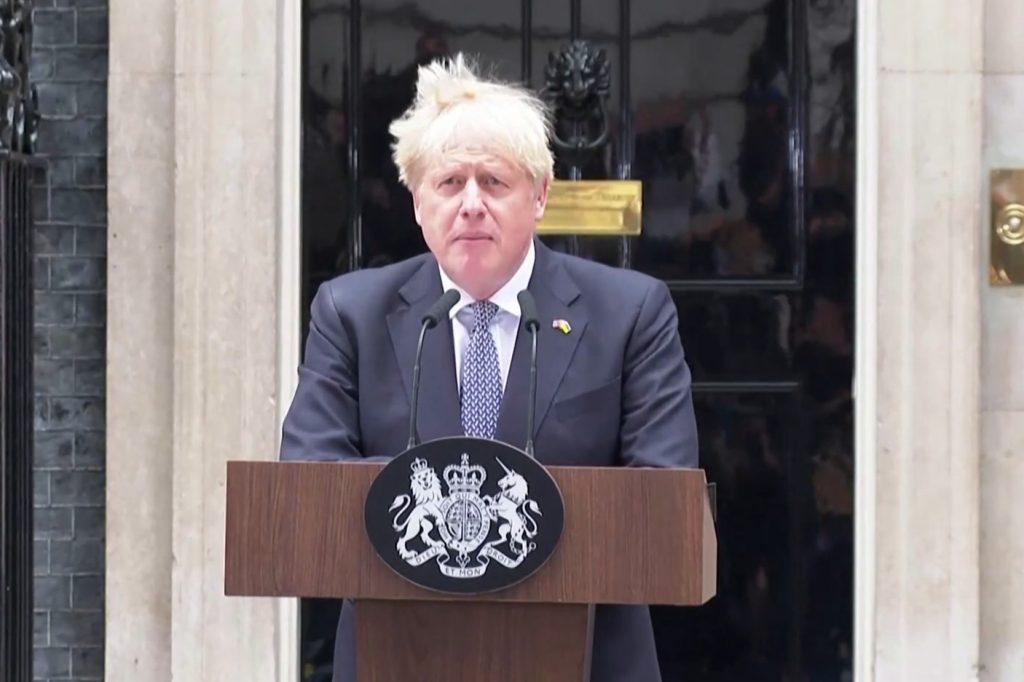
Last weekend I returned to Uxbridge for the first time since December 2019. The not-so-illustrious political career of Boris Johnson has ended in failure and disgrace. Johnson resigned as an MP at the conclusion of the Privileges Committee investigation. The Committee’s report found that Boris Johnson broke the COVID-19 rules, the ones his own government had set, and had misled Parliament when questioned about this.

Had Johnson not resigned, he would have been suspended from the House for 90 days. In the UK, MPs can be recalled by voters when suspended. If 10% of voters in the suspended MP’s constituency sign a recall petition a by-election must take place. Had Boris Johnson not resigned, he almost certainly would have faced a by-election. In these circumstances, he would likely have lost.

So Boris Johnson made one of the few honourable decisions of his life and resigned from parliament (though even then poo poo-ed the privileges committee report and denied fault).

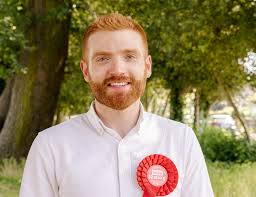
Last weekend I was out in Uxbridge canvassing for Danny Beale, Labour’s candidate in the by-election. Labour last won Uxbridge in 1966, and before that 1945. The Ruislip part of the constituency has never been held by Labour. But the demographics in the area are changing and despite a blip in 2019, overall the Tory vote has been gradually falling in the area for some time.

Above: Labour’s Uxbridge and Ruislip candidate Danny Beale

In politics, much is made of doorstep conversations. It is seen as the ultimate litmus test for how well a party, leader or set of policies are performing. Opponents of Jeremy Corbyn have often claimed that on the doorstep he was not popular. Certainly, my experience in 2019 was that Corbyn and the political project he came to represent was polarising. I found many were supportive of core Labour policy, but did not trust the party or its leadership.

The 2017 election proved there was significant support for social democratic policies (eg national care service, public ownership of rail, electricity, water etc, and funding public services properly). But weak leadership on Brexit, failure to respond properly on antisemitism and now his appalling position on the Russian Invasion of Ukraine have shown Corbyn was not fit to be Prime Minister. But nor was Boris Johnson, as the Privileges Committee have confirmed.

So what is the message on the doorstep now? When you go out you only get a small sample across a dozen or so streets. Much like opinion polling, the ‘mood on the doorstep’ is not an exact science, but gives you a general sense of the mood. Compared to 2019, overall the number saying they will vote for Labour is higher now, but only modestly.

The Conservatives won Uxbridge and South Ruislip by a majority of 7,210 in 2019. The thing that is likely to swing this Constituency to Labour on Thursday 20 July, may not be a huge swing to Labour, but former Tory voters staying at home or protest voting. On the doorstep, the anger from voters was palpable. Not all of this anger was directed at the Conservatives, but I and others had quite a few conservation with people who had previously voted Tory but would not be in the by-election.

The head-wind for Danny Beale is not coming from parliament but from the Greater London Authority (GLA). Labour’s London Mayor Sadiq Khan has decided to expand the Ultra Low Emission Zone out to all boroughs of London. This means owners of older vehicles will now pay a daily charge of £12.50.

London’s air pollution is bad and research by Imperial College London in 2019 found that it contributed 4000 premature deaths a year. Unfortunately, it is London residents who cannot afford electric vehicles who pay the price. In outer London suburbs like Uxbridge and Ruislip, car ownership is higher as public transport is generally not as frequent.

Danny Beale has called for the ULEZ expansion to be delayed, saying the cost of living crisis is the wrong time to implement this. He has also called for a better scrappage scheme to help people replace older vehicles. Unlike in other parts of the country, the Government have not helped Greater London implement a proper scrappage scheme, no doubt to put pressure on Sadiq Khan.

Did this issue come up on the doorstep? The very first door I knocked on this was their key concern. Others also mentioned it, usually in the wider context of the cost of living, and were as critical of the Government as they were of the London Mayor. But it was clear that ULEZ was a barrier to people voting Labour.

From this session and the feedback I’ve got from others who’ve canvassed, Labour can certainly win Uxbridge and Ruislip. But it will be close. The challenge will be for Sadiq Khan in next year’s London Mayoral elections. Decisions such as extending ULEZ, or increasing rail fares have been a result of the Government not supporting London. But many now blame the Mayor and the Labour London Authority Members. The Conservatives believe this will give them an advantage. The message I got on the doorstep was that anger at ULEZ did not automatically equate to voting Tory, especially given their recent track record in government.

There are two other byelections being held on 20 July: Somerton and From, and Selby and Ainsty. There is also the likelihood of a byelection in disgraced MP Chris Pincher’s constituency, and Nadine Dorries’s constituency of Mid Bedfordshire. Polls suggest that in each of these byelections, the Conservatives will struggle. Each has its own dynamic, with the Lib Dems being the serious challenger in Somerton and From, whereas in Selby and Ainsty a Labour victory is now looking likely.

Canvassing Uxbridge and Ruislip, the insight I get from canvassing is that Labour have a real chance, but should not be complacent. Support for the Conservative and Unionist Party is collapsing, but this is turning to cynicism and rage rather than enthusiastic support for a Labour Government next year.

There is a possibility that in 18 months’ time, UK Labour are in Government, but have lost the London Mayoralty. This is not inevitable, but for Sadiq Khan to win a 3rd term as Mayor, he will need to balance lowering emissions and environmental targets with helping Londoners survive the cost of living crisis. This could well turn out to be a tough campaign, which I hope does not give me a new “worst canvassing session.”

*The worst canvassing session I went on was the 2014 New Zealand General election. I was canvassing in the Wellington Ohariu electorate. It was early spring, and the rain was heavy in typical Wellington fashion. It took me hours to dry off. NZ Labour got 25% in that election, its worst result in a century. Labour did fail to win the Ohariu seat that time, though picked it up three years later when Jacinda Ardern won the 2017 election for Labour.

Previous Posts about my involvement with Labour and political campaigns. Plus other relevant posts:

Why the Labour Party

Why the Tories won the UK election

Why Labour Lost? Part 9: What the Party needs to do now?

What the recent elections tell us about British society

Tory Sleaze – sequels are often a disappointment

Can Rishi Sunak save the Conservative Government?

UK Labour – can they finally beat the Tories?

Labour’s Manifesto: Replacing the House of Lords, Devolution and Electoral Reform

The United Kingdom will have a general election at some point before January 2025, most likely in May or June 2024. Work has already begun on manifestos for the next election. With the precarious state of the UK economy, the likelihood of big spending promises is unlikely. Though public services have faced over a decade of austerity and the public is suffering a cost of living crisis, demands on the exchequer will be significant.

Where the next election will potentially be quite interesting and possibly see long-lasting changes is constitutional reform. Britain does not have a written constitution and instead has various written and unwritten arrangements. Recent events in British politics have highlighted the issues with this. In August 2022 Hannah White from Prospect Magazine made the following observation regarding Boris Johnson’s time in office:

The most important lesson that Johnson’s three years as prime minister have taught us is how uniquely vulnerable this type of constitution may be to concerted manipulation by a determined populist leader with a large Commons majority and a calculated agenda.

What Boris Johnson taught us about the UK constitution – Prospect Magazine

There is growing recognition of the need for constitutional and political reform in the UK after the last decade. While the 2011 referendum in the UK saw a general lack of interest in the topic of electoral reform, there has since been increased awareness of how the current system produced distorted results with parliament not being truly representative. This, along with general dissatisfaction with politics creates an opportunity for public debate about the future of democracy and the UK Constitution.

At the time of writing, Labour enjoys a significant lead in opinion polls, though in some polls this is starting to narrow slightly. The next UK election is Labour’s to lose, which given the result of the 2019 election is an incredible turnaround. If elected, it has an opportunity to usher in a new modern era of British democracy improving representation and trust in politics.

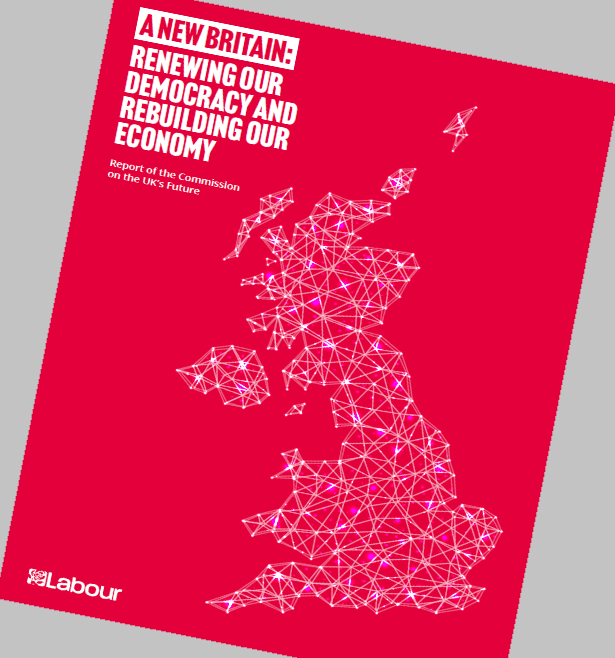
Signs are that the Party is thinking along these lines. In late 2022, the Party published a paper by the Commission on the UK’s Future, chaired by former Prime Minister Gordon Brown. This paper made various recommendations including:

  • Greater devolution of political power in England
  • Enchrenching in a new constitutional framework the Sewel Convention, which protects existing devolution in Scotland, Wales, and Northern Ireland.
  • Abolishing the House of Lords and replacing it with an Assembly of Nations and Regions

This paper is helpful in it starts an important debate about the future of political arrangements. Its strongest arguments are in favour of greater devolution in England, with the report highlighting the fact that the UK government is much more centralised than most others in Europe. It argues that current geographical inequalities in England are largely the result of this centralisation.

The current government’s Levelling-up agenda is also aimed at addressing regional inequalities, and included in its proposed reforms is greater devolution to local authorities. Both with the Conservative Government’s reform package and Labour’s proposals, there is still a lack of detail as to how this devolution will occur. Devolution to local government would require a significant funding boost, as current devolution to local authorities has been hamstrung by austerity and local authorities lacking resources. Establishing a regional government, similar to those in Germany, would be a logical way of ensuring regional decision-making, but would the public support the creation of another layer of government in England?

What the report proposes for Scotland, Wales and Northern Ireland are fine, but they avoid a bigger issue.

Northern Ireland is covered by the Belfast Agreement, now 25 years old. This agreement includes the provision for a border poll should the people of the Island of Ireland with it. Were a border poll to be held today, it is not entirely clear how this would go. But whatever the outcome, there would be a continued need for power-sharing, compromise and diplomacy given the history there.

The Commission on the UK’s Future report describes the union of nations as voluntary. Yet, the November 2022 Supreme Court judgement on the matter ruled that another independence referendum in Scotland could only happen with Westminsters’ consent. Regardless of one’s views on this issue, or indeed the recent issues with the SNP after Nicola Sturgeon’s resignation, if a union is voluntary then there must be some mechanism to leave. Even if the mechanism is a high threshold, such as 50% of eligible voters signing a petition calling for a referendum. That may not sound much, but getting 50% of eligible voters to do this would be a herculean task.

The blunt reality is, Labour’s opposition to Scottish Independence appears to be more motivated by a fear of losing crucial Scottish seats, as historically at least Labour did well up there. This may be very unfair, as many in Scottish Labour undoubtedly genuinely support staying in the union. But there is no denying that this impression has contributed to many former Labour supporters moving to the SNP since 2007.

Whilst the current strife in the SNP may change this, it would be incredibly naive to think that support for Scottish Independence will now completely collapse and the issue will go away. The argument that the people of Scotland already voted on this in 2014 holds little water given one of the key issues in that referendum was EU membership. The offer to the people of Scotland in 2014 was very different to the reality today.

Improve devolution and entrench the Sewel Convention by all means, but there still needs to be a mechanism by which the Scottish people can leave the United Kingdom if they so wish. This principle must apply to people living in other nations of the UK as well.

It is somewhat strange that a report that primarily focuses on the need for greater devolution in the UK includes a recommendation to abolish the House of Lords, yet when asked in the media, Gordon Brown said reform of the House of Commons (electoral reform) was out of scope. Either the report should just focus on devolution, which was by far the stronger section in the report, or it needs to include proposals for reform of both houses of parliament in Westminster.

In one of my posts following the 2019 election, I made the case for electoral reform, and in particular the need for UK Labour to sharpen its thinking in this area. Suffice it to say, three years on, having seen the results of a government that won 43% of the votes gaining 56% of seats in parliament, my view has not changed. What has changed, is that there is now far stronger support both within the UK Labour membership and more broadly for some sort of electoral reform.

In terms of the Lords, I declare my interest having worked on Piko contracts for two members of the Lords. My views of the Lords, and of the reform proposals are my own, not those of Piko’s clients.

The House of Lords is in need of some reform. At present, there are over 800 members, whereas the Commons only has 650 MPs. Whilst quite a few of its members have been appointed due to their expert knowledge and make important and meaningful contributions, the level of patronage, especially with Boris Johnson’s appointments, is simply unacceptable.

The Commission on the UK’s Future acknowledged the quality of committee reports from the Lords. I would add to this the valuable contribution of pre and post-legislative scrutiny, many of the amendments tabled at the committee stage of bills in the Lords and the overall quality of debate. This is due to the expertise and experience of many current Peers.

Any reform of the House of Lords should be careful not to throw the baby out with the bath water. Any reforms should protect what does work about the current House of Lords. One of the sad things about the current set-up is that many of the Lord’s reports get ignored by the government and get little attention in the media.

There is a strong case for a smaller, elected upper chamber. Having an unelected chamber means in reality its authority is reduced in the eyes of many. The Salisbury convention means it will not oppose the second or third reading of any government legislation promised in its election manifesto. During this term of parliament, the government have put forward legislation that attempted to breach international law and in some cases its own human rights legislation. An elected chamber might have been in a stronger position to push back.

Yet many of the unelected members today are not aligned to a party, and are there due to their expertise and experience. Any reform should consider how this pool of talent can still be utilised in any future structure, potentially through creating another role for current Lords with specific experience that parliament needs.

The proposal in the UK Future report is to replace the House of Lords with a democratic chamber representative of the nations and regions of the UK. Whilst this proposal is clearly to link it to the wider theme of devolution and empowering regions, its description of the new upper chamber sounds a lot like the current House of Commons. Given the poor performance of the Commons in recent years, this is hardly inspiring.

In reality, greater devolution, electoral reform and reform of the House of Lords and House of Commons need strong public buy-in. Slipping a few sentences into a party manifesto is simply not enough. Any manifesto commitment would need to be for something that furthers this important discussion, maybe a Commission on the UK’s constitutional and democratic future. But from there, any changes would need a direct mandate from the voters.

In New Zealand, electoral reform happened after two referenda, and a similar process would be needed in the UK. Unfortunately, post-Brexit, there is now a real fear of referenda as that experience was divisive, with many feeling the level of misinformation resulted in a bad decision. Britain’s political establishment must get over this, as ultimately referendums are the best tool to test public support of crucial constitutional or moral issues. The issues raised in the UK’s Future paper certainly fall into this category.

Were a Labour Government elected next year, its primary focus would be on the economy, just as it is for the current government. Constitutional reform would take time and a significant level of public engagement so that whatever ultimately was implemented, would work and have greater public support that the current arrangements. It would be very easy for this to be put in the too hard basket. Yet when public confidence in the institutions of government has fallen significantly in recent years, it would be a mistake not to take action in this area.

Natural disasters test new leaders in New Zealand – some did better than others.

The first real test of any political leader is how well they perform in a crisis. For New Zealand’s Prime Minister Chris Hipkins this test came very quickly.

At the time of writing, New Zealand is recovering from Cyclone Gabrielle, the worst weather event the country has suffered in living memory.

Cyclone Gabrielle is the second major weather event New Zealand has suffered in the last month. At the end of January, just days after Chris Hipkins becoming Prime Minister, Auckland, the country’s biggest city faced major flooding. This was not only the first major test of Hipkins as Prime Minister but also of the recently elected Auckland mayor Wayne Brown.

It would be unfair to claim that Mayor Brown has no previous political experience. 15 years ago he served one term as mayor of the Far North District, and prior to this had been a member of the Auckland District Health Board. But primarily, Brown’s experience was in the private sector as an engineer and property developer.

Brown’s election as mayor in October 2022 ended 12 years of Labour dominance of the Auckland mayoralty. The election of a right-of-centre mayor in New Zealand’s largest city was seen as an indication of what might happen nationally in the 2023 General Election.

After the Auckland flood, Wayne Brown’s election will now be viewed as a cautionary tale. What can happen when someone who is inexperienced and unsuited to political office is elected to important political leadership roles. The blowback of this on the New Zealand right should not be understated, it is bad news for them.

Brown, albeit reluctantly, admits he “dropped the ball“. Much like Liz Truss, who blamed her disastrous few weeks as UK Prime Minister on poor communication, Mayor Brown claimed his communications were ‘slow’.

The key criticism of Brown was that he was slow to declare a state of emergency in Auckland. During the crisis said to one journalist that “it was not his job to rush out with blankets.” In a text, to friends, Brown complained that he could not play tennis during the weekend of the floods as he “had to deal with media drongos over the flooding.”

Probably the most cringe-worthy moment was the joint media conference the Mayor did with the Prime Minister and two other Government Ministers. Brown was defensive and sounded out of his depth, whilst Chris Hipkins sounded like a Prime Minister.

I first met Chris Hipkins back in 1998 at a fundraiser for the Rimutaka (now Remutaka) Labour Party at the now-closed Plates Restaurant. He had been head boy at Petone College and led the campaign opposing the closure of his old school the by then Tory Government. Slightly older than me, Chris was VUWSA President a few years before me. Living in London at the time, he kept in contact and gave useful advice whilst I was President – including once when he reminded me that it was Saturday night in New Zealand, so I should go out and have fun instead of worrying about the Students’ Association budget.

After Student politics, Chris spent a brief spell in the private sector before working in parliament as an advisor to Helen Clark’s Government. In 2008 he became an MP and quickly was promoted to Labour’s opposition front bench. After Labour came to power in 2017, Chris has served in various senior Ministerial roles.

One of the big criticisms of ‘career politicians’ is that they do not have enough experience outside of parliament. It is true that within a parliamentary democracy, it is important to have diversity and people from different backgrounds. The same is true within the cabinet. However, the Prime Minister is in a political leadership role, the most senior politician in the country. Experience in politics is crucial, and it is something that Chris Hipkins has.

The implications of all this for the NZ Leader of the Opposition, Christopher Luxon, are not great. Luxon, a first-term MP elected to parliament in October 2020 wishes to be New Zealand’s Prime Minister in October. His experience prior to 2020 is in the private sector, most notably as CEO of Air New Zealand.

Having worked in and with the private sector through my company Piko, I accept that there are transferable skills from private sector leadership roles through to political leadership. But there are differences. In government, there is a need to manage ambiguity, much more so than when managing a company. There are far more competing priorities, all of which can have a profound impact on people’s lives. And when things get really tough, like during the COVID-19 pandemic, business leaders rely on the state for support. Therefore it falls to Government in a time of crisis to make the tough calls.

Diversity in politics is important. Yet on the right, the call isn’t for diversity. Instead what is often called for is people with “business experience”. CEO of big companies, high net-worth individuals who have done well on the money markets and other c-suite executives. Transferable skills from this sector can well help in political leadership roles, but these alone are not enough, other skills and experiences are needed to be a success.

By contrast, working as a parliamentary staffer, or in the public service, is viewed as being at risk of government groupthink. Worse, that promotion may be through nepotism rather than ability. There is always a risk of these things but has also worked with the public service and in parliament, it would be easy to overstate this risk. What you do get in these roles is close exposure to how the machinery of government works. My work in the British parliament over the last three years has taught me this. Parliamentary staff role offer valuable experience for anyone in a senior political role.

The Auckland floods and the current cyclone have highlighted the importance of political experience. Chris Hipkins, having served as a Minister during The Christchurch Mosque Terror Attack, COVID-19 and the cost of living increase is no stranger to a political crisis. He and his team instinctively know how to respond, when to open the emergency Beehive Bunker and how to communicate clearly to a worried public during these difficult times.

The events in the last few weeks have highlighted that in politics, actual political experience really counts.

The great man of history theory – does leadership matter?

Shortly after I started as a bus driver at Go Wellington as a Bus Driver I recall overhearing drivers talking about the company changing shifts to reduce drivers’ overtime pay. One driver, a former bank teller believed the problem was the union leadership. In his view what the Tramways Union needed was “a smartly dressed lawyer in a suit and with a good haircut to come and sort everything out.” Instead of this, the drivers ended up with me as their union president, no suits but I did eventually get a haircut. More importantly, what drivers got was a democratic union where drivers stood together and improved their pay and conditions.

The Great man of history theory is nothing new and has been quite seriously rebuffed by historians for many years. In Leo Tolstoy‘s War and Peace he firmly rejected the “great man” (and when he wrote this in the 1860s, it was men who were being written about), a theory claiming that in fact, they are only “history’s slaves.”

Yet, much of history is still written about and from the perspective of our leaders. In politics, it is a truism that leadership is of paramount importance, yet few can really define what ‘leadership’ really is. The common features tend to be personal strength, decision-making powers, bringing together and managing a team, the ability to communicate, and in effect being the human embodiment of a political ideal or movement. More cynically, money, good looks, fame, and various superficial qualities also help.

It is certainly true that the performance of a party leader can decide an election result, and this is understandable as they are in a position of responsibility where they must exercise judgment. The risk though is that the personal qualities or weaknesses are given greater emphasis and boring detail like tax policy is reduced to who came up with the best slogan or soundbite.

This issue is not a new one. Whilst it is currently vogue to blame all the world’s ills on social media, the reduction of politics down to a popularity contest of leaders predates Twitter. It has probably always been a feature of politics and certainly something that has constantly been a feature of democracies. Leaders with deep voices for example have tended to perform better, as physiologically we find them more authoritative.

The problem is, once we understand that to be a successful leader it helps to have certain qualities and mannerisms, those with ambition quickly start to act the part. Building a personal brand based on characteristics common among successful leaders has become the tried and trued playbook of many ambitious upcoming politicians, business leaders, and others aiming for positions of power. Maybe this is just smart and anyone who is ambitious needs to learn these unwritten rules? But when many believe politics and civil society is in decline, should we not think more critically about leadership?

There can be very little doubt about the importance leadership has played in recent politics. My recent post about Rishi Sunak and the state of the British Conservative Party outlines, the challenges facing the UK Government today make it very difficult for the Tories to win the next election. Whilst Rishi Sunak certainly has some of the qualities of a successful leader, he is simply too constrained by the situation he faces to really lift support for the Conservative Party now, though this may change. Likewise in New Zealand, Jacinda Ardern’s meteoric rise to power in 2017 and global popularity shortly after, dissipated throughout 2022 as the current economic crisis hit.

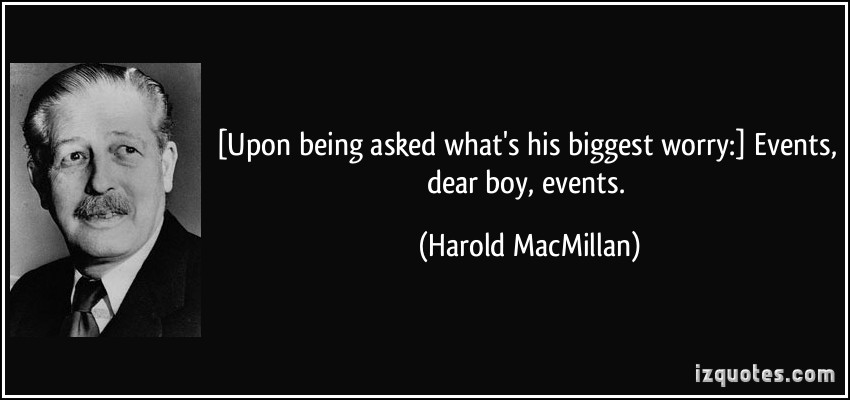
To paraphrase Harold MacMillan, what shapes the course of political history is “events dear boy, events”. Having certain qualities can get one into leadership positions, but ultimately one’s time in power is judged by how one responds to events. And more often than not, leaders only have limited control of these or their own legacy.

My email to Jacinda Ardern

Dear Jacinda

You probably will not remember me. I was the campaign manager for Andrew Little when he ran for Labour Leader back in 2014. The last time we met was in Burger Fuel on Cuba Street the day after you took over as Labour Leader in 2017. I was with my colleague from Piko and we were both covered in paint after doing work at our Trades Hall office. We certainly weren’t expecting to meet the future Prime Minister that evening.

I am emailing to say thank you for all that you have done, both in New Zealand and internationally since becoming Prime Minister. I now work as a Researcher in Westminster and I can say that you have earned the respect and admiration of politicians from all sides of the political divide over here in the last five years.

In particular, I wish to acknowledge the strong compassionate leadership you took after the Christchurch Mosque attack. Your simple statement “they are us” regarding Muslims living in Aotearoa had a profound impact and broke down barriers of hate and ignorance at a time when tensions were so high. I still tear up thinking about how important your showing humanity and compassion was at that dark time. Thank you.

Your government’s response to the coronavirus in 2020 was the right one and undoubtedly saved thousands of lives. Again, having lived through the UK response to this crisis, I and many others living here looked to the NZ response with considerable admiration.

The last couple of years has been difficult for governments throughout the world. The Ukraine invasion on the back of a global pandemic has seen inflation skyrocket everywhere. People understandably look to their elected representatives in difficult economic times and we know that the actions of the government can help or hinder economic recovery. But there is also much that is out of the hands of the nation-state. Where governments can have the most impact is on policies that help in the medium to long term. In the short term, options are quite limited and it is easy for our leaders to take the blame for things that are largely out of their control. The New Zealand government has managed this crisis better than many in the last 18 months. In years to come I hope this is recognised.

Your legacy as Prime Minister will be as someone who showed both strength and compassion in some of the most challenging times faced by any leader in modern times. On the world stage, you are rightly held up as a model of progressive political leadership, and I am certain this will continue into the future in whatever role you take on next.

Finally on a personal note, due to the coronavirus, I was only able to spend two weeks in Aotearoa during your time as Prime Minister. But as a Kiwi in London, I was proud of your leadership both of our party and of the country.

I wish you all the best for whatever comes next.

Kia Kaha me te pai katoa,

Nick Kelly

Boris Johnson – why he fell and can he come back?

The demise of Boris Johnson’s premiership in 2022 was both a surprising political upset and entirely predictable at the same time.

It was a political upset when considering the large majority the Conservative Party won in 2019 under his leadership, the best result of any political party since Thatcher’s 1979 election victory. Yet, after months of reports about Party Gate and scandal after scandal involving both Boris Johnson and various other MPs, his eventual resignation in June 2022 became inevitable. Indeed back in February last year my blog post questioned how he was still in post and argued that his brand was damaged. Five months later, after yet another scandal involving Deputy Chief Whip Chris Pincher, he was forced to resign.

It is still too soon to say how history will judge Boris Johnson, not least because there is still the possibility that he may return as Tory Leader someday. Few can deny that his ascent to the role of Conservative Party Leader and Prime Minister in 2019 profoundly impacted British politics for many years to come. In 2019 I said that one of Boris’s strengths as a politician was that he could tap into people’s hopes and fears. He would have been a formidable Leader of the Opposition, and if the Conservative Party do not win the next election this theory may be put to the test.

Yet, Boris Johnson is a deeply flawed character whose political ambition has and continues to come first. What little political or policy conviction he held was primarily about staying on brand and winning votes. This in itself is not unusual and in modern politics, one can have quite a successful career by being transactional and self-promotional.

Boris Johnson was ultimately undone by both his own character flaws and by the direction of the Conservative Party, the latter being seriously out of touch with the mood of the British public.

Plenty has already been said about Johnson’s character flaws, which were well-known long before he became Prime Minister. For those who backed him, there was plenty of evidence that things would turn out as they did. The fact is that like Johnson, his backers promoted him for short-term gain. Specifically to break the political deadlock caused by Brexit and to win an election largely on that issue. It worked.

But the fixes the Johnson leadership provided, under the guidance of Dominic Cummins and others, were largely short-term. His oven-ready Brexit deal may have won the election in 2019, but has resulted in a long-term stand-off over the Northern Ireland Protocol causing ongoing problems. The bold assertion during his resignation speech that his government had fixed social care is simply not true, with the system overwhelmed and the system still facing serious workforce shortages and lacking proper integration with the NHS.

The three years of Johnson’s premiership will be largely remembered for the Government’s management of the coronavirus pandemic. As I have addressed in earlier posts, the Government failed in its response to the pandemic. Yes, the rollout of the vaccine was a success, in no small part because this task was administered by the NHS, one of the most trusted British institutions, rather than being contracted out to businesses with close association with the Conservative Party. Examples of favourable business deals, such as those given to Dido Harding or Michelle Mone, whose companies were awarded lucrative government contracts and failed miserably in delivering have left a sour taste in voters’ mouths.

This all happened under Johnson’s watch and he was simply not fit to lead the country during this crisis. But he did not act alone. It was a failure not only of the Conservative Government but also of the British state. The crisis highlighted the country was not prepared for a pandemic, and longstanding underfunding of the NHS made this much worse.

A month before Boris Johnson’s resignation at PM, I argued that during the current time when inflation has increased globally, national governments are limited by what they can do, in the short term at least. Incumbent governments of all political persuasions have struggled in the last year, so it is not surprising that the Conservative’s polling numbers have been poor during this crisis. But in the same way that the Tories blamed Labour’s spending levels for the 2008 financial crisis, despite strong evidence that this was not the case, they cannot now claim economic problems are beyond the control of the nation-state without looking like hypocrites. Again, the short-term electoral gain in 2010 has now made a rod for their backs a decade on.

Boris Johnson is unlikely to return to any leadership role in the short term, not least because the Privileges Committee is yet to investigate party gate and his actions during the pandemic. If this investigation does not go Johnson’s way, he may face a byelection that he is not certain to win. 1922 Committee Chair Sir Graham Brady has suggested that Johnson had the numbers to run for the Tory leadership against Rishi Sunak in October 2022, though others claim Johnson made a desperate bluff talking up his support during this leadership race. Given the number of MPs who called for him to resign only weeks earlier, including the 57 ministers who resigned themselves in protest, for him to return anytime soon is unlikely and unwise.

Yet he retains core support within the Conservative Party, and with a group of Tory MPs. He also enjoys a surprising level of support still with the British public, though nowhere near the level he enjoyed in December 2019. His two months as caretaker Prime Minister in July and August 2022 during a cost of living crisis certainly did not help matters, where he partied in the Cotswalds and took holidays in Greece while many voters struggled to pay their bills. Meanwhile, the Tory Party spent the summer holding a leadership election, where, as the next post will discuss, the least competent candidate was elected by Tory members.

Boris Johnson believes that like his hero Winston Churchill, he can return to power one day. He probably believes that he fixed social care, did a good job during the pandemic and did a good job with his Brexit deal. Or he knows that if you repeat a lie often enough people start to believe it. When you have a legacy to protect and want a future in politics, you say what you need to say and do what you need to do. And the Tory Party? Would they put him in power again? If they thought it would increase their vote, yes they would. That he is not suitable or trustworthy is no matter, when the motivation is power at all costs.

Were Johnson to return as Tory Leader for the 2024 election, he would almost certainly lose. However, he may motivate a section of the Tory base and Brexit supporters, possibly mitigating the losses. On the other hand, this might spur on a wave of tactical voting by Labour, Lib-Dem and Green voters to punish the Tories for putting Johnson back after all that has happened.

It is risky to make predictions, but it is safe to assume we have not heard the last of Boris Johnson. And much like Berlusconi in Italy, the results will undoubtedly be bad both for politics and the country.

The Occupy Movement and the response to the 2008 financial crisis

As the world currently goes through a post-pandemic and Russian invasion of Ukraine fuelled economic crisis, it is interesting to reflect on the economic crisis of over a decade ago and how the public responded at that time.

After the 2008 financial crisis, despite predictions to the contrary at the time, there was a global shift to the right in the years that followed. Examples of this include the fall of the Brown Government to the Tory/Lib-Dem Coalition in the UK in 2010 or the Clark Labour Government being voted out in 2008. After some initial excitement about Obama’s election in 2008, the Republicans easily won the 2010 mid-terms. There were plenty of other examples across Europe, South Asia and South America of progressive or centre/centre-left governments falling.

Given the financial crisis exposed the failings of the banking sector and free market economics, it would seem strange at first that it was the political right who were the primary beneficiaries of this. In certain countries, incumbency was the issue where rightly or wrongly the party in power were blamed. The late 1990s and early 2000s were the height of the Third Way era, meaning many progressive governments had accepted and made little attempt to reverse the free market reforms of the 1980s. Whilst this position was electorally popular up to this point, by 2008 this position was not tenable. Meanwhile, the right was much quicker to pivot away from Laissez-faire to a more traditionally conservative position, raising concerns about immigration whilst claiming to be prudent economic managers. The politics of austerity were never popular where they were implemented. Yet, the argument that national debt is like household private debt where you just have to tighten your belt to get out of the red was not adequately challenged. That cutting social spending, holding down wages and other earnings and other such measures resulted in less money in the economy thus making the crisis worse became obvious, eventually. Yet in the early 2010s, many European Governments were implementing these sorts of policies.

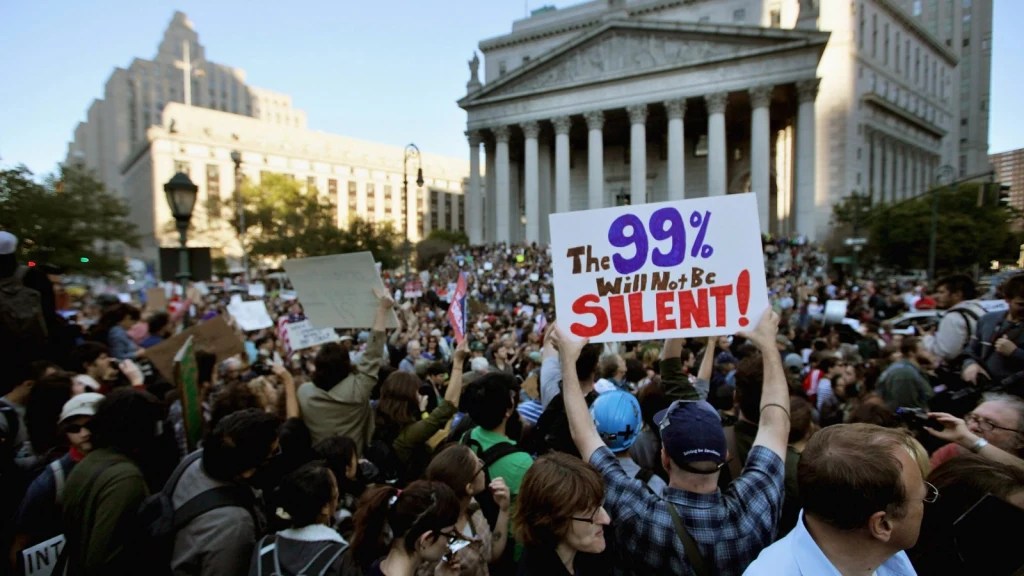
Above: Protesters in the Occupy Wall Street protests of 2011. One of the lasting legacies of this movement is the political slogan “we are the 99%” which continues to resonate with millions around the globe.

It was in this context that ‘Occupy Wall Street’, which quickly grew into the international Occupy Movement was born. Anger at banks being bailed out in the US whilst people’s homes were being repossessed and a feeling that the elected politicians had failed to stand up to Wall Street sparked this protest movement. The protests took inspiration from the Arab Spring protests in early 2011 which successfully brought down a handful of corrupt rulers in the region such as Muammar Gaddafi of Libya and Hosni Mubarak of Egypt amongst others.

Although there was some involvement of organised labour and other elements of the traditional left was involved, many more were not. In part, this was due to the reluctance of the main social democratic parties to be involved with such a movement, especially in the US when there was a Democrat in the White House. For many in the movement, there was a level of antipathy towards members of the political establishment, including those on the left.

As a friend of mine said to me a few times during the 2003 Iraq War protests “mass movements shoot up like a rocket, and subsequently fall like a stick.” Within a few months, the initial movement had dissipated. This was very similar to the late 1990s early 2000s anti-globalisation movement, the difference being that Occupy was responding to a serious financial crisis and failure of the global banking system. By contrast, anti-globalisation was reacting to the moral shortcomings of institutions such as the IMF or the World Bank and accused multi-national corporations of undermining democracy and self-determination, especially for those in less well-off nations.

It is interesting to look back now to see how both the anti-globalisation and the Occupy Wall Street movements influenced policy over the coming decade. Both were clear attempts to forge a new left in the post cold war era in response to the new right. On the surface, neither made any direct impact, with the free trade and the IMF agenda still rumbling on after the anti-globalisation protests in Seattle, Genoa and elsewhere. Likewise, the banking sector after 2008, took the government bailouts, the executives paid themselves bonuses and people paid the price, including mortgage foreclosures in the US. This contributed to the backlash against Obama during his presidency, as mentioned in an earlier blog post.

Ironically, the 2008 financial crisis saw the right move away from free market deregulation policies, in no small part as they had just failed on such a spectacular and global scale. The right became much more concerned with reducing debt through reducing government spending and other austerity policies. This is not inconsistent with free market ideology, more radical deregulation policies were not pursued with such vigour. With both the Brexit referendum in the UK and the rise of Trump in the US, the right began moving away from international trading blocks such as the EU or NAFTA. The claim by the anti-globalisation movement in the early 2000s was that the Neo-Liberal agenda wanted the free movement of capital, but not people. Certainly, in the case of Brexit, this was to see greater restrictions on both.

Not for the first time in history, the right took the sentiment of the anti-globalisation campaign and used it to pursue what is now termed a more ‘populist’ agenda. The UK Conservative Party winning “Red Wall”s seats in 2019 or Trump winning in the “rust belt” in 2016 were all in part due to this more ‘anti globalist’ agenda by the right. It also reflected that trying to openly pursue free market policies post-2008 was not going to work. Unlike the left, the right was as always quick to adapt to the changing environment.

The Occupy movement’s influence over politics in the 2010s is less obvious. Whilst the larger protests soon became much smaller, this movement did help shape the narrative of the left in the coming decade. The slogan “we are the 99%” stuck as did accusations of politicians serving the 1%. The surprising levels of support for Jeremy Corbyn’s Labour Party in 2017 and the rise of Bernie Sanders in the 2016 Democratic Primary owed something to this anti-corporate, anti-banking campaign of a few years earlier. More significantly, as the left needed to reinvent and reposition in the 2010s, this movement at least in part helped shift the centre-left parties towards a stronger anti-austerity and pro-public services position. The austerity light ‘moderate’ position some social democrats espoused in response to the financial crisis was never going to gain public support, especially when austerity was soon shown to have deepened rather than halted the economic crisis of the time.

Sudden mass movements may not instantly change the world. My friend’s analogy of the rocket becoming a falling stick may have been a good comparison. But maybe the falling stick in a small way did help change the course of history at least a little bit.

The end of the post war boom

Throughout my time being active in politics, people have discussed the rise of Neo-Liberalism and the free market that occurred throughout much of the world from the late 1970s onwards. Yet few seem to really understand the reasons for this significant shift in economic policy at that time, which continues to shape our society today.

Those less familiar with the works of Karl Marx may not be familiar with the concept of the tendency for the rate of profit to fall. One does not need to be a Marxist nor socialistically inclined to believe or understand this law of economics, which explains what has happened in the last half-century of economics. As Wikipedia explains:

The tendency of the rate of profit to fall (TRPF) is a hypothesis in the crisis theory of political economy, according to which the rate of profit—the ratio of the profit to the amount of invested capital—decreases over time. This hypothesis gained additional prominence from its discussion by Karl Marx in Chapter 13 of Capital, Volume III,[1] but economists as diverse as Adam Smith,[2]John Stuart Mill,[3]David Ricardo[4] and Stanley Jevons[5] referred explicitly to the TRPF as an empirical phenomenon that demanded a further theoretical explanation, although they differed on the reasons why the TRPF should necessarily occur.[6]

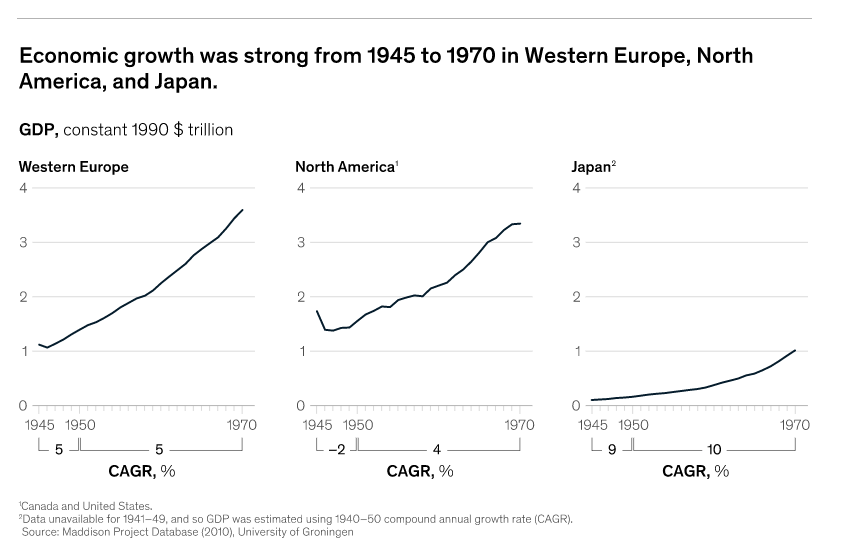
The above graph shows the strong level of growth in Western Europe, North America, and Japan between 1945 and 1970. The economic decline that followed would result in the new right revolution of the 1980s and 1990s.

To simplify this concept in explaining what happened in the late twentieth century we simply need to understand that in response to the 1930s depression many nations and particularly developed nations invested in infrastructure to stimulate their economies and create employment. This was followed shortly by the Second World War where investment in industry was required. Then after the war, the Marshall Plan rebuilt Europe, whilst similar investment and rebuilding occurred throughout the late 1940s. This period of investment in response to the depression and war created the post-war boom resulting in significant economic growth.

Keynesian economics whereby government policy and intervention in the economy and significant levels of government spending are required to stimulate the economy and prevent depressions. This theory dominated government policy in economically well-off nations from Great Depression until the mid-1970s, when the post-war boom came to an end. The thing Keynesian economics was meant to prevent happening, did happen. So in 1979, Margaret Thatcher came to power in the UK, and the following year Ronald Reagan in the US, and with them came a sea change in economic policies not just in their own countries but internationally.

The Neo-Liberal project essentially was to move away from state intervention and allow the invisible hand to do its dirty work. Privatisation of state infrastructure such as rail or power companies, reducing spending on public services and increased user pay charges, and generally reducing the size of the state to try and stimulate the private sector. Part of this also included reducing employment rights including laws protecting the right to collectively organise, ultimately resulting in reduced earnings for most people. As my series of blog posts about the trade union movement suggested, the job of those wishing to attack union rights was often made much easier by the fact that most union leaders and a poor understanding of economics or how to respond to the end of the post-war boom.

New Zealand was peculiar in its transition to Neo-Liberalism in that it was the Labour Government of 1984 to 1990 that first introduced and championed these right-wing economic policies. At the time the big political issue in New Zealand was the Nuclear Free movement which successfully stopped US Nuclear ships from visiting New Zealand. Whilst this was a worthy campaign, it is strange to think that a government selling off state assets (often for less than their market price) and putting thousands out of work managed to win support based on a Nuclear shipping policy when their economic decisions were hurting so many.

Neo-Liberalism and reducing the size and expenditure of the state were meant to stimulate the economy. For whatever short-term gains were made in the 1980s and 1990s, which generally only benefited the 1% wealthy elite, it soon became clear that the fundamental problems in the economy still remained. Unregulated or self-regulating markets resulted in terrible outcomes including the Pike River mining disaster in New Zealand, the Grenfell Tower fire in London, and the levee failures in New Orleans during Hurricane Katrina all from lack of regulation and investment by the Government.

The 2008 crash ended the widely held belief that the market could correct itself or that wealth would trickle down. This crisis was due to a lack of financial regulation and was then made much worse by those countries who insisted on implementing austerity measures to restore public finances, instead of making the economic situation worse. Neo-Liberalism now is discredited and few governments either on the left or right really have an appetite for the types of policies Thatcher and Reagan promoted 40 years ago. As I will discuss in another blog post on Liz Truss’s brief time as Prime Minister, attempts to follow such a path now generally end in disaster very quickly.

After the fall of the Eastern Block Communist/Marxism ideology has been largely discredited. The end of the post-war boom saw an end to Keynesian economics and a shift to Neo-Liberalism, which is now also largely discredited. In 2021 economic policy is largely populist and a weird mix of Keynsian/Keynesian-lite interventionism with a sprinkling of laissez-faire rhetoric. So far in the 21st century, Capitalism has lacked any serious rivalry from any other theory or system. But capitalism has also run out of ideas. This is not just an abstract notion as the political upheavals in recent years stem from people feeling let down and angry by an economy that has not delivered. Yet, there is no clear alternative to the status quo. People were shocked in 2016 when the UK voted for Brexit and the US voted for Donald Trump as President. The increasingly polarised and challenging political world we live in can be blamed on many different factors. But at its core, I believe much of the trouble is caused by the lack of economic policy ideas that can address some of the great challenges we face.

We can learn much from mid-20th century Keynesian economics, but we also need to understand the limits of this theory and what caused the shift away from them from the late 1970s. Whilst the Neo-Liberal experiment also failed, we should also understand that bureaucratic and cumbersome regulation must have a purpose, and whilst state investment in public services can have real benefits we must be clear about what these actually are when this money is spent. Whilst I subscribed to socialist ideas in the past, it is clear that attempts to implement such a system to date have all ended in failure. However, we can still take Marx’s economic analysis (if not subscribing fully to his proposed remedy), specifically what he had to say about the tendency of the rate of profit to fall. Before we decide whether the current economic system can be reformed or needs to be completely replaced, we first need to improve the general understanding of how our economic system works.