Tobacco bans in NZ and the UK.

In October, UK PM Rishi Sunak announced that he would follow New Zealand’s policy of gradually lifting the age at which people can buy tobacco. This would mean anyone born after 2009 would never be legally allowed to purchase tobacco. Last week, the new centre-right National Party-lead government in New Zealand announced it would be repealing this policy.

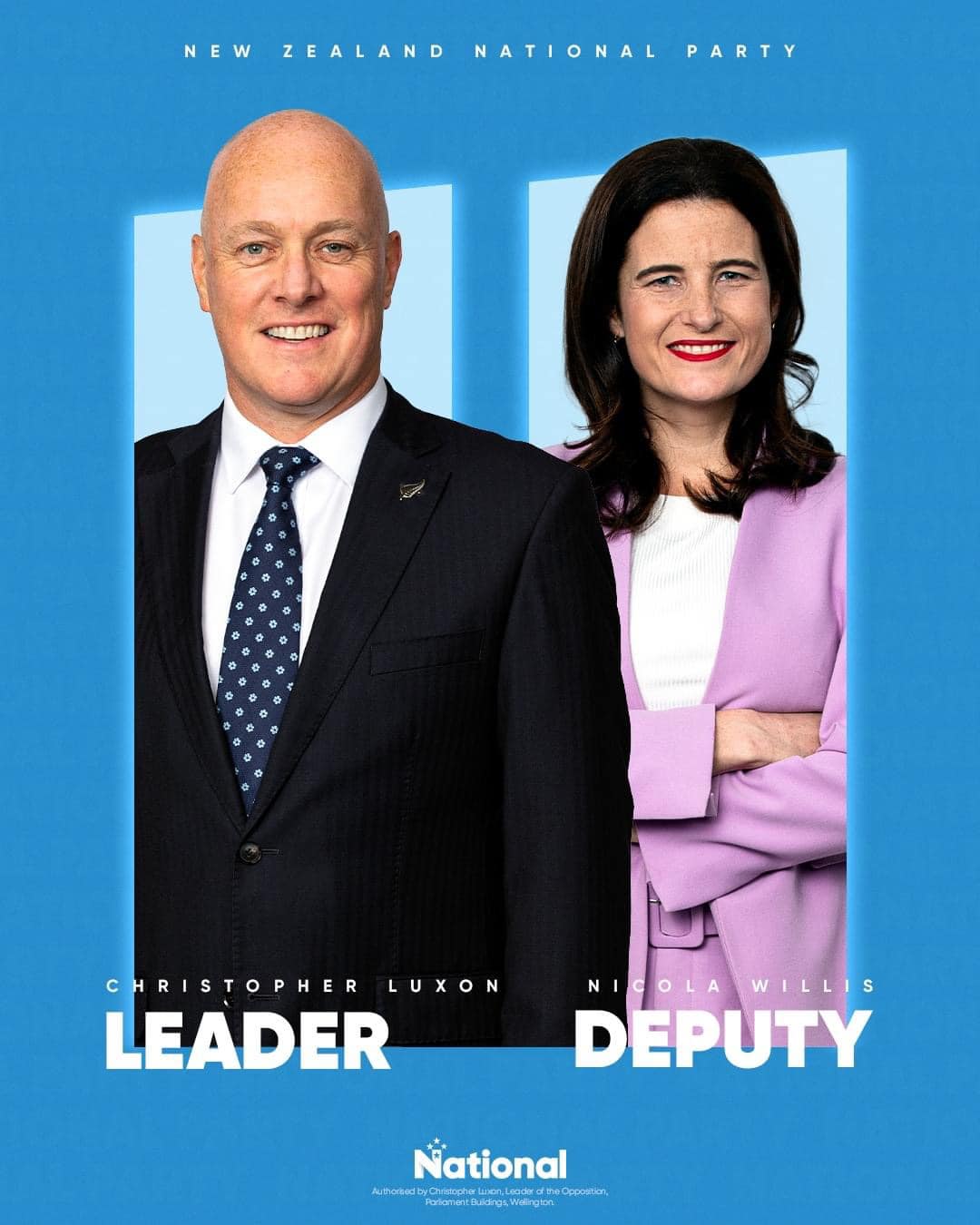
Two centre-right governments in English-speaking nations, both clients of Crosby Textor, yet opposite responses to tobacco regulation. The incoming NZ Health Minister Dr Shane Reti expressed concerns about a black market in tobacco sales if the ban was to be implemented. Reti also used the straw man argument that the tobacco ban was a factor driving recent ram rads of shops in New Zealand.

Worst of all, a key motivation for repealing the 2021 NZ tobacco legislation is to fund tax cuts. Before the election, it was clear that the National Party’s tax policy was unrealistic, just as Liz Truss’s tax cuts were in the UK. So the new government’s answer, remove restrictions on tobacco sales and use the revenue to fund tax cuts rather than funding the health system that tobacco tax revenue should be used for.

The decision in 2021 to introduce the smoking ban was a courageous one. Smoking causes many deaths each year and places a strain on the country’s health system. Smoking is addictive and we should do all we can to discourage young people from taking up this habit. This being said, putting a total ban on tobacco sales of people born after 2009 is well-meaning, but would likely have unintended and profoundly negative consequences.

There is a considerable body of evidence showing that prohibition does not work. Attempts at banning the sale of alcohol in the USA famously resulted in black market moonshine being sold. Attempts to stop the sale of narcotics in the so-called war on drugs have been a resounding failure. While it still may not be a popular view, the evidence shows that banning substances rarely stops consumption. Worse, it drives manufacturing and sales underground giving criminal gangs a great source of income and power.

The weird thing about the NZ ban is that in 2020 there was a real possibility that marijuana would be legalised. Run in parallel with the 2020 general election, the referendum on legalising marijuana was held. The result was 48.4 % in favour of legalising and 50.7 against it. In a country where studies have found that 80% of the population have tried pot, the level of cognitive dissonance of many voters is astounding.

Further, during the election campaign in 2020, Jacinda Ardern refused to state whether she supported legalising marijuana, despite earlier admitting she had tried the substance before. The concern from NZ Labour strategists was that Jacinda coming out in favour of legalising would be used against them by the opposition. As it happened, Labour won with a huge majority and the referendum was narrowly lost.

Jacinda Ardern had earlier stated her personal support for the legalisation and party members have voted at conferences in favour of policy remits calling for the same. Jacinda and other Labour frontbenchers could have openly stated their support for legalisation and still comfortably won the 2020 election. That they did not was an uncharacteristic failure of leadership by Jacinda Ardern and her team. This may have contributed to NZ still having drug laws that are disproportionately used against Maori and Pacifica populations and completely fail to stop the widespread use of marijuana.

That being said, it should not need the Prime Minister saying she supported legalisation for the referendum to succeed. The evidence from both NZ and overseas should have been enough.

All the arguments for legalising marijuana apply to tobacco as well. As a nonsmoker, I would be delighted if everyone stopped smoking. But I realise there will always be some who choose to. There will be black markets in tobacco, especially when other countries do not legislate for similar bans so people will be smuggling tobacco into the country. Further, while the state should encourage people to make good health choices and drive behaviours, banning tobacco is a bridge too far.

It might seem strange that a center-left Labour Party member would take this position. But it is a position based on evidence. Yes regulate the sale, add taxes, and limit where these products can be sold, which was also part of the 2021 NZ legislation. But prohibition of tobacco, like alcohol or marijuana will not work and will result in negative and unintended consequences.

It is unclear whether Rishi Sunak’s Conservative government will be successful in implementing a similar tobacco ban to that which NZ has just repealed. While there will be support across the political aisle for stronger restrictions, it is difficult to see how banning sales to people born after 2009 would work. Given how readily available hard drugs such as cocaine, MDMA and ketamine are on the streets of London, one has to be sceptical about the UK’s ability to successfully ban tobacco.

Instead of looking to the criminal justice system to tackle a health problem, we need policies that support people with addictions. Yes control the sale, and heavily regulate the strength and quality of what is being sold. But history has shown time and again that just banning things does not fix the problem.
NZ Election result

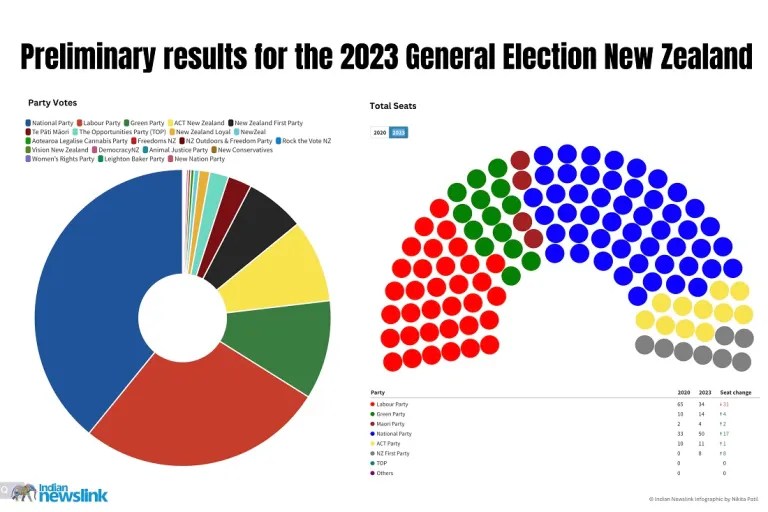
On Saturday Labour lost of General Election in New Zealand. Whilst there are special votes still to count, which make up roughly 20% of total votes cast in this election (including this author who voted from London), these will likely change the numbers in parliament but not the fact that there will be a change in Government.

Above: the provisional results of the 2023 NZ General Election. 20% of the vote is still to be counted and will not be known until early November

After UK Labour lost in 2019, I wrote nine fairly lengthy posts about why they lost. For NZ Labour the reasons can be summed up in a paragraph. I wrote two blog posts just for the election, one addressing Labour’s response to the Housing Crisis and another regarding their response to the coronavirus pandemic. It became apparent writing both these that Labour’s chances of winning were slim. On key policy areas like housing, but also education and transport Labour had over-promised in 2017 and underdelivered in Government. With the pandemic, unrealistic expectations were set, rather than properly preparing the public for community transmission post vaccinations, they locked down Auckland (the nation’s largest city) for weeks in 2021, only to have the inevitable community transmission throughout the country by early 2022.

In my post on historical trends and perspectives in NZ politics, I said that every time the National came to power since 1949, they have won a minimum of three terms. This is not inevitable for the incoming National Government. In part, this will be down to the performance of National, ACT and possibly NZ First in Government. It also will also come down to how well Labour perform in Opposition.

Immediately people will start speculating on the leadership. Yes, in politics leadership is critical. But the last thing Labour needs right now is a popularity contest amongst its remaining MPs, coupled with the weird parochialism that masquerades as factionalism in NZ Labour. Instead, Labour needs to grieve, try to understand and accept the loss, and then re-group and prepare to be the next government in 2016 (if not earlier).

NZ Herald reporter Simon Wilson made the following astute comment the day after the election:

One of the grat fallacies in politics is that there is a big middle ground of voters who like quiet moderation. Actually, voters want thing to be better. Those who swing from one party to another are not looking to reinforce the status quo. They have become disillusioned and want a shake-up

https://www.nzherald.co.nz/nz/simon-wilson-the-labour-collapse-fit-for-the-war-but-not-for-the-peace/ETSGLL7JAVBAHAVZZOXRGD4YZ4/

Labour needs to plan for government. Instead of glib slogans about fairness or positivity, Labour needs a believable plan to make life better for the people who are doing it tough right now. This does not mean over-complicated policy proposals, or arbitrary targets on building new homes. It means a clear vision with priority policy areas that resonate with the voting public.

NZ Labour will not be in government anymore. But the Party and its MPs must quickly start looking like a Government in waiting. This means a front bench with a mix of experienced and new MPs. Decisions about the party leadership should be part of this, but it is only one part.

There will need to be a reaffirming of commitments with The Green Party and strengthening alliances with Te Pāti Māori to show what a progressive centre-left government will look like next time. This work should be starting now.

In parliamentary politics, there are no final victories. After losing the 2023 election, Labour must now immediately focus on winning in 2026.

NZ Election: National’s Tax Policy

A year ago this month, the Liz Truss/Kwasi Kwarteng mini-budget destroyed once and for all the myth that the Tories are better at managing the economy. The New Zealand National Party could not even wait until they were in government to prove the same applies to them.

National, the main centre-right party in NZ politics have released a policy which economists claim does not add up. National argues their proposed foreign buyer’s tax will raise $2.9 billion. However, analysis from three independent economists does not back this claim. Instead, they estimate a $2.1 billion shortfall over a four-year period.

National are under increasing pressure to explain how they will fund their other tax cut policies. The foreign buyer tax policy was supposed to explain the shortfall. National has not released the fully costed workings of their policy and instead has fallen back on sound bites and slogans.

Like in the UK a year ago, there are real fears that cutting taxes during a cost of living crisis will drive up inflation. Further, if the so-called foreign buyer tax will not cover the shortfall, the only other option is severe spending cuts on public services or heavy borrowing. Or both.

National has raised considerably more money than Labour in the lead-up to this election. Much of this is from business. Many in the business sector were unhappy with the strict lockdowns during the pandemic, especially in 2021. Many of them believe the myth that the centre-right is better at managing the economy, so are supporting the National Party. More than a few of National’s business backers must now be questioning their investment in a party whose numbers simply do not add up.

In an interview with the NZ Herald, Opposition Finance Spokesperson and National’s deputy leader Nicola Willis, on seeing the alternative costings said it was “hardly surprising to have different economists disagreeing about things. National is confident in our figures. They have been independently assessed by Castalia economic advisors.”

Yet the full Castalia assessment has not been released. While the economists may have each produced their own different assessment of her party’s policy, they all agree National have grossly overestimated the revenue this new tax would raise.

If current polling is to be believed, in one month Willis will be the NZ Finance Minister and her party running the country. Given she and National are yet to produce more than opposition slogans and policies that do not add up, this is concerning.

Even the ACT Party, who are historically to the right of National, have now said they will be dialling back their tax cut policies due to the current economic situation in New Zealand. This is not entirely surprising. In the first term of the Thatcher Government, which started the New Right economic reforms in the UK, there were no tax cuts due to the high level of inflation in the late 1970s and early 1980s. By contrast, The NZ National Party, do not even understand their own economic theories. Their analysis seems to be little more than tax cuts = good, government spending = bad.

Willis and National said one way their numbers will add up is by cutting waste. They recently highlighted a story where a senior public servant was given a $40,000 farewell party. This is clearly unacceptable, and the official concerned was rightly made to pay this money back. But putting this in context, the total NZ health budget for 2022-23 was $14.9 billion. A handful of cases of waste, ordering fewer paperclips and turning off office heating at weekends will still just be a drop in the ocean.

At the time of writing, National are the favourites in this election. What is increasingly clear is they are not ready to govern. And increasingly, economists, even those sympathetic to centre-right politics are publically saying as much. Anyone who still thinks a National-led government will improve New Zealand’s economic situation need only look at the evidence. Like the UK Conservatives under Truss, they simply are not up to the task.

Natural disasters test new leaders in New Zealand – some did better than others.

The first real test of any political leader is how well they perform in a crisis. For New Zealand’s Prime Minister Chris Hipkins this test came very quickly.

At the time of writing, New Zealand is recovering from Cyclone Gabrielle, the worst weather event the country has suffered in living memory.

Cyclone Gabrielle is the second major weather event New Zealand has suffered in the last month. At the end of January, just days after Chris Hipkins becoming Prime Minister, Auckland, the country’s biggest city faced major flooding. This was not only the first major test of Hipkins as Prime Minister but also of the recently elected Auckland mayor Wayne Brown.

It would be unfair to claim that Mayor Brown has no previous political experience. 15 years ago he served one term as mayor of the Far North District, and prior to this had been a member of the Auckland District Health Board. But primarily, Brown’s experience was in the private sector as an engineer and property developer.

Brown’s election as mayor in October 2022 ended 12 years of Labour dominance of the Auckland mayoralty. The election of a right-of-centre mayor in New Zealand’s largest city was seen as an indication of what might happen nationally in the 2023 General Election.

After the Auckland flood, Wayne Brown’s election will now be viewed as a cautionary tale. What can happen when someone who is inexperienced and unsuited to political office is elected to important political leadership roles. The blowback of this on the New Zealand right should not be understated, it is bad news for them.

Brown, albeit reluctantly, admits he “dropped the ball“. Much like Liz Truss, who blamed her disastrous few weeks as UK Prime Minister on poor communication, Mayor Brown claimed his communications were ‘slow’.

The key criticism of Brown was that he was slow to declare a state of emergency in Auckland. During the crisis said to one journalist that “it was not his job to rush out with blankets.” In a text, to friends, Brown complained that he could not play tennis during the weekend of the floods as he “had to deal with media drongos over the flooding.”

Probably the most cringe-worthy moment was the joint media conference the Mayor did with the Prime Minister and two other Government Ministers. Brown was defensive and sounded out of his depth, whilst Chris Hipkins sounded like a Prime Minister.

I first met Chris Hipkins back in 1998 at a fundraiser for the Rimutaka (now Remutaka) Labour Party at the now-closed Plates Restaurant. He had been head boy at Petone College and led the campaign opposing the closure of his old school the by then Tory Government. Slightly older than me, Chris was VUWSA President a few years before me. Living in London at the time, he kept in contact and gave useful advice whilst I was President – including once when he reminded me that it was Saturday night in New Zealand, so I should go out and have fun instead of worrying about the Students’ Association budget.

After Student politics, Chris spent a brief spell in the private sector before working in parliament as an advisor to Helen Clark’s Government. In 2008 he became an MP and quickly was promoted to Labour’s opposition front bench. After Labour came to power in 2017, Chris has served in various senior Ministerial roles.

One of the big criticisms of ‘career politicians’ is that they do not have enough experience outside of parliament. It is true that within a parliamentary democracy, it is important to have diversity and people from different backgrounds. The same is true within the cabinet. However, the Prime Minister is in a political leadership role, the most senior politician in the country. Experience in politics is crucial, and it is something that Chris Hipkins has.

The implications of all this for the NZ Leader of the Opposition, Christopher Luxon, are not great. Luxon, a first-term MP elected to parliament in October 2020 wishes to be New Zealand’s Prime Minister in October. His experience prior to 2020 is in the private sector, most notably as CEO of Air New Zealand.

Having worked in and with the private sector through my company Piko, I accept that there are transferable skills from private sector leadership roles through to political leadership. But there are differences. In government, there is a need to manage ambiguity, much more so than when managing a company. There are far more competing priorities, all of which can have a profound impact on people’s lives. And when things get really tough, like during the COVID-19 pandemic, business leaders rely on the state for support. Therefore it falls to Government in a time of crisis to make the tough calls.

Diversity in politics is important. Yet on the right, the call isn’t for diversity. Instead what is often called for is people with “business experience”. CEO of big companies, high net-worth individuals who have done well on the money markets and other c-suite executives. Transferable skills from this sector can well help in political leadership roles, but these alone are not enough, other skills and experiences are needed to be a success.

By contrast, working as a parliamentary staffer, or in the public service, is viewed as being at risk of government groupthink. Worse, that promotion may be through nepotism rather than ability. There is always a risk of these things but has also worked with the public service and in parliament, it would be easy to overstate this risk. What you do get in these roles is close exposure to how the machinery of government works. My work in the British parliament over the last three years has taught me this. Parliamentary staff role offer valuable experience for anyone in a senior political role.

The Auckland floods and the current cyclone have highlighted the importance of political experience. Chris Hipkins, having served as a Minister during The Christchurch Mosque Terror Attack, COVID-19 and the cost of living increase is no stranger to a political crisis. He and his team instinctively know how to respond, when to open the emergency Beehive Bunker and how to communicate clearly to a worried public during these difficult times.

The events in the last few weeks have highlighted that in politics, actual political experience really counts.