
To view my Newsroom New Zealand column, click here: https://newsroom.co.nz/2024/05/30/sodden-sunaks-pr-misfire-a-sign-of-political-malaise/
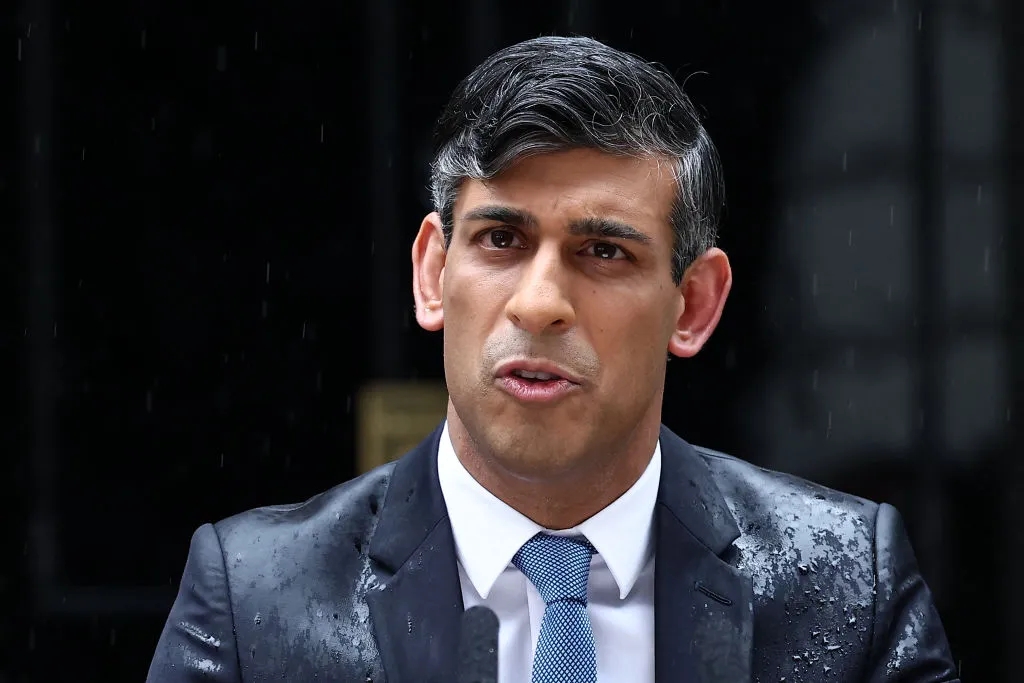
Sodden Sunak’s PR misfire, a sign of political malaise
To view my Newsroom New Zealand column, click here: https://newsroom.co.nz/2024/05/30/sodden-sunaks-pr-misfire-a-sign-of-political-malaise/
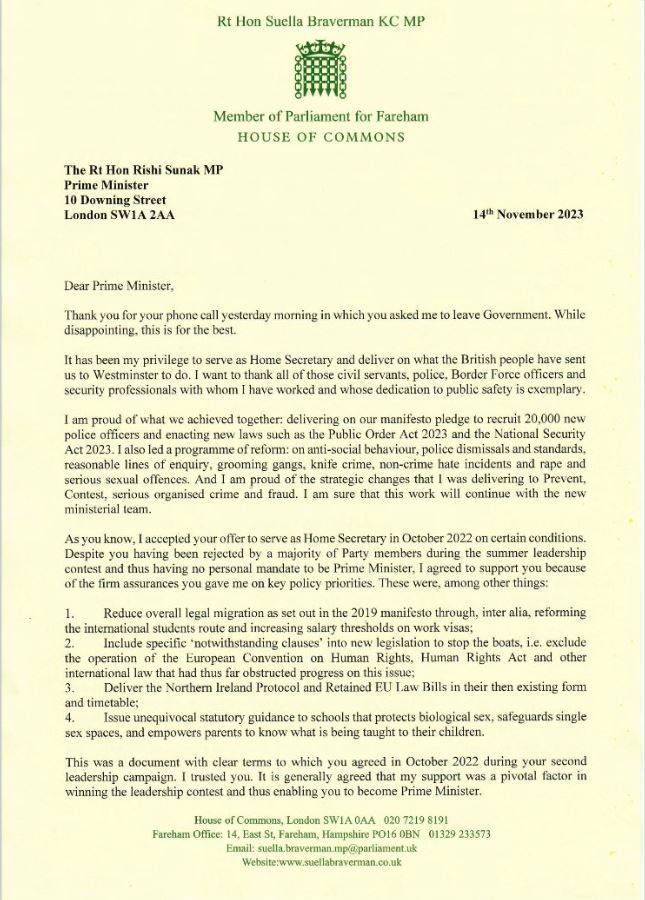
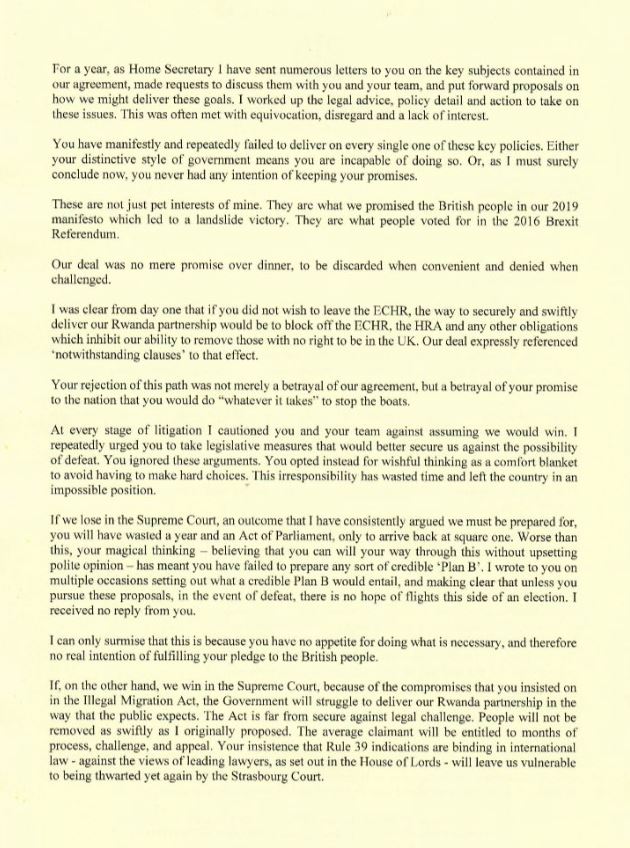
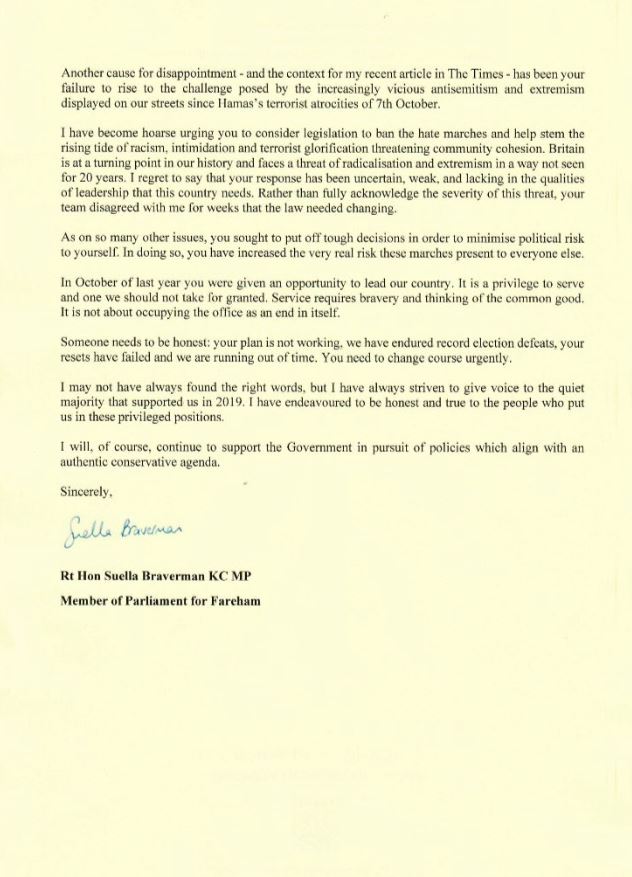
One has to really feel for those trying to write political satire these days. How can a satirist be more ridiculous than many of our political leaders they wish to lampoon? Case in point, yesterday’s “resignation letter” from sacked former Home Secretary Suella Braverman.
Just to recap. From July to September, the UK effectively had a caretaker government while the Tory Party conducted its internal leadership race. The top two candidates were Rishi Sunak and Liz Truss. Despite Sunak winning the support of more MPs, Truss won 57.4% of the party membership vote and became Prime Minister. It was a disaster.
In just 49 days as PM, Truss destroyed the myth that the Conservative Party is good at managing the economy. On 25 October 2022, Truss was forced to resign. The Conservatives were desperate not to go through another leadership ballot. Worse, there were fears Truss’s disgraced predecessor may stage a comeback. By this stage, the Tories were 30% behind in the polls.
Sunak became Prime Minister, despite losing the membership vote by being the only candidate. He did this by doing deals with the likes of Suella Braverman, who had been forced to resign as Home Secretary days earlier for breaching cabinet rules, and Dominic Raab who faced bullying accusations at the time and later was forced to resign.
Sunak did not need to do these grubby deals to stitch up support. In October 2022, Rishi Sunak was the only credible option. He did not need to do deals with people like Braverman and he would be in a much stronger position now if he had not.
Today’s decision by the Supreme Court that the Government’s Rwanda asylum policy is unlawful is the icing on the cake. Braverman is right in a sense, the government has wasted a year and an Act of Parliament on the Rwanda policy. But she is also completely wrong about the ECHR and the HRA. Instead, the UK government should have found a solution to the asylum crisis that complied with Human Rights legislation and international obligations. The response to the boat people crisis has been a failure by this government. Caused in no small part by deals done by Rishi Sunak to shore up support from the right of the Conservative Party.
For the political satirist, it is hard to come up with a more ridiculous situation. It would be all very funny were it not real, which instead is just frustrating and depressing.
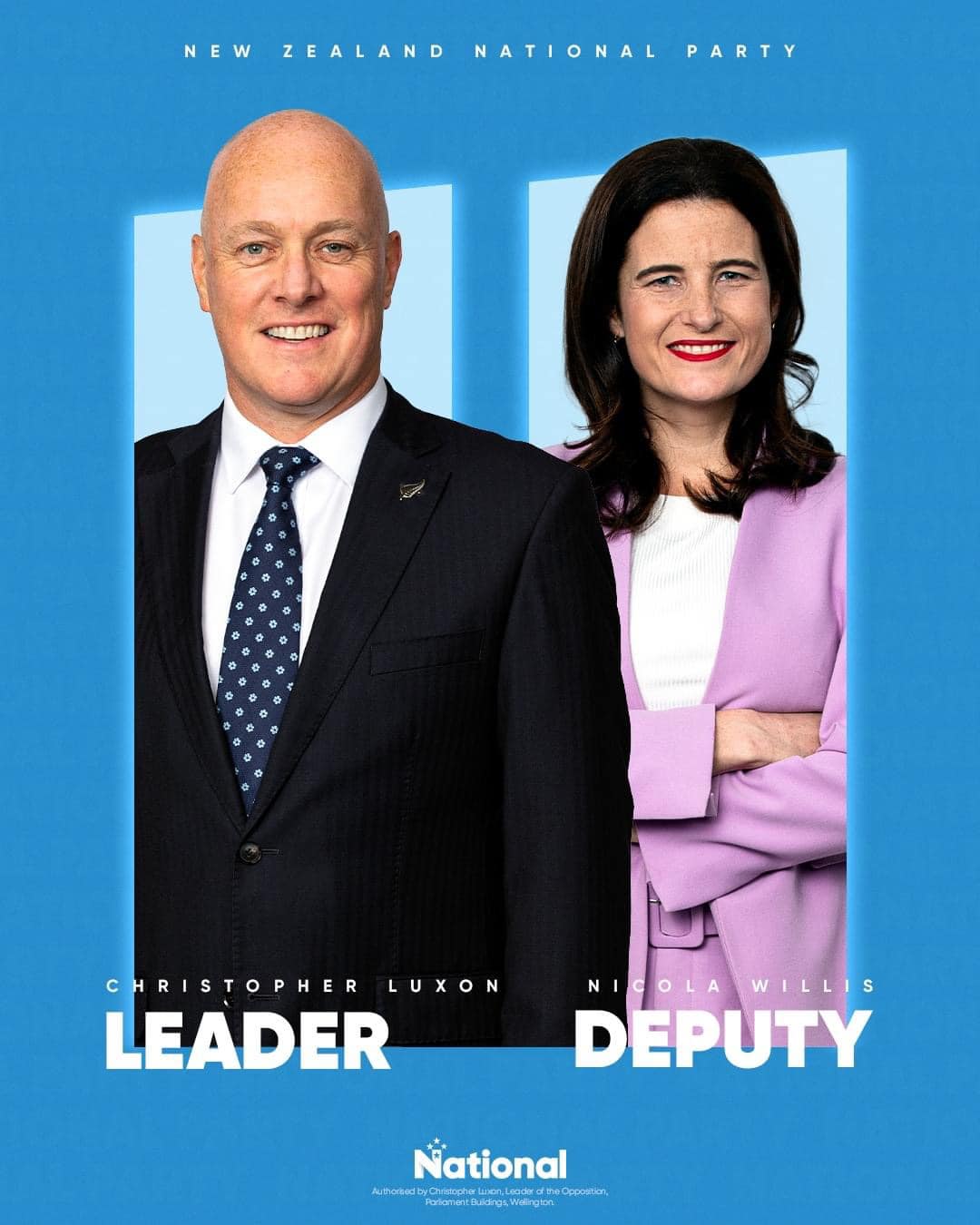
A year ago this month, the Liz Truss/Kwasi Kwarteng mini-budget destroyed once and for all the myth that the Tories are better at managing the economy. The New Zealand National Party could not even wait until they were in government to prove the same applies to them.
National, the main centre-right party in NZ politics have released a policy which economists claim does not add up. National argues their proposed foreign buyer’s tax will raise $2.9 billion. However, analysis from three independent economists does not back this claim. Instead, they estimate a $2.1 billion shortfall over a four-year period.
National are under increasing pressure to explain how they will fund their other tax cut policies. The foreign buyer tax policy was supposed to explain the shortfall. National has not released the fully costed workings of their policy and instead has fallen back on sound bites and slogans.
Like in the UK a year ago, there are real fears that cutting taxes during a cost of living crisis will drive up inflation. Further, if the so-called foreign buyer tax will not cover the shortfall, the only other option is severe spending cuts on public services or heavy borrowing. Or both.
National has raised considerably more money than Labour in the lead-up to this election. Much of this is from business. Many in the business sector were unhappy with the strict lockdowns during the pandemic, especially in 2021. Many of them believe the myth that the centre-right is better at managing the economy, so are supporting the National Party. More than a few of National’s business backers must now be questioning their investment in a party whose numbers simply do not add up.
In an interview with the NZ Herald, Opposition Finance Spokesperson and National’s deputy leader Nicola Willis, on seeing the alternative costings said it was “hardly surprising to have different economists disagreeing about things. National is confident in our figures. They have been independently assessed by Castalia economic advisors.”
Yet the full Castalia assessment has not been released. While the economists may have each produced their own different assessment of her party’s policy, they all agree National have grossly overestimated the revenue this new tax would raise.
If current polling is to be believed, in one month Willis will be the NZ Finance Minister and her party running the country. Given she and National are yet to produce more than opposition slogans and policies that do not add up, this is concerning.
Even the ACT Party, who are historically to the right of National, have now said they will be dialling back their tax cut policies due to the current economic situation in New Zealand. This is not entirely surprising. In the first term of the Thatcher Government, which started the New Right economic reforms in the UK, there were no tax cuts due to the high level of inflation in the late 1970s and early 1980s. By contrast, The NZ National Party, do not even understand their own economic theories. Their analysis seems to be little more than tax cuts = good, government spending = bad.
Willis and National said one way their numbers will add up is by cutting waste. They recently highlighted a story where a senior public servant was given a $40,000 farewell party. This is clearly unacceptable, and the official concerned was rightly made to pay this money back. But putting this in context, the total NZ health budget for 2022-23 was $14.9 billion. A handful of cases of waste, ordering fewer paperclips and turning off office heating at weekends will still just be a drop in the ocean.
At the time of writing, National are the favourites in this election. What is increasingly clear is they are not ready to govern. And increasingly, economists, even those sympathetic to centre-right politics are publically saying as much. Anyone who still thinks a National-led government will improve New Zealand’s economic situation need only look at the evidence. Like the UK Conservatives under Truss, they simply are not up to the task.
The premiership of Liz Truss will be remembered for many years to come. She will be remembered as being the shortest-serving former UK prime minister (for now), resigning after seven weeks. It will be remembered that only two days after going to Balmoral to meet the monarch, Queen Elizabeth II passed away having served 70 years on the throne, making Truss her 15th and final PM. People will also remember the Truss premiership for plunging already bad Conservative Party polling numbers down to record lows, giving the opposition Labour Party an unprecedented 30% lead. But the main thing her seven weeks as Prime Minister will be remembered for – destroying the longstanding myth that the Conservative Party are good at managing the economy.
As outlined in a post earlier this year in a global economic crisis, governments, in the short term at least, are limited in what they can do to remedy the situation. However, the one thing governments can certainly do is not make the situation worse. In this Liz Truss and former Chancellor Kwasi Kwarteng failed spectacularly.
The now infamous ‘mini budget’ or “Growth Plan” of 23 September 2022 caused the pound to hit an all-time low against the US dollar, and force the Bank of England to intervene to prevent chaotic drops in gilts prices from stinging pension funds and threatening financial stability. How on did the UK’s natural party of government, the party of sound money and fiscal responsibility manage to get it all so badly wrong? And so quickly?
Since 2008, as pointed out in my last blog post, right-of-centre governments have stepped back from full Thatcherite free market policies due to the fact that these policies directly resulted in the crisis of the last decade. Whilst free market and trickle-down economics may no longer be electorally viable, there remain many true believers in the small government crusade.
The decline and fall of Boris Johnson as PM was entirely of his own making and had been on the cards for some time. During the period, the disquiet within the Conservative Party was not so much over “Party-Gate” but the increase in taxes, namely National Insurance, to keep their manifesto commitment to fund social care, a policy area where previous governments have failed to grasp the nettle. Tory Party members were furious that a Conservative Government had raised taxes, and former Chancellor Rishi Sunak was in their eyes to blame. Enter Liz Truss.
Truss, on becoming Foreign Secretary in early 2022, began doing these strange photos where she was imitating former Tory Prime Minister Margaret Thatcher. This Thatcher cosplay was matched by sound-bite rhetoric about free markets and individualism. This really played to the home crowd with supporters in the Tory Party claiming “in Liz we Truss.”
Warnings from former Chancellor Sunak that the programme announced by Liz Truss when running for leader would make the economic situation worse were ignored by the party membership. In Liz they Trussed, in early September she became Conservative Party leader and Prime Minister.
A decade before coming to power, a group of right-leaning Tory MPs authored a book titled Britannia Unchained, a treatise, arguing that Britain should adopt a different and radical approach to business and economics or risk “an inevitable slide into mediocrity.” These MPs belonged to the Conservative Party ‘Free Enterprise’ group and included Liz Truss and the person a decade later she was to appoint as Chancellor, Kwasi Kwarteng.
In a later attempt to shift the blame to former Prime Minister Liz Truss for what happened, claiming he warned her the government were moving too fast. Kwarteng has not yet apologised for his mini budget on 23 September or the catastrophic fallout. In fact, his frustration seems more with the fact that Truss ended up sacking him, not long before being forced to resign herself. The truth is, the throwing caution to the wind approach of slashing taxes, removing restrictions on banker bonuses, and slashing other regulations such as IR35 were all consistent with what he and Truss had argued in Britannia Unchained a decade earlier. And these ideas found favour with the Conservative Party membership – with the idealised view of Thatcher’s vision of small government, deregulation and low taxation. For the general public, this was not so much ‘Britannia Unchained’ as ‘Libertarians Unhinged.’
Where this mini-budget really hit the rocks, especially with the financial markets, was the unfunded tax cuts and spending increases. The Tories, having implemented austerity policies during their first term in office with the Lib Dems, found out the hard way that underfunding the Police or the NHS was simply not an option. The 2017 election where they lost their overall majority, and Corbyn’s Labour had an unexpected surge in support largely due to increased turnout by young voters, was largely due to an anti-austerity backlash. In Kwarteng’s mini-budget, the solution was that the government borrow to pay for tax cuts and spending increases. The former Chancellor argued that cutting taxes and red tape this would stimulate economic growth meaning the government would soon be able to repay the debt.
Many were surprised to see financial markets react to a right-wing Tory budget in this way. Threats of capital withdrawal and other measures are not uncommon when centre-left governments try to implement their agenda. Yet here we had a right-wing budget and the market responded badly. One issue was that Truss and Kwarteng completely ignored the Office for Budget Responsibility before preparing the mini-budget. This office was set up by former Conservative Chancellor George Osborne, in response to his claims that Labour had acted financially irresponsibly when in power. This office was designed to be a check and balance for the left, yet it was the right who fell foul of it. One of Britain’s key selling points is that is a rules-based economy. By not consulting the OBR before the mini-budget, Truss and Kwarteng damaged Britain’s brand.
Cutting taxes at a time of high inflation is not a terribly smart move as it will drive up inflation further. Borrowing money to cut taxes and increase spending is what the Government in Greece did prior to the 2008 financial crash, with devastating consequences. Add both of these to a world economy struggling in the wake of the pandemic and the Russian invasion of Ukraine, it is no surprise that the markets reacted as they did.
Within days, Truss was forced to sack Kwarteng and announce a U-turn on the mini-budget, to much tormenting that “the lady is for turning” with reference to Margaret Thatcher’s famous quote. Within 44 days of becoming Prime Minister, Truss announced her resignation, having days earlier replaced her friend Kwazi Kwarteng with Jeremy Hunt as Chancellor and almost all measures in the mini-budget had to be reversed.
It was would easy to blame Truss and Kwarteng for this specular failure. Many have cited her shocking performances in the media as why ultimately she resigned and question how someone got to the highest level of public office when so clearly unable to perform. Leadership qualities play a significant role, and in modern politics media presentation is critical. But this was not a problem of style and presentation alone, as abysmal as this was under the Truss premiership.
The initial reaction to the Mini Budget in September was very positive from many in the Conservative Party and their cheerleaders in the tabloid media.
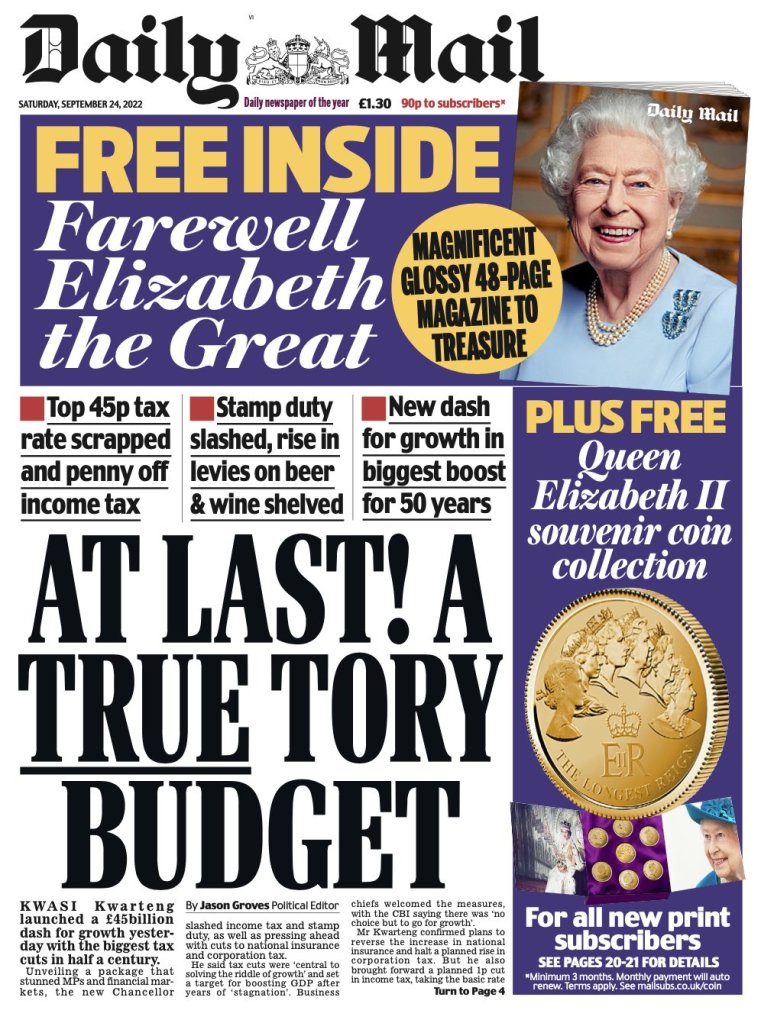
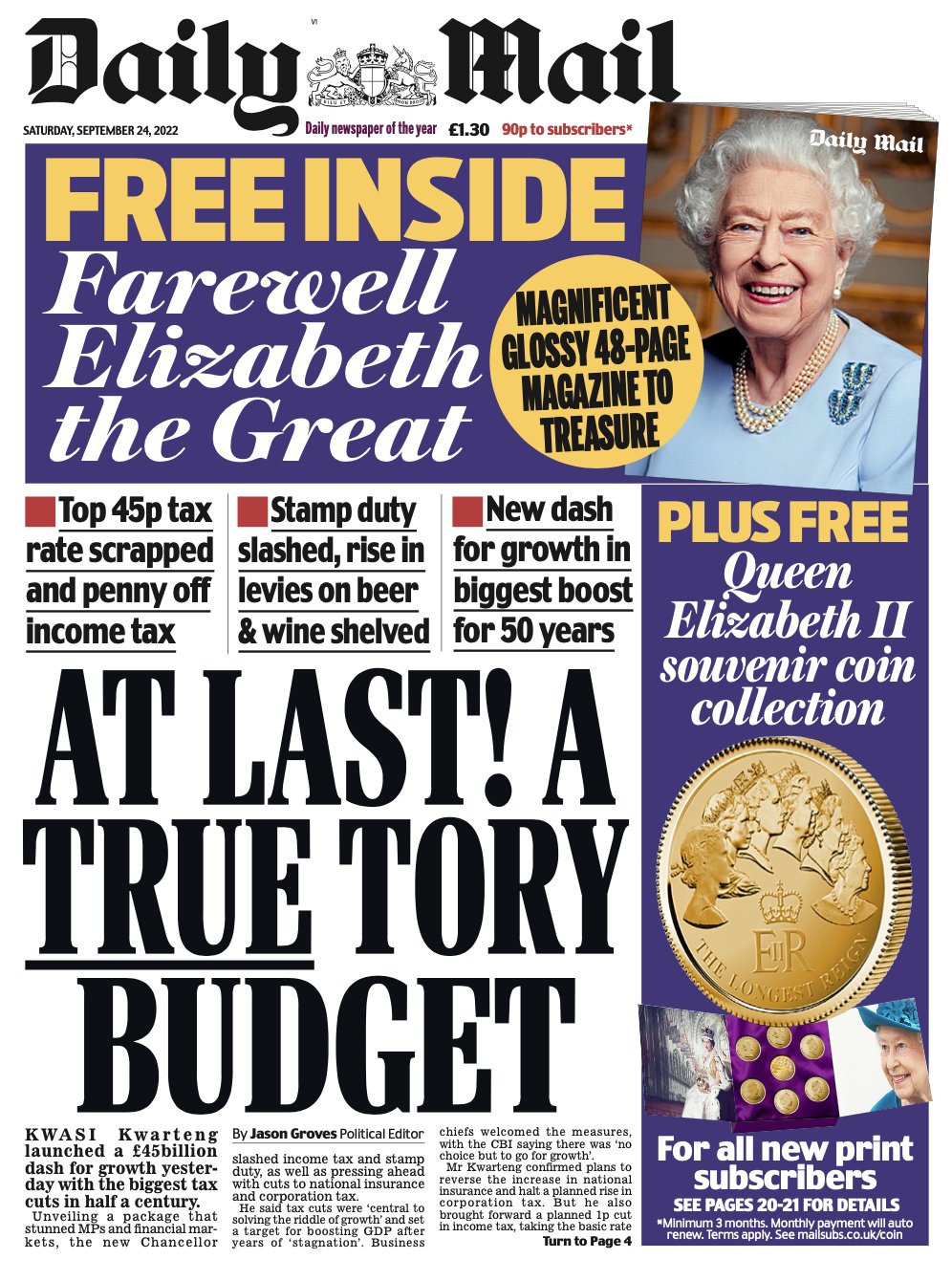
For Tory Party members and Daily Mail readers, this was the budget they had been waiting for. Far from being a surprise, the mini-budget was implementing not just the promises of Truss’s leadership campaign, but the wishes of many rank-and-file Conservatives. After enduring Sunak’s National Insurance increase the free market wing of the party finally had their way, at last, a true Tory budget. Never mind Britannia Unchained, this was Conservative Party unleashed.
The ‘get Brexit done/anti-Jeremy Corbyn’ coalition that won the Conservatives the 2019 election now finds itself in tatters. Not only were so-called red wall voters from the North East of England put off by the return of trickle-down economics, but polls show that large swaths of traditionally Conservative voting south of England were also in despair. Within the Conservative Party, those who still subscribed to Edmund Burke’s view that no “generation should be arrogant enough as to only think of themselves” and that borrowing for tax cuts would harm future generations, found themselves in the minority. In fact, the enduring influence of one-nation conservatism made popular by Benjamin Disraeli, of pragmatism and paternalism was replaced with an unwavering belief in small government and the market.
That Conservative MPs managed to avoid another membership ballot and Rishi Sunak replacing Liz Trus is the topic of the next blog post. Needless to say Conservative MPs, many from Constituencies once considered save tory, are now terrified by recent polls. Allowing the party membership a say risked a further dose of trickle-down right-wing economics, making the Tories unelectable for a long time. It was the party members who supported Truss, while in the first round, only 50 backed Truss for leader, though other candidates who had MP backing early on also espoused not dissimilar economic views.
Some who supported Truss may now have reflected on what happened and perhaps realise that these policies not only do not work, but electorally they are poison. But many on the right will blame it on Truss, her leadership style and the speed with which she tried to implement the reforms. In many ways, the fact that the mini-budget changes were done quickly and communicated poorly was a good thing, as it meant these policies were reversed quickly. A more media-savvy and gradual implementation would have done more harm in the long term. It is no accident that since 2008, free market trickle-down economics has been out of fashion. The Truss premiership has been a timely reminder that these policies do not work and should not be tried again.
 Nick Kelly