Decoding the Doorstep: Insights from Canvassing Uxbridge and South Ruislip

I spent the last UK General Election canvassing in Uxbridge, trying to unseat the then Prime Minister Boris Johnson. In the 25 years I’ve been politically active, this was the second most depressing canvassing session I had been to.* It was the middle of winter, the weather was awful, and it was obvious the votes were not going Labour’s way.

Last weekend I returned to Uxbridge for the first time since December 2019. The not-so-illustrious political career of Boris Johnson has ended in failure and disgrace. Johnson resigned as an MP at the conclusion of the Privileges Committee investigation. The Committee’s report found that Boris Johnson broke the COVID-19 rules, the ones his own government had set, and had misled Parliament when questioned about this.

Had Johnson not resigned, he would have been suspended from the House for 90 days. In the UK, MPs can be recalled by voters when suspended. If 10% of voters in the suspended MP’s constituency sign a recall petition a by-election must take place. Had Boris Johnson not resigned, he almost certainly would have faced a by-election. In these circumstances, he would likely have lost.

So Boris Johnson made one of the few honourable decisions of his life and resigned from parliament (though even then poo poo-ed the privileges committee report and denied fault).

Last weekend I was out in Uxbridge canvassing for Danny Beale, Labour’s candidate in the by-election. Labour last won Uxbridge in 1966, and before that 1945. The Ruislip part of the constituency has never been held by Labour. But the demographics in the area are changing and despite a blip in 2019, overall the Tory vote has been gradually falling in the area for some time.
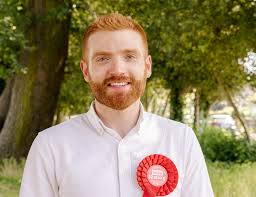
Above: Labour’s Uxbridge and Ruislip candidate Danny Beale

In politics, much is made of doorstep conversations. It is seen as the ultimate litmus test for how well a party, leader or set of policies are performing. Opponents of Jeremy Corbyn have often claimed that on the doorstep he was not popular. Certainly, my experience in 2019 was that Corbyn and the political project he came to represent was polarising. I found many were supportive of core Labour policy, but did not trust the party or its leadership.

The 2017 election proved there was significant support for social democratic policies (eg national care service, public ownership of rail, electricity, water etc, and funding public services properly). But weak leadership on Brexit, failure to respond properly on antisemitism and now his appalling position on the Russian Invasion of Ukraine have shown Corbyn was not fit to be Prime Minister. But nor was Boris Johnson, as the Privileges Committee have confirmed.

So what is the message on the doorstep now? When you go out you only get a small sample across a dozen or so streets. Much like opinion polling, the ‘mood on the doorstep’ is not an exact science, but gives you a general sense of the mood. Compared to 2019, overall the number saying they will vote for Labour is higher now, but only modestly.

The Conservatives won Uxbridge and South Ruislip by a majority of 7,210 in 2019. The thing that is likely to swing this Constituency to Labour on Thursday 20 July, may not be a huge swing to Labour, but former Tory voters staying at home or protest voting. On the doorstep, the anger from voters was palpable. Not all of this anger was directed at the Conservatives, but I and others had quite a few conservation with people who had previously voted Tory but would not be in the by-election.

The head-wind for Danny Beale is not coming from parliament but from the Greater London Authority (GLA). Labour’s London Mayor Sadiq Khan has decided to expand the Ultra Low Emission Zone out to all boroughs of London. This means owners of older vehicles will now pay a daily charge of £12.50.

London’s air pollution is bad and research by Imperial College London in 2019 found that it contributed 4000 premature deaths a year. Unfortunately, it is London residents who cannot afford electric vehicles who pay the price. In outer London suburbs like Uxbridge and Ruislip, car ownership is higher as public transport is generally not as frequent.

Danny Beale has called for the ULEZ expansion to be delayed, saying the cost of living crisis is the wrong time to implement this. He has also called for a better scrappage scheme to help people replace older vehicles. Unlike in other parts of the country, the Government have not helped Greater London implement a proper scrappage scheme, no doubt to put pressure on Sadiq Khan.

Did this issue come up on the doorstep? The very first door I knocked on this was their key concern. Others also mentioned it, usually in the wider context of the cost of living, and were as critical of the Government as they were of the London Mayor. But it was clear that ULEZ was a barrier to people voting Labour.

From this session and the feedback I’ve got from others who’ve canvassed, Labour can certainly win Uxbridge and Ruislip. But it will be close. The challenge will be for Sadiq Khan in next year’s London Mayoral elections. Decisions such as extending ULEZ, or increasing rail fares have been a result of the Government not supporting London. But many now blame the Mayor and the Labour London Authority Members. The Conservatives believe this will give them an advantage. The message I got on the doorstep was that anger at ULEZ did not automatically equate to voting Tory, especially given their recent track record in government.

There are two other byelections being held on 20 July: Somerton and From, and Selby and Ainsty. There is also the likelihood of a byelection in disgraced MP Chris Pincher’s constituency, and Nadine Dorries’s constituency of Mid Bedfordshire. Polls suggest that in each of these byelections, the Conservatives will struggle. Each has its own dynamic, with the Lib Dems being the serious challenger in Somerton and From, whereas in Selby and Ainsty a Labour victory is now looking likely.

Canvassing Uxbridge and Ruislip, the insight I get from canvassing is that Labour have a real chance, but should not be complacent. Support for the Conservative and Unionist Party is collapsing, but this is turning to cynicism and rage rather than enthusiastic support for a Labour Government next year.

There is a possibility that in 18 months’ time, UK Labour are in Government, but have lost the London Mayoralty. This is not inevitable, but for Sadiq Khan to win a 3rd term as Mayor, he will need to balance lowering emissions and environmental targets with helping Londoners survive the cost of living crisis. This could well turn out to be a tough campaign, which I hope does not give me a new “worst canvassing session.”

*The worst canvassing session I went on was the 2014 New Zealand General election. I was canvassing in the Wellington Ohariu electorate. It was early spring, and the rain was heavy in typical Wellington fashion. It took me hours to dry off. NZ Labour got 25% in that election, its worst result in a century. Labour did fail to win the Ohariu seat that time, though picked it up three years later when Jacinda Ardern won the 2017 election for Labour.

Previous Posts about my involvement with Labour and political campaigns. Plus other relevant posts:

Why the Labour Party

Why the Tories won the UK election

Why Labour Lost? Part 9: What the Party needs to do now?

What the recent elections tell us about British society

Tory Sleaze – sequels are often a disappointment

Can Rishi Sunak save the Conservative Government?

UK Labour – can they finally beat the Tories?

Cryptocurrency: My time working in blockchain

One of my early projects in London was working on a blockchain/cryptocurrency project for a small start-up in Shoreditch.

In February 2018 I wrote a post on this blog about cryptocurrency, mostly from a political perspective and trying to place it within an historical context. Little did I know that within weeks I would be working in the cryptocurrency world, entering at the tail end of a crypto-boom, only to see its value plunge without rhyme or reason.

I moved to London in 2017 a city whose future at the time seemed uncertain due to Brexit.

A year earlier I had founded Piko with a group of friends in New Zealand, and I naively assumed the British market would be broadly similar. I was soon to discover that while the differences were subtle they were significant, not least the different tax and contracting regimes. I also quickly found that in large economies people specialise, something I was very critical of at first, though now can see both pros and cons of this.

So in February 2018, I posted on the Kiwi’s in London chat page saying I was looking for Project Management roles. Within minutes a young guy named Heremaria Durie said he ran a start-up in Shoreditch and was looking for a Project Manager. Clint Heine who runs the page left a simple one-word response to this exchange “Boom”.

48 hours later I had signed a six-month contract.

Above: The team at Durie Capital Management at Borough Market, April 2018.

Start-ups are the one part of the London economy where being too specialist can be a disadvantage, especially in their very early days. While you might be a specialist coder, in a three-person start-up you are probably doing all the IT, some of the business and strategy oh and helping move the new furniture Amazon just delivered.

This start-up was in an open-plan office in Shoreditch, the trendy tech start-up hub in East London. In my mid 30’s I was by far the oldest member of my team. Ours was probably the loudest of the start-ups on the floor, but also the ones who tended to work the hardest and stay the longest. Stepping into the office you certainly felt the buzz of creativity and possibility the start-up world provides. Coming from the public sector and having a project and operations focus, it also seemed completely chaotic and at times borderline dysfunctional.

Coming into the role, I had to be upfront about the fact that I had not worked in either crypto or a tech start-up before. What quickly became clear to me was most people working in the world of cryptocurrency had not been involved long. The boom of late 2017 had seen many new players seeking to make their fortune and possibility change the world through crypto. The dream was very short-lived.

I never drank the crypto cool-aid, seeing very early on that its value was derived from pure speculation. At least with fiat currency, there is usually some rationale reason for it gaining or losing value, eg Kwazi Kwarteng’s disastrous mini-budget. For crypto investors, they were looking to make as much money as possible, for as little effort as they could.

The darker side of cryptocurrency is that many use it as a way of hiding dirty money, as most of these currencies are untraceable due to the libertarian ethos that inspired crypto. I was to witness this very early on.

One weekend in my second week on the project I went into the Shoreditch office to get the project plans done. The CEO Heremaia was also in working, and when I arrived he was deeply engrossed in conversation with someone. He was talking to a potential investor who was offering him a considerable amount of money to develop a new coin. When Heremaia correctly asked where this money was coming from, the caller refused to tell him. The caller then went on to tell Heremaia if he did not take the money and kept asking these questions, they would make sure he never worked in the sector again. Heremaia hung up the phone and never spoke to this person again.

Other investors, including the ones involved in our projects, were much more transparent. Our investors came in as a result of a crowdfunding campaign. They were people from the financial markets looking to diversify. Crypto and blockchain were potentially the new big thing, so they wanted a) to make money but also b) to be part of something that was going to change the world.

The dream of what was possible in this space was certainly intoxicating. Whilst I had no illusions about crypto, blockchain or decentralised ledger technology, had the ability to store and communicate vast levels of information, in a much more secure way. With some development it could also quickly communicate information was a far greater degree of accuracy.

It was explained to me that the genius of blockchain is that it is almost counter-intuitive. Instead of data being stored centrally is it stored in thousands of nodes. If one node is attacked, hacked or altered it can be discarded and removed from the blockchain, while the other nodes will still have the correct data stored. Whereas the centralised system may be harder to hack, once it is, game over.

By design, blockchain is meant to secure privacy and allow for untraceable transactions. Yet blockchain could be completely transparent and create an environment where our financial system was much more open and honest. In this, the issue is who owns the technology, and more to the point who is funding its research and development for what purpose.

What made working in this sector exciting, was not what was happening at that time. The excitement was thinking about the better ways this technology could be used. Yes, if the start-up I was working for had cracked this, we’d all end up quite wealthy. But the dream of what was possible was a far stronger motivator.

One of the challenges of working with new technology is finding people with the skills and experience to work on these projects. As a project manager, my inexperience in this sector proved not to be an issue as the tech was still very new. The challenge though, was finding people who had some experience and the ability to build the product that we needed.

We ended up subcontracting other start-ups and individuals from Europe, North America, Central Asia and the UK. We needed specialists in tokenomics (people who understood the economics of cryptocurrencies and how their value is derived – spoiler, there is no real logic to it), coding and platform building, cyber security, legal (very challenging with new technologies that are yet to be regulated), marketing and brand design.

Trying to implement a project plan with at times complicated interdependencies and with contractors from across the globe would inevitably prove difficult. It was also difficult to verify whether these providers really had the experience we needed as often their other projects had only launched recently. Others with more experience were in hot demand and would charge a fortune.

New technology is always challenging and inevitably there will be charlatans claiming to be something they are not. Likewise, many of the contractors we engaged did not trust new start-ups and wanted significant upfront payments before starting work.

At first, it seemed like all of this would be worthwhile as the expected return on investment was so lucrative. The Great Crypto crash of 2018 initially did not seem likely to impact our project as we were not planning to use BitCoin and were instead looking to create a new coin/token, and eventually our own blockchain platform. Yet by mid-2018 our investors were becoming wary. We found ourselves in a chicken and egg situation where we were reluctant to start the next phase of work until money came through, yet investors spooked by what they’d seen happen to crypto wanted to see results before investing further.

At the time it all seemed very stressful and some difficult conversations were had. Looking back, it simply was not the right time to invest in ambitious blockchain projects. Having started working on the project in late February, by May I was personally very invested in its success. Yet the warning signs were there. In a fairly frank conversation with my accountant, his tip to me was; “have fun with the project, but don’t expect it to last”.

By July we had delivered all that we could on the project. My contract was coming to an end, and it become clear that it would be unlikely that investors were prepared to help build a new blockchain platform. In mid-July I finished this contract and went on to work in the events sector and various other short-term contracts, until I eventually found myself working in the House of Lords in early 2020 (which will be the subject of future blog posts).

Blockchain technology is used more and more by mainstream tech companies and has been viewed as having potential in sectors like the Grocery Industry. Yet its links to dodgy crypto-assets and funny money hold it back. Every so often friends or colleagues will talk about investing in cryptocurrency. I hear the familiar lines about it being the next big thing and a way to get uber-rich quick, soon after I hear the equally familiar stories of x coin suddenly losing its value.

Blockchain is more secure and potentially quicker due to its decentralised nature. It also requires a considerable amount of energy to run. From an environmental perspective, this is not great and is another reason why people are still reluctant to invest in it.

None of these barriers are insurmountable and in time we will likely see blockchain used far more widely. While this was not to be in 2018, it was a great experience for me to work on this project and to gain insights into what one day might be possible.

Quick, secure transparent yet also private storage of data to a far greater level than exists today is what blockchain has the potential to deliver. If this can be powered by green energy, it has a real chance of success in the long term. But until this technology can divorce itself from cryptocurrency, it is unlikely people will seriously invest in its development.

The Future of the Monarchy

On Saturday, the coronation of King Charles III and Queen Camilla will take place. The last coronation of Queen Elizabeth II took place on 2 June 1953 and was one of only five such events in the 20th century.

The Coronation is certainly a historic event, but what is its relevance to the modern world?

In a 21st-century democracy, is it really still appropriate for someone to inherit the role of head of state, purely based on their bloodline? Does it make sense for this same person, not only to be head of state of the United Kingdom but also of Antigua and Barbuda, Australia, the Bahamas, Belize, Canada, Grenada, Jamaica, New Zealand, Papua New Guinea, St. Kitts and Nevis, St. Lucia, St. Vincent, and the Grenadines, the Solomon Islands and Tuvalu?

In November 2021, Barbados became a republic cutting ties with the British Monarchy, though still remaining a member of the Commonwealth. Barbados was a British colony until 1966, and becoming a republic has been viewed as an important step in self-government and breaking with that nation’s colonial past.

Similar moves are likely in Jamaica, with that country now planning to hold a referendum on the issue in 2024. Polls in Jamaica show a significant majority wanting the country to become a republic. Painful historic links to British Imperialism and the transatlantic slave trade are still major issues for people in Jamaica. Becoming a republic will help break this link.

Australia will likely hold a referendum on the issue in the next few years, though this will happen after the referendum on indigenous representation in parliament. Australia last held a referendum on becoming a republic in 1999. At this time the choice was between remaining a constitutional monarchy or becoming a republic where parliament appointed a president. Polls indicated at the time and since that were voters given the option of electing a president, support for becoming a republic would have been much higher.

Whilst a majority still support the monarchy in the UK, increasingly people do not view it as important. A recent British Social Attitudes study conducted recently shows the number of people who say the monarchy is “very important” has fallen to 29%, from 38% in 2022. Also, 45% of respondents said the monarch should now be abolished. Further, a report in the Telegraph recently said that 75% of people aged 18-24 do not care very much about the coronation, and 69% of 25-49 year-olds say the same. Even those aged over 65, the demographic most supportive of the monarchy, are not terribly interested with 53% saying they do not care very much.

With support for the monarchy being lackluster at best in the UK, and declining support in the other 14 nations where the British monarch is the head of state, does the monarchy really have a future?

Those who campaign in favor of the institution tend to use strawman arguments. These include the stability of constitutional democracies, though given recent events in British politics this argument now gets used far less. Another is that the monarchy is somehow cheaper than becoming a republic. When one takes into account the upkeep of royal palaces, the cost of coronations, and royal tours it is not clear how they come to this conclusion.

The argument that always comes up is the comparison with the United States. In recent years monarchists have used Trump as evidence for why we need a monarchy. Firstly, this assumes the United States is the only form of republic possible, ignoring the many other working examples of republics with strong working democracies. Secondly, the Trump bogeyman conveniently ignores the premiership of Johnson and Truss in the UK, or Scott Morrison in Australia, for which the monarchy provided no helpful check or balance.

Support for the monarchy is largely based on sentimentality. Democracies are not enhanced by feudal relics performing old-fashioned ceremonies and living in castles. These quaint traditions and displays are all rather nice, and for the most part fairly benign and harmless in themselves. But to pretend that they are in any way relevant to the modern world is absurd.

The links to colonialism and British imperialism are certainly not so benign, and have relevance today. The slave trade has directly contributed to racial inequalities that exist today. In New Zealand, the government is still resolving historical grievances from when ‘The Crown’ stole land and resources from Maori. There are similar histories in Australia and Canada. Becoming a republic does not put an end to these historical injustices. But sentimentality toward the institutions responsible is illogical and ignorant.

Few would argue that abolishing the monarch or other debates about the future of this institution are a priority at this time. Having come through a pandemic and now a cost-of-living crisis coupled with the Russian invasion of Ukraine, there are more pressing issues to address. At the same time, it is little surprise that interest in the coronation is low.

In all likelihood, we will now see the monarchy face a slow but steady decline. The priority must now be on strengthening democratic institutions to face the challenges of the future, not the idealisation of feudal relics.

Labour’s Manifesto: Replacing the House of Lords, Devolution and Electoral Reform

The United Kingdom will have a general election at some point before January 2025, most likely in May or June 2024. Work has already begun on manifestos for the next election. With the precarious state of the UK economy, the likelihood of big spending promises is unlikely. Though public services have faced over a decade of austerity and the public is suffering a cost of living crisis, demands on the exchequer will be significant.

Where the next election will potentially be quite interesting and possibly see long-lasting changes is constitutional reform. Britain does not have a written constitution and instead has various written and unwritten arrangements. Recent events in British politics have highlighted the issues with this. In August 2022 Hannah White from Prospect Magazine made the following observation regarding Boris Johnson’s time in office:

The most important lesson that Johnson’s three years as prime minister have taught us is how uniquely vulnerable this type of constitution may be to concerted manipulation by a determined populist leader with a large Commons majority and a calculated agenda.

What Boris Johnson taught us about the UK constitution – Prospect Magazine

There is growing recognition of the need for constitutional and political reform in the UK after the last decade. While the 2011 referendum in the UK saw a general lack of interest in the topic of electoral reform, there has since been increased awareness of how the current system produced distorted results with parliament not being truly representative. This, along with general dissatisfaction with politics creates an opportunity for public debate about the future of democracy and the UK Constitution.

At the time of writing, Labour enjoys a significant lead in opinion polls, though in some polls this is starting to narrow slightly. The next UK election is Labour’s to lose, which given the result of the 2019 election is an incredible turnaround. If elected, it has an opportunity to usher in a new modern era of British democracy improving representation and trust in politics.

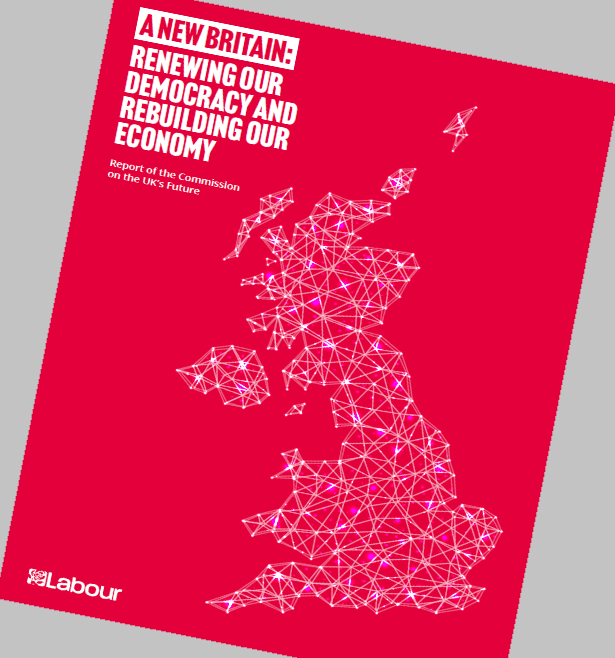
Signs are that the Party is thinking along these lines. In late 2022, the Party published a paper by the Commission on the UK’s Future, chaired by former Prime Minister Gordon Brown. This paper made various recommendations including:

  • Greater devolution of political power in England
  • Enchrenching in a new constitutional framework the Sewel Convention, which protects existing devolution in Scotland, Wales, and Northern Ireland.
  • Abolishing the House of Lords and replacing it with an Assembly of Nations and Regions

This paper is helpful in it starts an important debate about the future of political arrangements. Its strongest arguments are in favour of greater devolution in England, with the report highlighting the fact that the UK government is much more centralised than most others in Europe. It argues that current geographical inequalities in England are largely the result of this centralisation.

The current government’s Levelling-up agenda is also aimed at addressing regional inequalities, and included in its proposed reforms is greater devolution to local authorities. Both with the Conservative Government’s reform package and Labour’s proposals, there is still a lack of detail as to how this devolution will occur. Devolution to local government would require a significant funding boost, as current devolution to local authorities has been hamstrung by austerity and local authorities lacking resources. Establishing a regional government, similar to those in Germany, would be a logical way of ensuring regional decision-making, but would the public support the creation of another layer of government in England?

What the report proposes for Scotland, Wales and Northern Ireland are fine, but they avoid a bigger issue.

Northern Ireland is covered by the Belfast Agreement, now 25 years old. This agreement includes the provision for a border poll should the people of the Island of Ireland with it. Were a border poll to be held today, it is not entirely clear how this would go. But whatever the outcome, there would be a continued need for power-sharing, compromise and diplomacy given the history there.

The Commission on the UK’s Future report describes the union of nations as voluntary. Yet, the November 2022 Supreme Court judgement on the matter ruled that another independence referendum in Scotland could only happen with Westminsters’ consent. Regardless of one’s views on this issue, or indeed the recent issues with the SNP after Nicola Sturgeon’s resignation, if a union is voluntary then there must be some mechanism to leave. Even if the mechanism is a high threshold, such as 50% of eligible voters signing a petition calling for a referendum. That may not sound much, but getting 50% of eligible voters to do this would be a herculean task.

The blunt reality is, Labour’s opposition to Scottish Independence appears to be more motivated by a fear of losing crucial Scottish seats, as historically at least Labour did well up there. This may be very unfair, as many in Scottish Labour undoubtedly genuinely support staying in the union. But there is no denying that this impression has contributed to many former Labour supporters moving to the SNP since 2007.

Whilst the current strife in the SNP may change this, it would be incredibly naive to think that support for Scottish Independence will now completely collapse and the issue will go away. The argument that the people of Scotland already voted on this in 2014 holds little water given one of the key issues in that referendum was EU membership. The offer to the people of Scotland in 2014 was very different to the reality today.

Improve devolution and entrench the Sewel Convention by all means, but there still needs to be a mechanism by which the Scottish people can leave the United Kingdom if they so wish. This principle must apply to people living in other nations of the UK as well.

It is somewhat strange that a report that primarily focuses on the need for greater devolution in the UK includes a recommendation to abolish the House of Lords, yet when asked in the media, Gordon Brown said reform of the House of Commons (electoral reform) was out of scope. Either the report should just focus on devolution, which was by far the stronger section in the report, or it needs to include proposals for reform of both houses of parliament in Westminster.

In one of my posts following the 2019 election, I made the case for electoral reform, and in particular the need for UK Labour to sharpen its thinking in this area. Suffice it to say, three years on, having seen the results of a government that won 43% of the votes gaining 56% of seats in parliament, my view has not changed. What has changed, is that there is now far stronger support both within the UK Labour membership and more broadly for some sort of electoral reform.

In terms of the Lords, I declare my interest having worked on Piko contracts for two members of the Lords. My views of the Lords, and of the reform proposals are my own, not those of Piko’s clients.

The House of Lords is in need of some reform. At present, there are over 800 members, whereas the Commons only has 650 MPs. Whilst quite a few of its members have been appointed due to their expert knowledge and make important and meaningful contributions, the level of patronage, especially with Boris Johnson’s appointments, is simply unacceptable.

The Commission on the UK’s Future acknowledged the quality of committee reports from the Lords. I would add to this the valuable contribution of pre and post-legislative scrutiny, many of the amendments tabled at the committee stage of bills in the Lords and the overall quality of debate. This is due to the expertise and experience of many current Peers.

Any reform of the House of Lords should be careful not to throw the baby out with the bath water. Any reforms should protect what does work about the current House of Lords. One of the sad things about the current set-up is that many of the Lord’s reports get ignored by the government and get little attention in the media.

There is a strong case for a smaller, elected upper chamber. Having an unelected chamber means in reality its authority is reduced in the eyes of many. The Salisbury convention means it will not oppose the second or third reading of any government legislation promised in its election manifesto. During this term of parliament, the government have put forward legislation that attempted to breach international law and in some cases its own human rights legislation. An elected chamber might have been in a stronger position to push back.

Yet many of the unelected members today are not aligned to a party, and are there due to their expertise and experience. Any reform should consider how this pool of talent can still be utilised in any future structure, potentially through creating another role for current Lords with specific experience that parliament needs.

The proposal in the UK Future report is to replace the House of Lords with a democratic chamber representative of the nations and regions of the UK. Whilst this proposal is clearly to link it to the wider theme of devolution and empowering regions, its description of the new upper chamber sounds a lot like the current House of Commons. Given the poor performance of the Commons in recent years, this is hardly inspiring.

In reality, greater devolution, electoral reform and reform of the House of Lords and House of Commons need strong public buy-in. Slipping a few sentences into a party manifesto is simply not enough. Any manifesto commitment would need to be for something that furthers this important discussion, maybe a Commission on the UK’s constitutional and democratic future. But from there, any changes would need a direct mandate from the voters.

In New Zealand, electoral reform happened after two referenda, and a similar process would be needed in the UK. Unfortunately, post-Brexit, there is now a real fear of referenda as that experience was divisive, with many feeling the level of misinformation resulted in a bad decision. Britain’s political establishment must get over this, as ultimately referendums are the best tool to test public support of crucial constitutional or moral issues. The issues raised in the UK’s Future paper certainly fall into this category.

Were a Labour Government elected next year, its primary focus would be on the economy, just as it is for the current government. Constitutional reform would take time and a significant level of public engagement so that whatever ultimately was implemented, would work and have greater public support that the current arrangements. It would be very easy for this to be put in the too hard basket. Yet when public confidence in the institutions of government has fallen significantly in recent years, it would be a mistake not to take action in this area.

Gender recognition: woke-ism or human rights?

In late January, just days after the Government in Westminster blocked Scotland’s Gender Recognition Bill, the UK media widely reported the story of Isla Bryson the Trans woman being sent to a women’s prison in Scotland. Bryson was convicted of raping two women when she identified as a man.

Quickly, Bryson became the dominant narrative surrounding the Gender Recognition debate.

The sexual violence committed by this individual was horrendous. Further, it is understandable that many were concerned that she was sent to a women’s prison given this violence.

Isla Bryson does not represent the entire Trans community. This statement is not controversial and should be self-evident. Yet the reporting and debate surrounding this case and the broader issue of gender recognition in the UK illustrate that this is not well understood. Or, certain people in power, with willing allies in the media, are happy to frame the story in this way for their own political interest.

This is not just a story about Scottish devolution. Whilst this controversy will have contributed to Nicola Sturgeon’s resignation as First Minister, this is not the key issue. This is not just about an ongoing culture war in western society, specifically gender and so-called identity politics, though this is clearly part of the story. This is about something far more critical.

This debate is about every teenager, anywhere in the world, questioning their gender and sexual identity. This is about the person who after years of suffering, at some point in their lives decides they wish to identify as having a gender identity different to that of their birth.

This debate is about the awful statistics published in a Stonewall report in 2017 showing that:

● 92% of trans young people have thought about taking their own life;
● 84% of trans young people have self-harmed; and
● 45% of trans young people have tried to take their own life.

Stonewall School Report 2017

Recent moves to allow the trans community more rights and recognition have been met with opposition. Some of it is nothing more than prejudice and fear. But there is also an important debate to be had about gender and feminism, a debate which to date has been polarising and gets easily dismissed as a ‘culture war’.

TERF (trans-exclusionary radical feminist) is a term used to describe Germaine Greer, J K Rowling or other feminists who are critical of self-ID and other policies which allow people born as males to identify as women. Some of the comments made by these individuals and other TERF feminists have lacked compassion towards the trans community and understandably caused outrage. Some of the responses to these TERF’s has at times also been harsh.

We live in a world where people are socially conditioned to live and act in certain ways due to the gender of their birth. There are biological differences between men and women, yet society places considerable expectations on the role one must play in life based on this. For example, the idea historically that women were homemakers or were more suited to nurturing. Men my contrast are expected to show strength, not show emotions and be the “breadwinner” for the family.

Historically, and still today other societies have viewed gender differently to western society. For example, matriarchal societies continue to exist in parts of the world. In Samoa, the Fa’afafine non-binary or third gender has traditionally been part of their culture.

In our society, we have for centuries lived as a patriarchal, male-dominated culture. It is only just over a century ago that women were given the vote. Within the last half-century that same-sex relationships were decriminalised, and same-sex marriages were legally recognised. While there has been social change, we cannot pretend that old conservative attitudes towards gender and sexuality do not still dominate much of society. It should be no surprise that attempts to change gender recognition laws will be met with resistance.

We also need to understand where some of this opposition comes from. Whilst for many, opposition to trans rights is from a place or fear or lack of understanding. But there are also many who fear what many happen if someone born as a male, can identify as a women, and enter women-only safe spaces.

Figures from Rape Crisis show that one in four women have experienced rape or sexual assault in their life. Women are disproportionately more likely to be victims of domestic violence and homicide. The vast majority of these crimes are committed by men towards women. It is in this context that some fear men being able to identify as women, and why the Isla Bryson case, resulting in such a strong public backlash.

Of course, many of the horrendous statistics on rape and assault of women are as bad and often worse for the trans community. Where are the safe spaces for the trans community? Why should only someone who is a women by birth have access to things like women’s toilets?

The argument goes that the experience of someone born a women is not the same as that of someone who is trans. Except, not all people born women, or men, have the same experience living as that gender. The problem is, our society still has quite a rigid gender binary structure. Over the last century, this has been challenged and moved to an extent but is still largely intact.

It is easy to dismiss this discussion and debate as liberal wokism. For conservatives, both big C and small c, this all feels like a distraction about a small minority. The tendency is to either ignore the debate or use it to divide political opponents, as recently occurred in Scotland.

From a human rights perspective, we should be aiming to build a society where people are not forced to live within strict gender identities, determined by their sex at birth. Should someone wish to change their gender, they should be supported and made to feel safe and loved.

At the same time we cannot ignore voices who fear unintended consequences of reforms. Trans women competing in women sport or men identifying as women potentially committing crimes against women. These issues are not straight forward. The root of the problem is that our structures remain still very binary in terms of gender, and changing this is not easy. Creating safe spaces for people who are non-binary would certainly help, be it in sport or creating safe spaces.

At present, this debate continues to polarise and quickly inflame, with little really improving. For the 14 year old current questioning their gender identity, this debate must add to their stress and confusion considerably. It is for them, and anyone else struggling with their gender identity, that we must now try to move this debate onto human rights.

Natural disasters test new leaders in New Zealand – some did better than others.

The first real test of any political leader is how well they perform in a crisis. For New Zealand’s Prime Minister Chris Hipkins this test came very quickly.

At the time of writing, New Zealand is recovering from Cyclone Gabrielle, the worst weather event the country has suffered in living memory.

Cyclone Gabrielle is the second major weather event New Zealand has suffered in the last month. At the end of January, just days after Chris Hipkins becoming Prime Minister, Auckland, the country’s biggest city faced major flooding. This was not only the first major test of Hipkins as Prime Minister but also of the recently elected Auckland mayor Wayne Brown.

It would be unfair to claim that Mayor Brown has no previous political experience. 15 years ago he served one term as mayor of the Far North District, and prior to this had been a member of the Auckland District Health Board. But primarily, Brown’s experience was in the private sector as an engineer and property developer.

Brown’s election as mayor in October 2022 ended 12 years of Labour dominance of the Auckland mayoralty. The election of a right-of-centre mayor in New Zealand’s largest city was seen as an indication of what might happen nationally in the 2023 General Election.

After the Auckland flood, Wayne Brown’s election will now be viewed as a cautionary tale. What can happen when someone who is inexperienced and unsuited to political office is elected to important political leadership roles. The blowback of this on the New Zealand right should not be understated, it is bad news for them.

Brown, albeit reluctantly, admits he “dropped the ball“. Much like Liz Truss, who blamed her disastrous few weeks as UK Prime Minister on poor communication, Mayor Brown claimed his communications were ‘slow’.

The key criticism of Brown was that he was slow to declare a state of emergency in Auckland. During the crisis said to one journalist that “it was not his job to rush out with blankets.” In a text, to friends, Brown complained that he could not play tennis during the weekend of the floods as he “had to deal with media drongos over the flooding.”

Probably the most cringe-worthy moment was the joint media conference the Mayor did with the Prime Minister and two other Government Ministers. Brown was defensive and sounded out of his depth, whilst Chris Hipkins sounded like a Prime Minister.

I first met Chris Hipkins back in 1998 at a fundraiser for the Rimutaka (now Remutaka) Labour Party at the now-closed Plates Restaurant. He had been head boy at Petone College and led the campaign opposing the closure of his old school the by then Tory Government. Slightly older than me, Chris was VUWSA President a few years before me. Living in London at the time, he kept in contact and gave useful advice whilst I was President – including once when he reminded me that it was Saturday night in New Zealand, so I should go out and have fun instead of worrying about the Students’ Association budget.

After Student politics, Chris spent a brief spell in the private sector before working in parliament as an advisor to Helen Clark’s Government. In 2008 he became an MP and quickly was promoted to Labour’s opposition front bench. After Labour came to power in 2017, Chris has served in various senior Ministerial roles.

One of the big criticisms of ‘career politicians’ is that they do not have enough experience outside of parliament. It is true that within a parliamentary democracy, it is important to have diversity and people from different backgrounds. The same is true within the cabinet. However, the Prime Minister is in a political leadership role, the most senior politician in the country. Experience in politics is crucial, and it is something that Chris Hipkins has.

The implications of all this for the NZ Leader of the Opposition, Christopher Luxon, are not great. Luxon, a first-term MP elected to parliament in October 2020 wishes to be New Zealand’s Prime Minister in October. His experience prior to 2020 is in the private sector, most notably as CEO of Air New Zealand.

Having worked in and with the private sector through my company Piko, I accept that there are transferable skills from private sector leadership roles through to political leadership. But there are differences. In government, there is a need to manage ambiguity, much more so than when managing a company. There are far more competing priorities, all of which can have a profound impact on people’s lives. And when things get really tough, like during the COVID-19 pandemic, business leaders rely on the state for support. Therefore it falls to Government in a time of crisis to make the tough calls.

Diversity in politics is important. Yet on the right, the call isn’t for diversity. Instead what is often called for is people with “business experience”. CEO of big companies, high net-worth individuals who have done well on the money markets and other c-suite executives. Transferable skills from this sector can well help in political leadership roles, but these alone are not enough, other skills and experiences are needed to be a success.

By contrast, working as a parliamentary staffer, or in the public service, is viewed as being at risk of government groupthink. Worse, that promotion may be through nepotism rather than ability. There is always a risk of these things but has also worked with the public service and in parliament, it would be easy to overstate this risk. What you do get in these roles is close exposure to how the machinery of government works. My work in the British parliament over the last three years has taught me this. Parliamentary staff role offer valuable experience for anyone in a senior political role.

The Auckland floods and the current cyclone have highlighted the importance of political experience. Chris Hipkins, having served as a Minister during The Christchurch Mosque Terror Attack, COVID-19 and the cost of living increase is no stranger to a political crisis. He and his team instinctively know how to respond, when to open the emergency Beehive Bunker and how to communicate clearly to a worried public during these difficult times.

The events in the last few weeks have highlighted that in politics, actual political experience really counts.

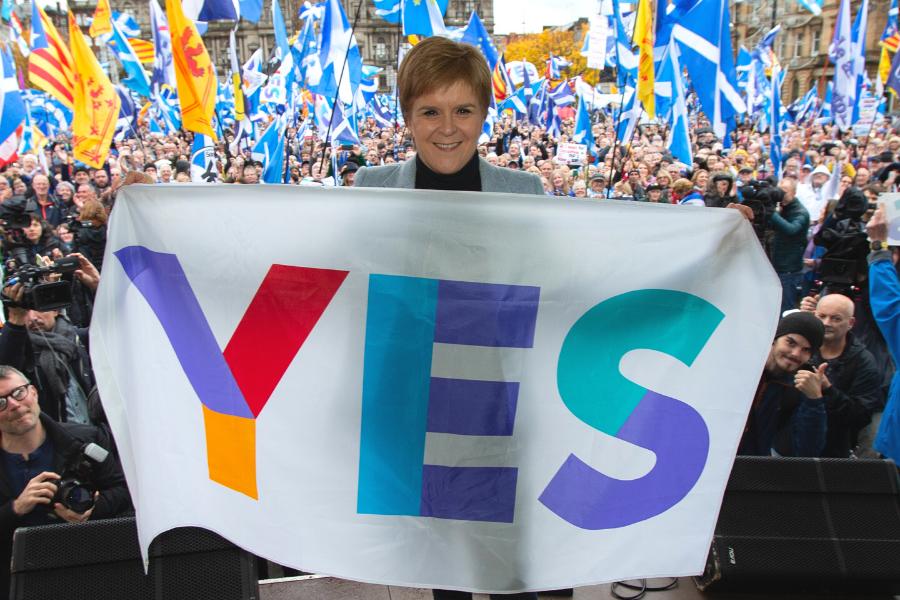
Nicola Sturgeon’s resignation and Scottish Independence.

The resignation of Scottish First Minister Nicola Sturgeon today took many by surprise. Her leadership of the Scottish National Party (SNP) and Scotland since 2014 has seen support for her party, and the cause of independence, increase significantly. Whilst recent controversies have dented her support, were an election held tomorrow the SNP would be re-elected to Holyrood and would win the most Scottish Seats in a Westminster election.

Much like the recent resignation of Jacinda Ardern in New Zealand, Sturgeon’s resignation comes after many years of hate and vitriol from political opponents. This was alluded to in her resignation announcement:

The First Minister is never off duty, particularly in this day and age. There is virtually no privacy. Even ordinary stuff that most people take for granted, like going for a coffee with friends or for a walk on your own becomes very difficult. And the nature and form of modern political discourse means that there is a much greater intensity – dare I say it? – brutality to life as a politician than in years gone by. All in all, and actually for a long time without being apparent, it takes its toll on you and on those around you. And if that is true in the best of times, it has been more so in recent years. Leading this country through the Covid pandemic is by far the toughest thing I’ve done. It may well be the toughest thing I ever do. I certainly hope so. Now by no stretch of the imagination was my job the hardest in the country during that time. But the weight of responsibility was immense, and it’s only very recently, I think, that I’ve started to comprehend, let alone process, the physical and mental impact of it on me.

https://www.bbc.co.uk/news/av/uk-scotland-64650792

In recent weeks, Sturgeon suffered political setbacks, which may have led to this decision today.

The first of these was the Supreme Court ruling in late November 2022 that a second referendum on Scottish Independence cannot be held, unless Westminster agrees to it. Controversially, Sturgeon’s response to this decision was that the next general election should be treated as a defacto referendum, something that SNP supporters are quite split on.

The second was the Gender Recognition Reform (Scotland) Bill. This Bill reduced the legal age someone could apply for a Gender Recognition Certificate. It also removed the need for a medical diagnosis and evidence of having lived for two years in their acquired gender. The response of the Conservative Government in Westminster was to make an order under the Scotland Act 1998 preventing this Bill from proceeding to Royal Ascent.

This was shortly followed by the controversy of a Transgender woman in Scotland who had been convicted of double rape being assessed for a women’s prison. Whilst this was an isolated incident that was quickly addressed by the authorities, it was quickly used as a weapon to attack Sturgeon’s “woke agenda”.

The English press, and in particular the Tory Press, has run a concerted campaign of attacking Sturgeon and the SNP for years. Pro Conservative newspaper The Telegraph have predicted doom for the Scottish Independence movement many times. For example, former SNP leader Alex Salmond formed Alba and has even gone as far as to describe Scotland as a “failed state” under Sturgeon’s leadership.

Despite investigations of breaching the Ministerial Code, which Sturgeon was cleared of, many in the media talked up her imminent political demise prior to the 2021 Holyrood elections. Others claimed that if the SNP did not win an outright majority, it showed there was not really support for independence in Scotland. That the SNP and Scottish Greens, who also support independence, did gain a majority in the 2021 Scottish election is conveniently downplayed by much of the media, especially in England.

My previous post asked whether political leadership mattered. Nicola Sturgeon as SNP leader has been a strong advocate for independence, and this will undoubtedly have contributed to increased support for this cause.

Like all leaders, she will be remembered most of all for how she responded to events. Sturgeon was an outspoken critic when the British Government struggled to get a Brexit deal through the Commons, regularly reminding the world that Scotland had voted to remain in the EU. During the coronvirus pandemic, Sturgeon was viewed by many as a strong and competent leader, in stark contrast to the incompetent actions of UK Prime Minister Boris Johnson and his Conservative Government. And in 2022, when the Truss/Kwarteng Mini Budget did enormous harm to the economy, Sturgeon was characteristically forthright in her condemnation.

While Sturgeon’s strong leadership and vision have helped build support for Scottish Independence, the Conservative and Unionist Party’s arrogance and self-serving incompetence in government have greatly aided her in this. Under the Tories, many Scots have become convinced they would be better off leaving the United Kingdom.

Polls show varying levels of support for independence. Overall, support for independence is higher than in the 2014 referendum. Further, the SNP continue to dominate Scottish politics, and a new leader is unlikely to change this. Those who believe Sturgeon’s departure spells the end for the independence movement will likely soon be disappointed.

The great man of history theory – does leadership matter?

Shortly after I started as a bus driver at Go Wellington as a Bus Driver I recall overhearing drivers talking about the company changing shifts to reduce drivers’ overtime pay. One driver, a former bank teller believed the problem was the union leadership. In his view what the Tramways Union needed was “a smartly dressed lawyer in a suit and with a good haircut to come and sort everything out.” Instead of this, the drivers ended up with me as their union president, no suits but I did eventually get a haircut. More importantly, what drivers got was a democratic union where drivers stood together and improved their pay and conditions.

The Great man of history theory is nothing new and has been quite seriously rebuffed by historians for many years. In Leo Tolstoy‘s War and Peace he firmly rejected the “great man” (and when he wrote this in the 1860s, it was men who were being written about), a theory claiming that in fact, they are only “history’s slaves.”

Yet, much of history is still written about and from the perspective of our leaders. In politics, it is a truism that leadership is of paramount importance, yet few can really define what ‘leadership’ really is. The common features tend to be personal strength, decision-making powers, bringing together and managing a team, the ability to communicate, and in effect being the human embodiment of a political ideal or movement. More cynically, money, good looks, fame, and various superficial qualities also help.

It is certainly true that the performance of a party leader can decide an election result, and this is understandable as they are in a position of responsibility where they must exercise judgment. The risk though is that the personal qualities or weaknesses are given greater emphasis and boring detail like tax policy is reduced to who came up with the best slogan or soundbite.

This issue is not a new one. Whilst it is currently vogue to blame all the world’s ills on social media, the reduction of politics down to a popularity contest of leaders predates Twitter. It has probably always been a feature of politics and certainly something that has constantly been a feature of democracies. Leaders with deep voices for example have tended to perform better, as physiologically we find them more authoritative.

The problem is, once we understand that to be a successful leader it helps to have certain qualities and mannerisms, those with ambition quickly start to act the part. Building a personal brand based on characteristics common among successful leaders has become the tried and trued playbook of many ambitious upcoming politicians, business leaders, and others aiming for positions of power. Maybe this is just smart and anyone who is ambitious needs to learn these unwritten rules? But when many believe politics and civil society is in decline, should we not think more critically about leadership?

There can be very little doubt about the importance leadership has played in recent politics. My recent post about Rishi Sunak and the state of the British Conservative Party outlines, the challenges facing the UK Government today make it very difficult for the Tories to win the next election. Whilst Rishi Sunak certainly has some of the qualities of a successful leader, he is simply too constrained by the situation he faces to really lift support for the Conservative Party now, though this may change. Likewise in New Zealand, Jacinda Ardern’s meteoric rise to power in 2017 and global popularity shortly after, dissipated throughout 2022 as the current economic crisis hit.

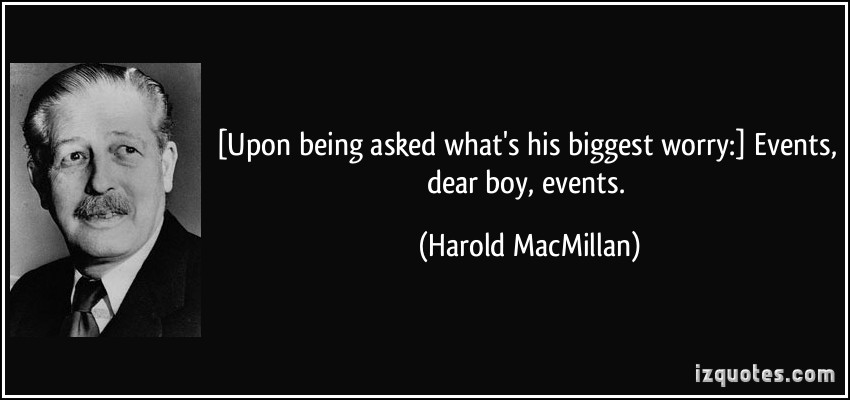
To paraphrase Harold MacMillan, what shapes the course of political history is “events dear boy, events”. Having certain qualities can get one into leadership positions, but ultimately one’s time in power is judged by how one responds to events. And more often than not, leaders only have limited control of these or their own legacy.

UK Labour – can they finally beat the Tories?

Labour in the UK currently has a double-digit lead in polls ahead of the Conservatives. The Polls immediately after the Truss/Kwarteng mini budget gave Labour their biggest lead ever, with a lead of 33% over the Tories. This has since fallen back to a 20% lead, still making Labour the strong favourites were an election to be called today. For this reason, there will be no election in the next year if the Conservatives have anything to do with it. The next election must be held at the latest in January 2025, and in all likelihood will be sometime in mid-2024. Given how terribly the Government has performed, it is hard to see how they could make it back even if the economy begins to recover.

However, just as one should never underestimate the UK Conservative Party as an electoral force, one also should never underestimate the UK Labour Party’s ability to clutch defeat from the jaws of history. It is just under two years ago that Labour under the current leadership of Keir Starmer lost the Hartlepool byelection, a so-called red-wall seat previously held by Labour since 1964. Much has happened since then but given how quickly things change in the current political climate, who knows what will be happening in 2024.

After the last UK election, I wrote a series of posts assessing why the UK Labour Party Lost. Shortly after this, a leaked report showed that factionalism was so bad within Labour that members of the Party head office tried to sabotage the 2017 election for the party as their favoured faction was not in charge. At the time few could see Labour making it back to power in 2024, with many predicting that Boris Johnson would be Prime Minister for the coming decade.

Writing those posts got me some interesting feedback. My post critical of the role of the ‘Blairite faction’ resulted in various Labour members associated with Progress and Labour First contacting me to say that I was obviously an insane Corbynista and dangerous. Later that day I posted another post critical of the role Momentum had played in the 2019 election, to which various supporters of the Corbyn loyal faction accused me of being a Blairite and a dangerous right winger. Whilst it was water off a ducks back to me, it showed how deeply divided and unwilling to engage all factions were at that time.

Starmer was elected Leader of the party in April 2020 having run on a platform of trying to bring the factions together. Specifically, Starmer’s campaign would continue the popular policies from Labour’s 2017 manifesto would be the ‘basis of the Party’s ‘foundational document’ for policy under his leadership. This recognised the fact that whilst Corbyn and the Momentum faction supporting him had become quite unpopular, the social democratic platform Labour ran on in 2017 was popular, more so than the party in itself. Now, in 2022, Starmer has said this document is being put to one side and instead the party will be “starting from scratch” leaving many to ask, what will Labour’s next policy manifesto look like?

The backdrop of course is the coronavirus pandemic and the economic chaos it has caused, followed by the Russian invasion of Ukraine. Added to this is the economic ineptitude of the Truss and Kwateng mini-budget has meant the UK find itself in a very difficult economic situation. The challenge for Labour now, is that it needs to be seen both as credible economic managers who can repair the damage caused by the current government, yet also present a programme that addresses growing inequalities. In particular, it needs to address the fact that most people under 40 in the UK are now significantly worse off financially than their parents were at that age. The younger voters who supported Labour in the 2017 ‘youthquake’, who were disproportionately disadvantaged after the last decade of austerity, are looking to the opposition to address the growing inequalities and to create a new social contract that works “for the many, not the few.”

It is not clear how the current Labour leadership will address this, with the prevailing thinking in the party now being that people on the left have nowhere else to go, and the priority for Labour now being to win former Tory voters over. The risk is that younger voters and voters on the left become disillusioned and stay at home, or cast a protest vote for The Greens or some other candidate. This may not seem a problem now, but if polls begin to narrow by 2024, stay-home or protest-left votes in a First Past the Post electoral system could be fatal in marginal constituencies.

The current Labour leadership wish to put as much daylight as possible between the Party now and the Corbyn years. This has meant distancing themselves from some of the more popular parts of the 2017 manifesto, including public ownership of rail, energy companies and other public services, despite most party members and the British Public favouring nationalisation in this area. Starmer and shadow chancellor Rachel Reeves have said such policies do not stack up against the Party’s fiscal rules. This could create tension for a future Labour Government. Internally, the Government would be fighting both the ‘soft’ and ‘hard’ left on these issues. Also, many voters, not only those who vote Labour, would become frustrated if the private companies continue to profit from a rail system that’s expensive and unreliable or an energy market that forces people into poverty.

At the same time, those on the left of Labour need to accept a few hard facts. The 2019 election defeat was a devastating loss caused in no small part by missteps, poor tactics and wrong policy calls by Corbyn, his advisors and Momentum. Also, Labour may have increased its vote considerably in 2017, but despite losing seats, the Tories also increased their overall percentage of the vote and got more votes than Labour.

Jeremy Corbyn’s suspension from the party has seen hundreds of members, including many branch chairs, have their membership also suspended for allowing motions of solidarity with Corbyn to be moved. Corbyn’s comments in response to the antisemitism report were ill-advised, but so too has been this clumsy night of the long knives against his supporters in the party. The party has suspended members or excluded them from MP selecton for sharing articles from proscribed organisations, mostly socialist. In the case of one Milton Keynes Councillor Lauren Townsend, she was blocked from standing as an MP for liking a tweet about Sturgeon testing negative for Covid-19, hardly an act of supporting a political rival. Labour also expelled filmmaker Ken Loach, maker of ‘I, Daniel Blake’, again for associating with proscribed organisations rather than actually belonging to them.

Corbyn has done himself absolutely no favours with his frankly idiotic position on Russia’s invasion of Ukraine, calling on the west to stop arming Ukraine and aligning with the Stop the War coalition’s position which appears more critical of NATO than Russia. This has now made it very easy for Starmer’s team to say that Corbyn will not have the whip restored. The left has now spent two years wasting energy trying to defend Corbyn and campaigning for him to get the whip restored. This absolutely plays into the hands of their opponents who now have good reason to expel leftists for not showing solidarity with Ukrainians.

Compare this to the US Democrats where Jo Biden’s former rival Bernie Sanders is now chair of the Senate Budget Committee, and a clear pact was made between the left and the moderate factions of the party to help beat Trump in 2020. Electoral politics is about building coalitions. The left in the UK needs to accept they alone do not have majority support and need to work with what they term the “soft left” and more centrist factions to win. The current Labour leadership need to ensure that the left still has a stake in Labour winning, and give enough to motivate the left to vote and campaign for Labour. In 2020 the Democrats learnt the hard lessons from 2016 when Sanders supporters were shunned by Hillary, resulting in many not supporting her campaign after the primaries and ultimately allowing Trump to win. In 2020, the Biden campaign made sure the left had a stake in a Democrat victory, and it paid off.

The fact is that to win elections, especially in a First Past the Post electoral system, a party needs to build a coalition of support. In 1997, UK Labour was able to build a coalition which in addition to the people who’d supported it throughout the Thatcher years, voters who’d supported the Thatcher project and its broad economic programme, but by the mid-1990s wanted something new, more socially liberal and slightly more moderate economically. This coalition held for three elections, but in 2010 many from this group of voters had drifted to the Lib Dems under Nick Clegg or back to the Conservatives under David Cameron who promised a more socially liberal and compassionate conservative party.

Starmer and the faction around want to build back the same coalition of voters they had in 1997. The problem is 25 years later, which included a decade of austerity, the voter demographics are more polarised and complex. The Conservative Party in 2022 has been forced to abandon Thatcher economics that Truss and Kwarteng tried to resurrect from the dead, and instead are now raising taxes, including for top income earners. The so-called centre-ground in politics is not the same as that in 1997. In fact, the term ‘centre’ is lazy political shorthand as if voters are easily categorised into ‘left’, ‘right’ and ‘centrists’ the latter swinging between the two and acting as king-maker. It has always been more complex than this, with people being more socially conservative on certain issues or economically liberal on others. The Brexit debate cut right across the old political divides with people across the spectrum, across class devices and cultural backgrounds being completely divided on the issue. A working-class voter in Hartlepool was not considered a swing voter until very recently, nor was an upper-middle-class voter in Kensington. Yet in the 2020s these voters will be part of the much larger ‘swing vote’ that will decide the next government.

Then there are the four nations of the United Kingdom. The majority of UK voters live in England, so inevitably this is where elections are won and lost. Historically, Labour has performed well in Scotland and Wales, with Northern Ireland having its own difficult history and different parties. Labour still performs well in Wales, having controlled the Welsh Senate since its creation in 1999. The 2021 deal between Welsh Labour and the Welsh nationalist party Plaid Cymru has been clever in securing broad support of support within the devolved government there.

The situation in Scotland is nowhere near as rosy. Traditionally, Scotland was a Labour stronghold, yet in the 2019 election, the party won only one seat up there. The Scottish National Party (SNP) have controlled the Scottish Parliament since 2007. There was a small amount of comfort for Labour in the 2022 local council elections where Labour came second to the SNP, but still a long way behind. Even the polls showing Labour with a 33% lead over the Tories nationally, had Labour was far behind the SNP in Scotland. Whilst support for independence hovers around the 50% mark in Scotland, it is consistently higher now than during the last independence referendum in 2014. The SNP have been clever to build a coalition of former Labour left voters and Scottish nationalists including some from the centre-right. By contrast, the various deals being done by Labour with the Conservatives and Lib Dems to stop the SNP risk doing more long-term harm to Labour’s chances in left-leaning Scotland.

For Labour, the strategy to win not only the next election but to start winning more often in the UK is to win over more English voters, as over 80% of the population live there. English voters have traditionally been small ‘c’ Conservative and large the ‘C’ Conservative Party usually do well, especially in the South outside of London. A wholesale return to Corbyn’s era politics is unlikely to shift this. In the short term, Labour with more of a 1997 flavour may win the next election, but it is not 1997, and very soon voters will grow restless.

English voters might be conservative but may see the need for economic reform so more people have opportunities. They will expect serious government interventions in housing, employment, education and transport. Already we have seen a Tory Government partially renationalise the railways, increase taxes to fund social care and lift Univeral Credit (the UK’s universal benefit), things the Tories would not have considered in the 1990s. The fact is society has changed. And in politics. you need to adapt. Traditionally the Conservative Party are much better at this than Labour. Whilst the Tories will probably now lose the next election, but, the size of their loss and Labour’s win will determine how long they spend in opposition. For Labour, winning more often will require nuisance and being adaptable. Yes, learn the important lessons from 1997, but know that times are now different and so too are policies and tactics. The left may not be strong enough to win, but they are still too big a block now to ignore and are more significant than in the 1990s. Like the Biden campaign, Starmer’s team will need to give the left something that means they can at least give grudging support. In turn, the left need to accept that a few important gains are better than none at all and the great cannot continue to be the enemy of the good or even the ok-ish.

The next election could well go to Labour, or at least be lost by the Tories due to their ineptness at running the country in the last few years. Labour’s internal problems have not gone away, it is just that the Conservative Party’s internal issues are now a lot worse and unusually for them have been aired in public. The opportunity for Labour is to build a winning coalition that helps them win not just the next election, but to start winning more than they lose.

Can Rishi Sunak save the Conservative Government?

On October 25 2022 Rishi Sunak became the fifth leader of the Conservative Party since they came to power in 2010. Having lost the membership ballot in the summer, Tory MPs having seen the polls after the Mini Budget and facing the prospect of electoral annihilation, coalesced around Rishi Sunak and ensured he was the only person on the ballot. In short, MPs no longer trusted their party membership after the Liz Truss fiasco.

Following on from Party Gate, and the troubles the Conservative Party faced in 2022, Rishi Sunak will be hoping for a scandal-free year and an economy that starts to recover. It has not got off to a very good start, with Party Chair Nadhim Zahawi facing allegations of tax issues which will be investigated by the independent ethics advisor. Meanwhile, the economic outlook for Britain is weaker than expected.

When a new Prime Minister comes in and appoints a new Cabinet it is referred to as a “new government.” This wears somewhat thin when many of the “new” Cabinet Ministers have served in previous governments, many only a few weeks earlier. The likes of Michael Gove, Dominic Raab or Penny Mordant have served under previous Prime Ministers pursuing the same Conservative Party policies in Government. The Conservative Party were elected in 2019 on a Manifesto that the public expect them to implement. The accumulative issues of the last 12 years or the last 12 months have not disappeared with a change at Number 10.

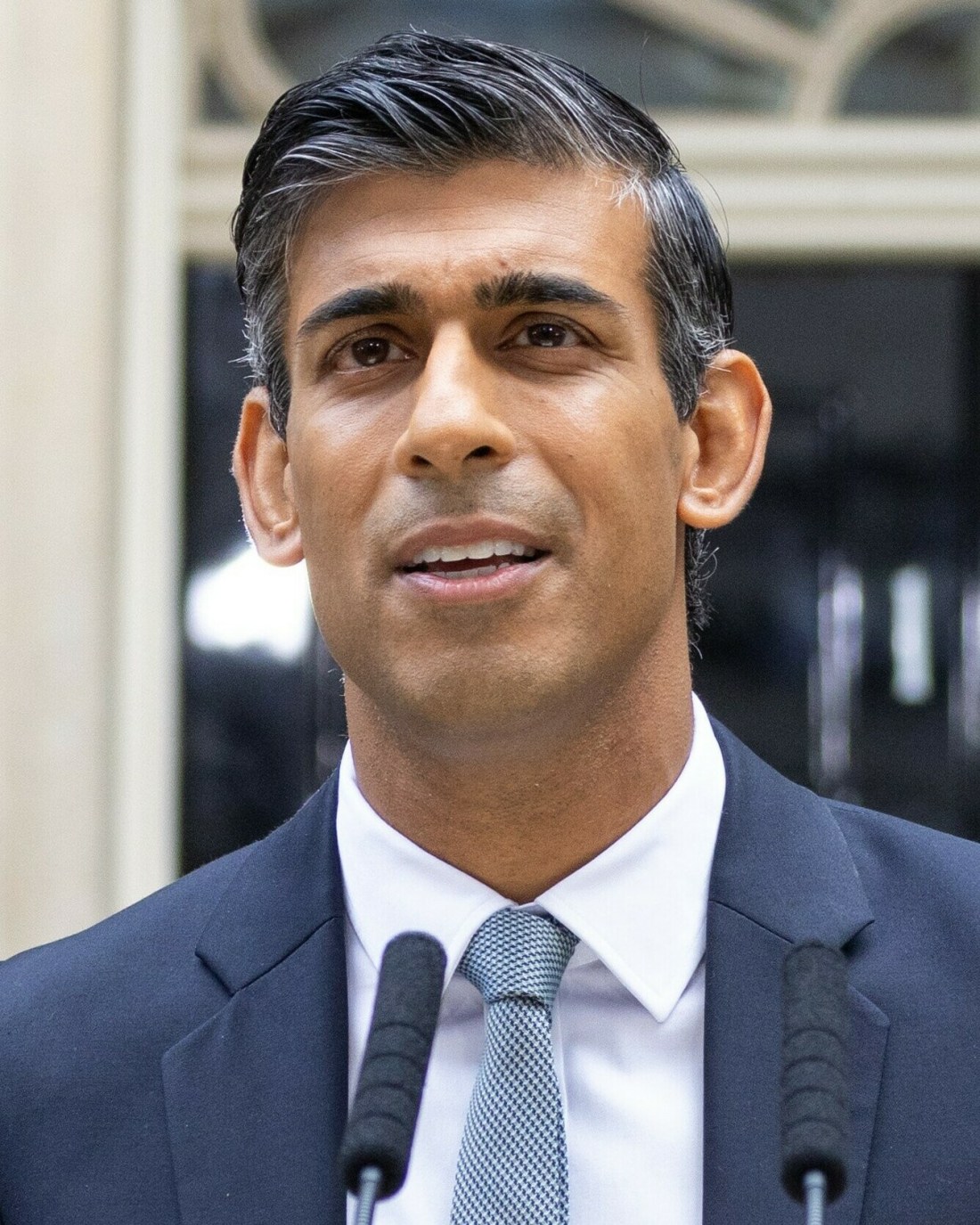
25/10/2022. London, United Kingdom. Prime Minister Rishi Sunak arrives in Downing Street. Picture by Lauren Hurley / No 10 Downing Street

The Truss libertarian experiment, described by Paul Goodman editor at Conservative Home as the economic experiment, which blew the roof off the chemistry lab. The Conservatives, having learnt in 2017 that policies of austerity are electoral Kryptonite, now face the reality that small government libertarian policies much craved by many tory members, simply will not work. Sunak inherits a party bereft of ideas and vision and is now forced to increase taxes to pay down public debt and fund public services such as the NHS. Promises made in 2019 to cut taxes would have been difficult to implement before the pandemic, now they simply are not possible.

The longstanding problem with British politics, as other commentators have pointed out, there is an expectation of European levels of spending on public services, but a naive view that the country can also have American levels of taxation. This is a problem not just for the Conservative Government, but for the opposition who once in government will have the choice of increasing taxes or slashing public spending. My next blog post will address this issue further.

Brexit is adding to Britain’s economic woes. In 2021 the UK faced a 14% fall in trade with the EU. The new trade agreements have not offset this, with deals like the one signed with Singapore largely mirroring Singapore’s deal with the EU meaning no gain from leaving the single market. In the case of the Australian deal, the desire to quickly conclude negotiations resulted in terms less favourable to Britain. There is no appetite from any of the main political party’s to revisit the decision to leave the European Union and to date little evidence that another referendum would see a different outcome. However, this becomes an issue of economic management with many leading Conservative politicians having boasted that having left the EU, Britain could negotiate favourable trade deals with the rest of the world. There is little prospect of a Free Trade deal with the US and the geo-political situation means deals with China are also unlikely, and in both cases, it is unlikely any deal would be favourable to Britain. The Conservatives since 2016 have talked of the opportunities of Brexit, yet have delivered few. This may not be top of voters’ priorities right now, but certainly, for many businesses, including those who have supported and donated to the Tories in the past, this is a serious problem. This is not a problem Sunak or any Conservative leader is likely to fix without going back on earlier commitments and renegotiating terms with the EU.

The Conservative Party are the natural party of Government in Britain and is the most electorally successful party in Europe. One of their great strengths is internal unity and discipline, much more so than Labour who more often than not air their dirty laundry in public. In the last 18 months, internal infighting has dominated the Conservative Party and ground the government to a halt over the summer while they elected a new leader, only for the winner to resign and be replaced by the runner-up weeks later.

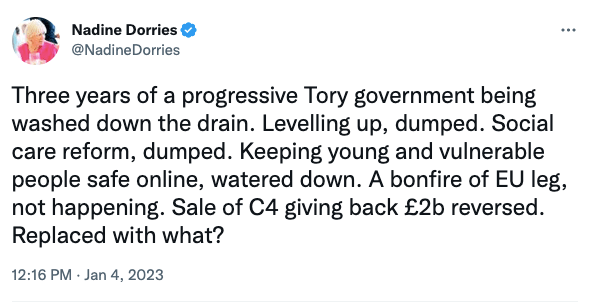
Sunak’s ascent to the top job has not reduced these internal divisions at all. The below tweet from former Minister and Conservative MP Nadine Dorries recently gives some idea of the simmering tensions within parliament:

The ‘Get Brexit Done’ coalition has fallen away with many former voters and supporters feeling disillusioned with the Tories’ performance in Government. Whereas in 2019, enough voters could get behind The Conservatives over Brexit, now there are fewer policies areas where the government have an advantage over the opposition. Attempts to attack Labour regarding recent union industrial actions have not landed so far. Many feel sympathy for striking nurses and feel health workers are not paid enough. Traditionally Rail workers get a bad rap for taking strike action without explaining their position to the public very well. RMT General Secretary Mick Lynch has been much stronger than his predecessors at making a case for his members. At the same time, with inflation above 10% many have sympathy with striking workers, and many more see the problem as poor economic management by the government even if they do not like unions going on strike. The current situation feels much more like the Ted Heath Conservative Government in 1973 than the Thatcher Government taking on the Miners Union a decade later.

It will be very difficult for the Conservative Party to win the next election. Certainly were an election held today the government will lose. But this is why there will be no election in 2023. In the best-case scenario, the economic situation is unlikely to improve until early 2024. Further to this, Sunak will want as much distance as possible from the Kwarteng Mini Budget, and this will take time. As well as an improved economy, the Tories will need to restore party unity both within their MPs and the broader party membership – who didn’t vote for Sunak.

A wedge issue, like Brexit, was in 2019, could help the Conservatives, but it is unclear what this would be. After 12 years in power, it is difficult to talk about ‘fixing the asylum system’ without it begging the question why haven’t you done so already? Slogans like a coalition of chaos about Labour and the SNP may have worked in 2015, but given the last year the Tories are in no position where they can accuse others of creating chaos. Certainly the 2017 slogan of strong and stable will not work again.

Despite everything that has happened, it would be a serious mistake to underestimate the British Conservative Party which has proven time and again to be an electoral force to be reckoned with. In England, where over 80% of British voters live, Tory is the default option in many parts of the country. The polarisation within Britain is high with tensions from the Brexit debate and ongoing calls for Scottish Independence still simmering. The Tories can certainly play these divisions to their advantage in the hope of winning support.

As the next post will discuss, Labour should be able to win the next election, but it is not a certainty yet. They have their own internal issues to resolve.