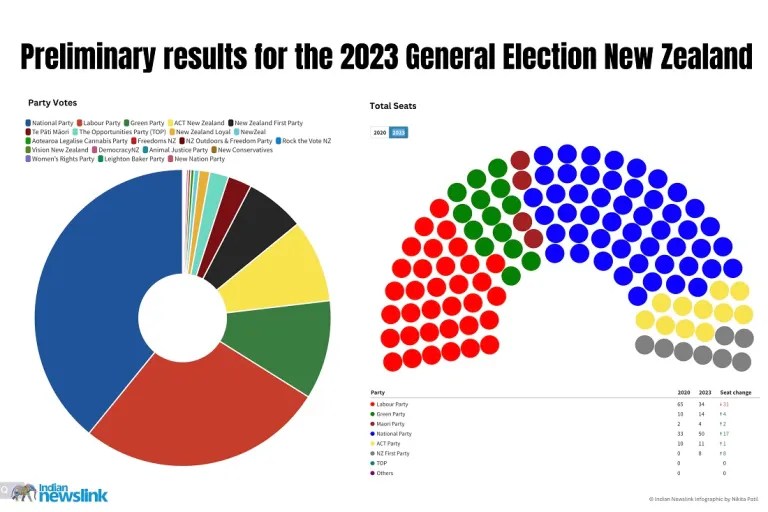
On Saturday Labour lost of General Election in New Zealand. Whilst there are special votes still to count, which make up roughly 20% of total votes cast in this election (including this author who voted from London), these will likely change the numbers in parliament but not the fact that there will be a change in Government.
Above: the provisional results of the 2023 NZ General Election. 20% of the vote is still to be counted and will not be known until early November
After UK Labour lost in 2019, I wrote nine fairly lengthy posts about why they lost. For NZ Labour the reasons can be summed up in a paragraph. I wrote two blog posts just for the election, one addressing Labour’s response to the Housing Crisis and another regarding their response to the coronavirus pandemic. It became apparent writing both these that Labour’s chances of winning were slim. On key policy areas like housing, but also education and transport Labour had over-promised in 2017 and underdelivered in Government. With the pandemic, unrealistic expectations were set, rather than properly preparing the public for community transmission post vaccinations, they locked down Auckland (the nation’s largest city) for weeks in 2021, only to have the inevitable community transmission throughout the country by early 2022.
In my post on historical trends and perspectives in NZ politics, I said that every time the National came to power since 1949, they have won a minimum of three terms. This is not inevitable for the incoming National Government. In part, this will be down to the performance of National, ACT and possibly NZ First in Government. It also will also come down to how well Labour perform in Opposition.
Immediately people will start speculating on the leadership. Yes, in politics leadership is critical. But the last thing Labour needs right now is a popularity contest amongst its remaining MPs, coupled with the weird parochialism that masquerades as factionalism in NZ Labour. Instead, Labour needs to grieve, try to understand and accept the loss, and then re-group and prepare to be the next government in 2016 (if not earlier).
NZ Herald reporter Simon Wilson made the following astute comment the day after the election:
One of the grat fallacies in politics is that there is a big middle ground of voters who like quiet moderation. Actually, voters want thing to be better. Those who swing from one party to another are not looking to reinforce the status quo. They have become disillusioned and want a shake-up
Labour needs to plan for government. Instead of glib slogans about fairness or positivity, Labour needs a believable plan to make life better for the people who are doing it tough right now. This does not mean over-complicated policy proposals, or arbitrary targets on building new homes. It means a clear vision with priority policy areas that resonate with the voting public.
NZ Labour will not be in government anymore. But the Party and its MPs must quickly start looking like a Government in waiting. This means a front bench with a mix of experienced and new MPs. Decisions about the party leadership should be part of this, but it is only one part.
There will need to be a reaffirming of commitments with The Green Party and strengthening alliances with Te Pāti Māori to show what a progressive centre-left government will look like next time. This work should be starting now.
In parliamentary politics, there are no final victories. After losing the 2023 election, Labour must now immediately focus on winning in 2026.
Watching the 2023 election campaign in New Zealand, one of Labour’s challenges appears to be that it has failed to manage voters’ expectations over the last six years.
Recalling the election campaign in 2017, Jacinda Ardern gave people hope that politics could be different. Moreover, the most significant social problems facing the country could be overcome by electing a government that promotes kindness and relentless positivity.
In early 2018 I wrote a post about the politics of hope, calling it a powerful and dangerous tool. In this blog post, I said the following:
Hope is one of the most galvanising and powerful emotions. It is the thing that has driven some of our greatest achievements as a species. It has kept people alive in times of despair and sorrow. It has driven movements for social change, such as the abolition of slavery and the civil rights movement. Hope is essential. Without it humanity cannot move forward.
But when hope is lost, it can be utterly devastating. Worse it can result in other powerful emotions, ones that drive people not to do good, but ill.
In 2023, many in New Zealand have lost hope. While the political and economic situation is arguably better in many ways than in other parts of the world, the difference in New Zealand is that people feel let down. And as I wrote in 2018, the results of people feeling this way can be devastating.
When NZ Labour won its historic majority in 2020, I wrote the following:
The coming term will not be an easy one for Labour, as the COVID-19 pandemic continues to rumble on and the world plunges into the worst financial crisis in decades. On Saturday Labour were rewarded for their handling of the crisis so far, but the hard part is yet to come. On the one hand, they need to rebuild the NZ economy at a time when international tourism is dead and export markets are volatile. But even prior to this the New Zealand economy was unbalanced and in a precarious state. Its over-reliance on dairy exports has made it vulnerable if anything happens to this market and resulted in over-intensive dairy farming which has harmed the environment – not a good look for a country that brands itself as clean and green. It also faces growing inequality with significant growth in homelessness and poverty in recent years.
This has indeed been a difficult term in government, and all the challenges described above came to be. Whilst this was never going to be an easy time to govern, after six years in power, three of which with a massive parliamentary majority, hard questions need to be asked about whether NZ Labour lived up to voter’s expectations.
There are two areas where the Labour-led government in New Zealand could have done a better job of managing expectations. One is Housing, and the second is the government’s handling of the COVID-19 pandemic. This post will focus on housing, and the next one on COVID.
Prior to the 2020 election, I wrote the following regarding the NZ Government’s handling of the housing crisis:
It is easy for both Labour and the Green Party’s to say they could not achieve all they wanted in their first term in government because of a difficult coalition partner. But this can only go so far. There are certain policy areas where the current Labour-led government have simply not yet delivered. At the beginning of 2019, Jacinda Ardern announced that it would be the year of delivery. Yet in policy areas such as decreasing homelessness, or the now ill-fated Kiwibuild program to build houses to combat the NZ Housing Crisis – delivery simply has not happened. Yes, these are difficult policy areas, but they are also policy areas where Labour took a strong stance in opposition.
The reality was and is that addressing the housing crisis was never going to be quick. A problem over three decades in the making was never going to be fixed within one parliamentary term. NZ lacks skilled construction workers due to apprenticeship programmes being cut in the 1990s. Since selling off the Ministry of Works in 1994, NZ has been reliant on large international companies for major public works, including major housing projects. These international firms have no sense of obligation to New Zealand and are price setters.
Even if the above were not issues, there still needs to be planning consents, environmental impact reports and other processes which means housing developments take time.
The problem with Kiwibuild was not only the slow pace at which progress was made but also that as a policy programme, it did not on its own mean thousands of low-income people could afford housing. It addressed a supply issue, but not related issues such as lifting people’s incomes and lowering deposit rates for mortgages.
In 2017 Labour and Green Party voters in New Zealand believed that Kiwi Build would tackle the housing crisis. The then opposition underestimated the challenge a mass building programme such as this would take. This does not mean it was the wrong policy, but that Jacinda Ardern and the Labour frontbench over-promised and under-delivered. Had they not done so, Labour’s vote may not have risen to a level where entering government was viable. But long term, this has now contributed to the challenges Labour are facing in this election.
The National Party’s track record on housing is abysmal. Nobody expects the National Party in power to do anything other than allow the wealthy few to own more and more property. In this way, National and the Right are much better at expectation management. They win not by exciting voters and giving hope, but through many voters becoming depressed to the point where they disengage.
The housing crisis is not unique to New Zealand as I wrote about back in 2018. Governments in English-speaking democracies in particular struggle with this complex problem, that has no single fix. Instead, it will take significant policy changes, but more importantly changes to public attitudes on home ownership, regulation of the rental market and in-fill housing. It takes a strong government to achieve such a change within the limits of parliamentary democracy. Until this happens, expect governments to keep falling at the ballot for inaction.
Earlier this year Andrew Marr wrote in the New Statesmen, that Britain’s problem was that it wanted Scandinavian levels of Public Services and North American levels of taxation. His view was that Britain was overdue for an honest debate about tax and public spending.
In New Zealand, there is a similar challenge. Politicians from the right have for decades put forward the myth that tax cuts will foster economic growth and be better for the economy. They instead lead to spending cuts, higher levels of user-pays and a deterioration of the public sector. Voters really dislike this, and demand governments fix the problem. Labour and other progressive parties will answer this call and promise to fix the health, education, public transport etc. Yet shy when the debate moves to funding these public services through taxation, too often the issue is fudged.
In New Zealand, a Labour Government is seeking re-election after six years in office. Though having made some decent moves, especially in the health system, it is clear that greater investment and improvements in public services are needed. Yet Labour has recently ruled out introducing a wealth or capital gains tax. There are strong arguments either way regarding these two forms of taxation. But having ruled them out, the question is, how will Labour improve funding to public services? Or is it content with things as they are?
Why has the Labour Government in New Zealand taken this policy position? And is it right to do so?
It’s the economy stupid
It is very difficult for governments to be re-elected when the economy is doing badly. The world over incumbent governments have struggled at the ballot box against high inflation and people’s disposable income taking a hit.
Inflation in New Zealand has been lower than in other countries such as the United Kingdom. However, the challenge in New Zealand has been the cost of living was high prior to the recent bout of inflation. Added to this the wage stagnation since the 1980s, increasing prices make life difficult for people.
Given this, there is a real reluctance to rock the boat or embark on any form of radical reform. New Zealand left commentator Chris Trotter (who went to school with my late mother at Heregaunga College – yes New Zealand is a small country) has argued that New Zealanders historically have wanted stability and normality and this election is no exception. He quotes the current Prime Minister’s comment regarding transformation.
Prime Minister Chris Hipkins spoke no more than the truth this past week when he warned those berating Labour for failing to deliver the “transformation” promised by his predecessor, Jacinda Ardern, to be careful what they wished for. As he rightly pointed out, the government of David Lange and Roger Douglas really did transform New Zealand – and it’s the consequences of that transformation (inequality, poverty, homelessness) that are driving the present demands for a new transformation.
There is undoubtedly a logic to what Chris Hipkins, backed by Chris Trotter claims above. Aside from the fact that in the 1980s Labour pushed new right reforms, against the very ethos and principles of the Labour Party, the speed with which these reforms were pushed through made for silly errors (e.g. selling assets for less than they were worth and sloppy legislation that lacked proper parliamentary scrutiny).
Voters may not be looking for massive social upheaval in the form of revolution or even radical reforms. But they expect the government to be addressing the social issues facing the country. Watch the leaders debate between Jacinda Ardern and Bill English in 2017. There can be no doubt that Jacinda promised the country that a Labour government would use every lever of government available to tackle the housing crisis, child poverty and poverty generally, low wages, and underfunding of mental health and the health system. Yet six years on, these problems continue and in some cases have gotten worse, in particular the housing market.
The government has had the excuse of the pandemic and then the cost of living crisis. However, it is worth noting that the first NZ Labour Government from 1935 to 1949 managed a massive programme of building social housing (state housing) during the Depression and through the Second World War. Things might be difficult, but it is still possible in the face of adversity to tackle the greatest social issues of the day.
Government responding to higher prices
One of the biggest challenges right now is the cost of living crisis. The government has come up with some reasonable responses to this. For example, increasing subsidies on Public Transport and a petrol tax exemption. Oddly, it decided to lift these subsidies weeks out from the General Election. If the thinking was that this would make them look like responsible managers of the economy, they needed to think again. A better move would have been to leave the subsidies on public transport and to delay ending the petrol tax exemption until mid-next year. As it is, people will now be paying more to get to work or drop their kids to school. This will drive up private debt and force more people into poverty.
The other recent announcement was a rehash of their 2011 policy of cutting the 15% Goods and Services Tax (GST) on fruit and vegetables. Whilst many both on the left and the right have been critical of this, there is merit in this policy. In the UK, there is no Value Added Tax (VAT) on fruit and vegetables, or in fact on most basic household items (bread, butter, etc.). Very few countries have the New Zealand model where sales tax is charged on absolutely everything. This is a regressive system that places the tax burden disproportionately on the poor.
The criticism of the GST off fruit and vegetables policy is that it will not make a significant difference to most households, especially with the transport subsidies ending. Another criticism is that it will reduce the take intake, placing public services at risk. This brings us back to the question, what level of public services do voters in New Zealand want? And how do they think this should be paid for?
The Tax Working Group
After forming a coalition with NZ First and the Green Parties in 2017, the Labour Government led by Jacinda Ardern established the Tax Working Group to investigate ways of reforming New Zealand’s taxation system and making it “fairer.” Some key areas under its purview included the Goods and Services Tax and alleviating the housing market.
In early 2019 this group reported back and recommended amongst other things In mid-February 2019, the Tax Working Group recommended that the New Zealand Government implement a Capital Gains Tax (CGT) and use the revenue generated to lower the personal tax rate and to target polluters. However, shortly after this Ardern announced that there would be no CGT while she was Prime Minister. This was a combination of pressure from NZ First, and polling showing public support was not strongly in favour of this.
Incidentally, the Bright-line rule is a form of capital gains tax, introduced by John Key’s National Government in 2015. Calls for a much broader capital gains tax have been loud from sections of the left for much of the last decade. Taxing capital gains is not the panacea many on the NZ left believe it to be. It is also not the only option to increase tax revenue, for example, things like a Financial Transaction Tax should also be explored.
What happened in 2019 was the debate on Capital Gains Tax was shut down. The recent discussion on wealth tax has now gone the same way. The two things Labour now need to consider are:
Are they still a party that stands for better funding for public services?
If so, how do they achieve this?
Other taxing questions
As already mentioned, NZ is unique in that it charges sales tax on absolutely everything. This is a very regressive form of taxation.
In some countries, the first $10,000 of income is tax-free, then is charged progressively. In New Zealand every single $ earned is taxable. In the UK, everything earned under £12,570 is not taxed, plus there is no VAT on most basic supermarket items. So while NZ has lower inflation than the UK, it punishes those on low incomes in other ways and has done so for decades.
On user pays NZ does not have a great record either. In the UK GP visits are free and have been since the NHS was established in 1948. In NZ GPs start charging when you turn 13. The current debate about free dentistry in NZ is important. Currently, dentistry is too expensive for many on low incomes.
There is a strong case for free dentistry across the lifecourse to improve overall population health. This may even help reduce the overall health spending in the long term. But there needs to be a decision by the voting public that there will be a tax regime to cover this service. The debate is starting in New Zealand, but until the tax question is resolved, progress will be frustratingly slow.
Tax, public services and the 2023 election
So of the two main parties National are proposing tax cuts but cannot explain how it will fund them. Labour, fear raising taxes will cost them swing voters, but not doing so is demotivating their base.
Minor parties are engaging in this debate, with both the Green and Maori Parties proposing wealth and other tax increases. On the right, the ACT Party is advocating over $1 billion in spending cuts. Whatever the issues with each of these party’s respective policies, they at least address the central issue that current tax levels are not sufficient to maintain quality public services. So the choice is to find ways to fund them, or as the ACT Party propose, give up and make people fend for themselves. That is the choice.
I rejoined the NZ Labour Party in 2013, after a few years of absence, and I will be voting for Labour again this year. If Labour does win a third term in office, the issue of tax and funding public services will need to be addressed.
A year ago this month, the Liz Truss/Kwasi Kwarteng mini-budget destroyed once and for all the myth that the Tories are better at managing the economy. The New Zealand National Party could not even wait until they were in government to prove the same applies to them.
National, the main centre-right party in NZ politics have released a policy which economists claim does not add up. National argues their proposed foreign buyer’s tax will raise $2.9 billion. However, analysis from three independent economists does not back this claim. Instead, they estimate a $2.1 billion shortfall over a four-year period.
National are under increasing pressure to explain how they will fund their other tax cut policies. The foreign buyer tax policy was supposed to explain the shortfall. National has not released the fully costed workings of their policy and instead has fallen back on sound bites and slogans.
Like in the UK a year ago, there are real fears that cutting taxes during a cost of living crisis will drive up inflation. Further, if the so-called foreign buyer tax will not cover the shortfall, the only other option is severe spending cuts on public services or heavy borrowing. Or both.
National has raised considerably more money than Labour in the lead-up to this election. Much of this is from business. Many in the business sector were unhappy with the strict lockdowns during the pandemic, especially in 2021. Many of them believe the myth that the centre-right is better at managing the economy, so are supporting the National Party. More than a few of National’s business backers must now be questioning their investment in a party whose numbers simply do not add up.
In an interview with the NZ Herald, Opposition Finance Spokesperson and National’s deputy leader Nicola Willis, on seeing the alternative costings said it was “hardly surprising to have different economists disagreeing about things. National is confident in our figures. They have been independently assessed by Castalia economic advisors.”
Yet the full Castalia assessment has not been released. While the economists may have each produced their own different assessment of her party’s policy, they all agree National have grossly overestimated the revenue this new tax would raise.
If current polling is to be believed, in one month Willis will be the NZ Finance Minister and her party running the country. Given she and National are yet to produce more than opposition slogans and policies that do not add up, this is concerning.
Even the ACT Party, who are historically to the right of National, have now said they will be dialling back their tax cut policies due to the current economic situation in New Zealand. This is not entirely surprising. In the first term of the Thatcher Government, which started the New Right economic reforms in the UK, there were no tax cuts due to the high level of inflation in the late 1970s and early 1980s. By contrast, The NZ National Party, do not even understand their own economic theories. Their analysis seems to be little more than tax cuts = good, government spending = bad.
Willis and National said one way their numbers will add up is by cutting waste. They recently highlighted a story where a senior public servant was given a $40,000 farewell party. This is clearly unacceptable, and the official concerned was rightly made to pay this money back. But putting this in context, the total NZ health budget for 2022-23 was $14.9 billion. A handful of cases of waste, ordering fewer paperclips and turning off office heating at weekends will still just be a drop in the ocean.
At the time of writing, National are the favourites in this election. What is increasingly clear is they are not ready to govern. And increasingly, economists, even those sympathetic to centre-right politics are publically saying as much. Anyone who still thinks a National-led government will improve New Zealand’s economic situation need only look at the evidence. Like the UK Conservatives under Truss, they simply are not up to the task.
From the outside, the New Zealand 2023 General Election seems both lacklustre and slightly strange. The Labour Government, having won a huge majority in 2020 is now fighting for its political life. Yet National, the main centre-right opposition party is still on average polling significantly worse now than they were when it lost power in 2017.
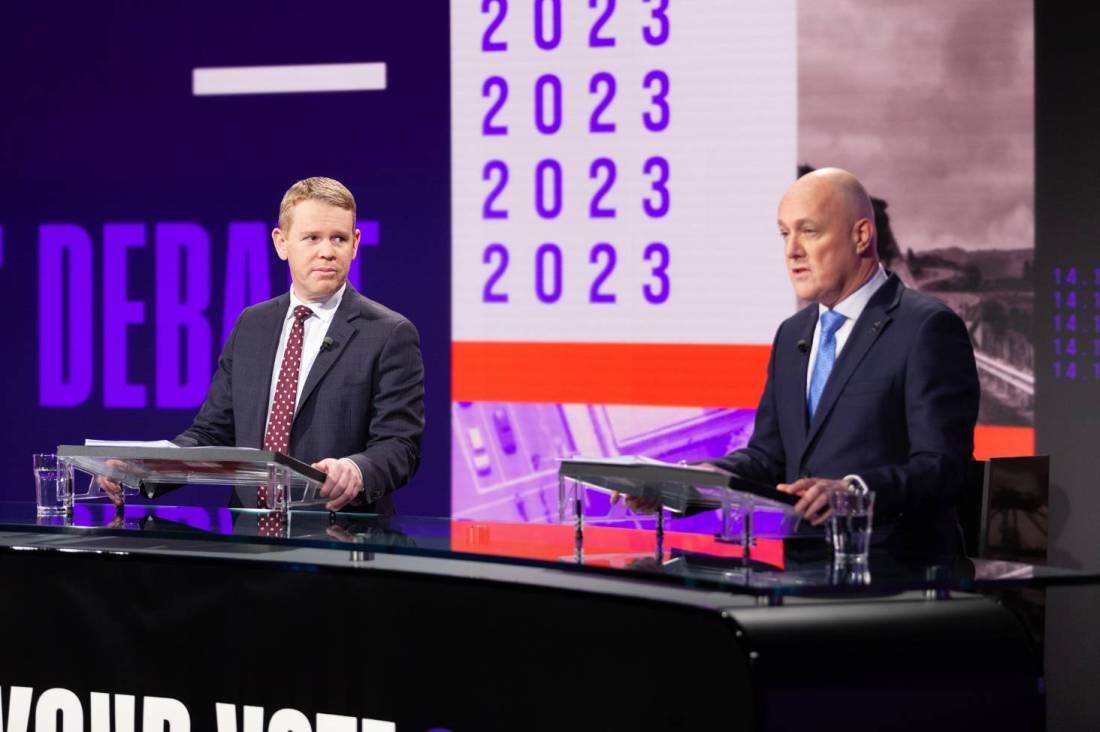
Above: The First Party Leaders Debate 19/09/2023
I have recently returned from a month-long visit to New Zealand, after four and a half-years absence due to the coronavirus pandemic. As a Kiwi who lived and breathed NZ politics until moving to the UK in 2017, and now having had time away to reflect, I will share my insights into what is happening.
This next series of blogs will look both at the politics leading up to this year’s general election and at what I have observed in terms of attitudes in New Zealand society.
This first blog will look at some historical trends and observations, assessing what this might tell us about the upcoming election.
Changing leaders is dangerous for the Party in power in New Zealand.
The last time a Party in power changed leader and went on to win a General Election was in the 1940s. The First NZ Labour Government led by Michael Joseph Savage died in 1939 and Peter Fraser took over as leader. Labour went on to win the 1943 election, which had been postponed two years due to the Second World War. Had this election been held when it was due in 1941, in all likelihood Labour would have lost power.
Since then, every time a party in government has changed leader in New Zealand, it has lost power. It happened to National in 1957 and again in 1972, then to Labour in 1975 and 1990, and to National in 1999 and 2017. In all these cases, other factors were of course in play, but there is a clear trend.
This is very different in other democracies. In neighbouring Australia, mid-term ‘leadership spills’ are commonplace with the Australian Labor Party and the Liberals.
The resignation of Jacinda Ardern in January and Chris Hipkins taking over the leadership initially saw Labour’s polling improve. But much has happened since then. If Labour does lose on 14 October, the change of leader may not be the deciding factor. But if they win, it would end an 80-year trend.
2. The Government may not be popular, but nor is the opposition – Historical perspective
There is no sugarcoating it. Labour has lost a lot of support since 2020. If some recent polls are to be believed, nearly one in two people who voted Labour in 2020 plan not to do so again on 14 October 2023.
But for the opposition National Party, polling numbers have been very mixed. While some recent polls give National a comfortable lead, some still have National polling as low as 31%. For context, when National lost power in 2017 it received 44% of the vote. Support for National remains significantly lower than at almost any point when it was in Government from 2008 to 2017 under the leadership of John Key and in the final year Bill English.
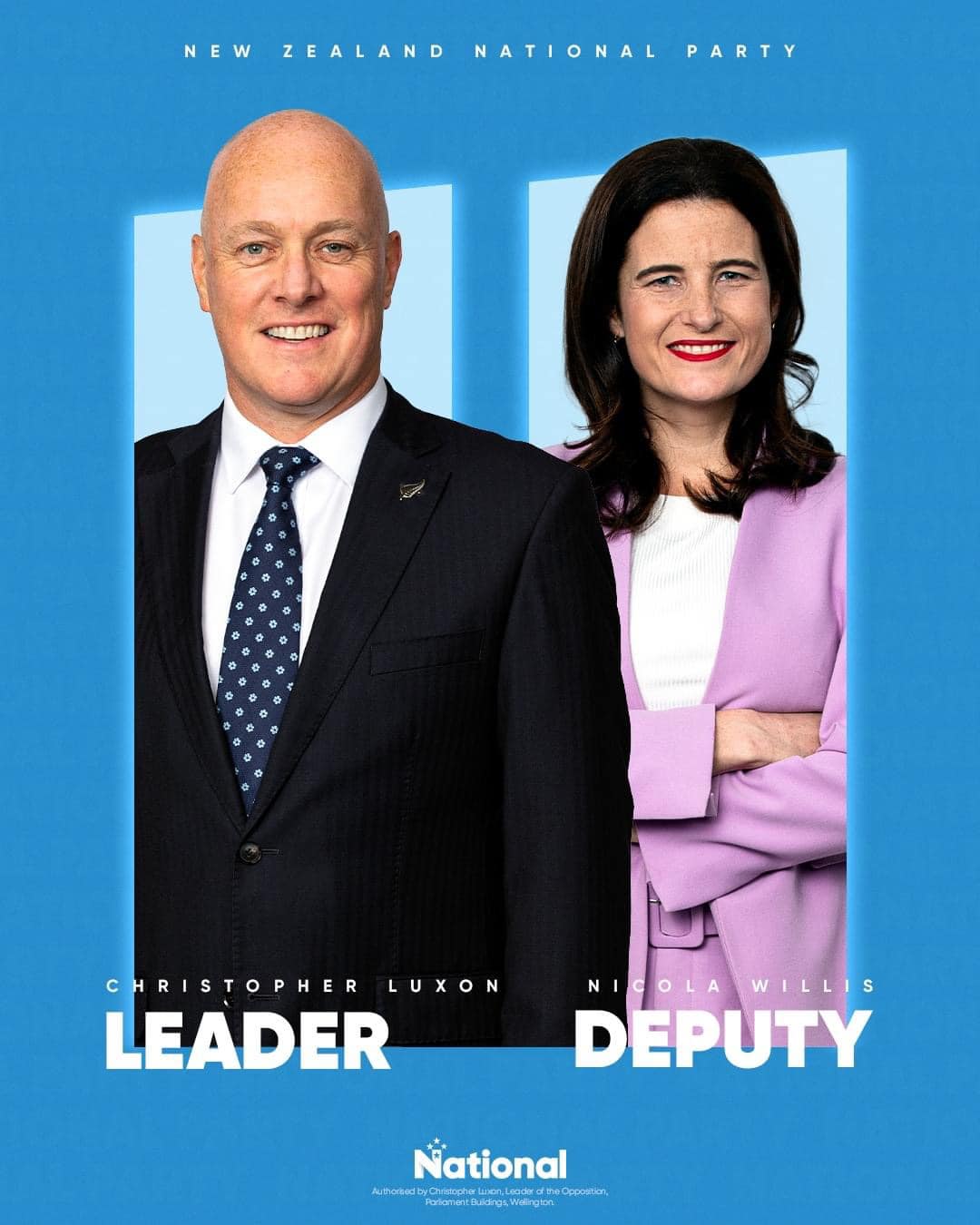
When it comes to preferred leader polling, National’s Christopher Luxon’s numbers are terrible. While there have been some recent polls giving him a slight boost, over the last 18 months his numbers have been generally poor and trailing Chris Hipkins even when Labour’s numbers have gone south. It is telling that National’s campaign material often features Christopher Luxon and Opposition Finance Spokesperson Nicola Willis, who is widely seen as a stronger performer.
For National, support for their Party or their leader is not where it was before coming to power in 2008 under John Key, in 1990 under Jim Bolger, 1975 under Muldoon, 1960 under Holyoake or 1949 under Holland. In all the above cases, while support for the Labour Government had fallen, the National Party and its leader had a much stronger level of support than at present.
National insiders have dreaded the upcoming party leader debates, especially after recent poor performances by Luxon. Historically, these debates have swayed undecided voters. There are real fears that National could take a poll hit of up to 5% if Luxon does not perform. It is unclear whether the first debate last night did much to assure his team, let alone the country, that he is up to the job.
At the time of writing, National are the favourites to win next month. If this comes to pass, it would be as part of a difficult coalition with the economically right ACT Party and the socially conservative and increasingly populist NZ First Party. As we will explore further, this combination is likely to be quite unstable and may scare many voters.
3. Historically, when Labour loses power, it spends a minimum of three terms in opposition.
Another trend in New Zealand politics has been that every time the National Party has won power from Labour, they stay in government for a minimum of three terms (four terms in the case of the Holyoak government of 1960-1972). If this trend holds, a Labour loss in October would mean being in opposition until 2032 or later. Psychologically this will be challenging for those in the Labour campaign, knowing this loss could see Labour in the wilderness for the next decade.
On current polling, National will probably scrape in. It is difficult to see on current polling numbers and Luxon’s poor performance as a leader how National could win the next three elections. National, if polling goes south in government may decide to change leaders after the election. But as outlined in point 1, this is a highly risky strategy in New Zealand politics.
Opposition finance spokesperson Nicola Willis is viewed as a likely successor. Some believed she may attempt to emulate Jacinda Ardern, taking over the leadership weeks out from the election. Given they are ahead in most polls, this would be a risky gamble. Also, her opposition to the government cutting the $5 surcharge on prescriptions in the recent budget shows that her hard-right economic views are out of step with the mood of the country.
4. Losing an election is not the end of the road for a leader
Whilst changing leaders in Government tends to spell electoral doom (see point 1), it is possible for leaders to come back after losing power. In 1957 Keith Holyoake took over as National Party leader and PM, only to lose power in the general election weeks later. It was a narrow defeat and Holyoake stayed on as National Party leader. Three years later in 1960, National won the election and Holyoake returned as Prime Minister. He also went on to win the subsequent three elections in 1963, 1966 and 1969 making him National’s most successful Prime Minister. National then lost in 1972 after Holyoake was replaced by Jack Marshall (see point 1).
The only Labour Leader who came close to this was Mike Moore, who in 1990 took over as Labour Leader and PM only to lose the general election weeks later. Moore stayed on, and in 1993 though not increasing Labour’s overall vote significantly, increased Labour’s number of seats from 28 to 45 in New Zealand’s final First Past the Post election. However, Labour did not win in 1993, and Moore was replaced by Helen Clark as leader shortly afterwards.
Based on the above, if Labour loses next month Chris Hipkins could potentially come back in 2026. That assumes he and Labour are able to defy point 3. However, if Labour drop below 30% as some polls currently suggest they might, the opportunity for such a comeback is unlikely.
5. The decline of both Labour and National
One should not make too much of single polls, especially this close to an election. But there have been a number of polls in 2023 showing both Labour and National polling below 35%. One recent poll had the combined Labour and National polling at 55%. Contrast that to the 2020 election where Labour and National together won 75% of the vote.
New Zealand has had proportional representation since 1996. Minor parties have played a significant role in MMP elections. It could be that after a generation of proportional representation, more voters are comfortable voting for these minor parties. Of the five parties currently in parliament, all have at some point served in government as has NZ First who currently do not have MPs but may do again after 14 October.
But this could also signify a greater trend away from the two parties that have dominated NZ politics since 1935. In France, the parties that have dominated politics since the end of the Second World War, in recent elections have been overtaken by President Macron’s centrist party and Le Pen’s far-right party respectively. This is in part explained by the French electoral system where there is a run-off vote between the two highest polling from the first round of voting a month earlier. But few can deny, that a major trend has been a move away from the old party’s and their style of politics. It is certainly not impossible that in the next five to ten years, New Zealand will have a Prime Minister who is from one of the current minor parties rather than Labour or National.
6. The first poll of the year predicts the election result
Another trend or tradition in New Zealand politics has been to look at the first poll, or group of polls, at the start of the year and this fairly accurately predicts who is likely to win. As the Wikipedia list of 2023 NZ polls illustrates, the polling for January 2023 was a real mixed bag with numbers being very close. Chris Hipkins took over from Jacinda Ardern in mid-January giving Labour a poll boost.
If the first polls are an indication of what will happen, it is likely to be a very close election where we do not know the results on election night. Instead overseas and special votes a fortnight later, along with prolonged coalition negotiations before the outcome is known. This is not unusual in New Zealand politics.
In recent weeks, some polls have shown Labour dipping below 30%. If Labour cannot increase its support, they are highly unlikely to be in government. Unless of course, Luxon performs so poorly that he too pulls National’s numbers below 30% as well.
7. Voters do not reward instability
This one is more common sense than a trend. If people are struggling they look to the government to lead them through a crisis. If the government is found wanting, it will be punished by voters. In my blog post in May 2022 on inflation, I argued that governments around the world were being punished for high inflation, when often they had little to no control over the drivers of it. However, governments are measured on their response, and they do have control over that. As an upcoming blog post will address, the response in New Zealand has been good overall but certainly, there was room for improvement.
Since March there have been four high-profile Ministerial resignations. Of these, two resulted in the MPs concerned leaving parliament, one saw the Minister quit Labour and joining another party and the other was a minor indiscretion, but not acted on in a timely or proper manner. At a time when people are doing it tough, having Ministers fall below the standards expected of them by the public is harmful to a government. For example, Stuart Nash was one of Labour’s high flyers, so his attempts to influence police procedures and release confidential information from cabinet meetings to two of his donors is harmful to Labour.
But then National had their own scandals with new MP Sam Uffindell having to be suspended from caucus not after winning the Tauranga byelection in 2022. There are also signs of division within National with former Minister Michael Woodhouse being given a low ranking on the party list. Again, in terms of unity, National are doing little better than Labour.
8. Increasing numbers of swing voters, in New Zealand and globally
This one is less of a historical trend and is certainly not limited to New Zealand. But it is a significant one, which still is not well understood.
There is this view that politics is won in “the centre” – that group of moderate, usually middle-class, voters who swing between the centre-left and the centre-right. This has always been an overly simplistic understanding of politics, but in 2023 it is very wide of the mark.
Firstly turnout counts. Unlike Australia, there is nothing legally forcing people to vote in New Zealand. In recent UK byelections, ex-Tory voters staying home has been a significant factor in Conservatives losing seats. In the US, many former Democratic Party voters stayed home in 2016, helping Trump win Rust-belt states. In New Zealand, a significant feature of Jacinda Ardern’s victory in 2017 was not National voters switching to Labour, but people voting Labour who had never voted before. There is some evidence that higher voter turnout favours the left, though this too is fairly simplistic.
One of the mistaken views I have heard from both Labour and National (or Conservative in the UK) strategists is that when pitching to ‘the centre’ their base will have nowhere else to go. The party base always has places to go. Minor parties are always an option, as is not voting. The issue is that trying to position your party to the centre and ignoring your base and your principles ultimately impresses no one. Voters reward authenticity, especially in an era of fake news and disinformation.
The size of the swing vote in elections is growing. In the UK the so-called redwall swinging Tory in 2019, or Canterbury and Kensington swinging to Labour in 2017, are both examples of this. In the US the working-class rustbelt states of traditionally Democrat voters got Trump elected, and in 2020 traditional Republican stronghold states such as Georgia and Arizona helped vote him out.
There are similar trends in NZ elections. The massive swing to Labour in 2020 and the now large swing against it in recent polls illustrates just how volatile the modern voter can be. In an era where old ideologies hold far less currency, the idea of the lifelong loyal Labour/National voter is outdated. Anecdotally from my recent visit to NZ, I spoke to former National voters planning to vote Green, former Labour members planning to vote National, and former ACT Party members now undecided voters. Whilst most were younger (under 45), older voters I spoke to were also now seriously questioning their lifelong allegiances. None were typical centrist swing voters likely to be captured by Bill Clinton-era style triangulation. In reality, people want politics to be better, and would happily look across the political spectrum for answers.
National may win in 2023. But given how far and how quickly voters now swing, National cannot count on Point 3 remaining a trend in the future. Even less so with their current leadership lineup.
Labour and National both have strategies to chase the mythical centrist swinger vote. Meanwhile, 45% of voters are now looking elsewhere, and this number could easily grow.
What can we conclude from these trends?
Mark Twain once said, “History never repeats itself, but it does often rhyme.”
The rhyme of New Zealand politics is that leadership really matters, arguably too much so. The media often focus on this rather than policy, leading to style rather than substance being reported on.
In 2023, a strong moderately conservative leader would do very well. Yet National are running a first-term MP who describes “New Zealand workers as bottom feeders.”
Neither Labour nor National are performing strongly overall. There are some polls showing the centre-right in a strong position, but inevitably they follow this up with a policy announcement or media interview which then loses them support.
Labour still has an outside chance with the Maori Party and the Greens to form a coalition government, but only just. They need to demonstrate what they stand for and what they intend to do for the next three years to get the country through the current economic crisis.
If both National and Labour are polling below 35%, both will be heavily reliant on coalition partners to govern. For Labour, anything below 30% is fatal. For National, being complacent when still polling in the mid-30s could see them fall at the last hurdle.
It is said that there is a thin line between bravery and stupidity. Posting a link to my blog post which said that Jeremy Corbyn was not fit to be Prime Minister, to the ‘Labour London Left’ WhatsApp group. I will leave it to the reader to decide which one that was.
The full quote is below:
The 2017 election proved there was significant support for social democratic policies (eg national care service, public ownership of rail, electricity, water etc, and funding public services properly). But weak leadership on Brexit, failure to respond properly on antisemitism and now his appalling position on the Russian Invasion of Ukraine have shown Corbyn was not fit to be Prime Minister. But nor was Boris Johnson, as the Privileges Committee have confirmed.
Jeremy Corbyn was and still is not fit to be Prime Minister. I say that as someone who took time off work to actively campaign for Labour in 2019. I also say this as a Labour member who supported the 2017 and (with some criticisms) the 2019 Labour manifesto policies, many of which would not have been there had Corbyn not won the 2015 UK Labour leadership race.
My ‘Why Labour Lost’ series of posts published after UK Labour’s 2019 election defeat (see links below) outlined the many and varied reasons for this result. Not all of it was Corbyn’s fault, nor indeed his faction Momentum. But they made serious errors and at times simply stupid calls.
More recently, Corbyn’s position on the Russian invasion of Ukraine in the last 16 months has shown that he lacks political judgment.
Shortly after the Russian invasion of Ukraine, I wrote the following of leftists who were opposed to giving military aid to help the Ukrainian resistance:
On the left, many are still influenced by the analysis of Lenin during the First World War and just before the 1917 Russian Revolution that in an inter-imperialist conflict socialists should be standing up to their own ruling class. During the First World War, there were strong arguments for working people not to align with the Tsar in Russia or other imperialist leaders in that conflict. It is dangerous to simply apply this idea to the current conflict without understanding that the context is different. There is a strong argument that people should be holding their own government or ‘ruling class’ to account during any situation like this. Ultimately, the decision to invade Ukraine was Russia’s, but there is still a question of what the governments and in particular NATO members could have done to help prevent this and what they can do now. Sadly, some on the left and drawn both bizarre and quite dangerous conclusions based on the premise that their role is to stick it to their own ruling class. Bizarrely, some socialists still mistake Russia to be some sort of socialist/anti-imperialist power, thinking that there is some residue influence of the 1917 revolution.
Corbyn’s position of opposing military intervention and instead trying to negotiate a peaceful settlement is at best naive and at worst giving tacit support to the Russian Government and Vladimir Putin.
Back in 2003 when I was active in opposing the invasion of Iraq, one of our key slogans in Peace Action Wellington was “peace with justice and self-determination”. Any “peace settlement” with Russia right now would involve at the very least, ceding territory taken by Russia in 2014 and probably some of the ground taken in 2022. This ‘peace’ would not involve any justice or self-determination.
What Jeremy Corbyn, the Stop the War coalition and others taking this position are doing is not progressive, left or indeed socialist. It is supporting imperialist expansion. Further, and this should be self-evident, if NATO and Western governments fail to stop the Russian invasion, this will not serve the interests of working people. That this distorted world political view still infects sections of the left is astounding. That Corbyn subscribes to it, frankly discredits him as a serious political operator.
But I can understand why people on the Labour left would not like this assessment. Even more so at a time when various left groups and individuals such as director Ken Loach have been kicked out of Labour.
And there are serious questions about Labour’s current direction. Labour, whilst winning the Selby and Ainsty by-election, narrowly lost the Uxbridge and South Ruislip byelection. Whilst most attribute this to the Labour Mayor of London extending the Ultra Low Emission Zone (ULEZ) to outer London, this was not the only reason. On the doorstep, Starmer’s Labour Party may not have been as polarising, but nor were people excited by it. In fact, many were unclear about what it stood for. Labour improved its percentage of the vote in Uxbridge and South Ruislip significantly, but it still failed to make it across the line. This should be a cautionary tale ahead of next year’s General Election.
In my blog post earlier this year on whether UK Labour can finally win, I argued that the left needs to accept that the 2019 election was a devastating loss, in no small part the result of poor decisions by Corbyn and his team. Equally, his opponents in the party have still failed to seriously reflect on why Corbyn was able to easily beat them both in 2015 and when they tried to remove him in 2016.
The 2017 Manifesto included policies such as renationalising rail and water companies. It opposed austerity and called for decent funding for the NHS, a national care service, a properly-funded national education service and stronger employment law that strengthens collective bargaining. These are mainstream social democratic policies in many other European countries.
Why did it take a member of the hard left Socialist Campaign Group becoming the leader of Labour for it to put forward a mainstream social democratic manifesto, rather than an over-triangulated, incoherent and frankly visionless positions it too often had prior to Corbyn? In a country where life expectancy is stalling, younger people are economically worse off than their parents, where over a million people are waiting for social housing and incomes have been falling for years, there is a real mood for change. Not just a change of government, but of policy. This does not mean a sudden lurch left, but a serious and costed programme that prioritises the needs of the many, not just the few.
In the UK Labour Party, people are divided into binary factional groupings of Corbynistas or Blairites. Loyalty to leaders and personalities over policy is not limited to Labour or UK politics. But it is frustrating nonetheless.
UK Labour is on course to win the next general election, whenever that may be. Its long-term success in government will, as I have argued previously, require the different factions of Labour to work together. The left need to accept that the Corbyn project failed, and move on. The right needs to accept that voices to the left of Third Way centrism have a legitimate and important place both in Labour and in political life.
Below are the links to my ‘Why UK Labour’ lost blog posts:
I spent the last UK General Election canvassing in Uxbridge, trying to unseat the then Prime Minister Boris Johnson. In the 25 years I’ve been politically active, this was the second most depressing canvassing session I had been to.* It was the middle of winter, the weather was awful, and it was obvious the votes were not going Labour’s way.
Last weekend I returned to Uxbridge for the first time since December 2019. The not-so-illustrious political career of Boris Johnson has ended in failure and disgrace. Johnson resigned as an MP at the conclusion of the Privileges Committee investigation. The Committee’s report found that Boris Johnson broke the COVID-19 rules, the ones his own government had set, and had misled Parliament when questioned about this.
Had Johnson not resigned, he would have been suspended from the House for 90 days. In the UK, MPs can be recalled by voters when suspended. If 10% of voters in the suspended MP’s constituency sign a recall petition a by-election must take place. Had Boris Johnson not resigned, he almost certainly would have faced a by-election. In these circumstances, he would likely have lost.
So Boris Johnson made one of the few honourable decisions of his life and resigned from parliament (though even then poo poo-ed the privileges committee report and denied fault).
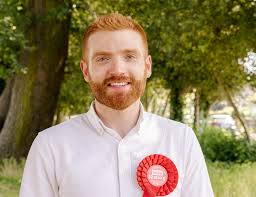
Last weekend I was out in Uxbridge canvassing for Danny Beale, Labour’s candidate in the by-election. Labour last won Uxbridge in 1966, and before that 1945. The Ruislip part of the constituency has never been held by Labour. But the demographics in the area are changing and despite a blip in 2019, overall the Tory vote has been gradually falling in the area for some time.
Above: Labour’s Uxbridge and Ruislip candidate Danny Beale
In politics, much is made of doorstep conversations. It is seen as the ultimate litmus test for how well a party, leader or set of policies are performing. Opponents of Jeremy Corbyn have often claimed that on the doorstep he was not popular. Certainly, my experience in 2019 was that Corbyn and the political project he came to represent was polarising. I found many were supportive of core Labour policy, but did not trust the party or its leadership.
The 2017 election proved there was significant support for social democratic policies (eg national care service, public ownership of rail, electricity, water etc, and funding public services properly). But weak leadership on Brexit, failure to respond properly on antisemitism and now his appalling position on the Russian Invasion of Ukraine have shown Corbyn was not fit to be Prime Minister. But nor was Boris Johnson, as the Privileges Committee have confirmed.
So what is the message on the doorstep now? When you go out you only get a small sample across a dozen or so streets. Much like opinion polling, the ‘mood on the doorstep’ is not an exact science, but gives you a general sense of the mood. Compared to 2019, overall the number saying they will vote for Labour is higher now, but only modestly.
The Conservatives won Uxbridge and South Ruislip by a majority of 7,210 in 2019. The thing that is likely to swing this Constituency to Labour on Thursday 20 July, may not be a huge swing to Labour, but former Tory voters staying at home or protest voting. On the doorstep, the anger from voters was palpable. Not all of this anger was directed at the Conservatives, but I and others had quite a few conservation with people who had previously voted Tory but would not be in the by-election.
The head-wind for Danny Beale is not coming from parliament but from the Greater London Authority (GLA). Labour’s London Mayor Sadiq Khan has decided to expand the Ultra Low Emission Zone out to all boroughs of London. This means owners of older vehicles will now pay a daily charge of £12.50.
Danny Beale has called for the ULEZ expansion to be delayed, saying the cost of living crisis is the wrong time to implement this. He has also called for a better scrappage scheme to help people replace older vehicles. Unlike in other parts of the country, the Government have not helped Greater London implement a proper scrappage scheme, no doubt to put pressure on Sadiq Khan.
Did this issue come up on the doorstep? The very first door I knocked on this was their key concern. Others also mentioned it, usually in the wider context of the cost of living, and were as critical of the Government as they were of the London Mayor. But it was clear that ULEZ was a barrier to people voting Labour.
From this session and the feedback I’ve got from others who’ve canvassed, Labour can certainly win Uxbridge and Ruislip. But it will be close. The challenge will be for Sadiq Khan in next year’s London Mayoral elections. Decisions such as extending ULEZ, or increasing rail fares have been a result of the Government not supporting London. But many now blame the Mayor and the Labour London Authority Members. The Conservatives believe this will give them an advantage. The message I got on the doorstep was that anger at ULEZ did not automatically equate to voting Tory, especially given their recent track record in government.
There are two other byelections being held on 20 July: Somerton and From, and Selby and Ainsty. There is also the likelihood of a byelection in disgraced MP Chris Pincher’s constituency, and Nadine Dorries’s constituency of Mid Bedfordshire. Polls suggest that in each of these byelections, the Conservatives will struggle. Each has its own dynamic, with the Lib Dems being the serious challenger in Somerton and From, whereas in Selby and Ainsty a Labour victory is now looking likely.
Canvassing Uxbridge and Ruislip, the insight I get from canvassing is that Labour have a real chance, but should not be complacent. Support for the Conservative and Unionist Party is collapsing, but this is turning to cynicism and rage rather than enthusiastic support for a Labour Government next year.
There is a possibility that in 18 months’ time, UK Labour are in Government, but have lost the London Mayoralty. This is not inevitable, but for Sadiq Khan to win a 3rd term as Mayor, he will need to balance lowering emissions and environmental targets with helping Londoners survive the cost of living crisis. This could well turn out to be a tough campaign, which I hope does not give me a new “worst canvassing session.”
*The worst canvassing session I went on was the 2014 New Zealand General election. I was canvassing in the Wellington Ohariu electorate. It was early spring, and the rain was heavy in typical Wellington fashion. It took me hours to dry off. NZ Labour got 25% in that election, its worst result in a century. Labour did fail to win the Ohariu seat that time, though picked it up three years later when Jacinda Ardern won the 2017 election for Labour.
Previous Posts about my involvement with Labour and political campaigns. Plus other relevant posts:
On Saturday, the coronation of King Charles III and Queen Camilla will take place. The last coronation of Queen Elizabeth II took place on 2 June 1953 and was one of only five such events in the 20th century.
The Coronation is certainly a historic event, but what is its relevance to the modern world?
In a 21st-century democracy, is it really still appropriate for someone to inherit the role of head of state, purely based on their bloodline? Does it make sense for this same person, not only to be head of state of the United Kingdom but also of Antigua and Barbuda, Australia, the Bahamas, Belize, Canada, Grenada, Jamaica, New Zealand, Papua New Guinea, St. Kitts and Nevis, St. Lucia, St. Vincent, and the Grenadines, the Solomon Islands and Tuvalu?
In November 2021, Barbados became a republic cutting ties with the British Monarchy, though still remaining a member of the Commonwealth. Barbados was a British colony until 1966, and becoming a republic has been viewed as an important step in self-government and breaking with that nation’s colonial past.
Similar moves are likely in Jamaica, with that country now planning to hold a referendum on the issue in 2024. Polls in Jamaica show a significant majority wanting the country to become a republic. Painful historic links to British Imperialism and the transatlantic slave trade are still major issues for people in Jamaica. Becoming a republic will help break this link.
Australia will likely hold a referendum on the issue in the next few years, though this will happen after the referendum on indigenous representation in parliament. Australia last held a referendum on becoming a republic in 1999. At this time the choice was between remaining a constitutional monarchy or becoming a republic where parliament appointed a president. Polls indicated at the time and since that were voters given the option of electing a president, support for becoming a republic would have been much higher.
Whilst a majority still support the monarchy in the UK, increasingly people do not view it as important. A recent British Social Attitudes study conducted recently shows the number of people who say the monarchy is “very important” has fallen to 29%, from 38% in 2022. Also, 45% of respondents said the monarch should now be abolished. Further, a report in the Telegraph recently said that 75% of people aged 18-24 do not care very much about the coronation, and 69% of 25-49 year-olds say the same. Even those aged over 65, the demographic most supportive of the monarchy, are not terribly interested with 53% saying they do not care very much.
With support for the monarchy being lackluster at best in the UK, and declining support in the other 14 nations where the British monarch is the head of state, does the monarchy really have a future?
Those who campaign in favor of the institution tend to use strawman arguments. These include the stability of constitutional democracies, though given recent events in British politics this argument now gets used far less. Another is that the monarchy is somehow cheaper than becoming a republic. When one takes into account the upkeep of royal palaces, the cost of coronations, and royal tours it is not clear how they come to this conclusion.
The argument that always comes up is the comparison with the United States. In recent years monarchists have used Trump as evidence for why we need a monarchy. Firstly, this assumes the United States is the only form of republic possible, ignoring the many other working examples of republics with strong working democracies. Secondly, the Trump bogeyman conveniently ignores the premiership of Johnson and Truss in the UK, or Scott Morrison in Australia, for which the monarchy provided no helpful check or balance.
Support for the monarchy is largely based on sentimentality. Democracies are not enhanced by feudal relics performing old-fashioned ceremonies and living in castles. These quaint traditions and displays are all rather nice, and for the most part fairly benign and harmless in themselves. But to pretend that they are in any way relevant to the modern world is absurd.
The links to colonialism and British imperialism are certainly not so benign, and have relevance today. The slave trade has directly contributed to racial inequalities that exist today. In New Zealand, the government is still resolving historical grievances from when ‘The Crown’ stole land and resources from Maori. There are similar histories in Australia and Canada. Becoming a republic does not put an end to these historical injustices. But sentimentality toward the institutions responsible is illogical and ignorant.
Few would argue that abolishing the monarch or other debates about the future of this institution are a priority at this time. Having come through a pandemic and now a cost-of-living crisis coupled with the Russian invasion of Ukraine, there are more pressing issues to address. At the same time, it is little surprise that interest in the coronation is low.
In all likelihood, we will now see the monarchy face a slow but steady decline. The priority must now be on strengthening democratic institutions to face the challenges of the future, not the idealisation of feudal relics.
The United Kingdom will have a general election at some point before January 2025, most likely in May or June 2024. Work has already begun on manifestos for the next election. With the precarious state of the UK economy, the likelihood of big spending promises is unlikely. Though public services have faced over a decade of austerity and the public is suffering a cost of living crisis, demands on the exchequer will be significant.
Where the next election will potentially be quite interesting and possibly see long-lasting changes is constitutional reform. Britain does not have a written constitution and instead has various written and unwritten arrangements. Recent events in British politics have highlighted the issues with this. In August 2022 Hannah White from Prospect Magazine made the following observation regarding Boris Johnson’s time in office:
The most important lesson that Johnson’s three years as prime minister have taught us is how uniquely vulnerable this type of constitution may be to concerted manipulation by a determined populist leader with a large Commons majority and a calculated agenda.
There is growing recognition of the need for constitutional and political reform in the UK after the last decade. While the 2011 referendum in the UK saw a general lack of interest in the topic of electoral reform, there has since been increased awareness of how the current system produced distorted results with parliament not being truly representative. This, along with general dissatisfaction with politics creates an opportunity for public debate about the future of democracy and the UK Constitution.
At the time of writing, Labour enjoys a significant lead in opinion polls, though in some polls this is starting to narrow slightly. The next UK election is Labour’s to lose, which given the result of the 2019 election is an incredible turnaround. If elected, it has an opportunity to usher in a new modern era of British democracy improving representation and trust in politics.
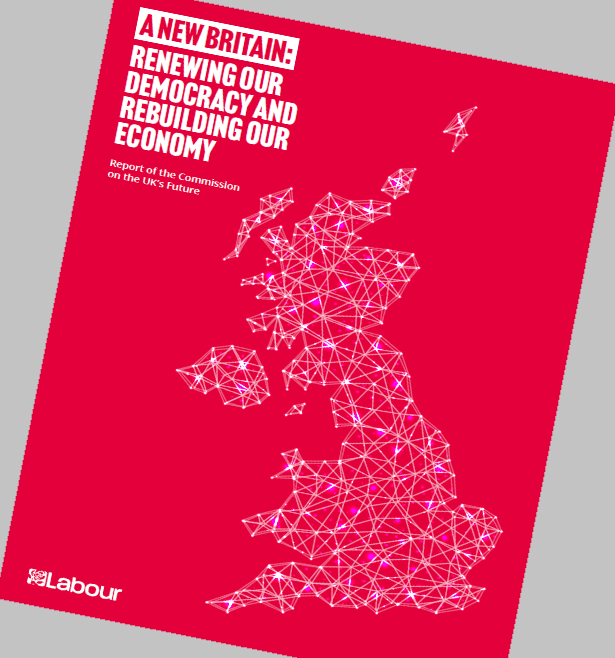
Signs are that the Party is thinking along these lines. In late 2022, the Party published a paper by the Commission on the UK’s Future, chaired by former Prime Minister Gordon Brown. This paper made various recommendations including:
Greater devolution of political power in England
Enchrenching in a new constitutional framework the Sewel Convention, which protects existing devolution in Scotland, Wales, and Northern Ireland.
Abolishing the House of Lords and replacing it with an Assembly of Nations and Regions
This paper is helpful in it starts an important debate about the future of political arrangements. Its strongest arguments are in favour of greater devolution in England, with the report highlighting the fact that the UK government is much more centralised than most others in Europe. It argues that current geographical inequalities in England are largely the result of this centralisation.
The current government’s Levelling-up agenda is also aimed at addressing regional inequalities, and included in its proposed reforms is greater devolution to local authorities. Both with the Conservative Government’s reform package and Labour’s proposals, there is still a lack of detail as to how this devolution will occur. Devolution to local government would require a significant funding boost, as current devolution to local authorities has been hamstrung by austerity and local authorities lacking resources. Establishing a regional government, similar to those in Germany, would be a logical way of ensuring regional decision-making, but would the public support the creation of another layer of government in England?
What the report proposes for Scotland, Wales and Northern Ireland are fine, but they avoid a bigger issue.
Northern Ireland is covered by the Belfast Agreement, now 25 years old. This agreement includes the provision for a border poll should the people of the Island of Ireland with it. Were a border poll to be held today, it is not entirely clear how this would go. But whatever the outcome, there would be a continued need for power-sharing, compromise and diplomacy given the history there.
The Commission on the UK’s Future report describes the union of nations as voluntary. Yet, the November 2022 Supreme Court judgement on the matter ruled that another independence referendum in Scotland could only happen with Westminsters’ consent. Regardless of one’s views on this issue, or indeed the recent issues with the SNP after Nicola Sturgeon’s resignation, if a union is voluntary then there must be some mechanism to leave. Even if the mechanism is a high threshold, such as 50% of eligible voters signing a petition calling for a referendum. That may not sound much, but getting 50% of eligible voters to do this would be a herculean task.
The blunt reality is, Labour’s opposition to Scottish Independence appears to be more motivated by a fear of losing crucial Scottish seats, as historically at least Labour did well up there. This may be very unfair, as many in Scottish Labour undoubtedly genuinely support staying in the union. But there is no denying that this impression has contributed to many former Labour supporters moving to the SNP since 2007.
Whilst the current strife in the SNP may change this, it would be incredibly naive to think that support for Scottish Independence will now completely collapse and the issue will go away. The argument that the people of Scotland already voted on this in 2014 holds little water given one of the key issues in that referendum was EU membership. The offer to the people of Scotland in 2014 was very different to the reality today.
Improve devolution and entrench the Sewel Convention by all means, but there still needs to be a mechanism by which the Scottish people can leave the United Kingdom if they so wish. This principle must apply to people living in other nations of the UK as well.
It is somewhat strange that a report that primarily focuses on the need for greater devolution in the UK includes a recommendation to abolish the House of Lords, yet when asked in the media, Gordon Brown said reform of the House of Commons (electoral reform) was out of scope. Either the report should just focus on devolution, which was by far the stronger section in the report, or it needs to include proposals for reform of both houses of parliament in Westminster.
In one of my posts following the 2019 election, I made the case for electoral reform, and in particular the need for UK Labour to sharpen its thinking in this area. Suffice it to say, three years on, having seen the results of a government that won 43% of the votes gaining 56% of seats in parliament, my view has not changed. What has changed, is that there is now far stronger support both within the UK Labour membership and more broadly for some sort of electoral reform.
In terms of the Lords, I declare my interest having worked on Piko contracts for two members of the Lords. My views of the Lords, and of the reform proposals are my own, not those of Piko’s clients.
The House of Lords is in need of some reform. At present, there are over 800 members, whereas the Commons only has 650 MPs. Whilst quite a few of its members have been appointed due to their expert knowledge and make important and meaningful contributions, the level of patronage, especially with Boris Johnson’s appointments, is simply unacceptable.
The Commission on the UK’s Future acknowledged the quality of committee reports from the Lords. I would add to this the valuable contribution of pre and post-legislative scrutiny, many of the amendments tabled at the committee stage of bills in the Lords and the overall quality of debate. This is due to the expertise and experience of many current Peers.
Any reform of the House of Lords should be careful not to throw the baby out with the bath water. Any reforms should protect what does work about the current House of Lords. One of the sad things about the current set-up is that many of the Lord’s reports get ignored by the government and get little attention in the media.
There is a strong case for a smaller, elected upper chamber. Having an unelected chamber means in reality its authority is reduced in the eyes of many. The Salisbury convention means it will not oppose the second or third reading of any government legislation promised in its election manifesto. During this term of parliament, the government have put forward legislation that attempted to breach international law and in some cases its own human rights legislation. An elected chamber might have been in a stronger position to push back.
Yet many of the unelected members today are not aligned to a party, and are there due to their expertise and experience. Any reform should consider how this pool of talent can still be utilised in any future structure, potentially through creating another role for current Lords with specific experience that parliament needs.
The proposal in the UK Future report is to replace the House of Lords with a democratic chamber representative of the nations and regions of the UK. Whilst this proposal is clearly to link it to the wider theme of devolution and empowering regions, its description of the new upper chamber sounds a lot like the current House of Commons. Given the poor performance of the Commons in recent years, this is hardly inspiring.
In reality, greater devolution, electoral reform and reform of the House of Lords and House of Commons need strong public buy-in. Slipping a few sentences into a party manifesto is simply not enough. Any manifesto commitment would need to be for something that furthers this important discussion, maybe a Commission on the UK’s constitutional and democratic future. But from there, any changes would need a direct mandate from the voters.
In New Zealand, electoral reform happened after two referenda, and a similar process would be needed in the UK. Unfortunately, post-Brexit, there is now a real fear of referenda as that experience was divisive, with many feeling the level of misinformation resulted in a bad decision. Britain’s political establishment must get over this, as ultimately referendums are the best tool to test public support of crucial constitutional or moral issues. The issues raised in the UK’s Future paper certainly fall into this category.
Were a Labour Government elected next year, its primary focus would be on the economy, just as it is for the current government. Constitutional reform would take time and a significant level of public engagement so that whatever ultimately was implemented, would work and have greater public support that the current arrangements. It would be very easy for this to be put in the too hard basket. Yet when public confidence in the institutions of government has fallen significantly in recent years, it would be a mistake not to take action in this area.
The first real test of any political leader is how well they perform in a crisis. For New Zealand’s Prime Minister Chris Hipkins this test came very quickly.
Cyclone Gabrielle is the second major weather event New Zealand has suffered in the last month. At the end of January, just days after Chris Hipkins becoming Prime Minister, Auckland, the country’s biggest city faced major flooding. This was not only the first major test of Hipkins as Prime Minister but also of the recently elected Auckland mayor Wayne Brown.
It would be unfair to claim that Mayor Brown has no previous political experience. 15 years ago he served one term as mayor of the Far North District, and prior to this had been a member of the Auckland District Health Board. But primarily, Brown’s experience was in the private sector as an engineer and property developer.
Brown’s election as mayor in October 2022 ended 12 years of Labour dominance of the Auckland mayoralty. The election of a right-of-centre mayor in New Zealand’s largest city was seen as an indication of what might happen nationally in the 2023 General Election.
After the Auckland flood, Wayne Brown’s election will now be viewed as a cautionary tale. What can happen when someone who is inexperienced and unsuited to political office is elected to important political leadership roles. The blowback of this on the New Zealand right should not be understated, it is bad news for them.
The key criticism of Brown was that he was slow to declare a state of emergency in Auckland. During the crisis said to one journalist that “it was not his job to rush out with blankets.” In a text, to friends, Brown complained that he could not play tennis during the weekend of the floods as he “had to deal with media drongos over the flooding.”
Probably the most cringe-worthy moment was the joint media conference the Mayor did with the Prime Minister and two other Government Ministers. Brown was defensive and sounded out of his depth, whilst Chris Hipkins sounded like a Prime Minister.
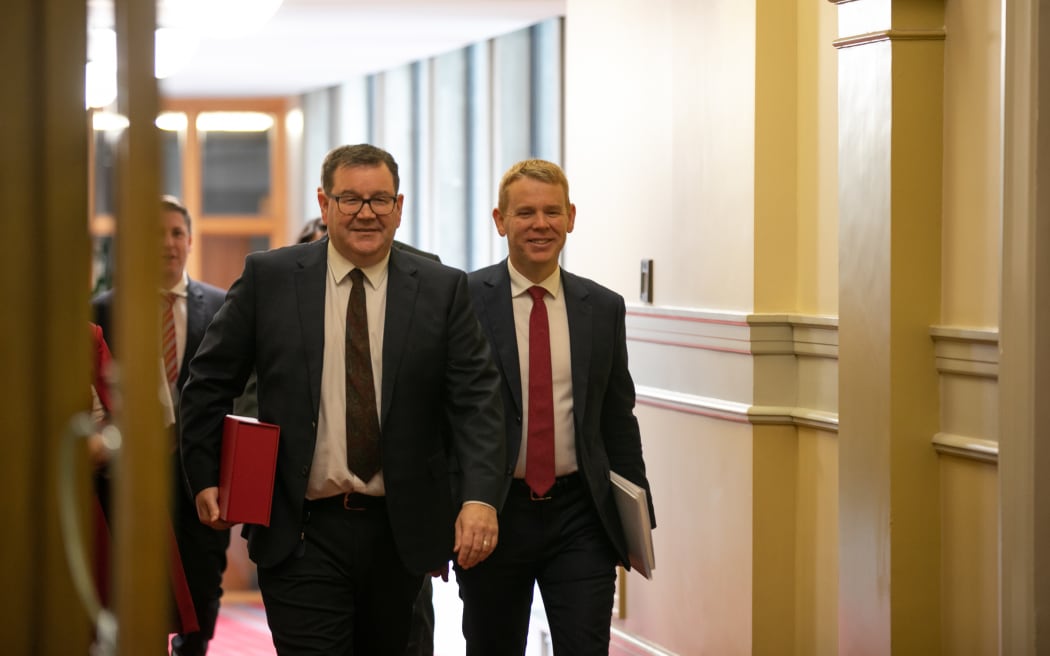
I first met Chris Hipkins back in 1998 at a fundraiser for the Rimutaka (now Remutaka) Labour Party at the now-closed Plates Restaurant. He had been head boy at Petone College and led the campaign opposing the closure of his old school the by then Tory Government. Slightly older than me, Chris was VUWSA President a few years before me. Living in London at the time, he kept in contact and gave useful advice whilst I was President – including once when he reminded me that it was Saturday night in New Zealand, so I should go out and have fun instead of worrying about the Students’ Association budget.
After Student politics, Chris spent a brief spell in the private sector before working in parliament as an advisor to Helen Clark’s Government. In 2008 he became an MP and quickly was promoted to Labour’s opposition front bench. After Labour came to power in 2017, Chris has served in various senior Ministerial roles.
One of the big criticisms of ‘career politicians’ is that they do not have enough experience outside of parliament. It is true that within a parliamentary democracy, it is important to have diversity and people from different backgrounds. The same is true within the cabinet. However, the Prime Minister is in a political leadership role, the most senior politician in the country. Experience in politics is crucial, and it is something that Chris Hipkins has.
The implications of all this for the NZ Leader of the Opposition, Christopher Luxon, are not great. Luxon, a first-term MP elected to parliament in October 2020 wishes to be New Zealand’s Prime Minister in October. His experience prior to 2020 is in the private sector, most notably as CEO of Air New Zealand.
Having worked in and with the private sector through my company Piko, I accept that there are transferable skills from private sector leadership roles through to political leadership. But there are differences. In government, there is a need to manage ambiguity, much more so than when managing a company. There are far more competing priorities, all of which can have a profound impact on people’s lives. And when things get really tough, like during the COVID-19 pandemic, business leaders rely on the state for support. Therefore it falls to Government in a time of crisis to make the tough calls.
Diversity in politics is important. Yet on the right, the call isn’t for diversity. Instead what is often called for is people with “business experience”. CEO of big companies, high net-worth individuals who have done well on the money markets and other c-suite executives. Transferable skills from this sector can well help in political leadership roles, but these alone are not enough, other skills and experiences are needed to be a success.
By contrast, working as a parliamentary staffer, or in the public service, is viewed as being at risk of government groupthink. Worse, that promotion may be through nepotism rather than ability. There is always a risk of these things but has also worked with the public service and in parliament, it would be easy to overstate this risk. What you do get in these roles is close exposure to how the machinery of government works. My work in the British parliament over the last three years has taught me this. Parliamentary staff role offer valuable experience for anyone in a senior political role.
The Auckland floods and the current cyclone have highlighted the importance of political experience. Chris Hipkins, having served as a Minister during The Christchurch Mosque Terror Attack, COVID-19 and the cost of living increase is no stranger to a political crisis. He and his team instinctively know how to respond, when to open the emergency Beehive Bunkerand how to communicate clearly to a worried public during these difficult times.
The events in the last few weeks have highlighted that in politics, actual political experience really counts.





 Nick Kelly