Labour’s House of Lords Reform – good, but kicking out 80 year olds is age discrimination.

For the last four years I have worked in the House of Lords. I admit that initially I was sceptical as to the value of an unelected chamber, especially one which still included hereditary peers.

My views have changed since. No, not out of self interest (the Lords is not my primary source of income), but through seeing up close the value add having of having a second chamber with people who are subject matter experts scrutinising legislation. Many Lords are not partisan, and those that are quite often speak independently from their party on policy matters they are experts in. The Committee Reports are of a considerably higher standard than that of the Commons, or indeed of most UK think tanks.

This being said, I do believe the House of Lords is in serious need of reform. Just over a year ago I posted my view on the Gordon Brown report on constitutional reform. While I agree with his recommendations for greater devolution in to regions in England, and strengthening the powers of governments in Wales, Scotland and Northern Ireland, I disagreed with his recommendations for the Lords.

Firstly, he proposes changes to the Lords, but recommended no changes to the Commons. Replacing antiquated and unrepresentative First Past the Post Electoral System with Mix-Member Proportional (as used in Germany and New Zealand) would do far more to improve politics in Westminster than any changes to the Lords.

Secondly, his proposal to create an elected chamber representative of the nations and regions of the UK could just create another House of Commons. Alternatively, it might give disproportionate power to smaller nations as a way of heading off independence campaigns. Neither of these options would in themselves improve Westminster functions.

Labour’s election manifesto commitments regarding Lords reform are overall quite sound. In 2024, hereditary Lords is indefensible. While some of the hereditary Peers make decent contributions in the Lords, as a point of principle hereditary titles must cease.

Labour have also committed to reviewing the appointments process in response to the current Government stacking it with supporters who should never have been admitted. There are too many members of the Lords, which is something a more robust appointment process can help address.

Where Labour’s proposal has gone seriously wrong is to force members of the Lords to retire at the age of 80. The last act of the previous Labour Government was to pass the Equalities Act 2010 which outlawed age discrimination at work. This law change is something Labour can be truly proud of as is seriously tackled ageism in the workplace. It is disappointing then, that Labour would force peers to retire at 80.

Many Lords over the age of 80 make important contributions, are articulate, work hard and should not be removed due to the number of birthdays they’ve had. An example is Sally Greengross, who I mentioned in my recent Newsroom article. She delayed Chemotherapy so she could put forward amendments to the Domestic Abuse Act supporting older victim survivors of abuse. Labour Peer Lord Alf Dubs, is in his 90s and is a tireless campaigner for the rights of refugees and migrants. Dubs himself came to the UK as a Jewish refugee as a child during the Second World War. Are Labour really going to kick out people like Alf Dubs?

I would hope, a pragmatic solution can be found whereby those who remain active and want to stay members of the Lords can do so.

Life peerages is something that needs reviewing, especially for those who rarely contribute in the Lords. But discriminating against someone based on the number of birthdays they’ve had is not the way to do this.

Betting on the election date – how I lost a tenner

The beleaguered Conservative and Unionist Party faced another scandal during their ill-fated election campaign. This one is due to party officials close to Rishi Sunak placing bets on the election date the day before it was announced.

This alledged breach of gambling law by Conservative Candidates adds to the Tories woes. At a time when the public are increasngly distrustful of politicians, the optics of this are horrendous. Attempting to personally profit from information gained in their work. Such behaviour might be normal (though legally dubious) when working the financial markets, in politics it is clearly out of line.

The story was made worse after the Finacial Times published the following graphs, showing a spike in bets the day before the election was announced:

Such a scandal would not occur in New Zealand politics, where gambling on elections and politics is not allowed. On the one hand it is quite fun to see what the bookies odds are, however it does prevent this sort of nonsence happening.

I must confess to having my own election date wager, but this did not go my way. My local Labour Councillor Rosie Parry thought, and hoped, the general election would be called in May. I however was confident that the election would be called in November and made a £10 bet.

My rationale for this punt, the PM was polling terribly and would face certain defeat if he went to the country early. By November, he would have been in post two years, and maybe some of the external factors going against him might have improved, slightly. My mistake was overestimating Sunak’s ability to think strategically. Going early soley on the basis that the rate of inflation has fallen, ignoring the fact that everything is more expensive than three years ago, he would not be that witless. Surely? Alas, I was wrong.

Technically neither Rosie or I won this bet. Then again, seeing the back end of this wretched government will be victory enough for us both.

Rishi Sunak – the change candidate?

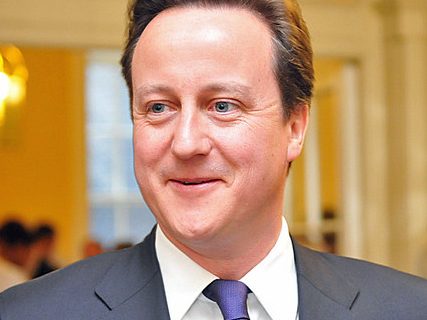
The decision to bring back former Prime Minister David Cameron as Foreign Secretary was a masterstroke. Cameron has many faults and his sudden exit from Number 10 after the Brexit referendum did not go his way left a black mark on his legacy. But Cameron, the PM who apologised for Bloody Sunday, who is sympathetic to Israel but has also criticised the blockade of Gaza and who knows how to manage international politics well is a smart choice as Foreign Secretary right now.

This is a government that has been perpetually in crisis, frankly ever since Cameron left. Cameron won’t fix everything, nor do much for the Conservative Party’s electoral prospects in 2024. But he is someone who understands and has experience working in foreign affairs. At a time when the world faces war in Ukraine and Gaza, plus heightened tension throughout the Middle East and greater hostility from China, foreign affairs is taking up much-needed government bandwidth at a time when the economy and domestic issues also desperately need attention.

Paul Goodman from Conservative Home made the following assessment of Cameron’s appointment:

The case for his appointment is that Sunak is short of talent to draw on, and that Cameron will serve the Government and his country with distinction, seniority and ability.  The case against is that the Prime Minister is reopening old Brexit wounds and China policy rows, alienating the present crop of Tory MPs, re-raising the Greensill saga, marginalising the Foreign Office in the Commons (since Cameron will go the the Lords), and bringing back to Government a politician who is seen by voters to have failed, and whose popularity ratings among them is low.

https://conservativehome.com/2023/11/13/reshuffle-live-blog-sunak-fires-braverman/

Given the number of Conservative MPs in the Commons after the 2019 landslide, it is concerning that the Tories are having to bring back ex-leaders and hurriedly put them in the House of Lords due to a lack of talent in their current caucus.

The decision to sack Suella Braverman as Home Secretary was long overdue. Over the last 12 months, there have been plenty of opportunities for Sunak to move her along. Sunak who lost the membership vote of the Tory leadership race last year, somehow felt he had to keep the likes of Braverman and former Justice Secretary Dominic Raab to hold the party together. In reality, what chances he had of resetting the dial for the Conservative Party post-Party Gate were dashed by keeping hard-right zealots like these two in the cabinet. The Armistice Day protests were in no small part the result of Braverman’s provocative and delusional editorial which she published without sign-off from Number 10. It was inevitable that she would be sacked, the fact that it took this event reflects very poorly on Sunak.

At the Conservative Party Conference in Manchester this September, Sunak tried a clever campaign trick of positioning himself as the change candidate. The idea is to present Labour, despite 13 years out of power, as being the status quo Party. Labour will defend policies such as ULEZ in London, which cost them the Uxbridge and Ruislip by-election, whereas the Tories call for change and for environmental targets set by their own government two years earlier to be relaxed. The Tories, despite 13 years to “fix” the migration and refugee crisis, will try and claim they are the party of change by ‘stopping the boats’.

This change candidate idea is not new, in fact, it is more or less what the Conservative Party did before the 2019 election. Rather than run on their abysmal record since 2010, they claim to stand for change. Is the public convinced? Polls suggest not. A cabinet reshuffle could be the signal that something is about to change. But the key “new” face, was PM for the first 6 of their 13 years in power. As Paul Goodman rightly says, the return of Cameron reopens old wounds. It also places a key cabinet post in the Lords, rather than it being held by an elected politician in the House of Commons. Historically this was not uncommon, but in recent times this has not been custom.

There was very little in the recent King’s Speech suggesting the government was on a new course or was implementing change. In terms of legislation, it was lightweight, and in terms of overall vision it offered even less.

The cabinet changes by Sunak have been done in response to the appalling actions of Braverman, and not a proactive desire to change by the PM. The decision to appoint Cameron as Foreign Secretary is a desperate act by a Prime Minister lacking confidence in his current MPs (with some justification), but also a PM really needing someone who can take the mental load in terms of foreign affairs.

The decision to appoint Cameron was a clever move. It will mean someone competent in the Foreign Secretary role at a critical time in global affairs. The overall fortunes of the Conservative Party will not change due to this appointment. Instead, it means the leader who took the Conservative Party into Government in 2010, will also be back in Cabinet in the months leading up to their likely electoral defeat in 2024.

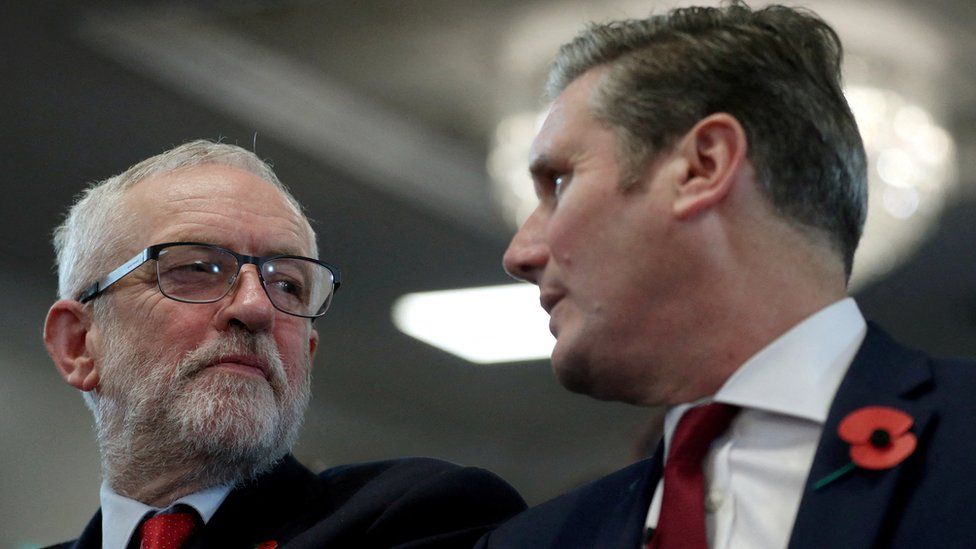
Jeremy Corbyn was not fit to be Prime Minister. But is Starmer?

It is said that there is a thin line between bravery and stupidity. Posting a link to my blog post which said that Jeremy Corbyn was not fit to be Prime Minister, to the ‘Labour London Left’ WhatsApp group. I will leave it to the reader to decide which one that was.

The full quote is below:

The 2017 election proved there was significant support for social democratic policies (eg national care service, public ownership of rail, electricity, water etc, and funding public services properly). But weak leadership on Brexit, failure to respond properly on antisemitism and now his appalling position on the Russian Invasion of Ukraine have shown Corbyn was not fit to be Prime Minister. But nor was Boris Johnson, as the Privileges Committee have confirmed.

https://nickkelly.blog/2023/07/09/decoding-the-doorstep-insights-from-canvassing-uxbridge-and-south-ruislip/

Jeremy Corbyn was and still is not fit to be Prime Minister. I say that as someone who took time off work to actively campaign for Labour in 2019. I also say this as a Labour member who supported the 2017 and (with some criticisms) the 2019 Labour manifesto policies, many of which would not have been there had Corbyn not won the 2015 UK Labour leadership race.

My ‘Why Labour Lost’ series of posts published after UK Labour’s 2019 election defeat (see links below) outlined the many and varied reasons for this result. Not all of it was Corbyn’s fault, nor indeed his faction Momentum. But they made serious errors and at times simply stupid calls.

More recently, Corbyn’s position on the Russian invasion of Ukraine in the last 16 months has shown that he lacks political judgment.

Shortly after the Russian invasion of Ukraine, I wrote the following of leftists who were opposed to giving military aid to help the Ukrainian resistance:

On the left, many are still influenced by the analysis of Lenin during the First World War and just before the 1917 Russian Revolution that in an inter-imperialist conflict socialists should be standing up to their own ruling class. During the First World War, there were strong arguments for working people not to align with the Tsar in Russia or other imperialist leaders in that conflict. It is dangerous to simply apply this idea to the current conflict without understanding that the context is different. There is a strong argument that people should be holding their own government or ‘ruling class’ to account during any situation like this. Ultimately, the decision to invade Ukraine was Russia’s, but there is still a question of what the governments and in particular NATO members could have done to help prevent this and what they can do now. Sadly, some on the left and drawn both bizarre and quite dangerous conclusions based on the premise that their role is to stick it to their own ruling class. Bizarrely, some socialists still mistake Russia to be some sort of socialist/anti-imperialist power, thinking that there is some residue influence of the 1917 revolution.

https://nickkelly.blog/2022/05/03/the-russian-invasion-of-ukraine-an-act-of-aggression/

Corbyn’s position of opposing military intervention and instead trying to negotiate a peaceful settlement is at best naive and at worst giving tacit support to the Russian Government and Vladimir Putin.

Back in 2003 when I was active in opposing the invasion of Iraq, one of our key slogans in Peace Action Wellington was “peace with justice and self-determination”. Any “peace settlement” with Russia right now would involve at the very least, ceding territory taken by Russia in 2014 and probably some of the ground taken in 2022. This ‘peace’ would not involve any justice or self-determination.

What Jeremy Corbyn, the Stop the War coalition and others taking this position are doing is not progressive, left or indeed socialist. It is supporting imperialist expansion. Further, and this should be self-evident, if NATO and Western governments fail to stop the Russian invasion, this will not serve the interests of working people. That this distorted world political view still infects sections of the left is astounding. That Corbyn subscribes to it, frankly discredits him as a serious political operator.

But I can understand why people on the Labour left would not like this assessment. Even more so at a time when various left groups and individuals such as director Ken Loach have been kicked out of Labour.

And there are serious questions about Labour’s current direction. Labour, whilst winning the Selby and Ainsty by-election, narrowly lost the Uxbridge and South Ruislip byelection. Whilst most attribute this to the Labour Mayor of London extending the Ultra Low Emission Zone (ULEZ) to outer London, this was not the only reason. On the doorstep, Starmer’s Labour Party may not have been as polarising, but nor were people excited by it. In fact, many were unclear about what it stood for. Labour improved its percentage of the vote in Uxbridge and South Ruislip significantly, but it still failed to make it across the line. This should be a cautionary tale ahead of next year’s General Election.

In my blog post earlier this year on whether UK Labour can finally win, I argued that the left needs to accept that the 2019 election was a devastating loss, in no small part the result of poor decisions by Corbyn and his team. Equally, his opponents in the party have still failed to seriously reflect on why Corbyn was able to easily beat them both in 2015 and when they tried to remove him in 2016.

The 2017 Manifesto included policies such as renationalising rail and water companies. It opposed austerity and called for decent funding for the NHS, a national care service, a properly-funded national education service and stronger employment law that strengthens collective bargaining. These are mainstream social democratic policies in many other European countries.

Why did it take a member of the hard left Socialist Campaign Group becoming the leader of Labour for it to put forward a mainstream social democratic manifesto, rather than an over-triangulated, incoherent and frankly visionless positions it too often had prior to Corbyn? In a country where life expectancy is stalling, younger people are economically worse off than their parents, where over a million people are waiting for social housing and incomes have been falling for years, there is a real mood for change. Not just a change of government, but of policy. This does not mean a sudden lurch left, but a serious and costed programme that prioritises the needs of the many, not just the few.

In the UK Labour Party, people are divided into binary factional groupings of Corbynistas or Blairites. Loyalty to leaders and personalities over policy is not limited to Labour or UK politics. But it is frustrating nonetheless.

UK Labour is on course to win the next general election, whenever that may be. Its long-term success in government will, as I have argued previously, require the different factions of Labour to work together. The left need to accept that the Corbyn project failed, and move on. The right needs to accept that voices to the left of Third Way centrism have a legitimate and important place both in Labour and in political life.

Below are the links to my ‘Why UK Labour’ lost blog posts:

Why UK Labour Lost? Part 1: Historical Context

Why UK Labour lost? Part 2: UK Labour’s strange loyalty to First Past the Post

Why UK Labour lost? Part 3: Its Brexit Innit

Why UK Labour lost? Part 4: Oooo Jeremy Corbyn

Why UK Labour lost? Part 5: Antisemitism

Why UK Labour lost? Part 6: New Labour and Blairism

Why UK Labour lost? Part 7: Momentum and the Corbynistas

Why UK Labour lost? Part 8: what it takes to win?

Why UK Labour lost? Part 9: What the party needs to do now.