Last weekend the EU elections saw a significant increase in support for the populist/alt-right in European elections.
I deliberately avoid using the term far-right. It would be too simplistic and inaccurate to paint a picture of Europe re-living the 1930s and entering fascism. It is not.
The actual result was that across the EU bloc, the centre-right maintained control. But in Germany, France, Belgium, Italy, Austria and various other countries the populist right increased their share of the vote. They are not a majority but a significant bloc in the European Parliament. A bloc that could destabilise the EU.
This is significant for two reasons.
One, these ‘populists’ do not agree on very much. They disagree on the issue of supporting Ukraine or on whether to reform or break up the EU.
Two, the rise in support for the populist right in the EU elections, collates with their increased support for these parties at national polls. The last three European countries I visited (Italy, Netherlands, and Portugal) all elected governments with alt-right parties playing significant roles shortly after I visited. I was gaining a complex but remembered that I had never been to Hungary and it’s been years since I visited Austria, both nations where the populist right won at the ballot box.
Why did Macron dissolve parliament and call an election for the end of the month? Possibly he is banking on tactical voting against Le Pen’s National Rally Party in the second round of voting. A high-risk strategy, and one where Macron’s centrist Renaissance Party risk being wiped out.
Why do we not see a similar right of the populist alt-left? Green Parties did make some gains in Europe last week, but to say the green movement is populist left is inaccurate. Some sections of it are, but much of the green movement in Europe, as in other democracies is mainstream and often part of the political establishment. Green politics are mainstream and as such get tarred with the same brush as other mainstream parties. Moreover, they are often the target of alt-right politician’s wrath.
Given the UK is no longer in the EU, will these results impact the coming UK election?
One recent poll had Nigel Farage’s Reform party level pegging with the Conservatives at 18%. The same rejection of mainstream politics and a desire for governments to be stronger on immigration has fuelled support for these parties in Europe, is also helping the Reform Party in the UK. Farage, who played a leading role in campaigning for Britain to leave the EU is now openly trying to replace the Conservative Party as the main right-of-centre party in UK politics. If this sounds far-fetched, it is what the alt-right has already achieved in France, Italy, Portugal and various other European nations in recent years.
While not being talked about much on the campaign trail, Labour if elected will seek to renegotiate the deal with Europe. The UK will not rejoin the single market, in the short term at least, but closer alignment is on the cards. Under the current EU leadership, this will be challenging, but not possible. The growing populist-right bloc does make things more unpredictable.
The right of the political spectrum is going through a significant transformation. The European elections are the latest example of populism gaining at the expense of the old mainstream parties. While Labour is likely to win the 2024 UK election, polls suggest the rise in the populist right is a European trend Britain is following.
In a nation that has suffered over 100,000 COVID-19 deaths, one maybe somewhat taken aback to see the latest YouGov Poll where The Conservative Party enjoy a 15% lead over the Labour Opposition. 17 months after the Conservatives won the 2019 General Election, it would be easy to conclude that the Government are still enjoying the support they gained during this campaign. The last year and a half have been anything but normal with a pandemic creating the greatest social and economic crisis in decades. As we are still living through this crisis, it is too soon to really understand what the long-term consequences of it will be. However, the recent elections in the UK do highlight some important trends and issues.
The downside to Party Political council elections is that the media interest is primarily what the impact of local council elections on national politics. This has included projections for how many seats each party would get in the House of Commons based on these results, despite the fact that not all councils were up for re-election. More importantly, while some will be voting on party lines, many others are likely to vote on local issues. Someones vote in council elections may not reflect how they would vote in a general election.
English Council Elections – 5 May 2018
It remains true that too much emphasis is made of how local election results may translate to voting intentions in a general election. Many people when they vote, are doing so based on the performance, or lack thereof, of their local councillors or mayors. However, many do use these elections as a chance to send a message based on the performance of party leaders nationally. And in 2021, the gains made by the Conservative Party, in particular Labour losing their majority on councils like Durham were part of a national trend.
Of course there were not just council elections being held on Thursday 6 May, but also the Scottish and Welsh assembly elections and the Hartlepool by-election.
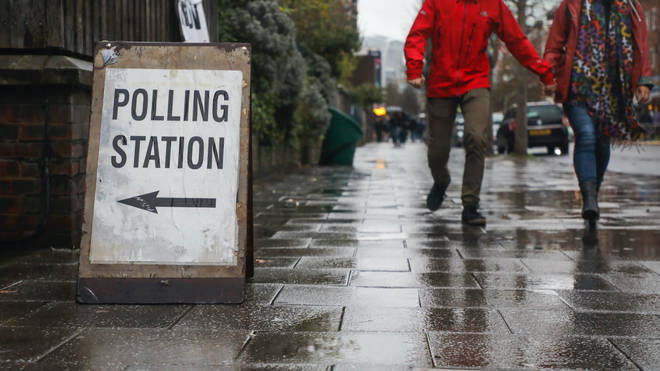
Voting took place across the UK on Thursday 6 May 2021 for council elections, the Hartlepool by-election and the Scottish and Welsh Assembly elections.
Hartlepool saw the Conservatives win in a constituency Labour had held for 57 years. The official response from Starmer’s leadership team was that Labour were still suffering from the result in 2019 where the Party had lost its ‘Red Wall’ seats and implied that the fault lay with the previous leader Jeremy Corbyn. Labour held Hartlepool in both the 2017 and 2019 general elections, and in 2017 Labour’s majority actually increased. Two major factors at play in Hartlepool were a) voter turnout falling to 42% whereas in 2019 turnout was 57.9% and b) in 2019 the combined Conservative Party and Brexit Party votes were ahead of Labour meaning in 2021 much of that Brexit Party vote went Conservative.
Another problem for Labour, and one which highlights the current poor decisions being made by Labour’s current leadership was the decision to select former Stockton South MP Paul Williams, from a shortlist of one, as their candidate. Williams, a vocal Remainer, was an odd choice for a constituency where support for Brexit was high. Williams was also forced to apologise early on in the campaign for an inappropriate tweet sent a few years earlier. When running for Labour Leader Kier Starmer tweeted that Labour needed to be “more democratic” in the way it selected candidates and should end “impositions” from the national leadership. Yet Paul Williams was ‘imposed’ and voters responded accordingly.
The current success of the Conservative Party is certainly in part due to the vaccine roll out. Unlike the expensive Track and Trace system that did not deliver, the NHS have rolled out a successful COVID-19 vaccination programme which has significantly reduced transmission and hospitalisation of this virus. Added to this has been the British media gleefully highlighting the problems the EU have had rolling out the vaccine, confirming to those who voted Brexit in 2016 and/or the Tories in 2019 that getting out of the EU was the right thing to do. Despite the pandemic, the Government made a point of delivering the promise to “get Brexit done.” Whilst this has not helped political stability in Northern Ireland, it keeps a promise made in 2019 which plays well with a strong section of English voters.
The re-election of the Scottish Nationalist Party, despite the recent controversy over Alex Salmond, will have disappointed those opposed to Scottish Independence. Any thoughts that Scottish Labour’s new leader Anas Sarwar would improve the fortunes for the party that once dominated in Scotland were dashed with the party coming third and only holding marginal seats like Dumbarton due to tactical voting by Tory and Lib Dem voters to stop an independence candidate winning. The media, particularly in England, and the Westminster establishment make much of the claim that having failed to win an outright majority there is no mandate for another independence referendum. This says more about the ignorance of the political and media establishment within the London bubble than about Scottish nationalism. The proportional voting system Scotland uses makes a party getting an outright majority highly unlikely. That the SNP were one seat shy of this is impressive. Further, the Scottish Greens also ran on a pro independence platform meaning there is a pro independence majority in the Scottish Parliament. Independence is still far from certain in Scotland, but as I wrote after the 2019 general election the calls for independence have and will continue to get louder.
The results were not all bad for the opposition Labour Party on 6 May. Greater Manchester Mayor Andy Burnham was elected with 67.3% of the vote to the Tories 19.6%. Andy ran on a progressive platform of improving buses and public transport in the city. He also has been given the nickname ‘King of the North’ after standing up to the Government in late 2020 calling for greater support for the region during the lockdown. In Wales, Labour was re-elected with their leader Mark Drakeford claiming the Welsh Governments response to COVID-19 helped them stay in power. In London Labour retained control of the Greater London Authority and Mayor Sadiq Khan was reelected. Khan’s majority was small than his 2016 result, with many voters dissatisfied with his handling of transport issues in the city.
The picture these results paint is one where the Conservatives won largely as it was their voters who had greater motivation to vote. Those satisfied with, or at least more forgiving of the Governments response to COVID-19, were more likely to go to the ballot box and vote Tory. The polling data shows the combined support of opposition parties to be greater than the Tories, but under a First Past the Post electoral system this helps the Tories. The current poll shows the Green Party, who currently has one MP in the House of Commons, enjoying 8% support. An increase in the Green vote to this sort of number will likely split the progressive vote in marginal constituencies and help the Tories. By contrast, the Conservatives no longer face serious competition on the right having mopped up the Brexit Party/UKIP support. Further, despite performing fairly poorly in Scotland and Wales, the Conservatives remain the dominant Party in England where the vast majority of UK voters live. As an English nationalist party, the Tories are able to motivate enough people in England to keep voting for them and keep them in power.
The COVID-19 pandemic was an opportunity for oppositions parties, in particular the Labour Party, to have made gains. Although a small-c conservative country, the governments handling of the crisis has upset many. Yet a combination of voter disengagement, and competition with the Greens and Lib Dems, has meant Labour continues to perform poorly, except in areas of the country where the party has local leaders who are prepared to step up. My next blog post will turn once again to the UK Labour Party to understand why 18 months after the 2019 election defeat the party is slipping backwards in terms of support nationally.


 Nick Kelly