Betting on the election date – how I lost a tenner

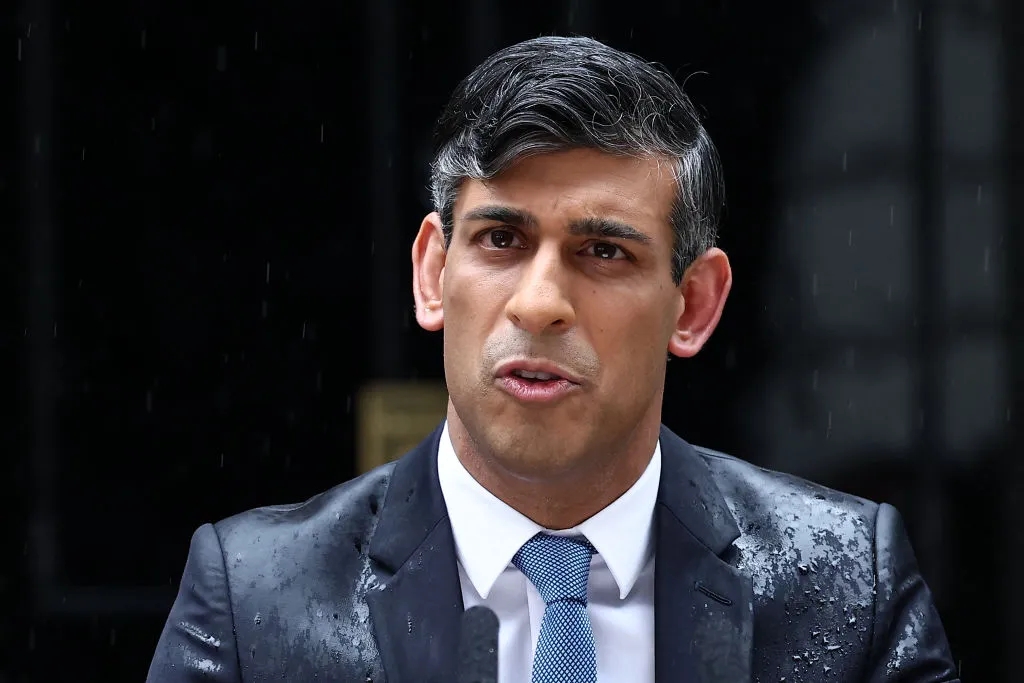
The beleaguered Conservative and Unionist Party faced another scandal during their ill-fated election campaign. This one is due to party officials close to Rishi Sunak placing bets on the election date the day before it was announced.

This alledged breach of gambling law by Conservative Candidates adds to the Tories woes. At a time when the public are increasngly distrustful of politicians, the optics of this are horrendous. Attempting to personally profit from information gained in their work. Such behaviour might be normal (though legally dubious) when working the financial markets, in politics it is clearly out of line.

The story was made worse after the Finacial Times published the following graphs, showing a spike in bets the day before the election was announced:

Such a scandal would not occur in New Zealand politics, where gambling on elections and politics is not allowed. On the one hand it is quite fun to see what the bookies odds are, however it does prevent this sort of nonsence happening.

I must confess to having my own election date wager, but this did not go my way. My local Labour Councillor Rosie Parry thought, and hoped, the general election would be called in May. I however was confident that the election would be called in November and made a £10 bet.

My rationale for this punt, the PM was polling terribly and would face certain defeat if he went to the country early. By November, he would have been in post two years, and maybe some of the external factors going against him might have improved, slightly. My mistake was overestimating Sunak’s ability to think strategically. Going early soley on the basis that the rate of inflation has fallen, ignoring the fact that everything is more expensive than three years ago, he would not be that witless. Surely? Alas, I was wrong.

Technically neither Rosie or I won this bet. Then again, seeing the back end of this wretched government will be victory enough for us both.

Do the EU elections matter in Britain?

Last weekend the EU elections saw a significant increase in support for the populist/alt-right in European elections.

I deliberately avoid using the term far-right. It would be too simplistic and inaccurate to paint a picture of Europe re-living the 1930s and entering fascism. It is not.

The actual result was that across the EU bloc, the centre-right maintained control. But in Germany, France, Belgium, Italy, Austria and various other countries the populist right increased their share of the vote. They are not a majority but a significant bloc in the European Parliament. A bloc that could destabilise the EU.

This is significant for two reasons.

One, these ‘populists’ do not agree on very much. They disagree on the issue of supporting Ukraine or on whether to reform or break up the EU.

Two, the rise in support for the populist right in the EU elections, collates with their increased support for these parties at national polls. The last three European countries I visited (Italy, Netherlands, and Portugal) all elected governments with alt-right parties playing significant roles shortly after I visited. I was gaining a complex but remembered that I had never been to Hungary and it’s been years since I visited Austria, both nations where the populist right won at the ballot box.

Why did Macron dissolve parliament and call an election for the end of the month? Possibly he is banking on tactical voting against Le Pen’s National Rally Party in the second round of voting. A high-risk strategy, and one where Macron’s centrist Renaissance Party risk being wiped out.

Why do we not see a similar right of the populist alt-left? Green Parties did make some gains in Europe last week, but to say the green movement is populist left is inaccurate. Some sections of it are, but much of the green movement in Europe, as in other democracies is mainstream and often part of the political establishment. Green politics are mainstream and as such get tarred with the same brush as other mainstream parties. Moreover, they are often the target of alt-right politician’s wrath.

Given the UK is no longer in the EU, will these results impact the coming UK election?

One recent poll had Nigel Farage’s Reform party level pegging with the Conservatives at 18%. The same rejection of mainstream politics and a desire for governments to be stronger on immigration has fuelled support for these parties in Europe, is also helping the Reform Party in the UK. Farage, who played a leading role in campaigning for Britain to leave the EU is now openly trying to replace the Conservative Party as the main right-of-centre party in UK politics. If this sounds far-fetched, it is what the alt-right has already achieved in France, Italy, Portugal and various other European nations in recent years.

While not being talked about much on the campaign trail, Labour if elected will seek to renegotiate the deal with Europe. The UK will not rejoin the single market, in the short term at least, but closer alignment is on the cards. Under the current EU leadership, this will be challenging, but not possible. The growing populist-right bloc does make things more unpredictable.

The right of the political spectrum is going through a significant transformation. The European elections are the latest example of populism gaining at the expense of the old mainstream parties. While Labour is likely to win the 2024 UK election, polls suggest the rise in the populist right is a European trend Britain is following.

UK General Election – the mood on the doorstep

Originally published in The Standard

This past Sunday I spent a day canvassing for the Labour Party in Gillingham and Rainham – a Kent constituency where 2019 the Conservative Party candidate won with a 15,000 majority. Conservations with constituents made it clear that the Conservatives are in trouble. Like the first person I spoke with, an 80-year-old man who told me he’s voted Tory all his life but was starting to lean Labour’s way. The main thing holding him back was Keir Starmer’s promise to lower the voting age to 16. Voters having reservations about Labour but feeling utterly betrayed by the Conservative Party turned out to be a reliable theme across many doorsteps throughout the day.

Conservative Party strategists hope that lifelong Tory voters will return to them by election day. But if Conservative supporters are still betting the polls are wrong, they will get little comfort on the doorstep.

The UK still has the First Past the Post Electoral system. Something New Zealand should have absolutely no nostalgia for. This means that, while the campaign is UK-wide, a lot of campaign activity is directed into constituencies that are deemed marginal. In marginal constituencies, a General Election brings a conveyor belt of the good and the great supporting their prospective parliamentary candidate. In “safe seats” voters get much less attention. I live in Lewisham North, a part of London where Labour historically have done very well. The local Labour Party have been twinned with the Gillingham and Rainham as it is deemed that campaigning there will have a greater impact.

In the past, overturning a 15,000 majority would have seemed near impossible. But the message on the doorstep this weekend suggests this is not the case in 2024.

Gillingham and Rainham like much of Kent voted for Brexit in 2016. During the 2019 General Election, parties calling for a second referendum struggled in ‘leave’ voting constituencies. In 2024, the key issues are the economy and the cost of living, the state of public services like the National Health Service (NHS), increased levels of immigration, the housing crisis and the under-resourcing of the criminal justice system. On these issues, voters in Gillingham and Rainham felt let down, in particular those who previously voted Conservative.

Just one term ago the Conservative Party notched up the best result they’d seen since Thatcher defeated Michael Foot in 1983. The common wisdom in Labour was rolling that win back would take longer than a single electoral cycle. Yet five years later it is credible that Labour may pick up seats that had not even featured in the list of the party’s target constituencies. Recent by-elections have seen Labour overturn 20,000 Tory majorities in seats such as Mid-Bedfordshire and in Tamworth. The Liberal Democrats have also enjoyed by-election victories in previously “safe” Conservative Seats. As a result, there has been much more interest in candidate selections, especially for Labour.

Last week, these selections, and the internal disputes that accompanied a few of them, overshadowed the election campaign more generally. In the Conservative Party, many sitting MPs including quite senior Ministers are stepping down this election. The week started with outgoing Conservative MP for Telford Lucy Allan being suspended for backing a Reform UK candidate, Nigel Fararge’s latest political party. Three days later, another outgoing Conservative MP, Mark Logan made a statement saying he is backing Labour at the next general election, as the party could “bring back optimism into British life”.

This, plus the double-digit poll lead, should have meant a good week for Starmer’s Labour. Instead, the party’s campaign messages were overshadowed by infighting over selection issues as factions positioned for power ahead of the expected win

Probably the most high-profile of these stoushes has concerned Diane Abbott’s candidacy. A Labour MP since 1987 and first ever black woman to be elected to the UK parliament, Abbott is regarded by many as an inspiration and a role model. Yet last week, there was a public spat over whether she would be allowed to stand again as the Labour candidate in Hackney North and Stoke Newington. The reason for this was a letter published in the Observer Newspaper over a year ago where she said:

“Many types of white people with points of difference, such as redheads, can experience this prejudice. But they are not all their lives subject to racism.”

Abbott claimed this sentence was from a first draft of the letter but ended up being published by mistake but was suspended from the Labour caucus pending an investigation which only ended last week.

On Wednesday it was announced Abbott would have the party whip restored. However, shortly afterwards news broke that Labour’s National Executive Committee were going to block her as a candidate.

The resulting furore dominated the news cycle for much of last week. Deputy Labour Leader Angela Rayner, London Mayor Sadiq Khan and many others including the online Tory publication Conservative Home all came out in support of Abbott. It took Keir Starmer three full days to state that she should be allowed to run. Starmer’s statement was strong and praised her as a trailblazer in UK politics but its lateness cost Labour two days of election coverage it didn’t need to lose.

The set-tos about Abbott and around the selection of other, less high-profile, candidates are due to party factionalism and internal politicking. Something that is patently ill-advised so close to a General Election, and especially against such an iconic figure as Abbott. To succeed in Government for any length of time, Labour needs to build a broad coalition of support, including those on the left of the party.

Understandably, the winning faction would want their people in key positions, including in candidate selections. But long-term, to be successful in Government, people from different parts of the party need to work together. There are plenty of historical examples in both UK and NZ politics of factionalism undermining the long-term success of the parliamentary party, especially when in government.

Finally, on a more lifestyle/entertainment note, one constituency of interest in the upcoming UK General Election will be the previously “safe” Tory seat of Mid Sussex. The Labour candidate is David Roundtree, drummer for the iconic Brit Pop band Blur. Due to both his profile, and ability to fund the campaign, Roundtree may be elected next month. If elected, the mountain of constituency casework may really make him think that modern life truly is rubbish.

Sunak skips D-Day landing 80th anniversary

Prime Minister Rishi Sunak’s decision to to leave the 80th anniversary of the D-Day landing early, may become a defining moment of this General Election and of Sunak’s time as Prime Minister.

Why would a Prime Minister, whose party is behind in the polls 28 days from the General Election, do something so utterly stupid?

This morning, Rishi Sunak was forced to issue an apology for what his opponents have described as a dereliction of duty, unpatriotic and disrespectful towards those who fought and those who gave their lives in this battle.

Conservative MPs, already fearing political oblivion next month, were horrified when images from the D-Day anniversary showed former PM and Foreign Secretary David Cameron and not the current Prime Minister. One does not envy Conservative candidates having to defend this on the doorstep this coming weekend.

With just under a month to go until the General Election, any hope of a come-back like that achieved by John Major in the April 1992 election, looks highly unlikely. Instead, polls now suggest this could be the largest Tory defeat since 1906.

Who won the ITV Leaders Debate?

Who won last night’s ITV leaders debate? Certainly not ITV.

If undecided voters were hoping the first leaders debate hosted by ITV would enlighten them on the key issues, they would have been sorely disappointed.

The short answer quick-fire nature of last night’s debate lent itself to an environment where the leaders spoke over each other and the adjudicator at times appeared to struggle.

At certain times, the leaders were asked yes or no questions on important policy topics. Important policy questions should not be left binary yes or no.

The slightly longer 30-second answers also barely gave the leaders time to say anything of substance.

Generally, I am not a fan of going after the media. But last night, British voters were let down by the fourth estate.

In terms of which leader won the debate, a YouGov snap poll released just after the debate said 51% thought Sunak performed better compared with 49% for Starmer. However, another poll conducted by Savanta said Starmer with 44% performed better than Sunak with 39%.

In terms of who was better at interrupting the debate to repeat pre-prepared attack lines, it was Sunak. He continued his line about Labour increasing taxes by £2000, again and again. Starmer responded that this was garbage. BBC fact-checkers on Radio 4’s Today Show said the £2000 figure was based on presumptions rather than a statement of fact.

Starmer got a line in about Rishi promising NHS waiting times would come down when in fact they have gone up. He landed a similar body blow on Sunak’s promise to reduce immigration numbers when again, the numbers have gone up under his premiership. The cringe moment with Starmer is when he reminded viewers, more than once, that his father was a tool-maker.

One important area of policy that was addressed in the debate was Britain’s membership of the European Court of Human Rights (ECHR). This court is separate from the European Union and was set up at the end of the Second World War to uphold human rights in Europe. Starmer expressed his continued support for the ECHR and reminded Sunak that Conservative Prime Minister Winston Churchill had been a strong advocate for the court.

Sunak’s response was that the UK should withdraw from the ECHR. He is doing so to stop the drift of his more right-wing supporters over to Nigel Fararge’s Reform Party. It seems populism has triumphed over human rights, at least on the right of UK politics.

Only the Labour and Conservative Party leaders were part of the debate. One commentator on Conservative Home has suggested it is not impossible the Tories come third in this general election (though not likely). While these two parties have dominated Westminster since the Second World War, other parties should have been included. But given the terrible format of last night’s debate, it is unlikely viewers would have heard much of substance from them either.

The UK Election: Impact on Parliament’s Facilities and Services: Researcher’s Reflection

Since January 2020 I have worked in the House of Lords as a Researcher, first for Baroness Sally Greengross, then after she passed away I worked for Baroness Usha Prashar. Both Crossbench Peers, meaning they do not take a party whip. Like many Crossbench Peers, both women were put in the Lords due to being subject matter experts and prefer to work with politicians from across the House rather than take a party whip.

Last Wednesday Rishi Sunak called a General Election. For the next two days, MPs and Peers worked on the wash-up whereby the parties decide what bills to complete, removing any controversial amendments or clauses, and abandoning others. Bills such as the Renters Reform Bill which would have banned landlords being allowed to issue no fault evictions, bit the dust. So too did the proposed smoke-free legislation, similar to that recently repealed in New Zealand.

When I arrived at Parliament on Thursday, MP staffers were already carrying boxes out of the parliamentary estate. Westminster, usually a hive of activity, already felt like a ghost town.

I use the gym at Parliament and try to go there most workdays. When I spoke to the manager, she said they expect to lose money over the election period. With a record number of MPs standing down, and polls suggesting many more will not return on July 4th, they would lose quite a few members. Their experience was that new MPs generally took about 3-4 months to find the gym and join. This year it will be compounded by the election being held just before summer recess, which is always followed shortly by the Party Conferences (another recess). New MPs may only spend about 3-4 weeks in parliament between July and October.

It won’t just be the gym impacted by this. Catering services throughout parliament will now be quiet in June when normally they are busy. Functions, including the Sally Greengross Memorial Lecture scheduled for June, are now postponed. The cafeteria and tearooms will now run a skeleton service on the estate for those still coming in, where opening hours will be reduced and only a handful of staff will be onsite.

My hairdresser in Parliament will still be open. Usually, it is quite difficult to get an appointment when parliament is sitting. This should not be a problem over the next few weeks. I imagine their income will be reduced significantly as well.

On Thursday afternoon I received an email about access to services during the election. Pretty obviously it stated that the parliamentary estate and resources could not be used for election campaigning. What I and fellow researchers not around at the last election had not realised was that this included access to the parliamentary library.

The Library’s research and reference
services will not be available during dissolution. Research assistants will be excluded from the Palace Library.
No pre-paid envelopes will be issued during dissolution. House of Lords stationery should not be used for party-political purposes.

House of Lords: Arrangements during the dissolution of Parliament, Thursday 30 May 2024

As Parliament will not be sitting I will have no need to access the Library or to order stationary.

Until the State Opening of Parliament on the 17th of July, visiting the gym will be my main reason for entering the estate. At least it will be quiet.

Underrepresented London

On Thursday 02 May 2024 Londoners will vote in the Greater London Authority (GLA) and London Mayoral Elections. This important election will set the direction for this major conurbation in the South-East of England. This city has been politically and economically dominant over the rest of the British Isles for much of the last 2,000 years, but it would be fair to say the capital has had a rocky few years.

In this year’s mayoral election, the choice is between the incumbent Labour Mayor Sadiq Khan, and Trump-supporting Conservative Susan Hall. Unlike previous GLA elections, this election will use the First Past the Post electoral system due to Conservative Government changes to the electoral laws. Voters will also be required to bring ID, a move no doubt designed to suppress voter turnout by non-Tory voters.

The significance of London to the UK economically

The London Metropolitan area generates around 1/3 of the UK’s GDP. For those living outside of London, there is considerable resentment that politicians and bankers hoard wealth in the city and do not share this wealth with the rest of the country. The counter-argument to this is that when London generates 1/3 of the UK’s GDP it must receive proper investment.

The London economy is often viewed as quite separate from the rest of the UK. Certainly, when the UK was a member of the EU, the connection between London and other European cities was stronger than that with regional cities like Sheffield or Liverpool – though there are clearly strong links between these cities and London.

Other parts of the UK, such as the north of England will complain about lack of investment and jobs in their region. This becomes a self-fulfilling prophecy when all the money and jobs are in London – this is more likely to be where new businesses and employment are created. On the other hand, does all GDP generated in London stay in London? Or does quite a bit of it get used to support different parts of the UK?

While there can be no doubt that there is considerable money and wealth in London, there is also deprivation and poverty. While London might generate 1/3 of the UK’s GDP, its residents are not all reaping the rewards of this wealth.

London Politics

The population of Greater London in 2019 was around 8.9 million, or around 12.5% of the total UK population. It is by far the most culturally diverse city in the UK. It also is one of the most cosmopolitan cities in Europe.

There is a general feeling of frustration in London. This frustration is directed at the Mayor, GLA, and the government in Westminster. In my earlier blog post on the Uxbridge by-election in mid-2023 I discussed some of the challenges London faces with the introduction of the Ultra Low Emissions Zone (ULEZ), where to ensure the capital has clean air people were being charged for driving older polluting vehicles in the city. That this has been introduced during the worst cost of living crisis in decades has made things very difficult for people who rely on cars to get to work, particularly in the outer suburbs of London. It is worth noting that 46% of London households have no vehicle, and this rate is even higher for those living in zones 1-3 where public transport is more reliable.

But the frustrations go beyond ULEZ. London is a city that voted overwhelmingly ‘Remain’ in 2016, whereas England as a whole the UK nation most supportive of leaving the European Union. In a city with considerable links to Europe, and where the banking sector is a major part of London’s economy, the anger and frustration at the Brexit result continue to simmer eight years after the referendum.

There has been valid criticism in the past that power is too centrally located in and around Whitehall, thus by default political decisions tended to favour London. There is certainly some evidence that this has occurred, at least historically. However, there is also evidence that Londoners often do not benefit and at times are forgotten by policy-makers.

While most MPs and civil servants would spend a significant portion of their week in London, only 73 of the 650 MPs in the House of Commons represent London Constituencies. Labour tends to dominate politics in London. Labour or centre-left candidates have won four of the six London Mayoral elections since 2000. At the 2019 election, while there was a national swing to the Conservative Party, Labour elected 46 Labour 20 Conservative MPs. Labour controls 23 of the 30 Borough Councils in London.

By contrast, the Conservative Party has historically dominated politics in England. And with 80% of the UK’s population living in England, and by winning there, the Conservatives have dominated Westminister and British Politics. UK politics is often dominated by Tory Shires and rural areas and towns in the south of England. The Brexit result in 2016 illustrated that having a London-dominated campaign will likely cause a backlash from voters in other parts of England.

It is not just through Party allegiance or issues like EU membership London is out of step with the rest of England. The fact is that London is perceived as wealthy and affluent. Other parts of the UK have struggled, especially ex-coal mining areas in Wales and the North of England. In these areas where public transport and other key infrastructure is poor, there is little patience for the Government investment in London.

Though not is all that it seems with regards to London. The Levelling-Up agenda has been sold as a programme to invest in these left-behind communities which desperately need infrastructure, industry and jobs. Yet many do not realise, that a not insignificant amount of Levelling-Up funding has also been spent on deprived parts of Greater London.

The high price of living in London

There is money in London. People who live within the M25 earn more. But, they spend considerably more for the privilege of living in Capital City. Increasingly people are being forced out of the city, with many former East London residents now moving to commuter counties like Essex and Kent. The cost of housing has skyrocketed in the last 20 years, meaning once affordable middle-class properties in Zone 2 and 3 of London are now worth over a million pounds. Properties in my suburb of Deptford are being advertised as starter homes with a price tag of £500k. Given most lenders require a 20% deposit, these properties are out of reach of most people living in the area.

So people end up in the rental market. According to Zoopla, the average monthly rent in London as of April 2024 is £2,121. Council tax, internet, water and energy bills are usually on top of this and have increased significantly in the last two years. The average monthly income after tax is £2,902.50. This means most renters spend well over 2/3 of their income on rent and utility bills, with other costs like train fares and groceries many are left with very little disposable income each month.

The demand for council housing or other genuinely social rent homes (rent that is based on levels of income) is high and this cannot be met by local authorities. People can wait for years for social housing. Worse, the condition of many council estates in many parts of London is bad.

People wanting to start a family are understandably leaving London due to these costs, while others are deciding not to have children due to the expense and pressure of living in the capital. There are likely to be school closures across London in the coming years due to these factors. This in turn will potentially drive more families out of the city.

London is increasingly becoming a city where urban professionals work every hour they can to survive. For the unemployed or those on low incomes, living in this city is nye-on impossible. My own experience of moving to London in 2017 was not easy. Finding decent work in London takes time and the set-up costs of moving to the city were extreme. While for me part of this was moving from New Zealand, for people moving from other parts of the UK to London they face many of these same challenges. It is very easy to get into considerable debt or to face hardships. Yes, moving to London is a choice, but it is the UK’s capital and economic centre so continues to be where many of the work opportunities are.

Infrastructure in London

One of the key narratives around the Levelling-up strategy is that it is to improve infrastructure in parts of England that traditionally have missed out. It is hard to argue that a decent rail network between Manchester and Liverpool should not be a key priority for transport investment.

London has received transport investment with the Cross Rail/Elizabeth line which opened in 2022. Though arguable much of the benefit of this line was for people outside of London in places like Reading who are now connected to the London network.

However, one of the key challenges in London is investing in the existing network. An example of this is the Bakerloo line. The current rolling stock on this line was purchased in 1972 and was due for replacement in 2008. It is now 16 years past its best-before date, and the line is now at risk of critical failure as a result. There are also strong arguments that this line should now be extended from its current final stop in Elephant and Castle, South East through to Hayes via Old Kent Road, Lewisham and Catford. A campaign was recently launched called Back the Bakerloo with the support of Borough Councils throughout Greater London.

The challenge for projects like this is that the Central Government at this time will be reluctant to bankroll major projects in London. They can underwrite any loans for the Greater London Authority, but even here, with the current state of Government finances and debt, this could be challenging.

Devolution of power to the Greater London Authority

One of the big challenges faced by the Greater London Authority is that it only receives a fraction of the tax collected in London. In New York roughly 50% of taxes collected go to the city authority, and in Tokyo over 70%. In London, that figure is under 10%. This is why during the pandemic the London Mayor had to go cap in hand to the Conservative Government (a Government most Londoners did not vote for) and ask them to bail out Transport for London due to the fall in passenger numbers during lockdown. The Government insisted that passenger fares in London increase, something Mayor Sadiq Khan has promised not to do. This was clearly political game-playing and is all too common when it comes to local government finances.

The implementation of ULEZ suffered similar political game-playing. When it was implemented, the London Mayor had asked the government to support a vehicle scrappage scheme just as it had done in the West Midlands where Conservative Mayor Andy Street has held office since 2017. If the Greater London Authority had stronger devolutionary powers and a greater share of London’s tax revenue a much better scrappage scheme could have been introduced.

Of course, the history of London Government and Westminister has been marred in conflict. In 1986 the Thatcher Government famously abolished the Greater London Council in response to the policies of left-wing Mayor Ken Livingston. Most people across the political spectrum would now agree this was a foolish decision and the current Greater London Authority was created by the Blair Government in 2000. However, there remains a power imbalance in favour of Whitehall and the government. The Greater London Authority and Borough Councils in London are not given sufficient powers to serve their local community. This challenge is not dissimilar to that faced by local leaders in other parts of the country. Whereas in Manchester or West Midlands, there is general recognition of the need for greater self-determination, not so for Greater London.

Reasons to be Cheerful

It would be easy to conclude that the picture is fairly gloomy given the challenges facing London. In addition to those mentioned, its Police force the Metropolitan Police has a poor reputation, while knife crime continues to plague London.

But London remains the cultural, political and economic capital of the UK. It does still have many strong leaders who will advocate for the city. Further, the challenges facing London like the housing crisis are becoming harder to ignore.

Sadiq Khan’s re-election pledges include free school meals for all primary school kids in London, building 40,000 new social houses and implementing rent controls. Khan also plans to continue his agenda to tackle air pollution in the city to improve public health and reduce greenhouse emissions in the capital. These are good practical measures to help people living in London.

The report authored by Gordon Brown in late 2022, recommends greater devolution in regions of England. It is highly likely that if Labour are elected to government this year, they will look to implement this part of the Gordon Brown report. This may include greater powers to the GLA.

Should a Conservative Party mayor be elected this week, or at some point in the future, the issue of devolution will not go away. Susan Hall or other City Hall Conservatives will not appreciate being dictated to by the government, especially if Labour are in power. Further, the Levelling-up agenda by the Conservative Government has included commitments to the devolution of power to local authorities. While there may be arguments on the details, both major UK political parties agree in principle that greater devolution is a good thing, including for London.

Greater London will not have an easy time over the next decade. The problems listed above are coming to a head fast and cannot be ignored for long. Things need to change in London, and it is reasonable to assume things will change over the next few years.

Iran launches missiles at Israel in retaliation for consulate strike in Damascus

In the last few hours, Iran has launched 300 missiles at Israel. Most of these were shot down by the Israeli missile defence system, and by Israel’s allies including the UK.

An antimissile system targets an Iranian aerial attack on Israel 14/04/2024

This attack was in retaliation for the Israeli bombing of the Iranian consulate annexe building adjacent to the Iranian embassy in Damascus, Syria, killing 16 people. This was part of Israel’s broader campaign to target Hezbollah assets in Syria since 2011. This has escalated since October 7 2023 and the intensified conflict between Hamas and Israel.

In October I described the attacks by Hamas on 7 October as horrific and appalling. I went on to say:

Hardliners in both Israel and Palestine are in control, which makes the prospect of peace or a lasting resolution to the conflict in the region seem a distant prospect at this stage. Whether it is a two-state solution, a one-state solution with power sharing, or some other construct, there needs to be a way that Israelis and Palestinians can live in peace. Until this happens, this conflict will destabilise not only the Middle East but the whole w

The horrific situation in Israel and Gaza

This conflict has indeed now escalated and the region is increasingly unstable. This is the first time that Iran has directly attacked Israeli territory. US President Joe Biden has told Israel that it will not participate in a counter-strike against Iran. However, Netanyahu and his hard-line coalition have ignored similar wise words of caution from the US in recent weeks. If Israel does respond, Iran has already signalled there will be further retaliation.

Since the 7 October attacks, Israel has argued that it has a right to defend itself. Israel does have this right, but it also has a responsibility to comply with international law and to the human rights of people living in Gaza. Israel also has a responsibility to stop the settler attacks in the West Bank, which have intensified since the 7 October 2023 attacks. It has a responsibility not to escalate violence by attacking Rafah, again something Biden has warned Israel against.

The South African Government has taken the Israeli Government to the International Court of Justice (ICJ), alleging that Israel is responsible for violations of the Genocide Convention in respect of its actions taken in Gaza. While it will likely be years before any decision is made by the ICJ, there is growing evidence that Israel has attacked hospitals and other civilian targets.

Historically the US Government has been Israel’s strongest ally, under both Democrat and Republican Presidents. Therefore it is no small thing that in a recent UN vote calling for an immediate ceasefire in Israel-Gaza, the US abstained rather than using their power of veto. Many supporters of Palestine and those on the left have been critical of the Biden Administration over its response to the Gaza conflict. In reality, Biden has pushed back on the Netanyahu Government much harder than his predecessors. Unfortunately, the response of the Israeli Government to the horrific attacks by Hamas on 7 October has escalated the violence and has now drawn Iran into active conflict against Israel.

Israel should not have bombed the Iranian consulate buildings in Damascus. Iran should not have fired 300 missiles at Israel in response. Neither of these actions should have happened, but they now have. The world now watches to see if there is further retaliation and escalation of violence, or if calmer and wiser heads prevail.

The prospect of peace or a lasting resolution to the conflict in the region seems more distant than ever. But only by doing everything possible to achieve such an outcome will there be any chance of this conflict de-escalating and a lasting peace being achieved.

In an episode of The Rest is Politics recorded shortly after 7 October, Alastair and Rory interviewed historian Yuval Noah Harari who had family caught up in the Hamas attacks on Israel. During this interview, Yuval rightly said that for people living in places like London instead of taking a side in this conflict, we need to be seeking long-term solutions to this conflict. I do not claim to have these solutions. But as a first step, an immediate ceasefire and a return to peace talks is an essential first step. By contrast, any escalation in this conflict will do untold harm both in the region and globally.

Joe Biden learning lessons from Keir Starmer?

A recent article on the Labour List authored by Ed Owen raised some interesting points about the respective elections coming up this year in the US and the UK.

The two most recent by-elections in England certainly were encouraging for Labour, as is recent polling. But we still maybe months away from a UK General Election and lots of thing can happen between now and then.

Before I delve into the various observations made in the article, there are a few key points to remember. UK Labour last won a general election back in 2005. Since then, the US Democrats have won three of the last four presidential elections. While Labour is ahead in the UK polls and has been for over two years, this is in no small part due to support for the Conservative Government collapsing.

I quote Ed Owen below:

Yet, ironically, with President Biden trailing Donald Trump – the soon-to-be anointed Republican candidate after primary victories in Iowa and New Hampshire – by up to six points in one recent opinion poll, many Democrats are now asking themselves whether they might have been in a stronger position if they had followed the experience of Labour and Keir Starmer.

While most Democrats are publicly rallying around Biden, some are privately despairing of how, through a combination of poor political strategy and personal misjudgments, he appears to have lost the confidence of a significant number of key swing voters he won in 2020.

Foremost among these mistakes, these critics allege, was the President’s willingness to indulge rather than confront the liberal left of the Democrat Party as represented by former rivals Senators Bernie Sanders and Elizabeth Warren. Both are kept close, and some of their leading advisers were brought into the administration’s ranks at its outset.

https://labourlist.org/2024/02/joe-biden-us-election-2024-donald-trump-democrats-swing-voters/

One of the great successes of the Biden campaign in 2020 was building bridges with the Sanders campaign and building what has so far been an enduring electoral coalition with the “liberal left grouping”.

Contrast this to 2016, where Hilary Clinton’s campaign failed to properly win over Sanders supporters or indeed many traditional Democrat voters. The so-called Rust Belt states such as Michigan were traditionally blue-collar Democrat strongholds but in 2016 voted for Trump, much to the surprise and upset of the Clinton campaign.

When President Biden joined the UAW picket line last year in Michigan, this was not about “indulging the left”, it was very smart electoral politics.

Contrast this to recent polling showing that support for Labour amongst UK Muslim voters has halved since the Starmer’s cack-handed response when asked if Israel had the right to cut off water and power to Gaza. Recently, New Statesmen Claudia Cokerell made the point that this, combined with many younger voters now disappointed at Labour ditching the £28bn green policy, may cost Labour quite a few votes. Though the Labour motion in parliament on a ceasefire should go someway to restoring confidence of those unhappy abour Labour’s Gaza position.

In the UK, the repeated kicking given to those who supported Corbyn and even some on the soft left of Labour is short sighted. In a post last year I wrote the Corbyn was “not fit to be Prime Minister” in reference to his position on Russia’s invasion of the Ukraine. His handling of the antisemitism issue in Labour also showed he was not capable of leading the party. But to treat anyone whose politics is to the left of New Labour as dangerous and not worthy of Labour membership or mainstream politics, is not smart and could do considerable harm in the long term.

The Tories have had a disasterous term in office, and much of their base are threatening not to vote. But Labour should not be complacent. There are plenty of examples where Labour were polling well during the term, only to lose the General Election. If polls narrow Labour needs to build a strong coalition of progressive support to win.

Ed Owen then goes on:

Trashing your party’s record in office is bad politics

Yet, despite serving as Vice President for eight years in the Obama administration, Biden has often appeared to side with the Warren/Sanders worldview. Indeed, only last April, National Security Adviser Jake Sullivan made a keynote speech that implicitly dumped on the economic philosophy of previous Democratic Presidents.

Trashing your party’s record in office is bad politics as Ed Miliband discovered in 2015, and PPI’s president Will Marshall agrees. “Is it really necessary to debate progressives again over Bill Clinton’s legacy?” he wrote last month. “With a vengeful Donald Trump thrashing about our political waters like a blood-frenzied shark, it seems like a distraction. What’s more, the left’s revisionist history of the Clinton years strikes me as a facile exercise in presentism – reinterpreting the past to score present-day ideological points.”

https://labourlist.org/2024/02/joe-biden-us-election-2024-donald-trump-democrats-swing-voters/

I wonder, if Will Marshall has ever reflected that the economic policies starting with Regan in the 1980s, continued by Clinton et al up to the 2016, directly contributed to the election of Trump. Exporting jobs and failing to rebuild new industries like in Michigan or Ohio. Might this have led to populist Trump winning the electoral college in 2016…maybe?

In terms of trashing the legacy, the Bill Clinton Presidency ended 23 years ago. Nearly a quarter of a century on, we have hindsight and perspect to see what the impact of policies from that time. Also, the reason progressive raise the Clinton legacy is because many in the Democrats think that these policies and strategies would still be successful now. Just as too many in UK Labour continue to use the 1997 election as the playbook for 2024 – ignoring some fairly major economic and social shifts that have taken place since.

It is not trashing the Legacy of either Clinton or Blair, to say that things should be done differently now. By that measure, were the legacies of Roosevelt or Attlee being trashed in the 1990s? The reality in politics is that you constantly need to adapt to the times. It is not the 1930s or the 1990s, though important lessons can be learnt from both.

Ed follows up with this:

Biden’s critics argue, that having been elected in 2020 as a bipartisan President (not least winning votes from Republicans and independents who could not stomach another Trump term), he has too often sought to govern in a partisan way driven more by a desire to avoid being attacked from the left than from the right.

“Keir Starmer has shown that when you stand firm with the concerns of real voters and take on the minority interests pursued by the left, you win the public’s trust and confidence,” one centrist Democrat observed recently. “This was a lesson we had to learn through the 80s and 90s but is one that appears now to have been forgotten.”

https://labourlist.org/2024/02/joe-biden-us-election-2024-donald-trump-democrats-swing-voters/

A bipartisan President? Really? Biden won the Demcratic nomination in 2020. Yes he did win support of voters who may have previously voted for different party’s, including some who had previously voted Republican. Yes, Trump has taken the Republican Party in different direction from the days of Regan and both Bush Presidencies, meaning moderate Republican’s now have not political home. But the programme of Biden and the Democratic Party should not just pander to this group. It is no good saying oh well liberals/the left will vote for us anyway, only to get angry when a few million people for a Green candidate in a close election.

Since becoming leader, Starmer has helped lift support for Labour. Under his watch, Labour have been calling out the failures of the current Government, including Party Gate, the Liz Truss Mini-Budget and the failed Rwanda Refugee policy. Again though, Starmer is yet to win a general election. Yes there have been some positive polling numbers, but we are yet to see much in the way of detailed policy from Labour as yet.

Biden has not been seen to be addressing voters’ key concerns

This strategic weakness has been compounded by what many see as Biden’s unwillingness or inability to address or connect with voters on the key issues of the day, notably the cost of living and immigration.

High inflation has undoubtedly hurt the administration and, while there have been significant falls in the last months, there are fears that long-term, transformational measures such as the Inflation Reduction Act – which invests more than $600bn into the clean energy transition – come at a time when many swing voters believe that public spending needs to be reined back, not least after the significant increase in government intervention during Covid.

https://labourlist.org/2024/02/joe-biden-us-election-2024-donald-trump-democrats-swing-voters/

High inflation and the cost of living has hurt governments around the world. Most incumbant governments have struggled in recent years. One example being New Zealand where Labour went from 50% of the vote in 2020 to 25% in 2023. Is it that Biden has not connected with voters on key issues, or is it that it takes time for policies to take effect, especially when the world economy is so unstable.

Biden has been a strong performer in terms of passing legislation. I was previously somewhat skeptical on Biden, but his list of achievements in office has been impressive. Not least of these was the Inflation Reduction Act, which pumped billions into clean energy and other US infrasture in desperate need of investment. These projects take years to roll out, but will no doubt be an incredible legacy of the Biden administration. Should Biden not have pushed to get this Act passed because some swing voters in a focus group said they don’t like the government spending money. Governing is about leading. It is about making the tough calls that need to be made. If we are serious about tackling climate change, or to invest in the economy and help people in the medium to long term.

Reining back spending at times maybe necessary. But not if it will do more long term harm than good. Those who have concerns about the levels of spending from the Inflation Reduction Act, may later reflect that ultimately it helped the US economy. Leadership is about having courage and doing what is needed.

Similar questions are being raised within the Labour leadership about the party’s £28bn green investment commitment. As a keen observer of US politics, Rachel Reeves has seen how Bidenomics has failed to land effectively with the American public since her very public embrace of the President’s economic policies when she was in the US in May last year.

Immigration continues to be a major public concern too, with “encounters” on the US-Mexico border last year numbering 2.5 million – the highest level for more than 20 years. As with higher prices, it’s an issue that a President who prides himself on understanding the concerns of middle America has been oddly detached and absent from.

https://labourlist.org/2024/02/joe-biden-us-election-2024-donald-trump-democrats-swing-voters/

To paraphrase Limp Bizkit’s Full Nelson, their mouth was writing cheques that their ass could not cash. When Labour announced their £28bn green investment pledge in 2021, it was quite clear that the global economy was not doing well as it emerged from the pademic. Yes, it is certainly worse now after the Liz Truss Mini Budget. But back then it was clear making a bold spending promise would be a challenge. Labour should not have announced the figure back then, especially if it couldn’t hold its nerve and see it through.

Bidenomics, as Ed Owen terms it, has not failed to land. Rather, the Biden administration has like all governments struggled with the economic situation. Recently this has resulted in not so great approval ratings for Biden. This is what happens in Government. Labour are not in Government, and have not been since 2010. The lesson Rachel Reeves should be taking from this is that being in power means making tough calls, which at times may reflect in polling numbers. A strong leader will ride this out.

The point about immigration in the above is important. Rightly or wrongly, in difficult economic times public opinion tends to shift swiftly against immigration. In both the UK and the US, significant sections of the economy rely on migrant workers. But it is a policy area where the right, especially the populist right of Trump, will attack progressive governments. When they do, progressives need a strong response.

Biden’s experience shows the challenge ahead for Starmer’s Labour

There’s still nine months to go until the US elections, and the combination of a strong and improving economy and Trump’s legal battles offers hope to Democrats that they can still win a second term with Biden.

But, after four days speaking to Democrats on the Hill and in the state legislature of Virginia, the visiting group of Labour PPCs returned to the UK both with a stark view of the task ahead for the Democrats and a renewed sense of purpose of what is required in the UK.

“Looking at US politics is pretty sobering for anyone tempted to get carried away about Labour’s poll lead,” said Kirsty McNeill, the party’s candidate in Midlothian. “The President’s colossal policy achievements are not translating into political support and our US trip was to help us work out why.

“The main conclusion I’ve drawn is that winning the election means getting to base camp – scaling the mountain of getting sustained support for our ambitious missions is the actual task. Keir’s reminders we should have zero complacency about the ease of either winning or governing in these conditions was brought into sharp relief in DC.”

https://labourlist.org/2024/02/joe-biden-us-election-2024-donald-trump-democrats-swing-voters/

There is still nine months to the US election. In that time the economy may improve, and the policies of the Biden administration should help that. There is still a strong possibility of Biden winning a second term, and indeed of the Democrats taking back Congress.

Trump needs to be defeated politically, with another overwhelming popular and electoral college vote against him and for Biden and the Democrats. While it is understandable the desire to prosecute Trump for his various crimes, to Trump’s base the legal campaign is further proof of the utterly false claim that he is being pursecuted by the establishment.

US politics is always very sobering. In earlier blog posts I have highlighted the many limitations of the flawed US political system. Biden has got as far has he has by having a programme, and by building a coalition of support which includes those on the left of the Democrats.

For Labour, if they win in 2024 it will be a difficult term in Government. In many ways they are right to under promise and possibly over deliver later if the economy improves. Labour needs to win over the trust of voters, and this includes voters on the left who may still be deciding whether to vote Labour.