Lewisham shopping centre redevelopment – taking the borough forward

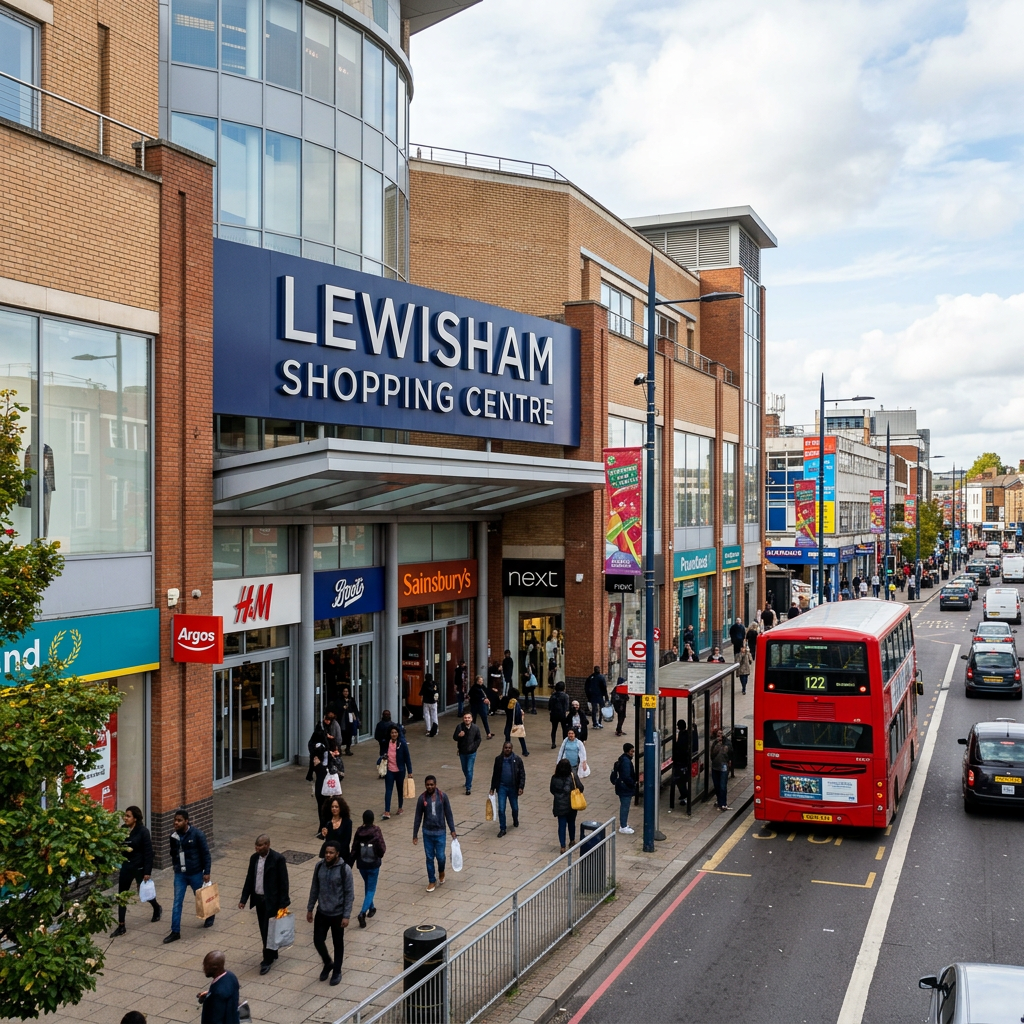
Crowd walking outside Lewisham Shopping Centre with red double-decker bus on road

The role of the opposition is to hold government—including local government—to account. That role comes with responsibilities to voters: first, to be truthful, and second, when opposing a proposal, to put forward a credible alternative.


Sadly, in Lewisham, the campaign opposing the redevelopment of Lewisham Shopping Centre does neither. As demonstrated in the video and Instagram post linked below, the opposition relies on misinformation rather than facts, and protest rather than practical solutions:

What Has Actually Been Agreed


Lewisham Council, under Labour leadership, has spent three years consulting residents, community groups, traders, and local businesses on the future of the town centre. This has not been rushed or imposed; it has been shaped through sustained engagement.


The outcome is a redevelopment plan that keeps the shopping centre and market open, while delivering significant long-term benefits for Lewisham:

  • 344 genuinely affordable homes, delivered at no cost to the council, including homes with a key worker discount scheme
  • A new 600-seat, community-owned cultural music venue
  • Around 2,000 new jobs and training opportunities for local people
  • A publicly accessible elevated garden and meadow, at least the size of two football pitches—creating a major new green space in the heart of Lewisham
  • Sub-market rent retail and workspace, with flexible terms to help local start-ups and small businesses grow
  • Ring-fenced funding for town centre improvements, including better transport, streets, and public facilities

Setting the Record Straight

Despite repeated claims from opponents, no residents are being displaced. The site currently provides no homes at all. Assertions to the contrary are simply untrue.

Claims that this redevelopment represents “gentrification” of the shopping centre also fail to stand up to scrutiny. Lewisham Shopping Centre is a tired, 1960s-era mall. Like many high streets across the UK—and globally—it has suffered from rising vacancy rates, a trend accelerated by the pandemic.

Lewisham is a Zone 2 town centre, well connected by the DLR and rail. Residents already travel outside the borough to shop, work, and socialise. The choice facing Lewisham is not between redevelopment and preservation of a thriving centre; it is between investment and managed decline.

A False Alternative

Opponents claim they want to “save” the shopping centre, yet their only proposal is to scrap the current plans and reopen consultation yet again. After three years of engagement, this is not a serious alternative—it is a recipe for delay, uncertainty, and eventual closure.

Far from protecting Lewisham town centre, this approach risks accelerating its decline.

A Positive Vision for Lewisham

I am proud to be standing on a Labour ticket that supports job creation, affordable housing, and investment in our local economy. The redevelopment of Lewisham Shopping Centre is about building a town centre that works for today’s residents—and for the next generation.

Lewisham deserves ambition, honesty, and solutions. That is what this plan delivers.

Save the Ravensbourne Arms | Protect Community Spaces in Ladywell

We’re calling on residents across Ladywell Ward and the wider Lewisham community to stand together and oppose any planning application that would result in the Ravensbourne Arms never being able to be used as a community space

📍 There is no clear evidence that it cannot be used as a public/community space

📍 Planning policy at every level (local, London-wide, and national) requires this to be proven – and it hasn’t been

📍 A similar proposal was already refused, with no meaningful change to justify approval now

📍 Claims of “no interest” are unproven and lack transparency

📍 Other venues nearby are thriving and expanding, showing clear demand

📍 Losing this space would damage Lewisham Town Centre and its evening economy

Yes, we need housing. But not at the cost of erasing community infrastructure.

✍🏾 Add your name. Make your voice heard.

Let’s protect what makes Ladywell… Ladywell.

🔗 Click link to support – https://survey.labour.org.uk/protectravensbournearms

We know there is a housing crisis in London, but ultimately we need to retain community spaces like the Ravensbourne Arms.

A great model for this is Catford House where the old pub has reopened and is now being used by the community for a variety of events such as art exhibitions and community meetings. And for the real ale drinkers like me, have Timothy Taylor’s Landlord on tap.

Ravensbourne Arms is a magnificent old building, and it is important that its kept as a community space for now and into the future.

Nick Kelly for Ladywell – From Commentary to the Arena

Readers of this blog over the past eight years will know that I am, first and foremost, a commentator — someone who analyses and critiques policy and politics. That role matters. But, as the saying goes, it is not enough merely to interpret the world in various ways; the point is to change it.

Or, as Theodore Roosevelt put it more memorably:

It is not the critic who counts; the credit belongs to the person who is actually in the arena.

Today, I am stepping into that arena.


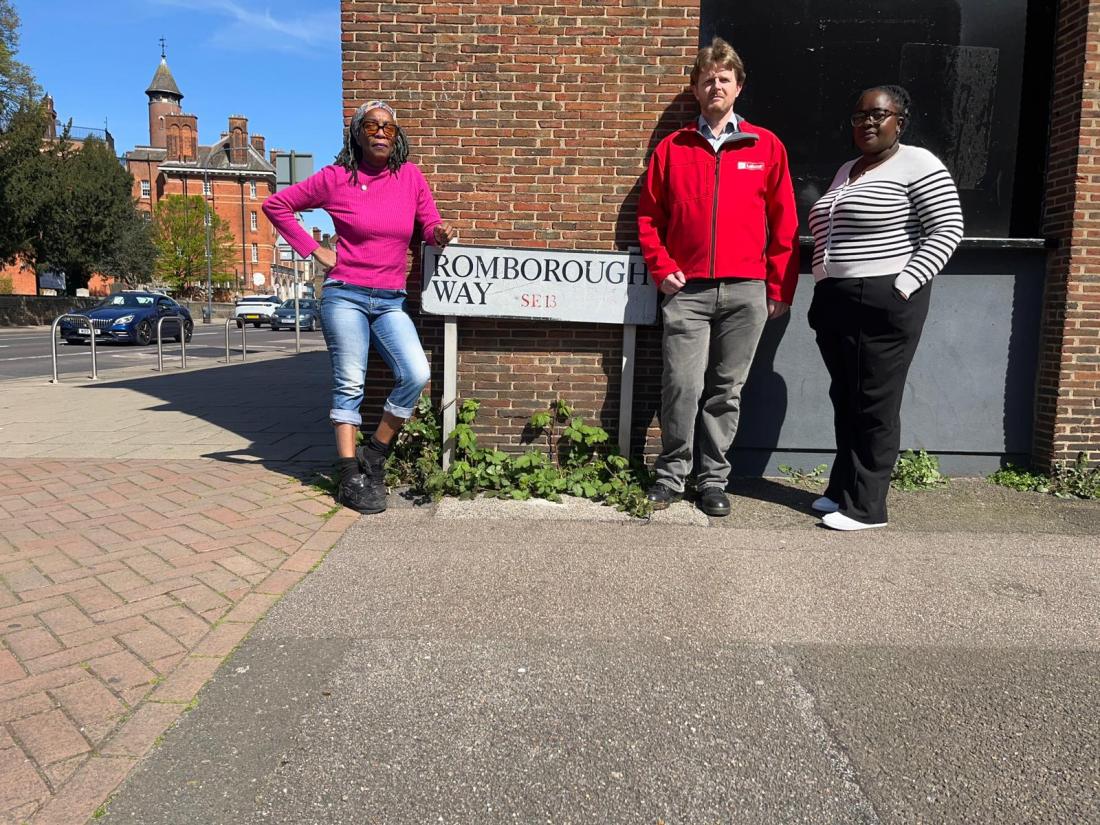
I am standing as a Labour candidate for the Ladywell Ward in Lewisham, alongside my running mates Collet Hunter and Ayesha Lahai‑Taylor. The question I’ve been asked most often is a simple one: why?


You can hear part of my answer here:

Nick Kelly explaining why he is running for Labour in Ladywell.

Former New Zealand Prime Minister said everyone needs “Someone to Love, Somewhere to Live, Somewhere to Work, Something to Hope For”. In this sentence he summed my Labour values. My values.

In one sentence, he captured my Labour values — and my own.


Throughout my working life, I’ve stood alongside bus drivers, security guards, and trade unions, fighting for stability, justice, and respect. I’ve worked to keep helplines open for older people escaping abuse — ensuring that when they needed someone to listen, someone was there, and that there was a pathway to safety and dignity.


Lewisham matters deeply to me because it reminds me of Upper Hutt, where I grew up: vibrant, alive, shaped by the strength of its communities. But I also see familiar challenges — particularly the shortage of safe, secure, genuinely affordable housing for everyone who calls this place home.


Over the coming weeks, I’ll be using this blog to set out how Labour can help build a Lewisham that works for everyone — and to explain why I am asking for your support for Collet, Ayesha, and me in Ladywell.


Watch this space.

Decoding the Doorstep: Insights from Canvassing Uxbridge and South Ruislip

I spent the last UK General Election canvassing in Uxbridge, trying to unseat the then Prime Minister Boris Johnson. In the 25 years I’ve been politically active, this was the second most depressing canvassing session I had been to.* It was the middle of winter, the weather was awful, and it was obvious the votes were not going Labour’s way.

Last weekend I returned to Uxbridge for the first time since December 2019. The not-so-illustrious political career of Boris Johnson has ended in failure and disgrace. Johnson resigned as an MP at the conclusion of the Privileges Committee investigation. The Committee’s report found that Boris Johnson broke the COVID-19 rules, the ones his own government had set, and had misled Parliament when questioned about this.

Had Johnson not resigned, he would have been suspended from the House for 90 days. In the UK, MPs can be recalled by voters when suspended. If 10% of voters in the suspended MP’s constituency sign a recall petition a by-election must take place. Had Boris Johnson not resigned, he almost certainly would have faced a by-election. In these circumstances, he would likely have lost.

So Boris Johnson made one of the few honourable decisions of his life and resigned from parliament (though even then poo poo-ed the privileges committee report and denied fault).

Last weekend I was out in Uxbridge canvassing for Danny Beale, Labour’s candidate in the by-election. Labour last won Uxbridge in 1966, and before that 1945. The Ruislip part of the constituency has never been held by Labour. But the demographics in the area are changing and despite a blip in 2019, overall the Tory vote has been gradually falling in the area for some time.

Above: Labour’s Uxbridge and Ruislip candidate Danny Beale

In politics, much is made of doorstep conversations. It is seen as the ultimate litmus test for how well a party, leader or set of policies are performing. Opponents of Jeremy Corbyn have often claimed that on the doorstep he was not popular. Certainly, my experience in 2019 was that Corbyn and the political project he came to represent was polarising. I found many were supportive of core Labour policy, but did not trust the party or its leadership.

The 2017 election proved there was significant support for social democratic policies (eg national care service, public ownership of rail, electricity, water etc, and funding public services properly). But weak leadership on Brexit, failure to respond properly on antisemitism and now his appalling position on the Russian Invasion of Ukraine have shown Corbyn was not fit to be Prime Minister. But nor was Boris Johnson, as the Privileges Committee have confirmed.

So what is the message on the doorstep now? When you go out you only get a small sample across a dozen or so streets. Much like opinion polling, the ‘mood on the doorstep’ is not an exact science, but gives you a general sense of the mood. Compared to 2019, overall the number saying they will vote for Labour is higher now, but only modestly.

The Conservatives won Uxbridge and South Ruislip by a majority of 7,210 in 2019. The thing that is likely to swing this Constituency to Labour on Thursday 20 July, may not be a huge swing to Labour, but former Tory voters staying at home or protest voting. On the doorstep, the anger from voters was palpable. Not all of this anger was directed at the Conservatives, but I and others had quite a few conservation with people who had previously voted Tory but would not be in the by-election.

The head-wind for Danny Beale is not coming from parliament but from the Greater London Authority (GLA). Labour’s London Mayor Sadiq Khan has decided to expand the Ultra Low Emission Zone out to all boroughs of London. This means owners of older vehicles will now pay a daily charge of £12.50.

London’s air pollution is bad and research by Imperial College London in 2019 found that it contributed 4000 premature deaths a year. Unfortunately, it is London residents who cannot afford electric vehicles who pay the price. In outer London suburbs like Uxbridge and Ruislip, car ownership is higher as public transport is generally not as frequent.

Danny Beale has called for the ULEZ expansion to be delayed, saying the cost of living crisis is the wrong time to implement this. He has also called for a better scrappage scheme to help people replace older vehicles. Unlike in other parts of the country, the Government have not helped Greater London implement a proper scrappage scheme, no doubt to put pressure on Sadiq Khan.

Did this issue come up on the doorstep? The very first door I knocked on this was their key concern. Others also mentioned it, usually in the wider context of the cost of living, and were as critical of the Government as they were of the London Mayor. But it was clear that ULEZ was a barrier to people voting Labour.

From this session and the feedback I’ve got from others who’ve canvassed, Labour can certainly win Uxbridge and Ruislip. But it will be close. The challenge will be for Sadiq Khan in next year’s London Mayoral elections. Decisions such as extending ULEZ, or increasing rail fares have been a result of the Government not supporting London. But many now blame the Mayor and the Labour London Authority Members. The Conservatives believe this will give them an advantage. The message I got on the doorstep was that anger at ULEZ did not automatically equate to voting Tory, especially given their recent track record in government.

There are two other byelections being held on 20 July: Somerton and From, and Selby and Ainsty. There is also the likelihood of a byelection in disgraced MP Chris Pincher’s constituency, and Nadine Dorries’s constituency of Mid Bedfordshire. Polls suggest that in each of these byelections, the Conservatives will struggle. Each has its own dynamic, with the Lib Dems being the serious challenger in Somerton and From, whereas in Selby and Ainsty a Labour victory is now looking likely.

Canvassing Uxbridge and Ruislip, the insight I get from canvassing is that Labour have a real chance, but should not be complacent. Support for the Conservative and Unionist Party is collapsing, but this is turning to cynicism and rage rather than enthusiastic support for a Labour Government next year.

There is a possibility that in 18 months’ time, UK Labour are in Government, but have lost the London Mayoralty. This is not inevitable, but for Sadiq Khan to win a 3rd term as Mayor, he will need to balance lowering emissions and environmental targets with helping Londoners survive the cost of living crisis. This could well turn out to be a tough campaign, which I hope does not give me a new “worst canvassing session.”

*The worst canvassing session I went on was the 2014 New Zealand General election. I was canvassing in the Wellington Ohariu electorate. It was early spring, and the rain was heavy in typical Wellington fashion. It took me hours to dry off. NZ Labour got 25% in that election, its worst result in a century. Labour did fail to win the Ohariu seat that time, though picked it up three years later when Jacinda Ardern won the 2017 election for Labour.

Previous Posts about my involvement with Labour and political campaigns. Plus other relevant posts:

Why the Labour Party

Why the Tories won the UK election

Why Labour Lost? Part 9: What the Party needs to do now?

What the recent elections tell us about British society

Tory Sleaze – sequels are often a disappointment

Can Rishi Sunak save the Conservative Government?

UK Labour – can they finally beat the Tories?

Labour’s Manifesto: Replacing the House of Lords, Devolution and Electoral Reform

The United Kingdom will have a general election at some point before January 2025, most likely in May or June 2024. Work has already begun on manifestos for the next election. With the precarious state of the UK economy, the likelihood of big spending promises is unlikely. Though public services have faced over a decade of austerity and the public is suffering a cost of living crisis, demands on the exchequer will be significant.

Where the next election will potentially be quite interesting and possibly see long-lasting changes is constitutional reform. Britain does not have a written constitution and instead has various written and unwritten arrangements. Recent events in British politics have highlighted the issues with this. In August 2022 Hannah White from Prospect Magazine made the following observation regarding Boris Johnson’s time in office:

The most important lesson that Johnson’s three years as prime minister have taught us is how uniquely vulnerable this type of constitution may be to concerted manipulation by a determined populist leader with a large Commons majority and a calculated agenda.

What Boris Johnson taught us about the UK constitution – Prospect Magazine

There is growing recognition of the need for constitutional and political reform in the UK after the last decade. While the 2011 referendum in the UK saw a general lack of interest in the topic of electoral reform, there has since been increased awareness of how the current system produced distorted results with parliament not being truly representative. This, along with general dissatisfaction with politics creates an opportunity for public debate about the future of democracy and the UK Constitution.

At the time of writing, Labour enjoys a significant lead in opinion polls, though in some polls this is starting to narrow slightly. The next UK election is Labour’s to lose, which given the result of the 2019 election is an incredible turnaround. If elected, it has an opportunity to usher in a new modern era of British democracy improving representation and trust in politics.

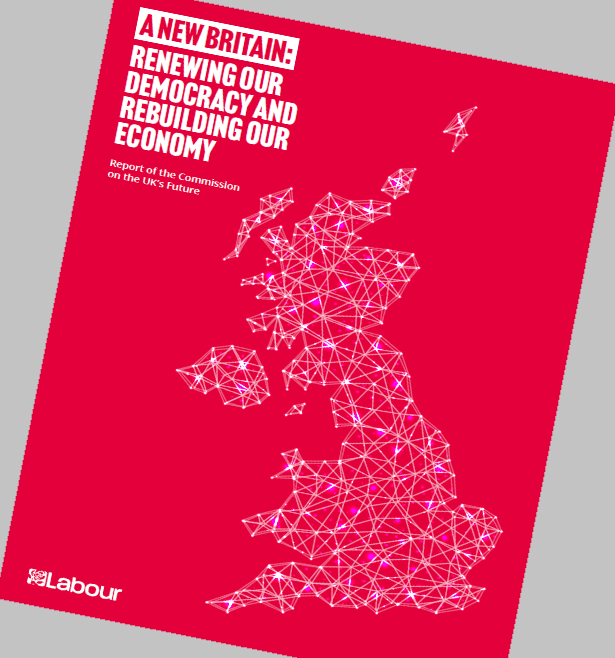
Signs are that the Party is thinking along these lines. In late 2022, the Party published a paper by the Commission on the UK’s Future, chaired by former Prime Minister Gordon Brown. This paper made various recommendations including:

  • Greater devolution of political power in England
  • Enchrenching in a new constitutional framework the Sewel Convention, which protects existing devolution in Scotland, Wales, and Northern Ireland.
  • Abolishing the House of Lords and replacing it with an Assembly of Nations and Regions

This paper is helpful in it starts an important debate about the future of political arrangements. Its strongest arguments are in favour of greater devolution in England, with the report highlighting the fact that the UK government is much more centralised than most others in Europe. It argues that current geographical inequalities in England are largely the result of this centralisation.

The current government’s Levelling-up agenda is also aimed at addressing regional inequalities, and included in its proposed reforms is greater devolution to local authorities. Both with the Conservative Government’s reform package and Labour’s proposals, there is still a lack of detail as to how this devolution will occur. Devolution to local government would require a significant funding boost, as current devolution to local authorities has been hamstrung by austerity and local authorities lacking resources. Establishing a regional government, similar to those in Germany, would be a logical way of ensuring regional decision-making, but would the public support the creation of another layer of government in England?

What the report proposes for Scotland, Wales and Northern Ireland are fine, but they avoid a bigger issue.

Northern Ireland is covered by the Belfast Agreement, now 25 years old. This agreement includes the provision for a border poll should the people of the Island of Ireland with it. Were a border poll to be held today, it is not entirely clear how this would go. But whatever the outcome, there would be a continued need for power-sharing, compromise and diplomacy given the history there.

The Commission on the UK’s Future report describes the union of nations as voluntary. Yet, the November 2022 Supreme Court judgement on the matter ruled that another independence referendum in Scotland could only happen with Westminsters’ consent. Regardless of one’s views on this issue, or indeed the recent issues with the SNP after Nicola Sturgeon’s resignation, if a union is voluntary then there must be some mechanism to leave. Even if the mechanism is a high threshold, such as 50% of eligible voters signing a petition calling for a referendum. That may not sound much, but getting 50% of eligible voters to do this would be a herculean task.

The blunt reality is, Labour’s opposition to Scottish Independence appears to be more motivated by a fear of losing crucial Scottish seats, as historically at least Labour did well up there. This may be very unfair, as many in Scottish Labour undoubtedly genuinely support staying in the union. But there is no denying that this impression has contributed to many former Labour supporters moving to the SNP since 2007.

Whilst the current strife in the SNP may change this, it would be incredibly naive to think that support for Scottish Independence will now completely collapse and the issue will go away. The argument that the people of Scotland already voted on this in 2014 holds little water given one of the key issues in that referendum was EU membership. The offer to the people of Scotland in 2014 was very different to the reality today.

Improve devolution and entrench the Sewel Convention by all means, but there still needs to be a mechanism by which the Scottish people can leave the United Kingdom if they so wish. This principle must apply to people living in other nations of the UK as well.

It is somewhat strange that a report that primarily focuses on the need for greater devolution in the UK includes a recommendation to abolish the House of Lords, yet when asked in the media, Gordon Brown said reform of the House of Commons (electoral reform) was out of scope. Either the report should just focus on devolution, which was by far the stronger section in the report, or it needs to include proposals for reform of both houses of parliament in Westminster.

In one of my posts following the 2019 election, I made the case for electoral reform, and in particular the need for UK Labour to sharpen its thinking in this area. Suffice it to say, three years on, having seen the results of a government that won 43% of the votes gaining 56% of seats in parliament, my view has not changed. What has changed, is that there is now far stronger support both within the UK Labour membership and more broadly for some sort of electoral reform.

In terms of the Lords, I declare my interest having worked on Piko contracts for two members of the Lords. My views of the Lords, and of the reform proposals are my own, not those of Piko’s clients.

The House of Lords is in need of some reform. At present, there are over 800 members, whereas the Commons only has 650 MPs. Whilst quite a few of its members have been appointed due to their expert knowledge and make important and meaningful contributions, the level of patronage, especially with Boris Johnson’s appointments, is simply unacceptable.

The Commission on the UK’s Future acknowledged the quality of committee reports from the Lords. I would add to this the valuable contribution of pre and post-legislative scrutiny, many of the amendments tabled at the committee stage of bills in the Lords and the overall quality of debate. This is due to the expertise and experience of many current Peers.

Any reform of the House of Lords should be careful not to throw the baby out with the bath water. Any reforms should protect what does work about the current House of Lords. One of the sad things about the current set-up is that many of the Lord’s reports get ignored by the government and get little attention in the media.

There is a strong case for a smaller, elected upper chamber. Having an unelected chamber means in reality its authority is reduced in the eyes of many. The Salisbury convention means it will not oppose the second or third reading of any government legislation promised in its election manifesto. During this term of parliament, the government have put forward legislation that attempted to breach international law and in some cases its own human rights legislation. An elected chamber might have been in a stronger position to push back.

Yet many of the unelected members today are not aligned to a party, and are there due to their expertise and experience. Any reform should consider how this pool of talent can still be utilised in any future structure, potentially through creating another role for current Lords with specific experience that parliament needs.

The proposal in the UK Future report is to replace the House of Lords with a democratic chamber representative of the nations and regions of the UK. Whilst this proposal is clearly to link it to the wider theme of devolution and empowering regions, its description of the new upper chamber sounds a lot like the current House of Commons. Given the poor performance of the Commons in recent years, this is hardly inspiring.

In reality, greater devolution, electoral reform and reform of the House of Lords and House of Commons need strong public buy-in. Slipping a few sentences into a party manifesto is simply not enough. Any manifesto commitment would need to be for something that furthers this important discussion, maybe a Commission on the UK’s constitutional and democratic future. But from there, any changes would need a direct mandate from the voters.

In New Zealand, electoral reform happened after two referenda, and a similar process would be needed in the UK. Unfortunately, post-Brexit, there is now a real fear of referenda as that experience was divisive, with many feeling the level of misinformation resulted in a bad decision. Britain’s political establishment must get over this, as ultimately referendums are the best tool to test public support of crucial constitutional or moral issues. The issues raised in the UK’s Future paper certainly fall into this category.

Were a Labour Government elected next year, its primary focus would be on the economy, just as it is for the current government. Constitutional reform would take time and a significant level of public engagement so that whatever ultimately was implemented, would work and have greater public support that the current arrangements. It would be very easy for this to be put in the too hard basket. Yet when public confidence in the institutions of government has fallen significantly in recent years, it would be a mistake not to take action in this area.


My email to Jacinda Ardern

Dear Jacinda

You probably will not remember me. I was the campaign manager for Andrew Little when he ran for Labour Leader back in 2014. The last time we met was in Burger Fuel on Cuba Street the day after you took over as Labour Leader in 2017. I was with my colleague from Piko and we were both covered in paint after doing work at our Trades Hall office. We certainly weren’t expecting to meet the future Prime Minister that evening.

I am emailing to say thank you for all that you have done, both in New Zealand and internationally since becoming Prime Minister. I now work as a Researcher in Westminster and I can say that you have earned the respect and admiration of politicians from all sides of the political divide over here in the last five years.

In particular, I wish to acknowledge the strong compassionate leadership you took after the Christchurch Mosque attack. Your simple statement “they are us” regarding Muslims living in Aotearoa had a profound impact and broke down barriers of hate and ignorance at a time when tensions were so high. I still tear up thinking about how important your showing humanity and compassion was at that dark time. Thank you.

Your government’s response to the coronavirus in 2020 was the right one and undoubtedly saved thousands of lives. Again, having lived through the UK response to this crisis, I and many others living here looked to the NZ response with considerable admiration.

The last couple of years has been difficult for governments throughout the world. The Ukraine invasion on the back of a global pandemic has seen inflation skyrocket everywhere. People understandably look to their elected representatives in difficult economic times and we know that the actions of the government can help or hinder economic recovery. But there is also much that is out of the hands of the nation-state. Where governments can have the most impact is on policies that help in the medium to long term. In the short term, options are quite limited and it is easy for our leaders to take the blame for things that are largely out of their control. The New Zealand government has managed this crisis better than many in the last 18 months. In years to come I hope this is recognised.

Your legacy as Prime Minister will be as someone who showed both strength and compassion in some of the most challenging times faced by any leader in modern times. On the world stage, you are rightly held up as a model of progressive political leadership, and I am certain this will continue into the future in whatever role you take on next.

Finally on a personal note, due to the coronavirus, I was only able to spend two weeks in Aotearoa during your time as Prime Minister. But as a Kiwi in London, I was proud of your leadership both of our party and of the country.

I wish you all the best for whatever comes next.

Kia Kaha me te pai katoa,

Nick Kelly