The Housing Crisis

People often say to me “you like politics.” By this they are referring to the fact that I have been politically active one way or another since I was 14, have run for public office, headed many campaigns and generally have opinions that I vocalise. For me politics is essential. Democracy is a fragile thing, and something we should defend. The political decisions made by our elected leaders determine the laws we live under, and decide the what infrastructure and services will be available to us as citizens. Basically democracy holds to account those who decide why people should be sent to prison or whether your local hospital should remain open. In short, politics matters and all citizens should pay attention.

But I don’t like politics. The more I have worked in political campaigns and been involved in politics the more I have grown to dislike the way politics works, or doesn’t. I dislike the elitism the exists in most nations capitals. But most of all, I dislike that short term election cycle focus limits the ability for long term decision making. Democracy is great. It forces decision makers to be accountable to the public every few years, and gives people a chance to throw out governments that aren’t performing. But election cycles encourage perverse behaviour. Specifically politicians are always thinking about the following election, and wish to take positions or pursue policies that aid them get re-elected. Often this can be a good thing, but sometimes is can be disastrous.

For the last few years in New Zealand there has been a housing crisis. The issue in a nut shell is that 30 years of deregulated free market policies have failed to deliver affordable housing to the majority of the population. Most young people are now unable to afford houses in NZ’s major cities as the value of housing sky rockets. The cost of renting has also ballooned, with a lack of controls and pure supply and demand determining the rental prices. The result, people paying an enormous percentage of their income on rents, with no chance of saving to buy their own home. Add to the problem, the government running down and selling off state housing. This crisis has caused increased homelessness, poverty and depravation.

In September I move to London. I switch on the news and what are they talking about, the UK’s housing crisis. Change the place names, different politicians but fundamentally the same problem. Fewer people able to own property, and social housing in short supply.

This crisis didn’t occur in the last term or two of government. The housing crisis in both countries (and in much of North America) comes from a lack of long term planning by successive governments and parliaments. Unregulated markets primary focus is profit. The most profitable thing for property developers to do is build high end housing, and sell it for as much as possible. Fewer people now own property, and increased numbers pay very high rents. The role of government is to step in and ensure a) there are rent controls, b) there is adequate supply of affordable housing and support for first home buyer and c) that there is adequate supply of social housing for those in need. If you don’t do this, you have homelessness, poverty and an increasingly unstable and unsafe society.

The problem is the housing crisis was created over a generation. No party can fix the housing crisis in one budget or even within one electoral cycle. There is no one simple fix to the problem. Related to increased housing costs is stagnant wages and a generally sluggish economy globally for the last 30 years. Fixing this problem requires some fundamental shifts in social and economic policy, that will take 15 to 20 years to fully implement. Further it will require decisions that will annoy vocal developers, property owners and the like. Electorally, it requires government implementing policies influential businesses and developers oppose, with benefits taking years to recognise.

I don’t claim to have all the solutions to this issue. But its clear that waiting for the political system that caused, or at least failed to prevent this crisis, to turn around and fix it is naive. Trying to find a political consensus across the main party’s in parliament would be ideal, but ideology and ambition makes this very challenging.

A radical, and by no means flawless possibility is greater direct democracy. The housing crisis reflects a fundamental breakdown of the social contract. A new contract is needed whereby everyone is guaranteed affordable housing. Everyone deserves somewhere to live. People should not pay more than 1/4 to 1/3 of their income in rent. Putting a deposit on a first home should not be totally out of reach for most low to middle income earners. One solution could be to hold a referendum where people vote for a new social contract? One that is then binding on all party’s to implement. Yes I can see issues with holding a referendum on social policy. There would need to be serious public debate and education regarding the issues. Reliable and credible information should not then be drowned out by fake news or scaremongering by those with a particular ideological bent. If later the social contract voted on doesn’t work, does another referendum need to be held to change it?

The above is not the perfect solution to a complex problem. But it is a possible alternative to the present situation where people are increasingly failed by politics. Whatever the solution to the housing crisis, the fix won’t be more of the same. Whatever the change thats needed is, something needs to change.

Exploring London in 1987 – walk # 1

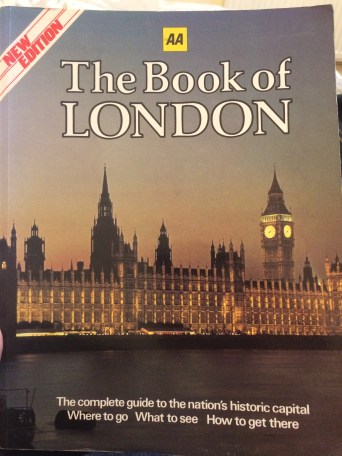
When moving to a new place, its important to have a good look around and get to know where you live. In London there is no shortage of places to explore. Having visited London prior to moving here I had a bit of an idea of things. But there is always more to see and do. Before moving here I found this wee gem:
IMG_6917

The 1980s Automobile Association Book of London.

This was purchased by my maternal grandparents when they came over to visit London in 1987. My Grandparents had both visited London during and after the second world war. My Grandad was stationed in North Africa and Italy for much of the war. My Nana was a Sargent at Trentham Army camp in Upper Hutt. After the war she visited London for the Victory Parade:

Above Left The London Victory Parades 1946, Right my Nana Pat Oram (nee Darroch) in her Army Sargent’s Uniform while in London.

40 years later my grandparents decided to come back to the the UK. This would be their last visit as they both died a few years later. I was 5 years old at the time and vaguely remember them being away.

Nana and Hilda 1987

Above, My Nana Pat Oram with her pen friend Hilda in Halifax in 1987

So 30 years later I was curious to see how accurate the The Book of London of the 1980s still was. There was no London Eye, no Shard, and no Walkie Talkie building. The Jubilee line stopped at Westminster and Surrey Quays station was still called Surrey Docks (should have kept that name according to the locals). Coventry City F.C were the FA cup victors and Sananda Maitreya’s Wishing Well was top of the pops. Much had changed in 30 years, but just how much?

Walk 1 in the 1980s book was of Westminster and Millbank. The walk commenced at Westminster Station and headed to the Cenotaph. The book advised the following:

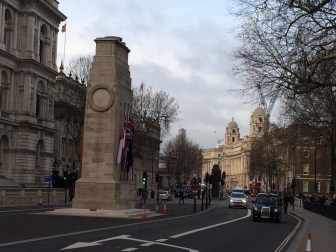
In the centre of Parliament Street is the Cenotaph, a simple yet moving pillar of Portland stone, that was designed by Sir Edwin Lutyens and unveiled in 1920 on the anniversary of Armistice Day. It was originally built to the memory of the men who lost their lives in World War 1. Now memorial service for the dead of both world wars are held here in every year on the second Sunday in November.
IMG_6652

Above: The Cenotaph, Parliament Street London. Photo taken 6/1/2018

30 years later it would be great to report that this monument was to a time when humanity fought and killed each other. That his practice has now ceased and that humanity has learned to live together in peace and harmony. Iraq, Afghanistan, Kosovo, Rwanda, Croatia, Bosnia, Kosovo, Sierra Leone, Algeria, Somalia, Yeman, Israel/Palestine, Congo, Chechenia, Macedonia…I could keep going

The next stop was Downing Street:

This world famous street was built by Sir George Downing, a secretary to the Treasury, in about 1680. At first it was an unimportant residential street with a pub – the Cat and Bagpipes – on the corner. In 1732 Gorge II offered No 10 to Sir Robert Walpole as a town house and since then it has been the official residence of the

British Prime Minister. No 11 is the official residence of the Chancellor of the Exchequer. The buildings themselves have unpretentious Georgian facades, but have been extensively modified inside.

Above: Downing Street 6/1/2018. Neither Theresa May nor Philip Hammond invited me in for a cup of tea – rude!

Next stop was the Government Offices:

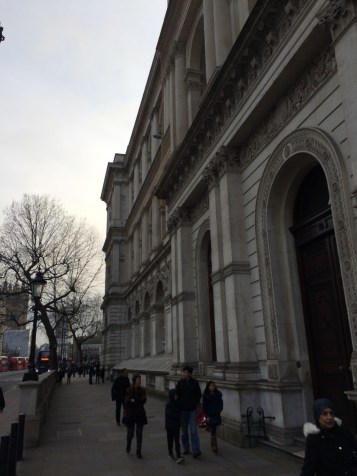
Sir George Gilbert Scott, the distinguished Victorian architect designed this imposing building. His first designs were in the Gothic style and Lord Palmerston rejected them all. He insisted on something Italian, so Scott bought some books on Italian architecture and ‘set vigorously to work to rub on up it,’ with the results that can be seen today.
IMG_6656

Above: Scott vigorously rubbed on up the Italian style – this was the result. 

Next is Parliament Square:

In and around Parliament Square there are many statues of British Politicians. Foreign statements men are also represented, and include Field-Marshal Smuts by Jacob Epstein, and (outside the old Middlesex Guildhall) a rumpled figure of Abraham Lincoln. The latter is a copy of the statue by Augustus Saint-Gaudens in Chicago.

Above – Parliament Square 6/1/2018. Today Nelson Mandela, Gandhi and Winston Churchill stand tall in the square. What happened to Smuts? Is he now in storage somewhere? Or was he melted down to make frying pans and sold at Tesco’s? 

Next the Middlesex Guildhall:

This Renaissance-style building was opened in 1913, and stands on the site of an earlier guildhall. It once functioned as the administrative centre for the old country of Middlesex. The friezes on the facade depict Magna Carta, Henry II granting charter to Westminster, and Lady Jane Grey accepting the crown from the Duke of Northumberland.

IMG_6658

Above: Middlesex Guildhall 6/1/2018

Next the Methodist Central Hall:

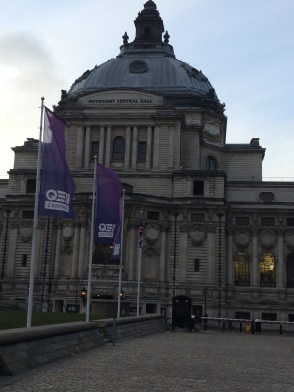
Built in 1849-51, the Methodist Central Hall stands across the road in Storey’s Gate. It was once a meeting place for the infant United Nations Organisation.
IMG_6663

Above: The Methodist Hall

Next, Little Dean’s School Yard and Westminster School

Westminster Abbey probably had its own school before 1200. When the abbey became a cathedral in 1540, the school became the King’s Grammer School, with 40 scholars. It was re-founded by Queen Elizabeth I in 1560. The custom known as Pancake Greeze is observed here every Shrove Tuesday. The cook, dressed in a cap and apron, comes in with a frying-pan and has to toss a pancake over the 16-ft high iron bar which separates the old Upper and Lower Schools. As it falls, representatives from each form scramble for it, and the boy who gets the biggest piece get a guinea from the Dean. On the north side of Little Dean’s Yard is Ashburnham House, built shortly after 1662, and the best example in London of a stately mid-17th century house.
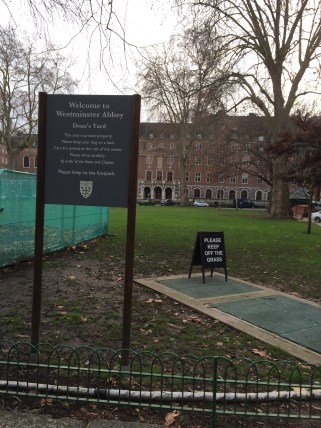
IMG_6664

Above:  Me and Julio down by the (Little Dean’s) school yard. 

Next Barton Street:

Barton Street contains some exceptionally well-preserved Georgian houses. Nos 1-14 (except for Nos 2 and 8) are original and carry a tablet dating them to 1722. T E Lawrence (‘Lawrence of Arabia’) lived at No 14. An inscription on the wall of No 2 reads ‘Peace on Thy House O Passer-by.’

Above: Barton Street, and Lawrence of Arabia’s old digs. 

Next, Smiths Square:

This square is named after Sir John Smith, who owned and developed the land. Some of the houses were rebuilt after World War II, but NO 5 dates from 1726. In the centre of the square is Thomas Archer’s fine church of St John. Concerts are often broadcast from the church, which has been specially adapted for the purpose. St John’s also has its own orchestra, now of international repute. Other buildings in teh square include the headquarters of both the Labour Party (Transport House, in the south-east corner of the square) and the Conservative Party (No 32).

Above: Left – The church of St John. Right- Building in South East corner of Smith Square, was the Headquarters of the British Labour Party in the 1980s. In 2018 it is now Europe House, London Headquarters for the European Union. This building appears to the the patron saint of lost causes. 

Next, Vauxhall Bridge Garden

A large bollard here marks the approximate site of Millbank Penitentiary from which, between 1816 and 1867, convicts sentenced to transportation embarked on their journey. The garden also contains a sculpture by Henry Moore, foundations and seats.

Above: Left – view of Vauxhall Bridge from Vauxhall Bridge Garden, Right Henry Moore’s sculpture. This Garden no longer contains a fountain and the seating looks uncomfortable – the results of austerity no doubt. 

Next, Lambeth Palace:

Much of this historic structure, which has been the London residence of the Archbishop of Canterbury for 700 years, was rebuilt during the 19th century. Extensive damage was caused by bombs during World War II. Of the old place, the most interesting parts are the Lollards Tower and the Gatehouse, both of the 15th century, and the 13th-century Chapel Crypt. Parts of the palace, and its grounds, are open to the public. Adjourning the south gateway of the palace is the former church of St Mary, now being restored as Museum of Garden History in memory of John Tradescant, Charles I’s gardener. Captain William Bligh, of the Bounty, is buried here.

Above: Lambeth Palace

Next, Victoria Tower Gardens

In the thin Triangle of Victoria Tower Gardens are the Buxton Drinking Fountain, Commemorating the emancipation of slaves in the British Empire in 1834, a statue of the Suffragette Mrs Emmeline Pankhurst (1858-1928); and a copy of the famouse statue by Auguste Rodin (1840-1917) called ‘The Burghers of Calais,’

Above: The Buxton Memorial, Victoria Tower Gardens.

Next, the Jewel Tower

This inconspicuous moated tower is in fact a survival of the medieval Palace of Westminster. It was built in 1365 to house the monarch’s personal treasure, and this remained its function until the death of Henry VIII. It now houses a collection of pottery and other items found during the excavations in the area, and is open to the public.

Above: The Jewel Tower, very inconspicuous. 

On conclusion of this walk, I was freezing cold. I caught a tube home on a line that wasn’t build until 1999. Some things had changed in 30 years, but overall walk 1 was pretty close to how it would have been in the 1980s. Would the other walks be the same?


Lies, damn lies, and unemployment figures

Last week there were reports by the BBC that unemployment rates in the UK had hit a record low. Back when I arrived in the UK in September 2017 there were newspaper reports that unemployment in London was at it lowest since the 1970s.

At a time when the government in Westminster lurch from crisis to crisis during brexit negotiations, and while the 2017 election wounds are still fresh, these statistics are welcomed news for the Conservative Government. Unfortunately for them, few are terribly excited, nor convinced by the statistics.

Anyone who works even an hour a week is deemed to be employed in these statistics. This means if you pick up a couple of one off cleaning jobs, do a few hours driving for uber, have a zero hours contract with McDonalds or are employed for only a few hours on minimum wage at the local supermarket you count as employed. How many people are currently seeking to increase their work hours and are still aspiring to receive an income to cover basic costs like food, rent, power etc? In reality while the number of people with no work may have fallen, many remain under employed and are still not earning enough to live each week.

I remember a similar issue in New Zealand just over a decade ago. At that time Labour was in power and boasted that unemployment was at a 20 year low. Again, the statistics didn’t count underemployment and the effects of casualisation of the work force.

The reality is with unemployment, government and business have three options:

Option 1: Do nothing and accept the consequences of high unemployment.

Option 2: Public investment in infrastructure that generates jobs and economic growth. This was the strategy adopted in the USA during the 1930s depression, where President Roosevelt’s New Deal kicked started that country’s economy.

Option 3: Fudge the statistics.

Politically, option 3 often proves to be the easiest.

The International Labour Organisation have a decent work agenda. This agenda calls not just for full employment, but for meaningful work, where people earn enough to live and where jobs are environmentally sustainable. By this measure, most countries have a long way to go. But it can be done. Public investment in projects such as renewable energy would help reduce the planets carbon emissions, create jobs and improve our society.

In the challenges that humanity faces in the coming years, doing nothing and fudging statistics isn’t going to cut it. We need to implement the ILO decent work agenda on a global scale. This will improve peoples lives, and create an economy that doesn’t pollute and destroy the environment. For all governments, this needs to be top of the agenda in 2018.


Work and Pensions respond

Some people say its not worth complaining as it doesn’t change anything. I couldn’t disagree more. In an earlier blog post I published my letter to the Secretary of Work and Pensions. I have now received a response:

Maybe they will now review and improve their phone systems. Maybe they won’t. But at least I forced the departments complaints team to look at the issue, and agree that the phone system was “frustrating.”

So my advise – when something isn’t right you should always complain. Its the only way things might get better.

Genius Trump

On the 1 year anniversary of Trumps inauguration quite a few commentators are giving their assessment of his first year as president. Not surprisingly, much of the commentary is less than flattering and the list of achievements fairly small.

Recently author Michael Wolff released his book Fire and Fury. This painted a picture of a white house staggering from crisis to crisis and a president who was unstable and not fit to lead. Trumps response to this was unsurprisingly to attack Wolff. Further Trump defended his mental fitness and claimed to be a genius.

Trump

It gives me no pleasure to do so but I am forced to agree, President Donald Trump is a genius. Don’t get me wrong, I utterly despise his policies and actions. His anti muslim immigration ban, his executive “gagging” order cutting funding to health groups that advise on contraception, his atrocious and inconsistent position on gun control in the US, his support on twitter of far right Britain First, describing third world countries as “shit holes”  and countless other utterly despicable statements. His actions both before inauguration and since have been  deplorable. But there is no denying the man is very smart.

When Trump first announced his candidacy for Presidency in 2015 he was largely written off as a joke. The political establishment were quick to pronounce “oh that will that will never happen.” 18 months later he’d beaten both the Bush’s and the Clinton’s, the families who’d won 5 out of the previous 8 elections. He was able to win rust belt states like Michigan that previously were considered ‘safe’ Democrat states. The reality is that Trump defied the odds, and he was able to harness the support of enough angry, alienated hope deprived American voters to install himself into the white house.

American politics has many flaws. All democracies have flaws, some more so than others. In the US, the system is based on a 200 year old constitution thats difficult to change. Difficult both in terms of the actual process, and culturally difficult due to the narrative that the constitution is some sort of sacred document that mustn’t be changed. Constitutions and rules are great, but they work best as living documents that evolve and change with the times. If they don’t change, they hold everyone back. So it is that a US President can be deemed to have won an election when they actually got 2.8 million fewer votes than his opponent. This is the second time this century that this has happened,  the other being in 2000 when Bush received 540,000 fewer votes than Al Gore. Despite losing two key elections where through this system, few Democrats have called for this system to be changed.

But Trumps success can’t be solely put down to a broken electoral system. For Trump, Hilary Clinton was the ideal candidate to go up against. Former First Lady, senator who voted for the invasion of Iraq (something Trump claimed to oppose during the Republican Primary Campaign in 2016) and part of the Washington Political establishment. Beaten in the Democrat Primary in 2008 by Obama, the Democratic Party leadership were seriously mistaken in thinking running Hilary would be a good move. And not its not because she was a women, I think had Bill Clinton run in the 2016 election he would have done even worse against Trump.

Hilary was considered the favourite at the start of the 2016 Primary, just as she had been in 2008. Out of nowhere, Bernie Sanders came on the scene and started winning considerable support. Politically you couldn’t get a more different candidate to Trump. What they had in common was they successfully tapped into growing alienation and discontentment in the political and economic system. I’m not saying that a Sanders vs Trump election would have produced a different outcome, though polls suggest otherwise. But once Hilary got the Democrat nomination, and she selected another establishment Democrat Tim Kaine, it was clear that the political establishment were still arrogant and not listening.

On the night of Trumps election I wasn’t surprised. Globally people are fed up with a political elite that don’t listen. The political bubbles that exist in Washington, Westminster, Wellington etc have ignored large sections of society for years. Until recently it worked for them. But Brexit, Trump and a number of upset elections recently in France, New Zealand, Germany and significantly in Alabama show when people have a chance to give the establishment a kick in the pants, they give it to them. There hasn’t been a clear ideological shift globally, but a growing resentment towards the political elites. Trump got this. He didn’t need to be consistent. He didn’t need to be honest. What he needed was to tap into feelings of resentment, sadly using the age old tools of Misogyny, xenophobia and general fear to do so. And yes some help from the Russian Government may have aided his cause.

A year later Trump continues to send late night tweets. The commentators and the establishment respond every time. “This shows Trump isn’t experienced as presidents don’t do this” they always respond. Global outrage and condemnation always follows when an outrageous comment is made. Yet he still tweets. Why? Simple, it fits with his brand. It connects him with his base. His voters wanted someone who wouldn’t just play the Washington game the Washington way. And the tweets prove it. He sends an outrageous tweet and the world responds. Like it or not he is setting the narrative. Its horrible, but he is a genius.

Fire and Fury no doubt sold well. It confirmed for those who oppose his presidency that he is not fit to hold office. Yet hold office he still does. I agree, he shouldn’t. I applaud those who in the US and around the world stand against his policies. But to stop the destructive Trump political agenda, we first need to understand why he come to power.

Compassion Fatigue

Sad Nurse

Last year I managed a project with health professionals. During this project I talked to a number of people who work in the health sector, who talked about how difficult their job had become. After years of austerity and underfunding, being told to do ‘more with less’ (one of the most idiotic HR/Management speak cliches) many health professionals are tired. They spoke of people who’d being in the profession a long time and were suffering from ‘compassion fatigue.’

In an earlier blog post I discussed why too much reliance on specialisation can have detrimental effects on individuals and the economy. In a profession like nursing, people working in the sector can easily find themselves trapped in jobs they no longer enjoy. Further they feel their contribution is not adequately remunerated or even properly acknowledged.

Generally people go into a profession like nursing as they want to help people. They get a buzz from helping someone in need and assisting them in their recovery. But do the same job day in day out, month after month, year after year…the buzz soon goes. As the decades roll by you increasingly find yourself cynical, and even slightly nauseated when the exited young nursing graduates are running around the hospital. All you can think is, you won’t be this happy in 20 years.

Sadly this happens to many people in caring professions. Professions that are often underpaid and undervalued. They find that they have been pigeon holed into these roles and struggle to get out. When looking for other work, friends and colleagues will just suggest jobs in the same field, and you increasingly feel trapped. Its not that you don’t care, its not that you don’t still want to help people. But you are tired, and its hard to keep looking after others when you feel nobody is there to help you.

This can quickly turn ugly. The person feeling unhappy and trapped becomes increasingly unhappy. One day they snap and tell their boss that they are an idiotic f#@k wit. They end up in a disciplinary meeting with the manager and HR. A union rep or some other employment advocate will be called in to represent them. This will be the one of 7-8 such cases said advocate will be dealing with that week, and you can be certain they too are becoming heartily sick of their job. Swearing at your boss is a sackable offence, but it will become clear that the manager didn’t follow the proper procedure, as they are in fact an idiotic f#@k wit. A confidential settlement will be reached and the employee is paid a couple of months salary. If the person is lucky this will be the opportunity they needed to change careers. Usually however this is the beginning of a long period of unemployment, and eventually a move into a lower paid role in the same profession.

For most people it doesn’t end up like this. Most people just struggle on and try and find ways to cope with being in a role they are over doing but can’t get out of. But in roles that require compassion this is a challenge. Compassion and empathy are not easy things to fake. And often you do still care, but you its hard not maintain the same level of energy that you had when you started in the role.

Health care professionals and other caring professions such as social workers or people who work in other social services do such an important role. So why do we work these people to exhaustion and suck all the energy out of them? Why do we trap people in roles for years that require a high level of emotional energy? People in these roles should be properly paid and valued. Also they should be given opportunities to train and transition to other roles if/when they feel the need to move on. After a break doing something else they may later want to return to their caring role, and they will do so with replenished energy and renewed passion.

People who care and help others are gems. We need to look after these people.

Positive thinking?

Is always being positive actually a good thing? Motivational speakers will often talk about picking your attitude or making sure you always have a positive outlook to life? On the surface is sounds like some fairly harmless possibly slightly hippie-ish ramblings. In corporate world talk of positive outlooks is a popular mantra, often linked to improving the companies performance or lifting sales. Again is this really that bad?

It is possible to be too negative. People who have suffered many knock backs or disappointments in life can easily became stuck in a mindset where nothing good can happen. Often this is used as a resistance to change, as you know whats the point nothing is going to make things better.

positive-thinking-meme

But frankly, always being positive is not the best thing. Its false. If something bad happens in your life such as you lose your job, a relationship ends or a loved one dies – is being positive that helpful? Or are you just repressing the emotions that you actually feel, and whats more should feel. Those of feelings of sadness, anger, regret, disappointment, frustration and grief. Telling people to just put those aside and be positive is frankly just nonsence.

When I lost my mother to cancer a few years ago, people at the time would try to comfort me and say things like “you will grow stronger from this.” A work colleague at the time came up to me shortly after mum died and said “those who say you are stronger for this are talking crap, its a shit thing that happened and there is nothing good about it.” This was the single best thing anyone said to me during that time, it validated how I actually felt. Sadly the colleague who said this to me, died suddenly of a heart attack two years later.

The above is an extreme example. We also face disappointment in day to day working life. You have been working on a project that didn’t come through or a funding request was denied. No, the answer isn’t just to give up. But being all new aged and zen and loving the enriching experience of a knock back  is not helpful. And telling a colleague to be certainly is not.

My experience has been that it is important to have goals or a desired outcomes to work towards. In doing so you hope to make progress as quickly or pain free as possible. As my previous post related to setting up a UK bank account explains, this isn’t always the case. Were those phone calls to the Department of Work and Pensions positive or life enriching? Like hell they were. They were very frustrating. It wasn’t a positive attitude that eventually got me through to set up a bank account, it was determination and persistence. Was it fun? No. Did I learn anything? That bureaucracy is a pain in the arse (something I was already well aware of).  But I didn’t give up, and that eventually got me through.

There are times when you can pick your attitude, and where stubbornly wallowing in the negative can be utterly destructive. But so too is stubbornly fixating on everything being positive. Its false, and actually very draining to force yourself to feel a certain way when it doesn’t come naturally. And sometimes “shit things” happen, and you should just allow yourself to accept how you feel rather than force something thats not real.

Letter to the Secretary of State for Work and Pensions

The Rt Hon David Gauke MP

Secretary of State for Work and Pensions 

House of Commons United Kingdom

SW1A 0AA

Rt Hon David Gauke,

In September 2017 I moved to the UK to expand my business Piko Consulting, a communications and research company into the UK market. One of the first things I did was to get myself a National Insurance Number.

In late October when still trying to set up a bank account in the UK, the bank asked me for proof of address. It was suggested to me by the bank that I called the Department for Work and Pensions and get them to send a letter with my National Insurance number on it to my home address.

On 24 October 2017 I called the Department of Work and Pensions help line. Firstly I was told that this was not the correct number and that for National Insurance queries I should call a different number. I then called this number. I was given a series of options; eventually I was put through to a pre-recorded message and then hung up on. My issue still wasn’t resolved so I called back. Once again, I after selecting a series of options I was hung up on. The third time I was slightly more cunning. I called back the helpline, and manipulated the answers in a way that I thought may get me put through to an actual human being. I had been at it for 20 minutes by this stage. I was successful. I spoke to someone, explained that I needed my National Insurance number posted on letterhead to my home address. The person on the phone agreed and said it would be on its way.

A few days later I got an email from my accountant. A letter had been sent to my accountants address with my National Insurance number on it, not to my home address as requested.

Having wasted over an hour of my life on a fruitless quest to get what I wanted out of the Department of Work and Pensions I elected not to put myself through this again.

A few months earlier I had seen the Ken Loach film I, Daniel Blake. At the start of the film there is this guy who recently suffered a heart attack trying to get information about his benefit out of the Department of Work and Pensions. He becomes highly frustrated with the long waiting times, and the circular conversations where he can get no answers to his questions. When I first saw this film I thought this scene was exaggerated for artistic effect. I now realise that this is an accurate display of a typical call to the Department of Work and Pensions.

My case ended up ok. I found another letter which the bank accepted as proof of address. What I was appalled by was that a government department could show such contempt for the UK tax payer by hanging up on them when they were seeking advice or help. That a pensioner who has paid tax all their lives, possibly a veteran even, could be treated with such contempt was very saddening. I understand the desire for government departments to save money and rationalise resources. And I accept that call centres will often get any number of nuisance callers or people who have questions they could easily find out online. But for some people using the internet is a struggle. And sometimes, people have complicated requests, and need to talk to someone rather than listen to a robot. It shouldn’t be a struggle for tax payers to get the help they require.

The UK is a great country, and I really love that I have the opportunity to live work and contribute here. But I do think its citizens deserve their government and in particular its government departments’ to treat its citizens with greater respect than the Department of Work and Pensions help line currently does.

Yours Sincerely,

Nick Signature

Nick Kelly

The folly of specialisation

Don’t misunderstand what I’m trying to say. Specialisation is a great thing. Modern society has evolved due to the specialisation of labour. People live longer as doctors and scientists have specialised in areas such as cardiology or neuroscience. It is a good thing to have a workforce where people’s particular skill sets are recognised and they can be their most productive.

But it is always possible to have too much of a good thing.

One of the things I have found moving from Wellington to London is the degree of specialisation is far greater in the UK. For example in a typical New Zealand communications team, there often are social media specialist roles. But people in these roles are likely to be expected to do other roles within the communications team, such as being the media contact or working on an organisations annual report. Far less likely (though it does happen) is it that a New Zealand organisations will have a team just dedicated to social media where the team members specialise in specific platforms such as Twitter or Instagram.

The personal struggle for me is that my CV and previous work experience includes a number of different roles. I have worked as an advocate and a representative. I have done research and analysis. I have set up and maintained social media campaigns or pages for organisations. I have been responsible for media campaigns dealing on a daily basis with journalists. I have worked the education, transport, trade union, government, private and NGO sector. I have been a member of governance boards. I have managed people and budgets. And I even use to drive a bus.

While I have been able to pick up contracts in London in my first 3 months here, the process of securing contracts can be slow. One of the challenges is that in London organisations rate specialist skills. So someone with 10 years specialist experience in social media is seen as an ideal candidate. Someone who has used social media in previous role, but also has wider experience  in managing the other functions of running a campaign or project may not be viewed as so qualified. I believe having that broader experience is incredibly valuable. Having someone who can see the bigger picture, or knows how their piece of the project interacts with the other departments or functions is vital.

Globally the trend is has significantly moved away from people remaining in the same job throughout their working lives. According to the Financial Times people in the workforce today should expect to change careers 5 times in their lifetimes. This isn’t a trend that workers in the UK are necessarily wanting to resist with nearly half of UK employees wanting a career change a 2015 study showed.

Changes to the world economy are going to perpetuate trends of people changing careers. In the UK clearly the changing economy when the country leaves the European Union will force businesses to change strategy, in a as yet  uncertain direction. But bigger shocks are on the way to the world economy than this. The development of driver less cars will result of millions of workers being forced to change careers in coming years. Responses to climate change, weather voluntary or reactively to climate disasters, will also cause massive changes to the workforce.

Significant changes to the workforce and people having multiple careers will not mean the end of specialisation. But people who display the skills of agility, adaptability and who can transfer specialist skills from one sector or role to another are very valuable to any organisation. Increasingly transferable skills and adaptability could will become just as important as having specialist knowledge.

Why Piko?

The second in my ‘Why’ series is about my company Piko. A group of us formed Piko in early 2016 in Aotearoa/New Zealand. In September 2017 I expanded Piko into London.

So why the name?

Piko is a Māori word which means to bend or curve.Piko was a road address for one of our directors at the time we formed the company. Much of our work is about helping our clients run campaigns for change, or to refocus clients strategic aims. Thus the name seemed appropriate.

But why did we form Piko?

The founding directors had worked in political parties, government departments, trade unions, Iwi organisations and private sector companies. One of the issues we had found in running campaigns is that often knowledge from successful projects or campaigns weren’t shared. We had run successful political campaigns within our various organisations. We wanted to build a company that helped organisations develop their capability so they can achieve their strategic goals or campaign outcomes.

Piko provides an opportunity for individuals to broaden their experiences and develop in their careers. It is very easy to end up in a certain sector or organisation, and soon find you only get opportunities to work in that area. Piko offers the opportunity to work across the public and private sector. To run campaigns for unions, charities, NGO’s and other not for profits, but also for political parties or businesses. We want people to develop their skills and capability, and not be limited by siloed organisation or sector thinking.

Much of our work has involved helping organisations run successful social media and digital campaigns. We are not a digital or social media company. We are a company that helps organisations run successful campaigns or promotions, and social media is one of the tools in the kit.

Why expand the business form New Zealand to London?

This why is addressed in the previous post. In the context of Piko’s overall business strategy campaigns and projects are often run across national boundaries. The UK retains strong connections with New Zealand, but also is a larger and more complex market in many ways. Both countries have much they can learn from each other, and Piko’s expansion in the UK can help facilitate this.