The Founders Story: The great men of history

Having worked in the London start up scene I’ve really enjoyed seeing some of the energy and innovation that people have. It’s particularly enjoyable seeing the way entrepreneurs are developing and utilising technology to try and enhance our lives. As a project manager, these are the sorts of challenges I absolutely love.

One of the less healthy aspects about start up life is the pressure. Starting a new business is difficult. Starting a business that relies on developing new technology requires significant time, skill, patience and most importantly investment. It is fair to say the barriers to entry are significant. It often involves months or years of unpaid or underpaid work – with no guarantee of success. Not surprisingly, the make up of people involved in start ups is predominately upper middle class, white and male. There are of course many exceptions to this rule,  and I’ve been lucky enough to meet some amazing people from different walks of life in the start up space.

One of the narratives around start ups is the “Founders Story”. This has been described by Fortune Magazine as the ‘love story’ company founders have with how their creation started out. In the technology space, comparisons to Bill Gates and Steve Jobs can become a daily obsession. The narrative goes that some brilliant person with incredibly innovative ideas has this brilliant vision which ultimately makes it big after a long struggle. The TV series Silicon Valley satirises this idea. The struggle to compete with existing market players, the need to get investment and ultimately to succeed.

When I hear people talk of the Founders Story, I am reminded of Leo Tolstoy’s War and Peace. In this novel Tolstoy rejects the idea that major events in history are the result of great men. War and Peace is set when the French led by Napoleon are at war with Russia. Tolstoy rejects the idea that the French lose this war due to poor decisions by leader Napoleon:

And it was not Napoleon who directed the course of the battle, for none of his orders were executed and during the battle he did not know what was going on before him. So the way in which these people killed one another was not decided by Napoleon’s will but occurred independently of him, in accord with the will of hundreds of thousands of people who took part in the common action. It only seemed to Napoleon that it all took place by his will

Image result for tolstoy
Tolstoy in his epic novel War and Peace wrote about the Great man of history theory. While writing at the time about Napoleon, 21st century entrepreneurs would do well to pay heed to this view. 

Start ups, like any other business are never solely the result of one persons effort alone. For any successful business to succeed it requires the contribution of many others. For example with technology companies it requires investors who believe in the project to take a financial risk. It requires developers, engineers and developers to put time and energy into building a minimum viable product (MVP) to take to market. It then requires marketing and sales people to build interest in your companies proposition and ultimately make sure what you are developing sells. And most importantly, it requires a top notch project manager to ensure everything is delivered on time, within budget and meeting the required quality scope. This PM also needs to communicate progress to all stakeholders and ensure important information is being share in real time (and I do all this for a very reasonable day rate 😉 )

But even if all the above goes to plan, a great many start ups don’t succeed. Is this because they don’t have the right leadership or founders? They certainly play a role. But other factors such as market demand for your product, the state of the economy at the time of launch or a plethora of other factors outside of the control of the founder can sink a start up. In some cases start ups can pivot to new idea or product, which can be down to innovation or skill, but is still at the mercy of external conditions.

The whole ‘Founders Story’ narrative subtracts from the good things that can happen in the start up space. It puts ego and pride at the centre, when humbleness and a willingness to learn from mistakes is required. Did Steve Jobs help create the Apple brand? Yes. Is his contribution grossly overstated?  You bet. Would we still have smart phones had Jobs never been born, almost certainly.

Reading 19th century weighty tome’s like War and Peace may not be top of most entrepreneurs to do list – but it may help them significantly if it were.

Jacinda and Gun Control

In the aftermath of the horrendous Christchurch terror attack, NZ Prime Minister Jacinda Ardern demonstrated strong leadership.

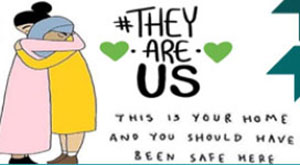
Her statement immediately following the attack against the Christchurch Muslim Community was clear “they are us” , a clear condemnation of Islamophobia by a world leader. When Donald Trump asked what he could do to help Jacinda replied he could show “sympathy and love for Muslim communities”

To my mind, one of the greatest acts of leadership by Ardern after the shooting was the following day when her government announced semi-automatic weapons would be banned. I have written before about Gun control. The Christchurch attack was not the first NZ mass shooting, with the 1990 Aramoana massacre and the 1997 Raurimu shooting both leaving many dead and injured. It should not have taken a bloodbath in Christchurch to see the NZ parliament finally take action. Previous attempts at banning semi-automatics or having a decent register of gun owners in NZ have been voted down.

New Zealand Prime Minister Jacinda Ardern announces tighter gun control laws hours after the Christchurch Mosque attack.

It is commendable that after this, Jacinda showed leadership on this. Many are now saying this is an example to the rest of the world, in particular to America where after a number of mass shootings gun control have been resisted by the NRA and others. I agree.

Christchurch Mosque terror attack

It’s been over a week since the horrendous terror attack in two Christchurch Mosques killing 50 people. This attack on the Muslim community in Christchurch was both heartbreaking and sickening. People around the world  are understandably shocked and appalled by what happening.

TheyAreUs-logo
The above was put out hours after the Christchurch shooting. 

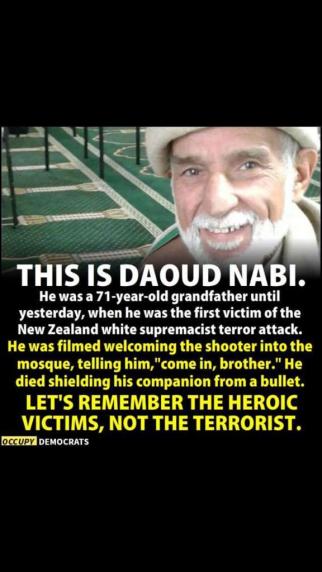
Many were surprised that such an attack could have happened in New Zealand. I was never of the view that New Zealand was safe or immune to the sorts of terror attacks like that committed in Christchurch on March 15th. It was however, utterly heartbreaking to learn that it had occurred. Its particularly gut wrenching to read of the acts of kindness and bravery by some of the victims such as Naeem Rashid who lost his own life trying to stop the gunman.

Thousands have gathered throughout New Zealand in vidils to mourn the dead and show solidarity with the Muslim community. The attack has even united the country’s rival biker gangs who are vowed to work together to protect Muslims attending Mosques.

DAOUD NABI

Much has already been said about this act of Far Right terror against the Christchurch Muslim community. I have more to say about the responses and developments post this event. However I end this by quoting a Muslim friend of mine in New Zealand, who posted the below on social media hours after the attack. These words will stay with me for a very long time:

I think we always feared there would be a terrorist attack. But we always feared it would be someone claiming to be Muslim, and that we would bear the impact of the aftermath, the xenophobia, the hate crimes, the calls to fight in foreign lands and the calls to go back home (to where?).

We thought we would be the target of the aftermath and feared what that would be.

We never thought that it would be us, going about our daily rituals. Jummah is sacred. It is the first thing that we try to establish when we form a community. It is the signal that we have enough Muslims to form a community. It is the place we meet every week.

The attacker choose to hit the heart of our community and the heart of our faith, which is the daily rituals of connecting with Allah (SWT). He choose to do it when we were together so it could be as gruesome as it could be.

Last year when I called out Islamophobia to people I thought were my tribe/friends, it fell pretty much of deaf ears. I was either ignored or dismissed (not by everyone but by enough people).

This is the result of all those horrible NZ Herald opinion pieces, all that vitriolic internet meme culture, all those horrible beliefs about Muslims.

This stuff goes on with violent consequence in the place of my ancestors. People related to me have died because of it, and the people responsible are now in high political office (I’m looking at you Modi).

And now it’s happening here. And people we are related to have died again.

Next time I call out Islamophobia don’t dare tell me “we are a broad church”.

Plastic and recycling

Since I was a child, I was told it was important to recycle to save the planet. Specifically we were taught at school that plastic waste should be put in the recycling bin rather than sending it to a landfill.

When I moved to the UK in 2017 I was somewhat surprised to hear that plastic had been sent to China to “recycle” but that from 2018 the Chinese government were banning the import of used plastic. Shortly afterwards I was to discover that my home country New Zealand had been doing the same thing and were now also unsure what to do about recycling.

So all these years many of us believed we were doing our bit for the planet recycling plastic bottles. Turns out we were just adding to a giant plastic mountain in china and destroying the environment over there.

Image result for plastic mountain in ocean

New Zealand has now banned single use plastic bags following on from San Francisco, South Korea along with various other retailers, cities and countries around the world.

This, along with consumer action to reduce the use of single use plastic plays an important role. But as a species, we have already made a hell of a mess. Along the way we have done serious harm to the ecosystem, polluted our oceans, harmed many endangered animals and left the planet in a far worse state than we found it. Actions to reduce plastic consumption are good, but not enough.

This problem requires a global solution. It requires international cooperations between governments and business. Moving to biodegradable plastic or other less harmful products must become a priority.

From a policy perspective, there is much more governments could be doing to incentivise  sustainability and reducing the use of plastics. This could be through encouraging producers and retailers not use them and to invest in alternatives. Rewarding consumers for not buying single use plastics, or where enforceable doing bans or restrictions on plastic bags and bottles

I hope in the 2020’s we see serious action on reducing plastic consumption. Further that we find a way to clean up the plastic mess we have already made.

Looking at situations differently

A year ago I did a post here about positive thinking. The crux of this post was that trying to always be positive or see the best in every situation is really unhelpful and denying reality. To paraphrase a quote “try and always speak the truth, no matter how bitter”.

A year later I still agree with this post, but I feel there is more to be said about how we deal with challenges.

In my working and personal life, I have found preparing for and often expecting the worst has been a useful tool. When I worked as a union advocate, preparing for a difficult negotiations mean I had the tools and plans in place to deal with this. With campaigns and project management, having a risk analysis and back up plans to mitigate these is vital.

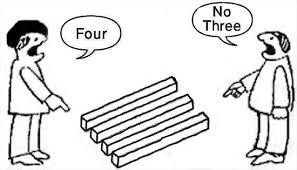
Hoping for the best and preparing for the worst is often very wise. How we prepare for the worst is the real test. One of the key things I’ve picked up through mentoring and coaching is to try and look at problems or challenges from a fresh perspective. It is very easy to look at a jigsaw puzzle from a certain angle and not see how it goes together. Turn the same puzzle upside down, or start doing the pieces on the other side and you may find that the pieces come together.

perspective

Controversial position maybe, but the reason many artists and creatives take mind altering substances (legal or otherwise) is altered consciousness changes one’s perspective and arguably unlocks creativity in the brain. A slightly tamer version of this is when you are trying to write a blog post. Mid way through this I’ve stopped to make a cup of tea. 10 minutes later the words are flowing much more freely.

The brain has survival instincts that have developed over centuries of evolution. Part of our survival techniques can be to really focus and stress about something that is a perceived threat or risk to our survival. Unfortunately I, like many in our society have a fight or flight mode that regularly kicks unnecessarily. At times it can motivate to action and be a push to get something done. Too often though it creates a mindset of feeling pressured and trapped. The result is looking at the problem from only a certain way, and struggling to see alternatives or different perspectives.

Dealing with situations like a death, a relationship break up, the loss of a job or source of income inevitably causes stress and anxiety along with other emotions. It is normal and healthy to feel this, and trying to “be positive” in such situations is bullshit and harmful. Seeking help, counselling and support is a good thing to do. One of the key things this does is help us gain perspective or maybe see the current issues differently. This helps our minds manage the situation, and look for paths forward.

In life things often aren’t where we want them to be. We aren’t in our dream job or our love life isn’t that we desire. Again, bollocks to being positive. But be clear where it is that you do want to be. Then really assess the options that are available to you, all of them, not just the “obvious” or “sensible” ones. And from there decide which options are more likely to get you to where you want to be. This may not always be the easy short or medium term option. You may make decisions your friends and family don’t understand or try to dissuade you from. But if you make the right choice and are clear where you want to go, this is very empowering.

Tough decisions are stressful. Gaining perspective on the source of the stress brings clarity, which in turn can lead to feelings of empowerment and dare I say it a positive outlook. A positive outlook isn’t the tool to improve your life, clarity and perspective are. Finding a way to look at things differently is a crucial part of this.

Why Project Management

Two years ago I decided to make a career change. The decision to become a Prince2 Practitioner Project Manager was an easy one.

I realised that throughout my career I have been involved in projects. The many political campaigns I was involved in, my work in trade unions organising workplaces and my involvement in students associations all involved project management. With unions I was trying to improve workplace conditions and  the relationship between union members and their employer. My work with local and central government advocating for public servants, involved a considerable degree of project management. And any form of political campaign involves project management.

A project according to Prince2 is the means by which we introduce change.

Specifically, project management is about setting up a temporary structure or organisation to manage this change. This change will be clearly defined with a clear end point to the project stated in the project plan.

I soon realised when studying Prince2 that whether consciously or not this is what I had been doing for years in my work. Studying Project management gave me the tools to build upon what I’d already been doing.

In addition to a career change, I also moved from Wellington (NZ) to London (my first time living overseas) and founded Piko London. This was one of the ballsiest and risky decisions I’d ever made. It certainly hasn’t been easy, but it’s one of the best decisions I have ever made.

Since moving to London, through Piko I have worked on projects for tech startups project managing the launch of new products using blockchain technology. Piko has also been contracted to do work in the retail space, specifically project managing a sales growth campaign. I also dabbled in a bit of political work, doing a project plan for a campaign to support precarious workers. I’ve also done some small event management contracts. You can read my full CV on linkedIn

project-management-stages
Above: The key stages in Project Management

One of the key aspects of a project is tolerances. Having clear tolerances for timeframes, cost and quality scope is crucial. When you hear or projects going way over budget, or being delayed by a few years, or not delivering on the outcomes promised at the start, a project manager will be asking ‘what was in your project plan’. Too often project plans are treated like sales pitches, rather than a viable plan to deliver a product or run a campaign. A good Project Manager will outline the project’s goals and the desired end state. But they will also be upfront and transparent with stakeholders about any risks or issues that may arise.

I’m looking forward to the new projects I pick up in 2019. Having a background both in the SME and tech sectors as well as the public sector gives me a good broad base of experience. I do enjoy managing projects that launch new products or systems. I am not a computer geek, however I enjoy projects where new technology is being created that will change and improve people’s lives. Being a project manager is about change, but also about making a difference. I can’t wait to sink my teeth into the next challenge.

Brexit, what next?

Yes, another Brexit post. If you live in the UK or follow its news you’ll almost certainly have Brexit fatigue. Trouble is it cannot be ignored. The world’s 6th largest economy leaves one of the worlds largest trading blocs – how this plays out will have global consequences.

If you live in the UK even more so. 45 years of economic integration with the EU is about to come to an end. And its likely to be on WTO terms rather than with a deal.

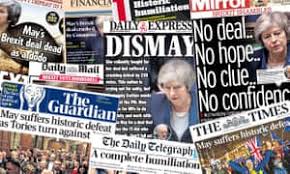
Last night May’s Brexit deal lost by 202 to 432 – setting a record for a government defeat in the house of commons.

brexit

Predicting what will happen next is a) risky and b) the stuff of lazy commentators sitting on the sidelines. I’d much rather talk about what should and shouldn’t happen.

Firstly, the calls for a second referendum. I understand why those who support remain and believe leaving the EU will be economic suicide want this. But I don’t support these calls at this stage. The fact is there was a referendum in 2016. Yes there was misinformation, yes people voted without there being real plans or modelling of what would happen. However the fact is that the remain campaign lost. Polls may show that were another referendum held today remain would win, however they showed this in 2016 too. Further, if remain did win narrowly in a second referendum, those pro leaving the EU would then actively campaign for a 3rd referendum. So it would just go on.

My take is that Brexit, despite the disruption and economic upheaval it is causing, still enjoys strong support throughout the UK. Not in London, probably not in Northern Ireland (understandably with the backstop issue) and possibly still not in Scotland. The rest of the UK voted to leave in 2016, and would likely do so again in a second vote.

A General Election. I suspect the Conservatives will survive today’s confidence vote, but it wouldn’t take much for me to be wrong on this. The DUP have said they will support the government, but they could change their minds. Alternatively it would only take a dozen rouge backbench Tories to decide they’ve had enough and it would be game over.

How would a general election go? All bets are off. Polls are highly unreliable in the UK as Brexit and the 2017 general election showed. The chances of a minority government are high. Two of the last 3 UK elections have resulted in minority governments, and divisions within the country have only widened in recent months. Even if Labour or Conservative to win a majority, the open divisions in both Parties will make the prospect of stable government unlikely.

There is talk now of no Brexit. In theory  pro remain MPs who have a majority in the commons would take over the process and either call a second referendum or just withdraw article 50 and pretendng the 2016 vote never happened. I suspect the backlash of either of these moves (especially the latter) would be strong. Any move that looks like the political establishment not respecting the 2016 referendum outcome will likely see yellow vest type opposition as recently seen in France.

The likely outcome now. Brexit, no deal and WTO rules applying. In the short term this will be disruptive, and probably will cause at least a small to moderate economic downturn. Within a few months the UK will probably come to some sort of deal with the EU, as neither party want no deal long term. In 2-3 years or maybe longer the UK will start forging trading relationships with other countries and things will start to improve. But will the short term pain be worth it for the long term gain? It’ll be about a decade till we really know. It’s at that point it would be worth reviewing whether the UK was better off in or out of the EU – assuming the EU is still in its current form in 10 years.

The short term harm is Brexit will add cost to businesses who rely on imports and exports to and from Europe in a no deal scenario. For firms that were already close to the wire, a no deal Brexit could be the final straw. But this is speculation, and not a certainty. But it’s the potential risk the economy faces with a no deal Brexit.

What should happen? What needed to happen back in 2016, and certainly after the 2017 election, is a cross party agreement on negotiating a Brexit deal. Very difficult I know given the divisions in parliament over this issue, but given the serious impact Brexit will have this is what was and is needed. It is probably too late for a cross party working group to get together and negotiate with the EU before March 29. But greater unity now would help restore confidence in parliament and help get things on a better path for the next step in the process.

It’s easy to be a merchant of doom with regards to Brexit. The fact is there was a referendum and people voted to leave. The country now needs to find a path forward. This will involve pragmatism, lateral thinking, compromise and being prepared to swallow some dead rats for the greater good. This needs to start today.

The New Year

Originally posted on my Facebook page

2018 – had its highs and its lows. It was challenging, hard work, rewarding, disappointing, fun, annoying and complex. Much has changed this year, yet many things seem exactly the same.
Years aren’t good or bad. They are a measure of time, and in those 365 days life happens.

2019 – there will be highs and lows. There will be moments of fun and joy, but also those of sadness and despair. I hope that in 2019 the knowledge and experience of 2018 will help me make good choices where and when I need to. But that the hurts and disappointments from the past don’t negatively impact on the future.

And tomorrow I change my calendar.

Happy New Year everyone.

Walk 12: Hampstead

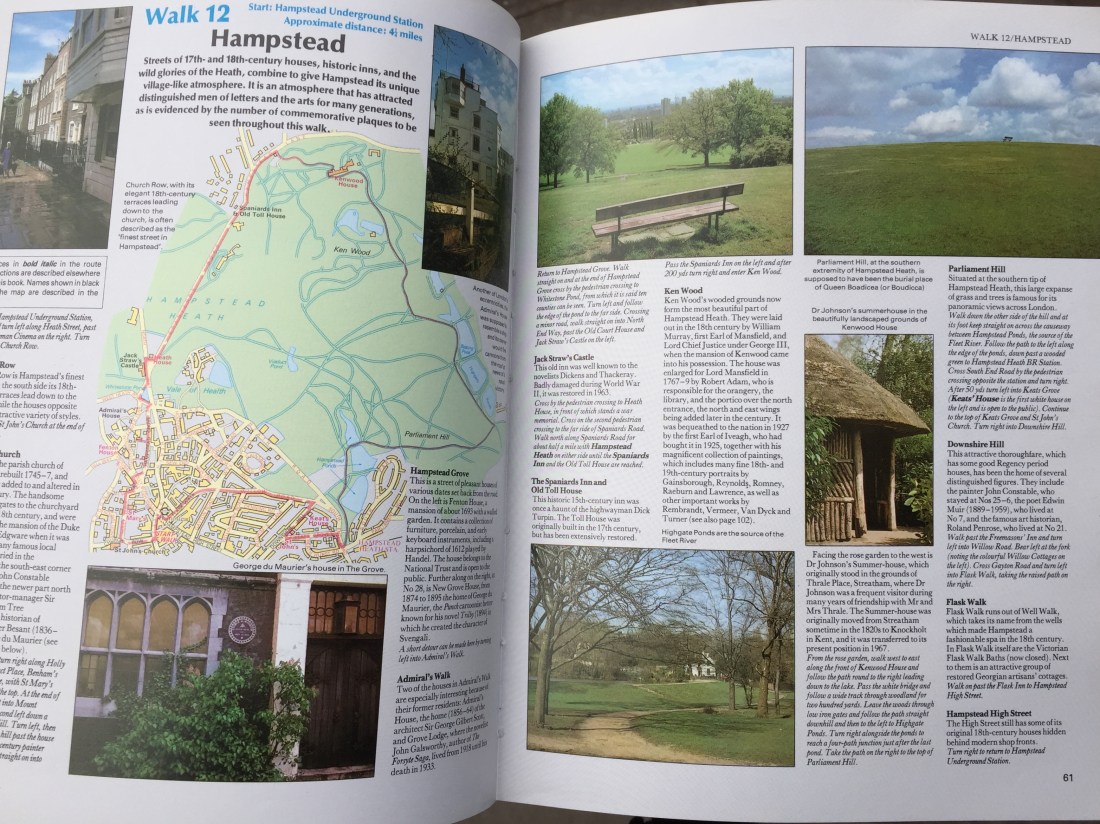
This is the final of the 12 walks from the 1980s AA guide book.

Walk 1 was around Westminster and Millbank.

Walk 2 around Buckingham Palace and Westminster Cathedral.

Walk 3 around St James.

Walk 4 was around Mayfair.

Walk 5 Bloomsbury and Holborn.

Walk 6 was ‘A walk around Soho’.

Walk 7 The Strand and Covent Garden.

Walk 8 The Inns of Court and Fleet Street.

Walk 9 The heart of the city

Walk 10 City Streets and Alleys

Walk 11 The Highways and Byways of Chelsea

The final walk in this series was around Hampstead, and I completed this on 16 December 2018.

fullsizeoutput_11bd

The walk commenced at Hampstead Station, on the boundary of zone 2 and 3 – making this walk the furtherest out of central London.

The first stop was Church Row, a street with a number of 18th century terraced houses. At the end of the street was St John’s Church, rebuilt 1746-7.

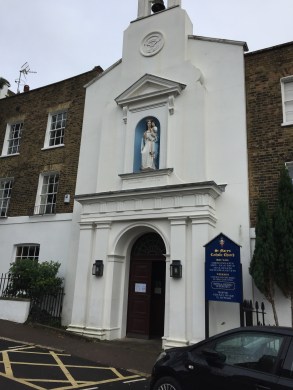
Then the walk took me past St Mary’s Catholic Church on Holy Street, through to Hampstead Grove. Here I got to visit Fenton House, and use my National Trust membership to walk around the property. Fenton House is a 1690s mansion which housed a number of musical instruments and a nice garden.

IMG_4523
St Mary’s Catholic Church.

Next the walk took me to the Admiral’s Walk. On this street can be seen the Admiral’s house, which according to the guide book is “supposed to resemble a ship.”


IMG_4538
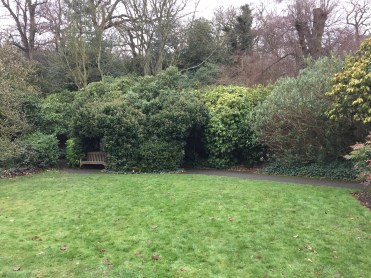
The view looking up Hampstead Grove

From here the walk proceeded to Jack Straw’s Castle, known to authors Dickens and Thackeray.

From here I walked up Spaniards Road to the Old Toll House and The Spaniards Inn. I stopped at the latter for liquid refreshments.


After this I walked to the next stop on the tour, Ken Wood. This House and gardens is looked after by English Heritage, which I am also a member of, though entry to the house is free. The House and gardens were laid out by William Murray first Earl of Mansfield, and the house enlarged by Lord Mansfield in 1967.

One feature in the 1980s guide book of Ken Wood that no longer exists is Dr Johnson’s summer house. A replica of this was created in the 1970s(?), and a photo of it can be see in the guide book (see above). When I asked the grounds keepers about this, they said that this summer house burnt down in the early 1980s.

IMG_4564
The site of Dr Johnson’s Summer House. 

From here the walk took me through Hampstead Heath, one of London’s larger and more famous green spaces. This took me to Parliament Hill, where you can get panoramic views of the city.

From here I left the Heath and headed to Downshire Hill, which has Regency period houses and then down Flask Walk.

After this the walk concluded on Hampstead High Street and I caught the tube back from Hampstead underground.

Voting systems – why they matter.

I generally don’t hold New Zealand politics up on a pedestal. However there is one decision made in recent years that I do support, and that is changing the NZ electoral system in 1996. For the last 22 years New Zealand has used the Mixed Member Proportional system (MMP for short) which is explained here. This system was modeled on the German MMP system, and is used in a number of other countries around the world.

In the 2015 Canadian General election, Liberal Party leader Justin Trudeau ran on a platform of electoral reform in Canada. This country uses the First Past the Post electoral system also used in the UK, the US and in New Zealand prior to 1996. Disappointingly, Trudeau after being elected abandoned this policy in early 2017 claiming there was lack of public support for such a change. This is disappointing on two counts. Firstly this is a broken election promise. Secondly the best test of public support for electoral reform is through a binding referendum, just as New Zealand held in 1993.

A few days ago, the UK Make Votes Matter campaign released a clip by John Cleese of Monty Python and Faulty Towers fame in favour of electoral reform. This clip can be seen below:

Cleese makes a compelling argument as to why the current voting system for the Westminster Parliament in broken, and why too many voices are not being heard.

I must admit to struggling to understand why electoral reform is not a bigger issue in the UK. In 1951, The Attlee Labour government lost the general election on seats, despite winning the most votes by a significant margin. In 1974 the Ted Heath Conservative government lost the October election (there was another election in February 1974 which it won) despite winning more votes nationally.

In more recent times, no government has won an overall majority in the UK. Thatchers Conservative Government at the height of its support in 1983 only won 44% of the vote. Then in 1997 when the Blair government supposedly won in a landslide, Labour only won 43% of the vote. As Cleese points out in the clip, the numbers were even worse in the 2005 and 2015 elections, where in both cases a single political party won an outright majority in the house of commons despite only winning 35% of the vote.

In the US, First Past the Post resulted in Trump winning the presidency despite losing the popular vote by 2.5 million votes nationally. Also in 2000 George W. Bush won the presidency despite losing the popular vote by 0.5 million votes, and dodgy maneuvering in Florida. Then there are the issues with House and Senate elections, where again an MMP type system would likely produce a significantly different and probably far more diverse and representative set of results.

In New Zealand the catalyst for change came when the Muldoon National (conservative) government in power from 1975 to 1984 won 3 consecutive terms despite winning fewer votes than the Labour opposition in the 1978 and 1981 general elections. This was followed by two governments which quickly pushed through Neo Liberal reforms despite strong public opposition. Electoral reform was seen as a way holding the two main party’s to account, and ensuring no party that got under 50% of the vote could govern alone.

The New Zealand system isn’t perfect. For example I’d change the threshold that says party’s only get into parliament after winning 5% of the vote unless they get an electorate seat. I’d lower that threshold to say 2-3%, and winning an electorate seat wouldn’t entitle you to additional MP’s if your party got under the threshold.

Despite these niggles, the NZ voting system has worked ok. Yes coalition governments are now normal, and it has forced the two main party’s to compromise (arguably a good thing). However the system has produced stable governments, and in 5 of the 8 MMP elections it has been clear which party or party’s won on election night. In the other 3 elections a government has been formed within a few weeks of the election. It has improved representation with the number of women, Maori, Pacifika, Asian, Queer and other previously under represented groups getting elected to parliament in increased numbers.

No electoral system will fix everything. But it lays the foundation by a strong functioning democracy. Electoral systems like First Past the Post result in too many people not having a voice, and election results that don’t reflect the will of the people.

If you live in the UK you can sign a petition calling for electoral reform here