Why the Your Party project serves The Reform Party

The Zara and Jeremy project will help Nigel Farage

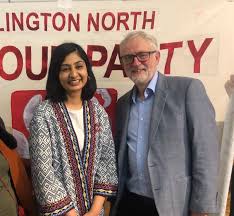
Former Labour Leader Jeremy Corbyn and Coventry MP Zara Sultana, both former Labour MPs who lost the whip, are threatening to start a new party on the left.

I use the word threaten, as that is what this project will do. It will threaten the NHS, threaten employment rights and threaten to destroy what little faith the public has in politics.

Why?

Because, under the First Past the Post electoral system, splitting the progressive vote will help Nigel Farage become Prime Minister.

Corbyn, in his four-year tenure as Labour leader, failed to advocate for proportional representation. Instead, he was happy to maintain a system which essentially reduces politics down to a two-horse race.

Jeremy and Zara know full well that by forming another left party under the current electoral system, they will split the vote and help Reform come to power. Yet, this is what they are doing.

Things are not easy now, in the UK or global politics. But things will get so much worse if a split progressive vote puts the Reform Party into Government in the UK.

Trump – not fit for public office.

On the eve of the US Presidental, it is worth reflecting that this is now the third election where Donald Trump has been on the ballot. Initially dismissed as a joke candidate who would not make it past the primary, his brand of post-truth and divisive politics has dominated the last decade of US politics.

In the six years since I started this blog, I have written various posts about Trump’s politics and its negative influence on the world. These are listed below:

Genius Trump

Guns

Qasem Soleimani: murdered by the United States

Pandemics are no time for inward-looking nationalism

The US election – why sometimes voting for the lesser evil is right

Trump loses the Presidency, but Trumpism lives on

The ugly finale of the Trump Presidency

The US withdraws from Afghanistan and the inevitable happened

Democracy is on the Ballot – watershed US midterms this week

The 2022 midterms and what happens next in US politics

Trump is not, and never has been, fit for public office. Yet he remains a force to be reckoned with. He has never won the popular vote, and the majority of Americans, including many in ‘red’ states, oppose him. But to beat him, people need to vote……

2024 UK Election – the Tories finally lose power

Welcome to my 200th blog post, the first since the 2024 UK General Election.

In what came as a shock to absolutely no one, the Conservatives lost. Badly.

Today the corridors of Westminster felt like the first day of school. 334 new MPs have come in to get their passes working, set up their email and find a desk. A couple of freshers nervously asked if they were allowed on the red carpet/ the House of Lords end (they are). Many were walking around steering in awe at the statues and artwork and excitedly looking around the Commons.

The election result was a massive swing against the Tories. 121 MPs will be the lowest number of Conservative MPs elected in the party’s history. Labour is by far the largest party and will govern with a majority of 172. Below are the full results showing the results for all MPs and parties elected:

PartySeatsSeats (change) Total VotesShare of the Vote
Labour412+2119,704,65533.7%
Conservatives121-2516,827,31123.7%
Liberal Democrats72+643,519,19912.2%
SNP9-39724,7582.5%
Sinn Fein70210,8910.7%
Independent6+6564,2432.0%
Reform UK5+54,117,22114.3%
Green4+31,943,2656.7%
Plaid Cymru4+2194,8110.7%
DUP5-3172,0580.6%
SDLP2086,8610.3%
Alliance Party10117,1910.4%
UUP1+194,7790.3%
TUV1+148,6850.2%
The 2024 UK General Election results

In 2019, Labour received 10,269,051 votes and won just 202 seats. In 2024, Labour received 9,704,655 votes but won 412 seats. In 2017, Labour won 12,877,918 or 40% of the vote, compared with 33.7% of the vote in 2024.

I will come back to the elephant in the room, the lack of proportionality in the First Past the post-electoral system.

The feedback on the doorstep is reflected in the numbers above. Many voters were undecided leading up to the election and unenthusiastic about either main party. When pressed, it became clear many former Conservative voters would not be supporting that party again. 2024 was the election that the Tories lost, and badly.

On the surface, 33.7% may not seem like a strong result for Labour, in terms of overall support. We need to consider some of the following factors:

  1. Tactical voting played a significant role in this election. Many would-be Labour voters living in places like Devon voted Liberal Democrat to stop the Tories. Curiously, the Liberal Democrats went from 3,696,419 votes, equating to 11.6% in 2019, whereas on Thursday their total votes went down to 3,519,199, but due to lower turnout, this equates to 12.2% of the vote. The Lib Dems now have 71 MPs, instead of the 8 they got in 2019.
  2. The voter coalition built by Jeremy Corbyn’s Labour in the 2017 election of younger progressive voters, has now moved to the Greens. On Thursday the Greens received 1,943,265 votes equating to 6.7% of votes cast. In 2019, the Greens received 865,715 votes or 1.1% of the vote.
  3. In New Zealand or other countries with more proportional voting systems, it is common to look at the centre-left and centre-right bloc rather than just what the parties received. Labour and the Greens together received 40.4% of the vote compared with the Conservatives and Reform who received 38%. The Liberal Democrats were largely targeting Tory seats this election. They stood on a broadly social democratic platform and made it clear that unlike 2010 they would not support a Conservative Government after the election. So adding their 12.2% to the Centre-left bloc we get to 52.6%.
  4. So while First Past the Post has produced a result that is not proportional, and in my view is an appalling voting system, a different voting system like the one used in Germany and New Zealand would have still resulted in a Labour Government (though almost certainly in coalition) and a crushing defeat for the Tories.

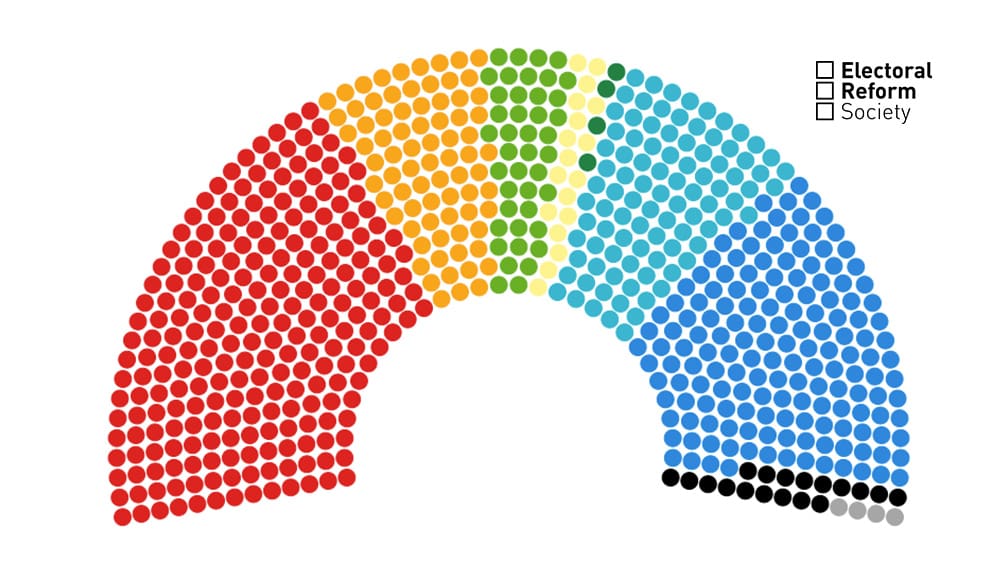
The UK Electoral Reform Society have put together modle showing what the result would have looked like using the Additional Member System used in Scotland and Wales:

https://www.electoral-reform.org.uk/how-the-2024-election-could-have-looked-with-proportional-representation/

The problem with this is that if there were a different voting system, people would likely not vote the same way.

The broader problem with the proportional representation debate in the UK is they tend to advocate only specific alternative voting systems like AMS or AV. This election result will rightly see more people call for proportional representation. Just as New Zealand did before changing voting systems in 1993, UK voters need the opportunity to explore all viable alternatives to First Past the Post.

Those who blame the rise in Reform for the Tory Party’s misfortune need to look at the bigger picture. In 2015 UKIP, Farage’s old party, received 3.8 million votes compared with Reform’s 4.1 million last week. While Farage’s new political vehicle certainly cost the Tories votes in key marginals, there is evidence of former Labour voters also switching to Reform.

The Conservative Party lost because their vote went from 13,966,454 votes or 43.6% in 2019 to 6,827,311 or 23.7% in 2024. The number of people who voted Tory halved in just five years. Why? Their response to the pandemic, party-gate, the Liz Truss mini-budget and their failure to manage the small boats crisis in the channel. They were terrible at managing the economy allowed public services to decline.

In terms of the two major party’s vote share, in 2019 the Labour and the Conservatives together received 75.% of the vote, and in 2017 82.3%. Last week the two combined received 57.4% of the vote.

One feature in this election is the 6 independent candidates, many of whom ran on the issue of Gaza. In one case it caused former Labour front-bencher Jonathan Ashworth to lose his Leicester South seat. Other senior Labour MPs such as Wes Streeting or Jess Phillips saw their majorities reduced drastically as many Muslim voters abandoned Labour for Independent candidates, or refused to vote. Starmer’s Labour Party was initially reluctant to call for a ceasefire in Gaza. Had there not been a significant swing against the Conservatives, Labour losing support from large sections of the British Muslim community could have been very damaging.

Former Labour Leader Jeremy Corbyn was also elected as an Independent MP in Islington North. Again, his position on Gaza was a factor in Corbyn’s success.

In Scotland, support for the embattled Scottish Nationalist Party (SNP) collapsed. Labour now has 37 of Scotland’s 57 seats, compared with one seat in 2019. It would be a mistake to view this as a collapse in support for Scottish Independence as a cause. A Norstat/Sunday Star Times poll published just a fortnight ago found that 47% of Scots still support independence, while 47% support staying in the union. Other recent polls on Scottish independence have also been quite close. The election result, rather than spelling the end for Scottish Independence, instead may result in the SNP being the main political vehicle for this cause.

In Northern Ireland, Sein Fein won the most seats. This is consistent with the most recent Stormont and local government elections in Northern Ireland. The decline of the Democratic Unionist Party post-Brexit has in part fuelled division on the Unionist side with two other rival parties challenging them.

Wales no longer has any Conservative MPs. Labour has controlled the Welsh Senedd since it was created in 1999. Despite the recent scandal surrounding Vaughan Gething the new Welsh First Minister, Labour continue to dominate politics in that nation.

This was a change election. Not only is there a new Government, but politics will be different. After this election, there are 264 women MPs, a record in Westminster. The Cabinet will also have more women than any before it. There will also be more MPs from ethnic minority backgrounds, though there is some concern that this diversity is not fully reflected in the cabinet.

Britain has been in decline in recent years. It will be difficult for the incoming government as they inherit a poor economy, crumbling public services and a country whose standing internationally has diminished considerably since Brexit. It is no wonder voters lacked enthusiasm during this election.

For Labour, the next five years will be an opportunity to show the country they can be trusted with power. Things will be tough and any honeymoon could be short-lived. That said, voters will take time to forget, let alone forgive the mess left by the previous Conservative administration. While people may not yet be enthusiastic about Labour, they can could no longer stomach the Tories.

UK Tories fend off challenges both left and right

Opinion: It was with a strong sense of déjà vu that I watched Rishi Sunak announce that if re-elected, he would introduce compulsory national service for all 18-year-olds. I remember an equally embattled former National Party Prime Minister Jenny Shipley making the same outlandish promise during the 1999 election campaign.

Read my full column at Newsroom NZ: https://newsroom.co.nz/2024/07/03/uk-tories-fend-off-challenges-left-and-right/

The political centre has moved, someone should tell the strategists.

Originally posted on The Standard

Trust in politicians is at a record low. This is true for the UK during its General Election Campaign, with multiple surveys showing that most voters are dissatisfied with how the UK is governed. In Aotearoa, this depressing trend is also reported in polls. What is causing this trend?  Much of this is due to hubris and poor decisions by politicians. In part, however, outdated thinking and a failure to understand public opinion by the political establishment have caused this situation. Ironically, the tactics used to overcome this problem 30 years ago, are today perpetuating it.

30 years ago, we had Dot Matrix printers, Windows 95 and brick cell phones. Today we live in a world of AI, Tik Tok and 5G. While technology changes have been embraced, including in political campaigns, strategies and methods to connect with voters seem stuck in the MS-DOSS era.

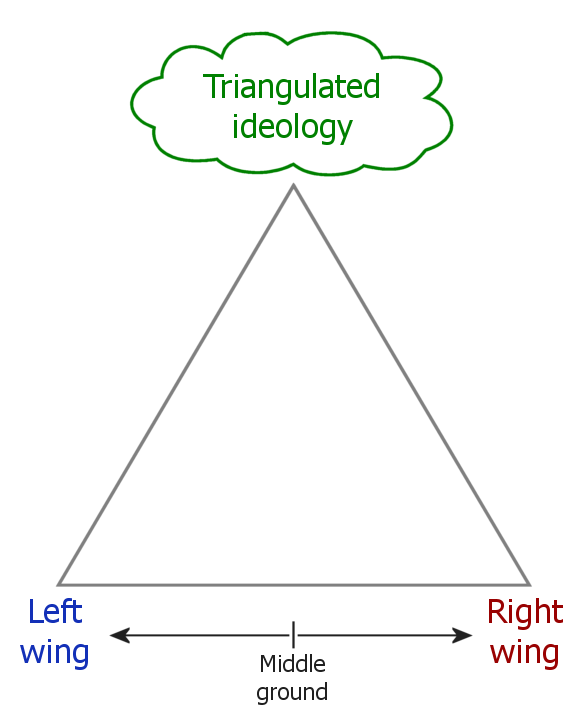
Triangulation is a political strategy whereby a politician presents a position as being above or between the left and right sides (or “wings”) of a democratic political spectrum. In the 1990s Clinton used this tactic to successfully win “centrists” who had supported Reagan in the 1980s, as did Tony Blair’s New Labour Government. The economic reforms of Thatcher and Reagan were left in place, but with a more socially liberal agenda and more resources for health and education, though often in partnership with the private sector.

Whether it was right or wrong, it is entirely understandable in 1997 that Tony Blair’s new Labour had no appetite for increasing taxes, especially after losing the 1992 election after the Tories painted Labour as the high tax party. Or if we go further back, in the 1979 winter of discontent, where the streets were strewn with rubbish because of striking binmen, was the death knell for the Callaghan Labour Government. So again, rightly or wrongly, New Labour was cautious about giving too much power to the union movement.

Smarter minds have clocked that much has changed since 1997. Whereas in the 1990s free market reforms still enjoyed reasonable support, after the 2008 financial crisis, followed by years of government austerity policies, this is no longer the case. It was the equivalent of Y2K, except it actually did cause chaos.  

Following the pandemic, advocating small government, low taxation and bestowing the virtues of the market is now met with derision by all but the most hardened libertarians.

Sections of the UK media have grasped that society has changed, as have the more credible think tanks and forward-thinking academics. Many political strategists have missed the memo. Or they just have no idea how to adapt to modern politics. They continue to pitch to “the centre”, or at least to where “the centre” was 30 years ago.

Labour’s New Deal for Working People, billed as a “plan to make work pay, ensure security at work and provide the work-life balance everyone deserves”. The policy specifics are broadly similar to those introduced in the first term of Jacinda Ardern’s Labour-led Government in 2017; raising the minimum wage, banning zero-hours contracts, improving sick pay provisions and requiring employers to issue contracts which reflect actual hours worked with compensation for cancelled shifts. In a country where most people are poorer than they were at the last election, policies that lift people’s incomes are popular.

Days before the General Election was called, Conservative Home commentator Chris Hopkins argued that workers’ rights would be the wrong dividing line for the Conservatives to challenge Labour on. Chris argued that where previously the Conservatives could argue for flexibility and a lightly regulated workforce on the grounds that it would boost economic growth, now voters have “wised up” and that the “old political rules no longer apply”. He goes on to say:

Where the public may once have conceded workers’ rights for a perceived higher standard of living via growth and jobs, they have lost trust in the Conservatives as effective stewards of the UK economy.

Think of it like this. If your main job is now more precarious, your mortgage has significantly increased and you are working a second gig to make up for it, I’d imagine stopping ‘fire and rehire’ and having the ‘ability to switch off’ would look like a pretty good offer. And it would look good to Conservative supporters as much as anyone else.

Have the Conservative Party taken heed of this sound analysis? Conservative Business Secretary and future Tory leadership hopeful Kemi Badenoch has claimed “Labour’s new employment regulations are going to make it very hard to hire, strangling employment”. Despite 14 years of weak employment protections failing to stimulate the economy, Badenoch and her colleagues in government still think this is a strong dividing line with Labour.

She is not alone in this. Lord Peter Mandelson, Business Secretary in the Blair/Brown New Labour Government warned in March that Labour’s employment law changes must not be rushed or go further than “the settlement bequeathed by New Labour”. Mandleson was one of the architects of New Labour and has advised the current Labour leadership on strategy and policy. While the ‘Black Prince’ is undoubtedly a smart cookie, his fingers are not on the pulse of public opinion on this issue.

Sharon Graham, the General Secretary of Unite, the largest Labour Party-affiliated trade union in the UK has warned that Labour has watered down proposals to ban fire and rehire, and sectorial bargaining plans have been delayed. It is no surprise that the Unite leader wants to push Labour further, but in this case, what is being asked is quite modest. A union representing over 1.2 million workers in the UK, which is growing each year, should not be dismissed out of hand.

Another example of triangulation leading to poor policy positions is tax. The Conservative Party have made a key pitch of the 2024 campaign that Labour will increase taxes and they will cut them. Labour has in fact ruled out increasing income tax, VAT or national insurance, which are the main taxes which bring in government revenue.

Taxes have risen since 2019 despite the Conservatives promising to cut them in their previous manifesto. The tax burden has risen to 36% of national income, the highest it has been since 1949. This has been due to a freeze on the income tax threshold, increases to corporation tax and a windfall tax on energy companies.

While Tory party faithful decry their party breaking their 2019 promise, the economic reality is that the government cannot cut taxes without harsh cuts to public services. The election of Liz Truss as Tory leader was largely a response to this, and the harsh reality of unfunded tax cuts destroyed the Conservative Party’s reputation as sound economic managers. The voting public is more interested in public services that work than tax cuts which fuel inflation and do little to help people.

The British public would much rather the government invest in crumbling public services like the NHS, and polls have consistently shown this for some time. The public can see roads full of potholes, schools falling down, the NHS overwhelmed and there not being enough police on the streets.  

The recent debate on how quickly each party would increase military spending in the next term was another example. The public knows that whatever is promised now, if the situation in Ukraine, Gaza or elsewhere in the world deteriorates further, the government will have no choice but to increase military spending. In this context, it is no wonder that the Conservative Party’s promise to cut taxes, without a proper explanation of how it will be paid for, has fallen flat.

Labour has ruled out tax increases and is banking on economic growth to help them fund public services, as it did during the Blair/Brown Government. While measures like planning reform and improving the trade deal with Europe will help, there is no guarantee that economic growth will happen fast enough to fix Britain’s woes in the next parliamentary term. The Shadow Chancellor’s commitment to having the fastest-growing economy in the G7 is ambitious, to say the least.

In New Zealand, the decision of the Labour Government in 2023 to rule out a ‘wealth tax’ saw the party’s polling decline, albeit from an already poor position. It confirmed voters fear that Labour had no serious plan to fix public services in a third term if re-elected. By contrast, the UK has had 14 years of Conservative Government and the public is crying out for change. Once in Government, a future Labour Government will face the same challenges if they rule out new forms of revenue, especially if aspirations of economic growth fail to materialise.

The UK Institute for Fiscal Studies has said there is a ‘conspiracy of silence’ on how public services will be funded if there are to be no tax rises in the next five years. My Dad has a theory that given the choice of conspiracy or cock-up, it is almost always a cock-up. The cock up here is parties making political calculations on old models, based on public attitudes 30 years ago.

Society is a much more complex place in 2024. We carry smartphones with 10 times more memory than 1990s PCs, which give us access to vast amounts of information online. We also are much more connected and events which once took hours or days to be reported are now on our phone newsfeeds in seconds.

People’s political views and voting intentions are vastly different now from what they were in the 1990s. The size of political swings in democratic nations has increased substantially in recent years. The so-called political centre was always lazy shorthand to describe a section of the voting public who broadly speaking decided elections. Society, much like technology, is much more complex than it was in the 1990s. The politicians who are first to adapt to this change will be the ones who ultimately succeed.  

Labour’s House of Lords Reform – good, but kicking out 80 year olds is age discrimination.

For the last four years I have worked in the House of Lords. I admit that initially I was sceptical as to the value of an unelected chamber, especially one which still included hereditary peers.

My views have changed since. No, not out of self interest (the Lords is not my primary source of income), but through seeing up close the value add having of having a second chamber with people who are subject matter experts scrutinising legislation. Many Lords are not partisan, and those that are quite often speak independently from their party on policy matters they are experts in. The Committee Reports are of a considerably higher standard than that of the Commons, or indeed of most UK think tanks.

This being said, I do believe the House of Lords is in serious need of reform. Just over a year ago I posted my view on the Gordon Brown report on constitutional reform. While I agree with his recommendations for greater devolution in to regions in England, and strengthening the powers of governments in Wales, Scotland and Northern Ireland, I disagreed with his recommendations for the Lords.

Firstly, he proposes changes to the Lords, but recommended no changes to the Commons. Replacing antiquated and unrepresentative First Past the Post Electoral System with Mix-Member Proportional (as used in Germany and New Zealand) would do far more to improve politics in Westminster than any changes to the Lords.

Secondly, his proposal to create an elected chamber representative of the nations and regions of the UK could just create another House of Commons. Alternatively, it might give disproportionate power to smaller nations as a way of heading off independence campaigns. Neither of these options would in themselves improve Westminster functions.

Labour’s election manifesto commitments regarding Lords reform are overall quite sound. In 2024, hereditary Lords is indefensible. While some of the hereditary Peers make decent contributions in the Lords, as a point of principle hereditary titles must cease.

Labour have also committed to reviewing the appointments process in response to the current Government stacking it with supporters who should never have been admitted. There are too many members of the Lords, which is something a more robust appointment process can help address.

Where Labour’s proposal has gone seriously wrong is to force members of the Lords to retire at the age of 80. The last act of the previous Labour Government was to pass the Equalities Act 2010 which outlawed age discrimination at work. This law change is something Labour can be truly proud of as is seriously tackled ageism in the workplace. It is disappointing then, that Labour would force peers to retire at 80.

Many Lords over the age of 80 make important contributions, are articulate, work hard and should not be removed due to the number of birthdays they’ve had. An example is Sally Greengross, who I mentioned in my recent Newsroom article. She delayed Chemotherapy so she could put forward amendments to the Domestic Abuse Act supporting older victim survivors of abuse. Labour Peer Lord Alf Dubs, is in his 90s and is a tireless campaigner for the rights of refugees and migrants. Dubs himself came to the UK as a Jewish refugee as a child during the Second World War. Are Labour really going to kick out people like Alf Dubs?

I would hope, a pragmatic solution can be found whereby those who remain active and want to stay members of the Lords can do so.

Life peerages is something that needs reviewing, especially for those who rarely contribute in the Lords. But discriminating against someone based on the number of birthdays they’ve had is not the way to do this.

Betting on the election date – how I lost a tenner

The beleaguered Conservative and Unionist Party faced another scandal during their ill-fated election campaign. This one is due to party officials close to Rishi Sunak placing bets on the election date the day before it was announced.

This alledged breach of gambling law by Conservative Candidates adds to the Tories woes. At a time when the public are increasngly distrustful of politicians, the optics of this are horrendous. Attempting to personally profit from information gained in their work. Such behaviour might be normal (though legally dubious) when working the financial markets, in politics it is clearly out of line.

The story was made worse after the Finacial Times published the following graphs, showing a spike in bets the day before the election was announced:

Such a scandal would not occur in New Zealand politics, where gambling on elections and politics is not allowed. On the one hand it is quite fun to see what the bookies odds are, however it does prevent this sort of nonsence happening.

I must confess to having my own election date wager, but this did not go my way. My local Labour Councillor Rosie Parry thought, and hoped, the general election would be called in May. I however was confident that the election would be called in November and made a £10 bet.

My rationale for this punt, the PM was polling terribly and would face certain defeat if he went to the country early. By November, he would have been in post two years, and maybe some of the external factors going against him might have improved, slightly. My mistake was overestimating Sunak’s ability to think strategically. Going early soley on the basis that the rate of inflation has fallen, ignoring the fact that everything is more expensive than three years ago, he would not be that witless. Surely? Alas, I was wrong.

Technically neither Rosie or I won this bet. Then again, seeing the back end of this wretched government will be victory enough for us both.

Do the EU elections matter in Britain?

Last weekend the EU elections saw a significant increase in support for the populist/alt-right in European elections.

I deliberately avoid using the term far-right. It would be too simplistic and inaccurate to paint a picture of Europe re-living the 1930s and entering fascism. It is not.

The actual result was that across the EU bloc, the centre-right maintained control. But in Germany, France, Belgium, Italy, Austria and various other countries the populist right increased their share of the vote. They are not a majority but a significant bloc in the European Parliament. A bloc that could destabilise the EU.

This is significant for two reasons.

One, these ‘populists’ do not agree on very much. They disagree on the issue of supporting Ukraine or on whether to reform or break up the EU.

Two, the rise in support for the populist right in the EU elections, collates with their increased support for these parties at national polls. The last three European countries I visited (Italy, Netherlands, and Portugal) all elected governments with alt-right parties playing significant roles shortly after I visited. I was gaining a complex but remembered that I had never been to Hungary and it’s been years since I visited Austria, both nations where the populist right won at the ballot box.

Why did Macron dissolve parliament and call an election for the end of the month? Possibly he is banking on tactical voting against Le Pen’s National Rally Party in the second round of voting. A high-risk strategy, and one where Macron’s centrist Renaissance Party risk being wiped out.

Why do we not see a similar right of the populist alt-left? Green Parties did make some gains in Europe last week, but to say the green movement is populist left is inaccurate. Some sections of it are, but much of the green movement in Europe, as in other democracies is mainstream and often part of the political establishment. Green politics are mainstream and as such get tarred with the same brush as other mainstream parties. Moreover, they are often the target of alt-right politician’s wrath.

Given the UK is no longer in the EU, will these results impact the coming UK election?

One recent poll had Nigel Farage’s Reform party level pegging with the Conservatives at 18%. The same rejection of mainstream politics and a desire for governments to be stronger on immigration has fuelled support for these parties in Europe, is also helping the Reform Party in the UK. Farage, who played a leading role in campaigning for Britain to leave the EU is now openly trying to replace the Conservative Party as the main right-of-centre party in UK politics. If this sounds far-fetched, it is what the alt-right has already achieved in France, Italy, Portugal and various other European nations in recent years.

While not being talked about much on the campaign trail, Labour if elected will seek to renegotiate the deal with Europe. The UK will not rejoin the single market, in the short term at least, but closer alignment is on the cards. Under the current EU leadership, this will be challenging, but not possible. The growing populist-right bloc does make things more unpredictable.

The right of the political spectrum is going through a significant transformation. The European elections are the latest example of populism gaining at the expense of the old mainstream parties. While Labour is likely to win the 2024 UK election, polls suggest the rise in the populist right is a European trend Britain is following.

UK General Election – the mood on the doorstep

Originally published in The Standard

This past Sunday I spent a day canvassing for the Labour Party in Gillingham and Rainham – a Kent constituency where 2019 the Conservative Party candidate won with a 15,000 majority. Conservations with constituents made it clear that the Conservatives are in trouble. Like the first person I spoke with, an 80-year-old man who told me he’s voted Tory all his life but was starting to lean Labour’s way. The main thing holding him back was Keir Starmer’s promise to lower the voting age to 16. Voters having reservations about Labour but feeling utterly betrayed by the Conservative Party turned out to be a reliable theme across many doorsteps throughout the day.

Conservative Party strategists hope that lifelong Tory voters will return to them by election day. But if Conservative supporters are still betting the polls are wrong, they will get little comfort on the doorstep.

The UK still has the First Past the Post Electoral system. Something New Zealand should have absolutely no nostalgia for. This means that, while the campaign is UK-wide, a lot of campaign activity is directed into constituencies that are deemed marginal. In marginal constituencies, a General Election brings a conveyor belt of the good and the great supporting their prospective parliamentary candidate. In “safe seats” voters get much less attention. I live in Lewisham North, a part of London where Labour historically have done very well. The local Labour Party have been twinned with the Gillingham and Rainham as it is deemed that campaigning there will have a greater impact.

In the past, overturning a 15,000 majority would have seemed near impossible. But the message on the doorstep this weekend suggests this is not the case in 2024.

Gillingham and Rainham like much of Kent voted for Brexit in 2016. During the 2019 General Election, parties calling for a second referendum struggled in ‘leave’ voting constituencies. In 2024, the key issues are the economy and the cost of living, the state of public services like the National Health Service (NHS), increased levels of immigration, the housing crisis and the under-resourcing of the criminal justice system. On these issues, voters in Gillingham and Rainham felt let down, in particular those who previously voted Conservative.

Just one term ago the Conservative Party notched up the best result they’d seen since Thatcher defeated Michael Foot in 1983. The common wisdom in Labour was rolling that win back would take longer than a single electoral cycle. Yet five years later it is credible that Labour may pick up seats that had not even featured in the list of the party’s target constituencies. Recent by-elections have seen Labour overturn 20,000 Tory majorities in seats such as Mid-Bedfordshire and in Tamworth. The Liberal Democrats have also enjoyed by-election victories in previously “safe” Conservative Seats. As a result, there has been much more interest in candidate selections, especially for Labour.

Last week, these selections, and the internal disputes that accompanied a few of them, overshadowed the election campaign more generally. In the Conservative Party, many sitting MPs including quite senior Ministers are stepping down this election. The week started with outgoing Conservative MP for Telford Lucy Allan being suspended for backing a Reform UK candidate, Nigel Fararge’s latest political party. Three days later, another outgoing Conservative MP, Mark Logan made a statement saying he is backing Labour at the next general election, as the party could “bring back optimism into British life”.

This, plus the double-digit poll lead, should have meant a good week for Starmer’s Labour. Instead, the party’s campaign messages were overshadowed by infighting over selection issues as factions positioned for power ahead of the expected win

Probably the most high-profile of these stoushes has concerned Diane Abbott’s candidacy. A Labour MP since 1987 and first ever black woman to be elected to the UK parliament, Abbott is regarded by many as an inspiration and a role model. Yet last week, there was a public spat over whether she would be allowed to stand again as the Labour candidate in Hackney North and Stoke Newington. The reason for this was a letter published in the Observer Newspaper over a year ago where she said:

“Many types of white people with points of difference, such as redheads, can experience this prejudice. But they are not all their lives subject to racism.”

Abbott claimed this sentence was from a first draft of the letter but ended up being published by mistake but was suspended from the Labour caucus pending an investigation which only ended last week.

On Wednesday it was announced Abbott would have the party whip restored. However, shortly afterwards news broke that Labour’s National Executive Committee were going to block her as a candidate.

The resulting furore dominated the news cycle for much of last week. Deputy Labour Leader Angela Rayner, London Mayor Sadiq Khan and many others including the online Tory publication Conservative Home all came out in support of Abbott. It took Keir Starmer three full days to state that she should be allowed to run. Starmer’s statement was strong and praised her as a trailblazer in UK politics but its lateness cost Labour two days of election coverage it didn’t need to lose.

The set-tos about Abbott and around the selection of other, less high-profile, candidates are due to party factionalism and internal politicking. Something that is patently ill-advised so close to a General Election, and especially against such an iconic figure as Abbott. To succeed in Government for any length of time, Labour needs to build a broad coalition of support, including those on the left of the party.

Understandably, the winning faction would want their people in key positions, including in candidate selections. But long-term, to be successful in Government, people from different parts of the party need to work together. There are plenty of historical examples in both UK and NZ politics of factionalism undermining the long-term success of the parliamentary party, especially when in government.

Finally, on a more lifestyle/entertainment note, one constituency of interest in the upcoming UK General Election will be the previously “safe” Tory seat of Mid Sussex. The Labour candidate is David Roundtree, drummer for the iconic Brit Pop band Blur. Due to both his profile, and ability to fund the campaign, Roundtree may be elected next month. If elected, the mountain of constituency casework may really make him think that modern life truly is rubbish.

Sunak skips D-Day landing 80th anniversary

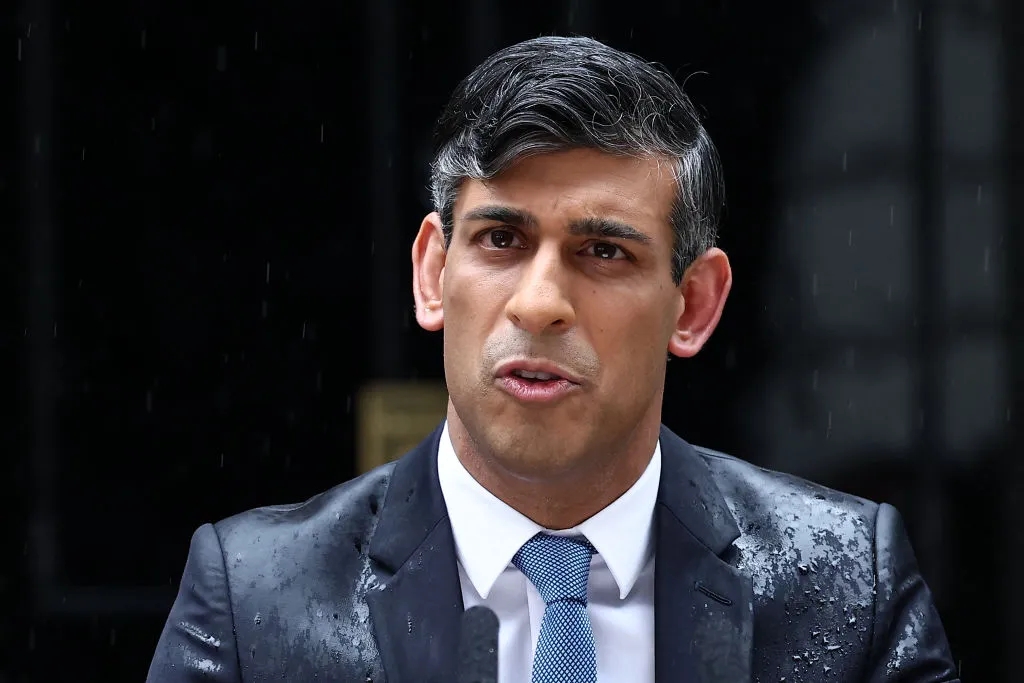
Prime Minister Rishi Sunak’s decision to to leave the 80th anniversary of the D-Day landing early, may become a defining moment of this General Election and of Sunak’s time as Prime Minister.

Why would a Prime Minister, whose party is behind in the polls 28 days from the General Election, do something so utterly stupid?

This morning, Rishi Sunak was forced to issue an apology for what his opponents have described as a dereliction of duty, unpatriotic and disrespectful towards those who fought and those who gave their lives in this battle.

Conservative MPs, already fearing political oblivion next month, were horrified when images from the D-Day anniversary showed former PM and Foreign Secretary David Cameron and not the current Prime Minister. One does not envy Conservative candidates having to defend this on the doorstep this coming weekend.

With just under a month to go until the General Election, any hope of a come-back like that achieved by John Major in the April 1992 election, looks highly unlikely. Instead, polls now suggest this could be the largest Tory defeat since 1906.