The UK Election: Impact on Parliament’s Facilities and Services: Researcher’s Reflection

Since January 2020 I have worked in the House of Lords as a Researcher, first for Baroness Sally Greengross, then after she passed away I worked for Baroness Usha Prashar. Both Crossbench Peers, meaning they do not take a party whip. Like many Crossbench Peers, both women were put in the Lords due to being subject matter experts and prefer to work with politicians from across the House rather than take a party whip.

Last Wednesday Rishi Sunak called a General Election. For the next two days, MPs and Peers worked on the wash-up whereby the parties decide what bills to complete, removing any controversial amendments or clauses, and abandoning others. Bills such as the Renters Reform Bill which would have banned landlords being allowed to issue no fault evictions, bit the dust. So too did the proposed smoke-free legislation, similar to that recently repealed in New Zealand.

When I arrived at Parliament on Thursday, MP staffers were already carrying boxes out of the parliamentary estate. Westminster, usually a hive of activity, already felt like a ghost town.

I use the gym at Parliament and try to go there most workdays. When I spoke to the manager, she said they expect to lose money over the election period. With a record number of MPs standing down, and polls suggesting many more will not return on July 4th, they would lose quite a few members. Their experience was that new MPs generally took about 3-4 months to find the gym and join. This year it will be compounded by the election being held just before summer recess, which is always followed shortly by the Party Conferences (another recess). New MPs may only spend about 3-4 weeks in parliament between July and October.

It won’t just be the gym impacted by this. Catering services throughout parliament will now be quiet in June when normally they are busy. Functions, including the Sally Greengross Memorial Lecture scheduled for June, are now postponed. The cafeteria and tearooms will now run a skeleton service on the estate for those still coming in, where opening hours will be reduced and only a handful of staff will be onsite.

My hairdresser in Parliament will still be open. Usually, it is quite difficult to get an appointment when parliament is sitting. This should not be a problem over the next few weeks. I imagine their income will be reduced significantly as well.

On Thursday afternoon I received an email about access to services during the election. Pretty obviously it stated that the parliamentary estate and resources could not be used for election campaigning. What I and fellow researchers not around at the last election had not realised was that this included access to the parliamentary library.

The Library’s research and reference
services will not be available during dissolution. Research assistants will be excluded from the Palace Library.
No pre-paid envelopes will be issued during dissolution. House of Lords stationery should not be used for party-political purposes.

House of Lords: Arrangements during the dissolution of Parliament, Thursday 30 May 2024

As Parliament will not be sitting I will have no need to access the Library or to order stationary.

Until the State Opening of Parliament on the 17th of July, visiting the gym will be my main reason for entering the estate. At least it will be quiet.

Underrepresented London

On Thursday 02 May 2024 Londoners will vote in the Greater London Authority (GLA) and London Mayoral Elections. This important election will set the direction for this major conurbation in the South-East of England. This city has been politically and economically dominant over the rest of the British Isles for much of the last 2,000 years, but it would be fair to say the capital has had a rocky few years.

In this year’s mayoral election, the choice is between the incumbent Labour Mayor Sadiq Khan, and Trump-supporting Conservative Susan Hall. Unlike previous GLA elections, this election will use the First Past the Post electoral system due to Conservative Government changes to the electoral laws. Voters will also be required to bring ID, a move no doubt designed to suppress voter turnout by non-Tory voters.

The significance of London to the UK economically

The London Metropolitan area generates around 1/3 of the UK’s GDP. For those living outside of London, there is considerable resentment that politicians and bankers hoard wealth in the city and do not share this wealth with the rest of the country. The counter-argument to this is that when London generates 1/3 of the UK’s GDP it must receive proper investment.

The London economy is often viewed as quite separate from the rest of the UK. Certainly, when the UK was a member of the EU, the connection between London and other European cities was stronger than that with regional cities like Sheffield or Liverpool – though there are clearly strong links between these cities and London.

Other parts of the UK, such as the north of England will complain about lack of investment and jobs in their region. This becomes a self-fulfilling prophecy when all the money and jobs are in London – this is more likely to be where new businesses and employment are created. On the other hand, does all GDP generated in London stay in London? Or does quite a bit of it get used to support different parts of the UK?

While there can be no doubt that there is considerable money and wealth in London, there is also deprivation and poverty. While London might generate 1/3 of the UK’s GDP, its residents are not all reaping the rewards of this wealth.

London Politics

The population of Greater London in 2019 was around 8.9 million, or around 12.5% of the total UK population. It is by far the most culturally diverse city in the UK. It also is one of the most cosmopolitan cities in Europe.

There is a general feeling of frustration in London. This frustration is directed at the Mayor, GLA, and the government in Westminster. In my earlier blog post on the Uxbridge by-election in mid-2023 I discussed some of the challenges London faces with the introduction of the Ultra Low Emissions Zone (ULEZ), where to ensure the capital has clean air people were being charged for driving older polluting vehicles in the city. That this has been introduced during the worst cost of living crisis in decades has made things very difficult for people who rely on cars to get to work, particularly in the outer suburbs of London. It is worth noting that 46% of London households have no vehicle, and this rate is even higher for those living in zones 1-3 where public transport is more reliable.

But the frustrations go beyond ULEZ. London is a city that voted overwhelmingly ‘Remain’ in 2016, whereas England as a whole the UK nation most supportive of leaving the European Union. In a city with considerable links to Europe, and where the banking sector is a major part of London’s economy, the anger and frustration at the Brexit result continue to simmer eight years after the referendum.

There has been valid criticism in the past that power is too centrally located in and around Whitehall, thus by default political decisions tended to favour London. There is certainly some evidence that this has occurred, at least historically. However, there is also evidence that Londoners often do not benefit and at times are forgotten by policy-makers.

While most MPs and civil servants would spend a significant portion of their week in London, only 73 of the 650 MPs in the House of Commons represent London Constituencies. Labour tends to dominate politics in London. Labour or centre-left candidates have won four of the six London Mayoral elections since 2000. At the 2019 election, while there was a national swing to the Conservative Party, Labour elected 46 Labour 20 Conservative MPs. Labour controls 23 of the 30 Borough Councils in London.

By contrast, the Conservative Party has historically dominated politics in England. And with 80% of the UK’s population living in England, and by winning there, the Conservatives have dominated Westminister and British Politics. UK politics is often dominated by Tory Shires and rural areas and towns in the south of England. The Brexit result in 2016 illustrated that having a London-dominated campaign will likely cause a backlash from voters in other parts of England.

It is not just through Party allegiance or issues like EU membership London is out of step with the rest of England. The fact is that London is perceived as wealthy and affluent. Other parts of the UK have struggled, especially ex-coal mining areas in Wales and the North of England. In these areas where public transport and other key infrastructure is poor, there is little patience for the Government investment in London.

Though not is all that it seems with regards to London. The Levelling-Up agenda has been sold as a programme to invest in these left-behind communities which desperately need infrastructure, industry and jobs. Yet many do not realise, that a not insignificant amount of Levelling-Up funding has also been spent on deprived parts of Greater London.

The high price of living in London

There is money in London. People who live within the M25 earn more. But, they spend considerably more for the privilege of living in Capital City. Increasingly people are being forced out of the city, with many former East London residents now moving to commuter counties like Essex and Kent. The cost of housing has skyrocketed in the last 20 years, meaning once affordable middle-class properties in Zone 2 and 3 of London are now worth over a million pounds. Properties in my suburb of Deptford are being advertised as starter homes with a price tag of £500k. Given most lenders require a 20% deposit, these properties are out of reach of most people living in the area.

So people end up in the rental market. According to Zoopla, the average monthly rent in London as of April 2024 is £2,121. Council tax, internet, water and energy bills are usually on top of this and have increased significantly in the last two years. The average monthly income after tax is £2,902.50. This means most renters spend well over 2/3 of their income on rent and utility bills, with other costs like train fares and groceries many are left with very little disposable income each month.

The demand for council housing or other genuinely social rent homes (rent that is based on levels of income) is high and this cannot be met by local authorities. People can wait for years for social housing. Worse, the condition of many council estates in many parts of London is bad.

People wanting to start a family are understandably leaving London due to these costs, while others are deciding not to have children due to the expense and pressure of living in the capital. There are likely to be school closures across London in the coming years due to these factors. This in turn will potentially drive more families out of the city.

London is increasingly becoming a city where urban professionals work every hour they can to survive. For the unemployed or those on low incomes, living in this city is nye-on impossible. My own experience of moving to London in 2017 was not easy. Finding decent work in London takes time and the set-up costs of moving to the city were extreme. While for me part of this was moving from New Zealand, for people moving from other parts of the UK to London they face many of these same challenges. It is very easy to get into considerable debt or to face hardships. Yes, moving to London is a choice, but it is the UK’s capital and economic centre so continues to be where many of the work opportunities are.

Infrastructure in London

One of the key narratives around the Levelling-up strategy is that it is to improve infrastructure in parts of England that traditionally have missed out. It is hard to argue that a decent rail network between Manchester and Liverpool should not be a key priority for transport investment.

London has received transport investment with the Cross Rail/Elizabeth line which opened in 2022. Though arguable much of the benefit of this line was for people outside of London in places like Reading who are now connected to the London network.

However, one of the key challenges in London is investing in the existing network. An example of this is the Bakerloo line. The current rolling stock on this line was purchased in 1972 and was due for replacement in 2008. It is now 16 years past its best-before date, and the line is now at risk of critical failure as a result. There are also strong arguments that this line should now be extended from its current final stop in Elephant and Castle, South East through to Hayes via Old Kent Road, Lewisham and Catford. A campaign was recently launched called Back the Bakerloo with the support of Borough Councils throughout Greater London.

The challenge for projects like this is that the Central Government at this time will be reluctant to bankroll major projects in London. They can underwrite any loans for the Greater London Authority, but even here, with the current state of Government finances and debt, this could be challenging.

Devolution of power to the Greater London Authority

One of the big challenges faced by the Greater London Authority is that it only receives a fraction of the tax collected in London. In New York roughly 50% of taxes collected go to the city authority, and in Tokyo over 70%. In London, that figure is under 10%. This is why during the pandemic the London Mayor had to go cap in hand to the Conservative Government (a Government most Londoners did not vote for) and ask them to bail out Transport for London due to the fall in passenger numbers during lockdown. The Government insisted that passenger fares in London increase, something Mayor Sadiq Khan has promised not to do. This was clearly political game-playing and is all too common when it comes to local government finances.

The implementation of ULEZ suffered similar political game-playing. When it was implemented, the London Mayor had asked the government to support a vehicle scrappage scheme just as it had done in the West Midlands where Conservative Mayor Andy Street has held office since 2017. If the Greater London Authority had stronger devolutionary powers and a greater share of London’s tax revenue a much better scrappage scheme could have been introduced.

Of course, the history of London Government and Westminister has been marred in conflict. In 1986 the Thatcher Government famously abolished the Greater London Council in response to the policies of left-wing Mayor Ken Livingston. Most people across the political spectrum would now agree this was a foolish decision and the current Greater London Authority was created by the Blair Government in 2000. However, there remains a power imbalance in favour of Whitehall and the government. The Greater London Authority and Borough Councils in London are not given sufficient powers to serve their local community. This challenge is not dissimilar to that faced by local leaders in other parts of the country. Whereas in Manchester or West Midlands, there is general recognition of the need for greater self-determination, not so for Greater London.

Reasons to be Cheerful

It would be easy to conclude that the picture is fairly gloomy given the challenges facing London. In addition to those mentioned, its Police force the Metropolitan Police has a poor reputation, while knife crime continues to plague London.

But London remains the cultural, political and economic capital of the UK. It does still have many strong leaders who will advocate for the city. Further, the challenges facing London like the housing crisis are becoming harder to ignore.

Sadiq Khan’s re-election pledges include free school meals for all primary school kids in London, building 40,000 new social houses and implementing rent controls. Khan also plans to continue his agenda to tackle air pollution in the city to improve public health and reduce greenhouse emissions in the capital. These are good practical measures to help people living in London.

The report authored by Gordon Brown in late 2022, recommends greater devolution in regions of England. It is highly likely that if Labour are elected to government this year, they will look to implement this part of the Gordon Brown report. This may include greater powers to the GLA.

Should a Conservative Party mayor be elected this week, or at some point in the future, the issue of devolution will not go away. Susan Hall or other City Hall Conservatives will not appreciate being dictated to by the government, especially if Labour are in power. Further, the Levelling-up agenda by the Conservative Government has included commitments to the devolution of power to local authorities. While there may be arguments on the details, both major UK political parties agree in principle that greater devolution is a good thing, including for London.

Greater London will not have an easy time over the next decade. The problems listed above are coming to a head fast and cannot be ignored for long. Things need to change in London, and it is reasonable to assume things will change over the next few years.


Mr Bates vs The Post Office

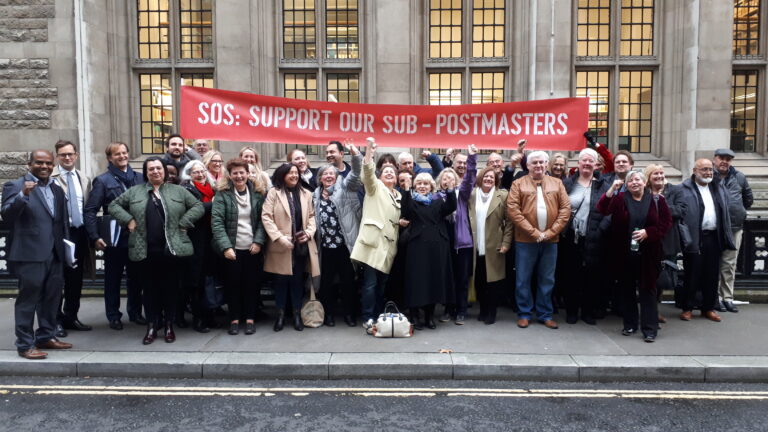
Many question the value of the performing arts and drama. At the start of 2024, the ITV drama Mr Bates vs The Post Office did what journalists, politicians and broader civil society have failed to do over the last 25 years. It raised public awareness of the injustice faced by the postmasters employed by Post Office Limited. Many postmasters, forced to use the Horizon computer system were falsely accused of stealing post office money. In fact, Horizon, built and maintained by Fujitsu, was faulty and produced inaccurate reports.

There is much more to say about the twists and turns of this case, too long for one blog post. It is better to watch the ITV drama to get a decent overview. Needless to say in the 6 and a half years I have lived in London, the Horizon Post Office scandal has featured regularly in the news. While some convictions were eventually overturned, many still await justice. It has taken an ITV drama to force the Government and the Post Office into action.

Three broader issues arise from this case:

  1. Justice delayed is justice denied
  2. The need for greater accountability of big tech companies
  3. The worrying precedent of overturning convictions through legislation

Point one is fairly self-explanatory. Many of the postmaster convictions date back to the early 2000s. Yet many are waiting years to get their day in court to clear their name. This is not unusual. For those impacted by the contaminated blood scandal, where people were given contaminated blood in the 1970s and 1980s, many are still waiting for adequate compensation. Another is the Hillsborough disaster where a football stand collapsed killing 79 people and injuring 766. It took many families 30+ years for compensation for the crime, and in that case, the subsequent police cover-up. Horizon and the contaminated blood scandals were state-initiated corporate crimes, and Hillsborough was a state-facilitated corporate crime. In all three examples, many of those affected have died before receiving a penny of compensation.

On point two, this is a growing problem. In a week where Mark Zuckerburg at a US Senate hearing was forced to apologise to families whose children had been harmed online, the calls for greater regulation of tech companies are growing. Increasingly social media platforms will find themselves regulated. But the big tech companies providing the software organisations like post offices now rely on to function, remain largely unpoliced. This is because by and large, they are the only ones who really understand how their programmes work. We rely on them as the experts, which makes it hard to scrutinise or regulate. When the Horizon produced false reports and Fujitsu said it was the postmasters, the Post Office struggled to prove otherwise (though made little attempt at doing so either). Some were expressing concern about Horizon as early as 1999, yet proving the issues or finding replacement software proved near impossible. Even after the ITV drama, in 2024 the Post Office is still using Horizon, though promise it will be replaced later this year.

The Government’s response to this has been to pass legislation quickly that overturns all convictions related to the Horizon scandal. Given how overloaded the court system is, it would take many more years to hear all the cases. In an election year, this would not be acceptable to voters. But this sets a worrying precedent. Firstly, whilst a great many of those convicted during the Horizon scandal were innocent, in all likelihood were will be some who were not.

On point three, governments overruling the courts is never a good thing. The independence of the judiciary is crucial in a democracy so that the rule of law is not undermined by the government of the day for political gain. This is what makes the UK Government’s latest efforts to overturn the Rwanda ruling through legislation so concerning. It is a slippery slope to what is happening in Hungary under Prime Minister Vicktor Orban where courts will now be directly overseen by the government. Similar policies have been pursued by hard-right governments in Poland and India.

The postmaster legislation is not doing this. It is a well-intentioned action aimed at fixing a longstanding injustice. But it could set a precedent for future governments to overturn other court decisions, and over time undermine the independence of the judiciary. If this happens, the legacy of the postmaster-horizon scandal will be felt for many more years to come.

Tobacco bans in NZ and the UK.

In October, UK PM Rishi Sunak announced that he would follow New Zealand’s policy of gradually lifting the age at which people can buy tobacco. This would mean anyone born after 2009 would never be legally allowed to purchase tobacco. Last week, the new centre-right National Party-lead government in New Zealand announced it would be repealing this policy.

Two centre-right governments in English-speaking nations, both clients of Crosby Textor, yet opposite responses to tobacco regulation. The incoming NZ Health Minister Dr Shane Reti expressed concerns about a black market in tobacco sales if the ban was to be implemented. Reti also used the straw man argument that the tobacco ban was a factor driving recent ram rads of shops in New Zealand.

Worst of all, a key motivation for repealing the 2021 NZ tobacco legislation is to fund tax cuts. Before the election, it was clear that the National Party’s tax policy was unrealistic, just as Liz Truss’s tax cuts were in the UK. So the new government’s answer, remove restrictions on tobacco sales and use the revenue to fund tax cuts rather than funding the health system that tobacco tax revenue should be used for.

The decision in 2021 to introduce the smoking ban was a courageous one. Smoking causes many deaths each year and places a strain on the country’s health system. Smoking is addictive and we should do all we can to discourage young people from taking up this habit. This being said, putting a total ban on tobacco sales of people born after 2009 is well-meaning, but would likely have unintended and profoundly negative consequences.

There is a considerable body of evidence showing that prohibition does not work. Attempts at banning the sale of alcohol in the USA famously resulted in black market moonshine being sold. Attempts to stop the sale of narcotics in the so-called war on drugs have been a resounding failure. While it still may not be a popular view, the evidence shows that banning substances rarely stops consumption. Worse, it drives manufacturing and sales underground giving criminal gangs a great source of income and power.

The weird thing about the NZ ban is that in 2020 there was a real possibility that marijuana would be legalised. Run in parallel with the 2020 general election, the referendum on legalising marijuana was held. The result was 48.4 % in favour of legalising and 50.7 against it. In a country where studies have found that 80% of the population have tried pot, the level of cognitive dissonance of many voters is astounding.

Further, during the election campaign in 2020, Jacinda Ardern refused to state whether she supported legalising marijuana, despite earlier admitting she had tried the substance before. The concern from NZ Labour strategists was that Jacinda coming out in favour of legalising would be used against them by the opposition. As it happened, Labour won with a huge majority and the referendum was narrowly lost.

Jacinda Ardern had earlier stated her personal support for the legalisation and party members have voted at conferences in favour of policy remits calling for the same. Jacinda and other Labour frontbenchers could have openly stated their support for legalisation and still comfortably won the 2020 election. That they did not was an uncharacteristic failure of leadership by Jacinda Ardern and her team. This may have contributed to NZ still having drug laws that are disproportionately used against Maori and Pacifica populations and completely fail to stop the widespread use of marijuana.

That being said, it should not need the Prime Minister saying she supported legalisation for the referendum to succeed. The evidence from both NZ and overseas should have been enough.

All the arguments for legalising marijuana apply to tobacco as well. As a nonsmoker, I would be delighted if everyone stopped smoking. But I realise there will always be some who choose to. There will be black markets in tobacco, especially when other countries do not legislate for similar bans so people will be smuggling tobacco into the country. Further, while the state should encourage people to make good health choices and drive behaviours, banning tobacco is a bridge too far.

It might seem strange that a center-left Labour Party member would take this position. But it is a position based on evidence. Yes regulate the sale, add taxes, and limit where these products can be sold, which was also part of the 2021 NZ legislation. But prohibition of tobacco, like alcohol or marijuana will not work and will result in negative and unintended consequences.

It is unclear whether Rishi Sunak’s Conservative government will be successful in implementing a similar tobacco ban to that which NZ has just repealed. While there will be support across the political aisle for stronger restrictions, it is difficult to see how banning sales to people born after 2009 would work. Given how readily available hard drugs such as cocaine, MDMA and ketamine are on the streets of London, one has to be sceptical about the UK’s ability to successfully ban tobacco.

Instead of looking to the criminal justice system to tackle a health problem, we need policies that support people with addictions. Yes control the sale, and heavily regulate the strength and quality of what is being sold. But history has shown time and again that just banning things does not fix the problem.

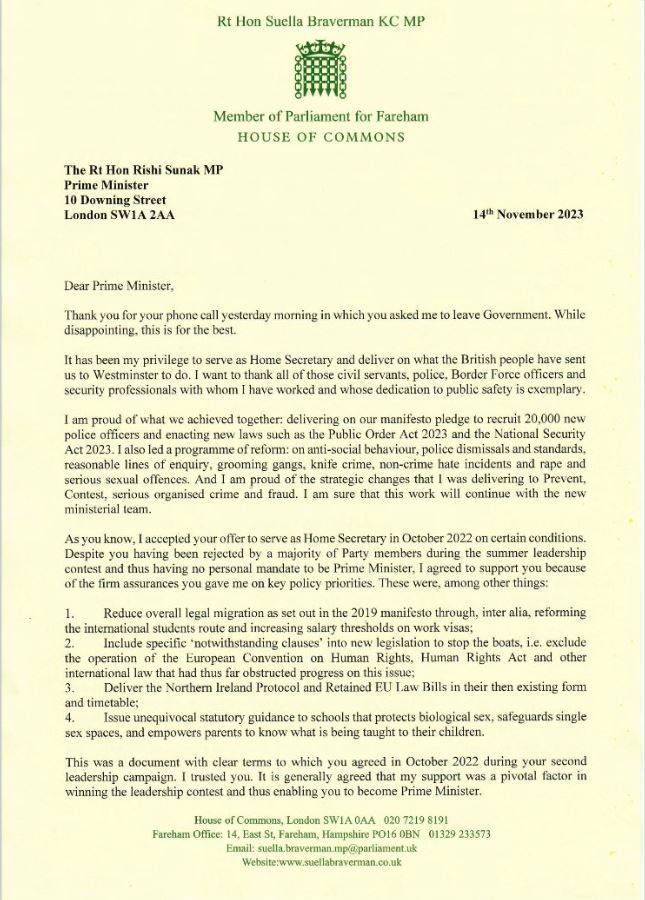
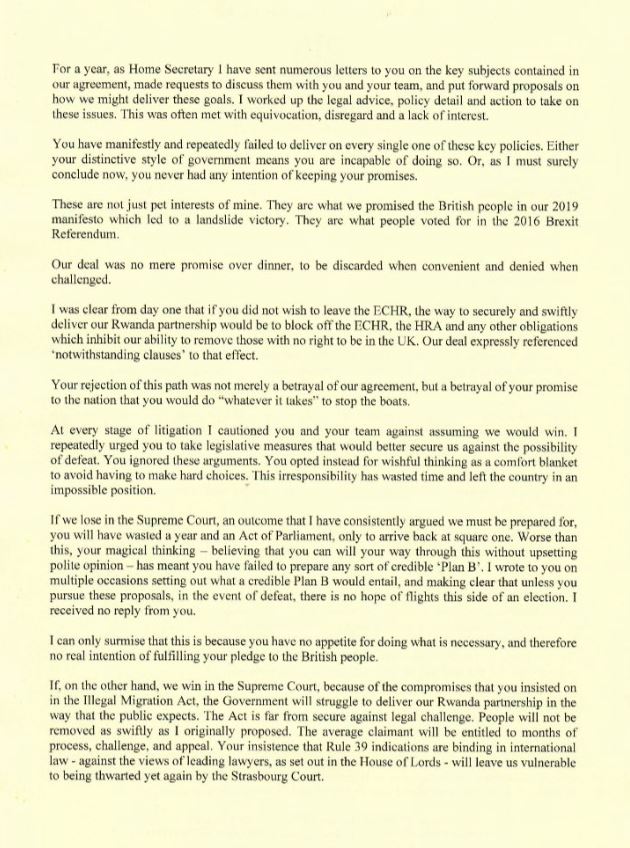
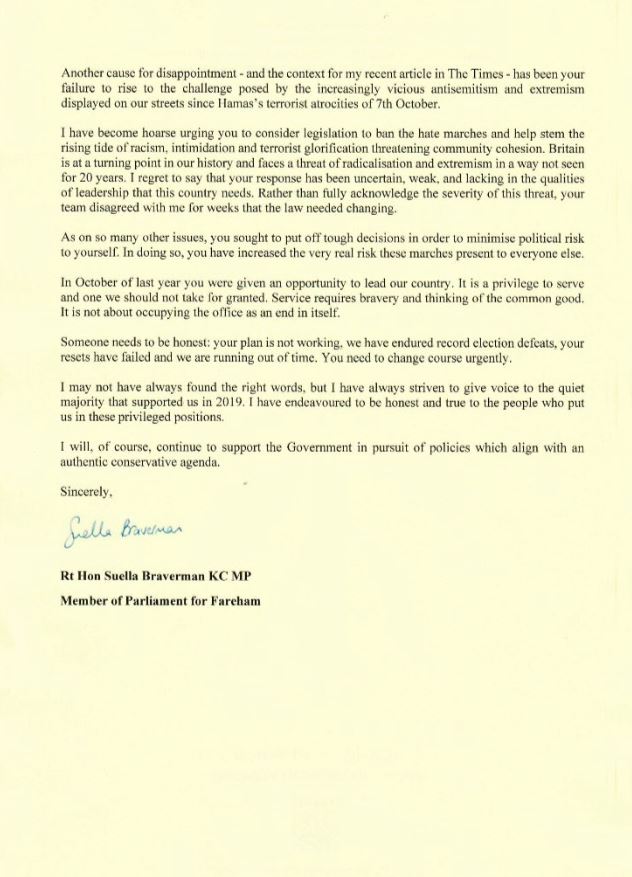
Rishi Sunak’s grubby deal with Suella Braverman

One has to really feel for those trying to write political satire these days. How can a satirist be more ridiculous than many of our political leaders they wish to lampoon? Case in point, yesterday’s “resignation letter” from sacked former Home Secretary Suella Braverman.

Just to recap. From July to September, the UK effectively had a caretaker government while the Tory Party conducted its internal leadership race. The top two candidates were Rishi Sunak and Liz Truss. Despite Sunak winning the support of more MPs, Truss won 57.4% of the party membership vote and became Prime Minister. It was a disaster.

In just 49 days as PM, Truss destroyed the myth that the Conservative Party is good at managing the economy. On 25 October 2022, Truss was forced to resign. The Conservatives were desperate not to go through another leadership ballot. Worse, there were fears Truss’s disgraced predecessor may stage a comeback. By this stage, the Tories were 30% behind in the polls.

Sunak became Prime Minister, despite losing the membership vote by being the only candidate. He did this by doing deals with the likes of Suella Braverman, who had been forced to resign as Home Secretary days earlier for breaching cabinet rules, and Dominic Raab who faced bullying accusations at the time and later was forced to resign.

Sunak did not need to do these grubby deals to stitch up support. In October 2022, Rishi Sunak was the only credible option. He did not need to do deals with people like Braverman and he would be in a much stronger position now if he had not.

Today’s decision by the Supreme Court that the Government’s Rwanda asylum policy is unlawful is the icing on the cake. Braverman is right in a sense, the government has wasted a year and an Act of Parliament on the Rwanda policy. But she is also completely wrong about the ECHR and the HRA. Instead, the UK government should have found a solution to the asylum crisis that complied with Human Rights legislation and international obligations. The response to the boat people crisis has been a failure by this government. Caused in no small part by deals done by Rishi Sunak to shore up support from the right of the Conservative Party.

For the political satirist, it is hard to come up with a more ridiculous situation. It would be all very funny were it not real, which instead is just frustrating and depressing.

NZ Election: National’s Tax Policy

A year ago this month, the Liz Truss/Kwasi Kwarteng mini-budget destroyed once and for all the myth that the Tories are better at managing the economy. The New Zealand National Party could not even wait until they were in government to prove the same applies to them.

National, the main centre-right party in NZ politics have released a policy which economists claim does not add up. National argues their proposed foreign buyer’s tax will raise $2.9 billion. However, analysis from three independent economists does not back this claim. Instead, they estimate a $2.1 billion shortfall over a four-year period.

National are under increasing pressure to explain how they will fund their other tax cut policies. The foreign buyer tax policy was supposed to explain the shortfall. National has not released the fully costed workings of their policy and instead has fallen back on sound bites and slogans.

Like in the UK a year ago, there are real fears that cutting taxes during a cost of living crisis will drive up inflation. Further, if the so-called foreign buyer tax will not cover the shortfall, the only other option is severe spending cuts on public services or heavy borrowing. Or both.

National has raised considerably more money than Labour in the lead-up to this election. Much of this is from business. Many in the business sector were unhappy with the strict lockdowns during the pandemic, especially in 2021. Many of them believe the myth that the centre-right is better at managing the economy, so are supporting the National Party. More than a few of National’s business backers must now be questioning their investment in a party whose numbers simply do not add up.

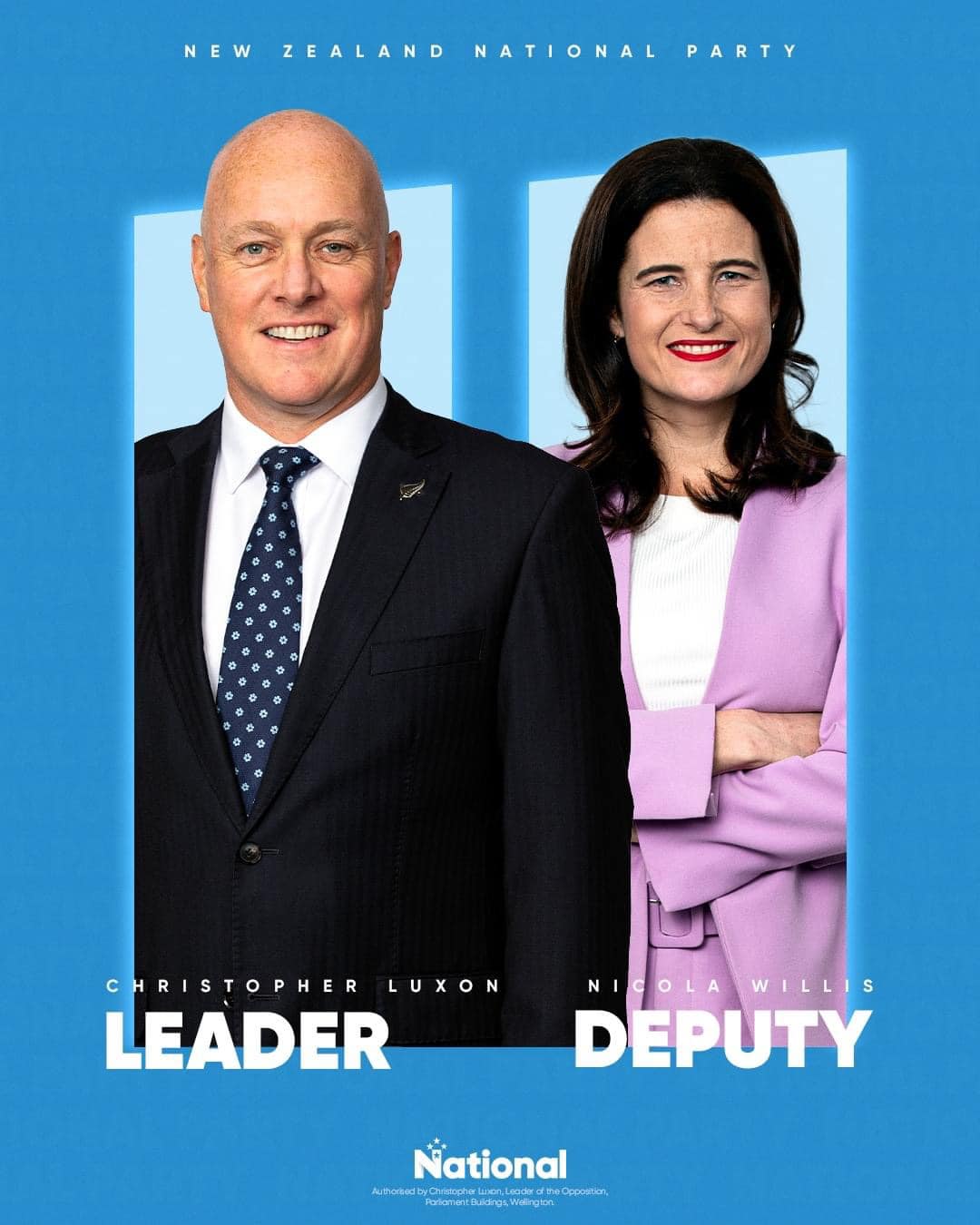
In an interview with the NZ Herald, Opposition Finance Spokesperson and National’s deputy leader Nicola Willis, on seeing the alternative costings said it was “hardly surprising to have different economists disagreeing about things. National is confident in our figures. They have been independently assessed by Castalia economic advisors.”

Yet the full Castalia assessment has not been released. While the economists may have each produced their own different assessment of her party’s policy, they all agree National have grossly overestimated the revenue this new tax would raise.

If current polling is to be believed, in one month Willis will be the NZ Finance Minister and her party running the country. Given she and National are yet to produce more than opposition slogans and policies that do not add up, this is concerning.

Even the ACT Party, who are historically to the right of National, have now said they will be dialling back their tax cut policies due to the current economic situation in New Zealand. This is not entirely surprising. In the first term of the Thatcher Government, which started the New Right economic reforms in the UK, there were no tax cuts due to the high level of inflation in the late 1970s and early 1980s. By contrast, The NZ National Party, do not even understand their own economic theories. Their analysis seems to be little more than tax cuts = good, government spending = bad.

Willis and National said one way their numbers will add up is by cutting waste. They recently highlighted a story where a senior public servant was given a $40,000 farewell party. This is clearly unacceptable, and the official concerned was rightly made to pay this money back. But putting this in context, the total NZ health budget for 2022-23 was $14.9 billion. A handful of cases of waste, ordering fewer paperclips and turning off office heating at weekends will still just be a drop in the ocean.

At the time of writing, National are the favourites in this election. What is increasingly clear is they are not ready to govern. And increasingly, economists, even those sympathetic to centre-right politics are publically saying as much. Anyone who still thinks a National-led government will improve New Zealand’s economic situation need only look at the evidence. Like the UK Conservatives under Truss, they simply are not up to the task.

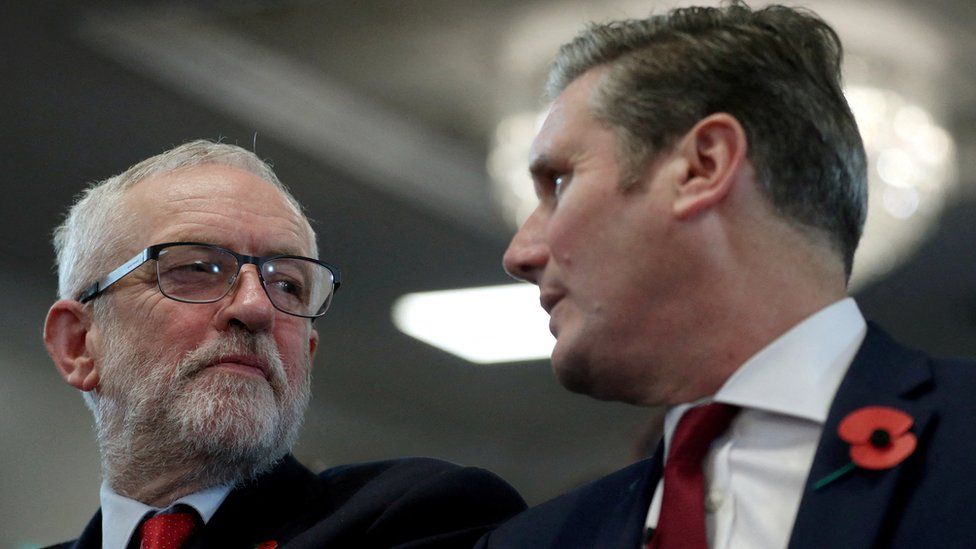
Jeremy Corbyn was not fit to be Prime Minister. But is Starmer?

It is said that there is a thin line between bravery and stupidity. Posting a link to my blog post which said that Jeremy Corbyn was not fit to be Prime Minister, to the ‘Labour London Left’ WhatsApp group. I will leave it to the reader to decide which one that was.

The full quote is below:

The 2017 election proved there was significant support for social democratic policies (eg national care service, public ownership of rail, electricity, water etc, and funding public services properly). But weak leadership on Brexit, failure to respond properly on antisemitism and now his appalling position on the Russian Invasion of Ukraine have shown Corbyn was not fit to be Prime Minister. But nor was Boris Johnson, as the Privileges Committee have confirmed.

https://nickkelly.blog/2023/07/09/decoding-the-doorstep-insights-from-canvassing-uxbridge-and-south-ruislip/

Jeremy Corbyn was and still is not fit to be Prime Minister. I say that as someone who took time off work to actively campaign for Labour in 2019. I also say this as a Labour member who supported the 2017 and (with some criticisms) the 2019 Labour manifesto policies, many of which would not have been there had Corbyn not won the 2015 UK Labour leadership race.

My ‘Why Labour Lost’ series of posts published after UK Labour’s 2019 election defeat (see links below) outlined the many and varied reasons for this result. Not all of it was Corbyn’s fault, nor indeed his faction Momentum. But they made serious errors and at times simply stupid calls.

More recently, Corbyn’s position on the Russian invasion of Ukraine in the last 16 months has shown that he lacks political judgment.

Shortly after the Russian invasion of Ukraine, I wrote the following of leftists who were opposed to giving military aid to help the Ukrainian resistance:

On the left, many are still influenced by the analysis of Lenin during the First World War and just before the 1917 Russian Revolution that in an inter-imperialist conflict socialists should be standing up to their own ruling class. During the First World War, there were strong arguments for working people not to align with the Tsar in Russia or other imperialist leaders in that conflict. It is dangerous to simply apply this idea to the current conflict without understanding that the context is different. There is a strong argument that people should be holding their own government or ‘ruling class’ to account during any situation like this. Ultimately, the decision to invade Ukraine was Russia’s, but there is still a question of what the governments and in particular NATO members could have done to help prevent this and what they can do now. Sadly, some on the left and drawn both bizarre and quite dangerous conclusions based on the premise that their role is to stick it to their own ruling class. Bizarrely, some socialists still mistake Russia to be some sort of socialist/anti-imperialist power, thinking that there is some residue influence of the 1917 revolution.

https://nickkelly.blog/2022/05/03/the-russian-invasion-of-ukraine-an-act-of-aggression/

Corbyn’s position of opposing military intervention and instead trying to negotiate a peaceful settlement is at best naive and at worst giving tacit support to the Russian Government and Vladimir Putin.

Back in 2003 when I was active in opposing the invasion of Iraq, one of our key slogans in Peace Action Wellington was “peace with justice and self-determination”. Any “peace settlement” with Russia right now would involve at the very least, ceding territory taken by Russia in 2014 and probably some of the ground taken in 2022. This ‘peace’ would not involve any justice or self-determination.

What Jeremy Corbyn, the Stop the War coalition and others taking this position are doing is not progressive, left or indeed socialist. It is supporting imperialist expansion. Further, and this should be self-evident, if NATO and Western governments fail to stop the Russian invasion, this will not serve the interests of working people. That this distorted world political view still infects sections of the left is astounding. That Corbyn subscribes to it, frankly discredits him as a serious political operator.

But I can understand why people on the Labour left would not like this assessment. Even more so at a time when various left groups and individuals such as director Ken Loach have been kicked out of Labour.

And there are serious questions about Labour’s current direction. Labour, whilst winning the Selby and Ainsty by-election, narrowly lost the Uxbridge and South Ruislip byelection. Whilst most attribute this to the Labour Mayor of London extending the Ultra Low Emission Zone (ULEZ) to outer London, this was not the only reason. On the doorstep, Starmer’s Labour Party may not have been as polarising, but nor were people excited by it. In fact, many were unclear about what it stood for. Labour improved its percentage of the vote in Uxbridge and South Ruislip significantly, but it still failed to make it across the line. This should be a cautionary tale ahead of next year’s General Election.

In my blog post earlier this year on whether UK Labour can finally win, I argued that the left needs to accept that the 2019 election was a devastating loss, in no small part the result of poor decisions by Corbyn and his team. Equally, his opponents in the party have still failed to seriously reflect on why Corbyn was able to easily beat them both in 2015 and when they tried to remove him in 2016.

The 2017 Manifesto included policies such as renationalising rail and water companies. It opposed austerity and called for decent funding for the NHS, a national care service, a properly-funded national education service and stronger employment law that strengthens collective bargaining. These are mainstream social democratic policies in many other European countries.

Why did it take a member of the hard left Socialist Campaign Group becoming the leader of Labour for it to put forward a mainstream social democratic manifesto, rather than an over-triangulated, incoherent and frankly visionless positions it too often had prior to Corbyn? In a country where life expectancy is stalling, younger people are economically worse off than their parents, where over a million people are waiting for social housing and incomes have been falling for years, there is a real mood for change. Not just a change of government, but of policy. This does not mean a sudden lurch left, but a serious and costed programme that prioritises the needs of the many, not just the few.

In the UK Labour Party, people are divided into binary factional groupings of Corbynistas or Blairites. Loyalty to leaders and personalities over policy is not limited to Labour or UK politics. But it is frustrating nonetheless.

UK Labour is on course to win the next general election, whenever that may be. Its long-term success in government will, as I have argued previously, require the different factions of Labour to work together. The left need to accept that the Corbyn project failed, and move on. The right needs to accept that voices to the left of Third Way centrism have a legitimate and important place both in Labour and in political life.

Below are the links to my ‘Why UK Labour’ lost blog posts:

Why UK Labour Lost? Part 1: Historical Context

Why UK Labour lost? Part 2: UK Labour’s strange loyalty to First Past the Post

Why UK Labour lost? Part 3: Its Brexit Innit

Why UK Labour lost? Part 4: Oooo Jeremy Corbyn

Why UK Labour lost? Part 5: Antisemitism

Why UK Labour lost? Part 6: New Labour and Blairism

Why UK Labour lost? Part 7: Momentum and the Corbynistas

Why UK Labour lost? Part 8: what it takes to win?

Why UK Labour lost? Part 9: What the party needs to do now.

Decoding the Doorstep: Insights from Canvassing Uxbridge and South Ruislip

I spent the last UK General Election canvassing in Uxbridge, trying to unseat the then Prime Minister Boris Johnson. In the 25 years I’ve been politically active, this was the second most depressing canvassing session I had been to.* It was the middle of winter, the weather was awful, and it was obvious the votes were not going Labour’s way.

Last weekend I returned to Uxbridge for the first time since December 2019. The not-so-illustrious political career of Boris Johnson has ended in failure and disgrace. Johnson resigned as an MP at the conclusion of the Privileges Committee investigation. The Committee’s report found that Boris Johnson broke the COVID-19 rules, the ones his own government had set, and had misled Parliament when questioned about this.

Had Johnson not resigned, he would have been suspended from the House for 90 days. In the UK, MPs can be recalled by voters when suspended. If 10% of voters in the suspended MP’s constituency sign a recall petition a by-election must take place. Had Boris Johnson not resigned, he almost certainly would have faced a by-election. In these circumstances, he would likely have lost.

So Boris Johnson made one of the few honourable decisions of his life and resigned from parliament (though even then poo poo-ed the privileges committee report and denied fault).

Last weekend I was out in Uxbridge canvassing for Danny Beale, Labour’s candidate in the by-election. Labour last won Uxbridge in 1966, and before that 1945. The Ruislip part of the constituency has never been held by Labour. But the demographics in the area are changing and despite a blip in 2019, overall the Tory vote has been gradually falling in the area for some time.

Above: Labour’s Uxbridge and Ruislip candidate Danny Beale

In politics, much is made of doorstep conversations. It is seen as the ultimate litmus test for how well a party, leader or set of policies are performing. Opponents of Jeremy Corbyn have often claimed that on the doorstep he was not popular. Certainly, my experience in 2019 was that Corbyn and the political project he came to represent was polarising. I found many were supportive of core Labour policy, but did not trust the party or its leadership.

The 2017 election proved there was significant support for social democratic policies (eg national care service, public ownership of rail, electricity, water etc, and funding public services properly). But weak leadership on Brexit, failure to respond properly on antisemitism and now his appalling position on the Russian Invasion of Ukraine have shown Corbyn was not fit to be Prime Minister. But nor was Boris Johnson, as the Privileges Committee have confirmed.

So what is the message on the doorstep now? When you go out you only get a small sample across a dozen or so streets. Much like opinion polling, the ‘mood on the doorstep’ is not an exact science, but gives you a general sense of the mood. Compared to 2019, overall the number saying they will vote for Labour is higher now, but only modestly.

The Conservatives won Uxbridge and South Ruislip by a majority of 7,210 in 2019. The thing that is likely to swing this Constituency to Labour on Thursday 20 July, may not be a huge swing to Labour, but former Tory voters staying at home or protest voting. On the doorstep, the anger from voters was palpable. Not all of this anger was directed at the Conservatives, but I and others had quite a few conservation with people who had previously voted Tory but would not be in the by-election.

The head-wind for Danny Beale is not coming from parliament but from the Greater London Authority (GLA). Labour’s London Mayor Sadiq Khan has decided to expand the Ultra Low Emission Zone out to all boroughs of London. This means owners of older vehicles will now pay a daily charge of £12.50.

London’s air pollution is bad and research by Imperial College London in 2019 found that it contributed 4000 premature deaths a year. Unfortunately, it is London residents who cannot afford electric vehicles who pay the price. In outer London suburbs like Uxbridge and Ruislip, car ownership is higher as public transport is generally not as frequent.

Danny Beale has called for the ULEZ expansion to be delayed, saying the cost of living crisis is the wrong time to implement this. He has also called for a better scrappage scheme to help people replace older vehicles. Unlike in other parts of the country, the Government have not helped Greater London implement a proper scrappage scheme, no doubt to put pressure on Sadiq Khan.

Did this issue come up on the doorstep? The very first door I knocked on this was their key concern. Others also mentioned it, usually in the wider context of the cost of living, and were as critical of the Government as they were of the London Mayor. But it was clear that ULEZ was a barrier to people voting Labour.

From this session and the feedback I’ve got from others who’ve canvassed, Labour can certainly win Uxbridge and Ruislip. But it will be close. The challenge will be for Sadiq Khan in next year’s London Mayoral elections. Decisions such as extending ULEZ, or increasing rail fares have been a result of the Government not supporting London. But many now blame the Mayor and the Labour London Authority Members. The Conservatives believe this will give them an advantage. The message I got on the doorstep was that anger at ULEZ did not automatically equate to voting Tory, especially given their recent track record in government.

There are two other byelections being held on 20 July: Somerton and From, and Selby and Ainsty. There is also the likelihood of a byelection in disgraced MP Chris Pincher’s constituency, and Nadine Dorries’s constituency of Mid Bedfordshire. Polls suggest that in each of these byelections, the Conservatives will struggle. Each has its own dynamic, with the Lib Dems being the serious challenger in Somerton and From, whereas in Selby and Ainsty a Labour victory is now looking likely.

Canvassing Uxbridge and Ruislip, the insight I get from canvassing is that Labour have a real chance, but should not be complacent. Support for the Conservative and Unionist Party is collapsing, but this is turning to cynicism and rage rather than enthusiastic support for a Labour Government next year.

There is a possibility that in 18 months’ time, UK Labour are in Government, but have lost the London Mayoralty. This is not inevitable, but for Sadiq Khan to win a 3rd term as Mayor, he will need to balance lowering emissions and environmental targets with helping Londoners survive the cost of living crisis. This could well turn out to be a tough campaign, which I hope does not give me a new “worst canvassing session.”

*The worst canvassing session I went on was the 2014 New Zealand General election. I was canvassing in the Wellington Ohariu electorate. It was early spring, and the rain was heavy in typical Wellington fashion. It took me hours to dry off. NZ Labour got 25% in that election, its worst result in a century. Labour did fail to win the Ohariu seat that time, though picked it up three years later when Jacinda Ardern won the 2017 election for Labour.

Previous Posts about my involvement with Labour and political campaigns. Plus other relevant posts:

Why the Labour Party

Why the Tories won the UK election

Why Labour Lost? Part 9: What the Party needs to do now?

What the recent elections tell us about British society

Tory Sleaze – sequels are often a disappointment

Can Rishi Sunak save the Conservative Government?

UK Labour – can they finally beat the Tories?

The Future of the Monarchy

On Saturday, the coronation of King Charles III and Queen Camilla will take place. The last coronation of Queen Elizabeth II took place on 2 June 1953 and was one of only five such events in the 20th century.

The Coronation is certainly a historic event, but what is its relevance to the modern world?

In a 21st-century democracy, is it really still appropriate for someone to inherit the role of head of state, purely based on their bloodline? Does it make sense for this same person, not only to be head of state of the United Kingdom but also of Antigua and Barbuda, Australia, the Bahamas, Belize, Canada, Grenada, Jamaica, New Zealand, Papua New Guinea, St. Kitts and Nevis, St. Lucia, St. Vincent, and the Grenadines, the Solomon Islands and Tuvalu?

In November 2021, Barbados became a republic cutting ties with the British Monarchy, though still remaining a member of the Commonwealth. Barbados was a British colony until 1966, and becoming a republic has been viewed as an important step in self-government and breaking with that nation’s colonial past.

Similar moves are likely in Jamaica, with that country now planning to hold a referendum on the issue in 2024. Polls in Jamaica show a significant majority wanting the country to become a republic. Painful historic links to British Imperialism and the transatlantic slave trade are still major issues for people in Jamaica. Becoming a republic will help break this link.

Australia will likely hold a referendum on the issue in the next few years, though this will happen after the referendum on indigenous representation in parliament. Australia last held a referendum on becoming a republic in 1999. At this time the choice was between remaining a constitutional monarchy or becoming a republic where parliament appointed a president. Polls indicated at the time and since that were voters given the option of electing a president, support for becoming a republic would have been much higher.

Whilst a majority still support the monarchy in the UK, increasingly people do not view it as important. A recent British Social Attitudes study conducted recently shows the number of people who say the monarchy is “very important” has fallen to 29%, from 38% in 2022. Also, 45% of respondents said the monarch should now be abolished. Further, a report in the Telegraph recently said that 75% of people aged 18-24 do not care very much about the coronation, and 69% of 25-49 year-olds say the same. Even those aged over 65, the demographic most supportive of the monarchy, are not terribly interested with 53% saying they do not care very much.

With support for the monarchy being lackluster at best in the UK, and declining support in the other 14 nations where the British monarch is the head of state, does the monarchy really have a future?

Those who campaign in favor of the institution tend to use strawman arguments. These include the stability of constitutional democracies, though given recent events in British politics this argument now gets used far less. Another is that the monarchy is somehow cheaper than becoming a republic. When one takes into account the upkeep of royal palaces, the cost of coronations, and royal tours it is not clear how they come to this conclusion.

The argument that always comes up is the comparison with the United States. In recent years monarchists have used Trump as evidence for why we need a monarchy. Firstly, this assumes the United States is the only form of republic possible, ignoring the many other working examples of republics with strong working democracies. Secondly, the Trump bogeyman conveniently ignores the premiership of Johnson and Truss in the UK, or Scott Morrison in Australia, for which the monarchy provided no helpful check or balance.

Support for the monarchy is largely based on sentimentality. Democracies are not enhanced by feudal relics performing old-fashioned ceremonies and living in castles. These quaint traditions and displays are all rather nice, and for the most part fairly benign and harmless in themselves. But to pretend that they are in any way relevant to the modern world is absurd.

The links to colonialism and British imperialism are certainly not so benign, and have relevance today. The slave trade has directly contributed to racial inequalities that exist today. In New Zealand, the government is still resolving historical grievances from when ‘The Crown’ stole land and resources from Maori. There are similar histories in Australia and Canada. Becoming a republic does not put an end to these historical injustices. But sentimentality toward the institutions responsible is illogical and ignorant.

Few would argue that abolishing the monarch or other debates about the future of this institution are a priority at this time. Having come through a pandemic and now a cost-of-living crisis coupled with the Russian invasion of Ukraine, there are more pressing issues to address. At the same time, it is little surprise that interest in the coronation is low.

In all likelihood, we will now see the monarchy face a slow but steady decline. The priority must now be on strengthening democratic institutions to face the challenges of the future, not the idealisation of feudal relics.

Labour’s Manifesto: Replacing the House of Lords, Devolution and Electoral Reform

The United Kingdom will have a general election at some point before January 2025, most likely in May or June 2024. Work has already begun on manifestos for the next election. With the precarious state of the UK economy, the likelihood of big spending promises is unlikely. Though public services have faced over a decade of austerity and the public is suffering a cost of living crisis, demands on the exchequer will be significant.

Where the next election will potentially be quite interesting and possibly see long-lasting changes is constitutional reform. Britain does not have a written constitution and instead has various written and unwritten arrangements. Recent events in British politics have highlighted the issues with this. In August 2022 Hannah White from Prospect Magazine made the following observation regarding Boris Johnson’s time in office:

The most important lesson that Johnson’s three years as prime minister have taught us is how uniquely vulnerable this type of constitution may be to concerted manipulation by a determined populist leader with a large Commons majority and a calculated agenda.

What Boris Johnson taught us about the UK constitution – Prospect Magazine

There is growing recognition of the need for constitutional and political reform in the UK after the last decade. While the 2011 referendum in the UK saw a general lack of interest in the topic of electoral reform, there has since been increased awareness of how the current system produced distorted results with parliament not being truly representative. This, along with general dissatisfaction with politics creates an opportunity for public debate about the future of democracy and the UK Constitution.

At the time of writing, Labour enjoys a significant lead in opinion polls, though in some polls this is starting to narrow slightly. The next UK election is Labour’s to lose, which given the result of the 2019 election is an incredible turnaround. If elected, it has an opportunity to usher in a new modern era of British democracy improving representation and trust in politics.

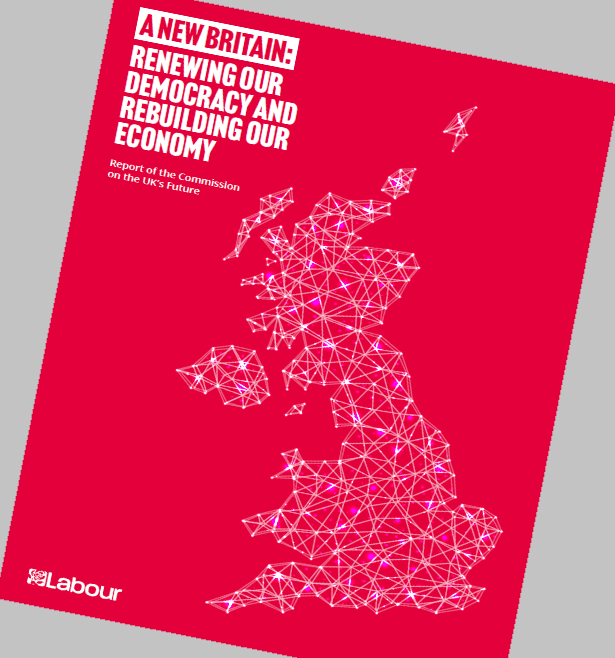
Signs are that the Party is thinking along these lines. In late 2022, the Party published a paper by the Commission on the UK’s Future, chaired by former Prime Minister Gordon Brown. This paper made various recommendations including:

  • Greater devolution of political power in England
  • Enchrenching in a new constitutional framework the Sewel Convention, which protects existing devolution in Scotland, Wales, and Northern Ireland.
  • Abolishing the House of Lords and replacing it with an Assembly of Nations and Regions

This paper is helpful in it starts an important debate about the future of political arrangements. Its strongest arguments are in favour of greater devolution in England, with the report highlighting the fact that the UK government is much more centralised than most others in Europe. It argues that current geographical inequalities in England are largely the result of this centralisation.

The current government’s Levelling-up agenda is also aimed at addressing regional inequalities, and included in its proposed reforms is greater devolution to local authorities. Both with the Conservative Government’s reform package and Labour’s proposals, there is still a lack of detail as to how this devolution will occur. Devolution to local government would require a significant funding boost, as current devolution to local authorities has been hamstrung by austerity and local authorities lacking resources. Establishing a regional government, similar to those in Germany, would be a logical way of ensuring regional decision-making, but would the public support the creation of another layer of government in England?

What the report proposes for Scotland, Wales and Northern Ireland are fine, but they avoid a bigger issue.

Northern Ireland is covered by the Belfast Agreement, now 25 years old. This agreement includes the provision for a border poll should the people of the Island of Ireland with it. Were a border poll to be held today, it is not entirely clear how this would go. But whatever the outcome, there would be a continued need for power-sharing, compromise and diplomacy given the history there.

The Commission on the UK’s Future report describes the union of nations as voluntary. Yet, the November 2022 Supreme Court judgement on the matter ruled that another independence referendum in Scotland could only happen with Westminsters’ consent. Regardless of one’s views on this issue, or indeed the recent issues with the SNP after Nicola Sturgeon’s resignation, if a union is voluntary then there must be some mechanism to leave. Even if the mechanism is a high threshold, such as 50% of eligible voters signing a petition calling for a referendum. That may not sound much, but getting 50% of eligible voters to do this would be a herculean task.

The blunt reality is, Labour’s opposition to Scottish Independence appears to be more motivated by a fear of losing crucial Scottish seats, as historically at least Labour did well up there. This may be very unfair, as many in Scottish Labour undoubtedly genuinely support staying in the union. But there is no denying that this impression has contributed to many former Labour supporters moving to the SNP since 2007.

Whilst the current strife in the SNP may change this, it would be incredibly naive to think that support for Scottish Independence will now completely collapse and the issue will go away. The argument that the people of Scotland already voted on this in 2014 holds little water given one of the key issues in that referendum was EU membership. The offer to the people of Scotland in 2014 was very different to the reality today.

Improve devolution and entrench the Sewel Convention by all means, but there still needs to be a mechanism by which the Scottish people can leave the United Kingdom if they so wish. This principle must apply to people living in other nations of the UK as well.

It is somewhat strange that a report that primarily focuses on the need for greater devolution in the UK includes a recommendation to abolish the House of Lords, yet when asked in the media, Gordon Brown said reform of the House of Commons (electoral reform) was out of scope. Either the report should just focus on devolution, which was by far the stronger section in the report, or it needs to include proposals for reform of both houses of parliament in Westminster.

In one of my posts following the 2019 election, I made the case for electoral reform, and in particular the need for UK Labour to sharpen its thinking in this area. Suffice it to say, three years on, having seen the results of a government that won 43% of the votes gaining 56% of seats in parliament, my view has not changed. What has changed, is that there is now far stronger support both within the UK Labour membership and more broadly for some sort of electoral reform.

In terms of the Lords, I declare my interest having worked on Piko contracts for two members of the Lords. My views of the Lords, and of the reform proposals are my own, not those of Piko’s clients.

The House of Lords is in need of some reform. At present, there are over 800 members, whereas the Commons only has 650 MPs. Whilst quite a few of its members have been appointed due to their expert knowledge and make important and meaningful contributions, the level of patronage, especially with Boris Johnson’s appointments, is simply unacceptable.

The Commission on the UK’s Future acknowledged the quality of committee reports from the Lords. I would add to this the valuable contribution of pre and post-legislative scrutiny, many of the amendments tabled at the committee stage of bills in the Lords and the overall quality of debate. This is due to the expertise and experience of many current Peers.

Any reform of the House of Lords should be careful not to throw the baby out with the bath water. Any reforms should protect what does work about the current House of Lords. One of the sad things about the current set-up is that many of the Lord’s reports get ignored by the government and get little attention in the media.

There is a strong case for a smaller, elected upper chamber. Having an unelected chamber means in reality its authority is reduced in the eyes of many. The Salisbury convention means it will not oppose the second or third reading of any government legislation promised in its election manifesto. During this term of parliament, the government have put forward legislation that attempted to breach international law and in some cases its own human rights legislation. An elected chamber might have been in a stronger position to push back.

Yet many of the unelected members today are not aligned to a party, and are there due to their expertise and experience. Any reform should consider how this pool of talent can still be utilised in any future structure, potentially through creating another role for current Lords with specific experience that parliament needs.

The proposal in the UK Future report is to replace the House of Lords with a democratic chamber representative of the nations and regions of the UK. Whilst this proposal is clearly to link it to the wider theme of devolution and empowering regions, its description of the new upper chamber sounds a lot like the current House of Commons. Given the poor performance of the Commons in recent years, this is hardly inspiring.

In reality, greater devolution, electoral reform and reform of the House of Lords and House of Commons need strong public buy-in. Slipping a few sentences into a party manifesto is simply not enough. Any manifesto commitment would need to be for something that furthers this important discussion, maybe a Commission on the UK’s constitutional and democratic future. But from there, any changes would need a direct mandate from the voters.

In New Zealand, electoral reform happened after two referenda, and a similar process would be needed in the UK. Unfortunately, post-Brexit, there is now a real fear of referenda as that experience was divisive, with many feeling the level of misinformation resulted in a bad decision. Britain’s political establishment must get over this, as ultimately referendums are the best tool to test public support of crucial constitutional or moral issues. The issues raised in the UK’s Future paper certainly fall into this category.

Were a Labour Government elected next year, its primary focus would be on the economy, just as it is for the current government. Constitutional reform would take time and a significant level of public engagement so that whatever ultimately was implemented, would work and have greater public support that the current arrangements. It would be very easy for this to be put in the too hard basket. Yet when public confidence in the institutions of government has fallen significantly in recent years, it would be a mistake not to take action in this area.