
Yesterday the Labour team joined the Ladywell Fields River Clean-Up. These events are regularly organised by local volunteers to clean the River Ravensbourne. These volunteers are the unsung hero’s of our community who ensure that our local parks and waters ways are protected. It was a privilege to spend time with them yesterday.
Ayesha Lahai-Taylor, Collet Hunter and Nick Kelly, Labour candidates in Ladywell Ward, Lewisham, walking back from the River clean-up in Ladywell Fields, Saturday 11 April 2026.
That London, the third‑largest city in Europe, has an urban waterway teeming with wildlife and plant life is something truly extraordinary. It is a shared asset we must actively protect as a community. Although it was a privilege to be part of the clean‑up, it was also a saddening insight into how poorly some still treat this precious environment.
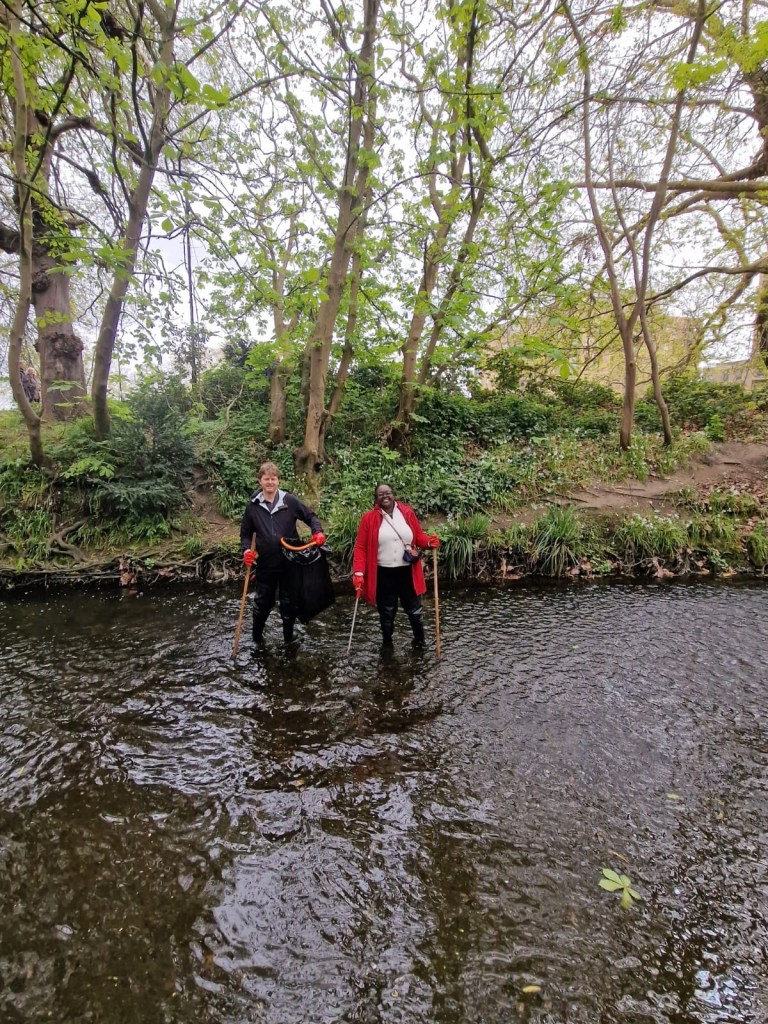
Ayesha Lahai Taylor and I in our waders cleaning the River Ravensbourne.
In Notes from a Small Island, published in 1995, Bill Bryson wryly described what he called Britain’s “annual festival of litter,” observing how people seemed to find time to scatter crisp packets, empty cigarette boxes, and plastic bags across the landscape. That line stayed with me as I stood by the Ravensbourne.
Talking with Robert, a local volunteer who has been cleaning the river for more than 25 years, put things into perspective. He told me the river is in far better shape than it was two decades ago, when it was common to haul out mattresses—and even the occasional moped. Listening to him brought back memories of the Hutt River in Upper Hutt, where I grew up in New Zealand, which suffered from similar problems years ago. It struck me then that this isn’t a London problem, or even a UK problem. Litter and pollution are human problems, and the difference comes down to whether enough people choose to care.
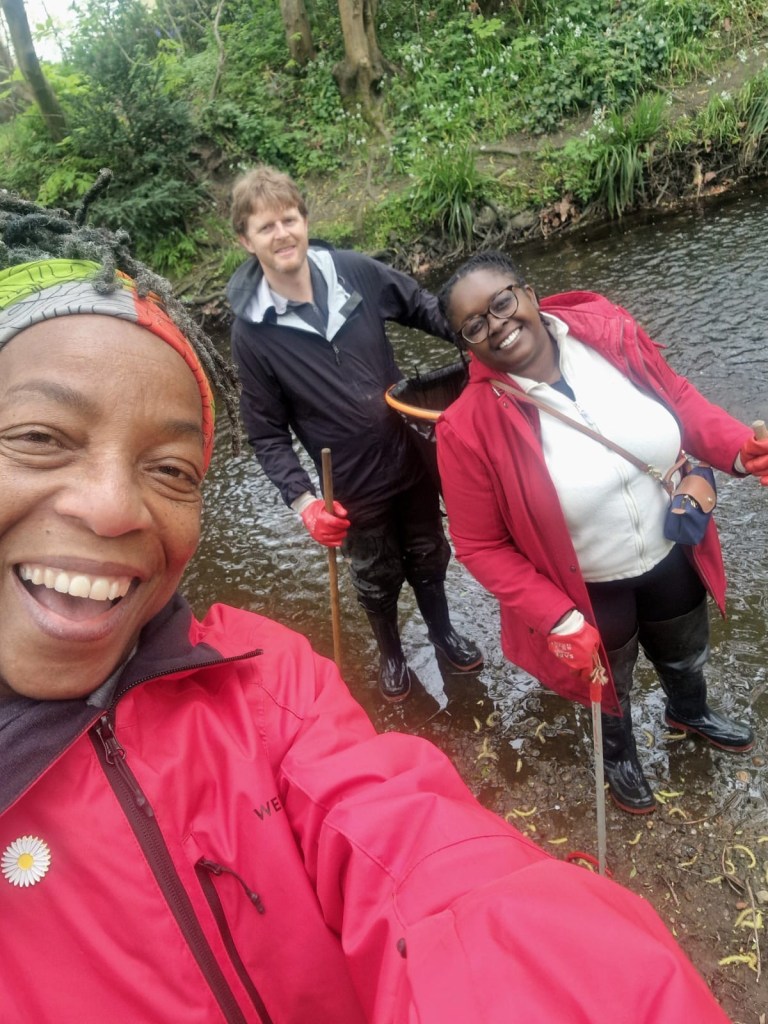
Colette Hunter, Ayesha Lahai-Tayer and me in the River Ravensbourne.
In the river we found car hubcaps, bike parts, piles of CDs (perhaps the aftermath of a messy breakup and an act of revenge?), vape components, crisp packets, wine and beer bottles, and an assortment of other discarded rubbish. What felt particularly ironic was that, along much of this stretch of river, you have to walk past several clearly placed litter bins just to reach the water—making the decision to throw waste into the river a conscious choice rather than an accident.
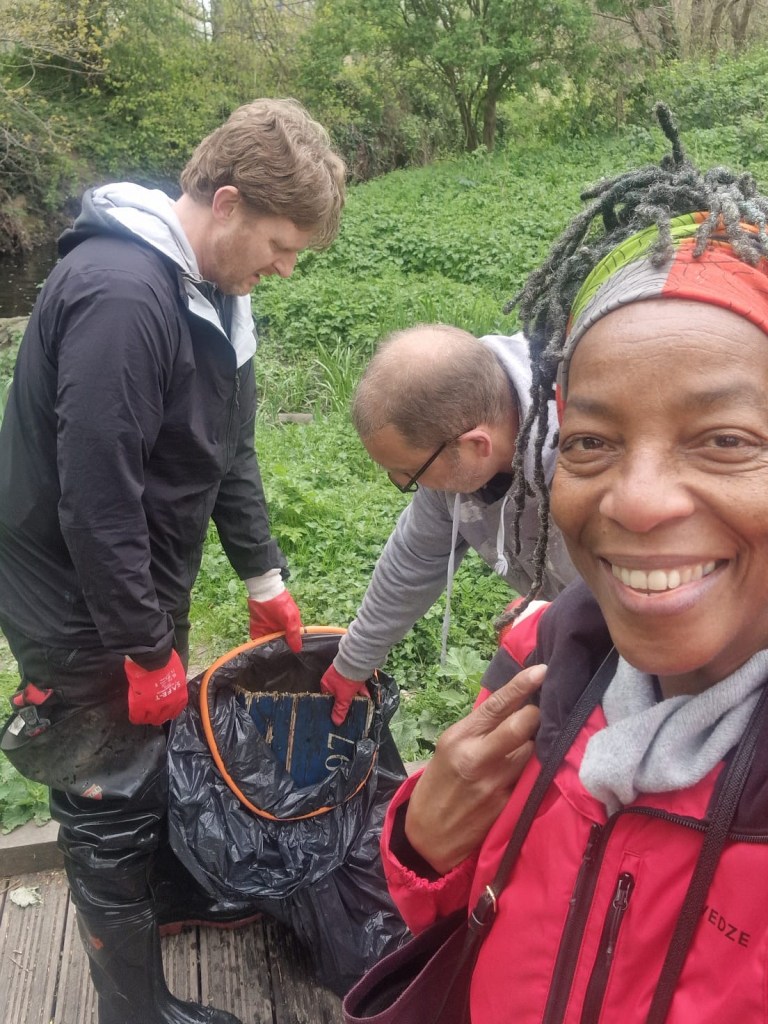
Above: Collet snapped a photo of me and the real estate sign I found at the bottom of the river.
Clearly, more needs to be done to prevent fly‑tipping—especially the dumping of rubbish into our rivers. One positive step is the Labour Lewisham Council’s recent decision to reduce the cost of bulky waste collection to £5 per item, replacing the previous flat rate of £42 for up to four large items. By making it easier and more affordable to dispose of bulky household waste responsibly, measures like this should help reduce both fly‑tipping on land and the thoughtless dumping of rubbish into our waterways.
But ultimately, the small minority to chose to discard their rubbish in this way need to be held to account. Labour have promised to install more CCTV at fly-tipping hotspots and fine those who blight our Lewisham borough. Lewisham Labour also promise to reintroducing town-centre managers who will work directly with the police to make our town centres safer and more welcoming places to visit. To find out more read our manifesto: Our Manifesto – Lewisham Labour Party – Lewisham Labour
Our park volunteers are community champions—but they can’t do it alone. Clean rivers and healthy green spaces depend on all of us stepping up.
 Nick Kelly