Walk 12: Hampstead

This is the final of the 12 walks from the 1980s AA guide book.

Walk 1 was around Westminster and Millbank.

Walk 2 around Buckingham Palace and Westminster Cathedral.

Walk 3 around St James.

Walk 4 was around Mayfair.

Walk 5 Bloomsbury and Holborn.

Walk 6 was ‘A walk around Soho’.

Walk 7 The Strand and Covent Garden.

Walk 8 The Inns of Court and Fleet Street.

Walk 9 The heart of the city

Walk 10 City Streets and Alleys

Walk 11 The Highways and Byways of Chelsea

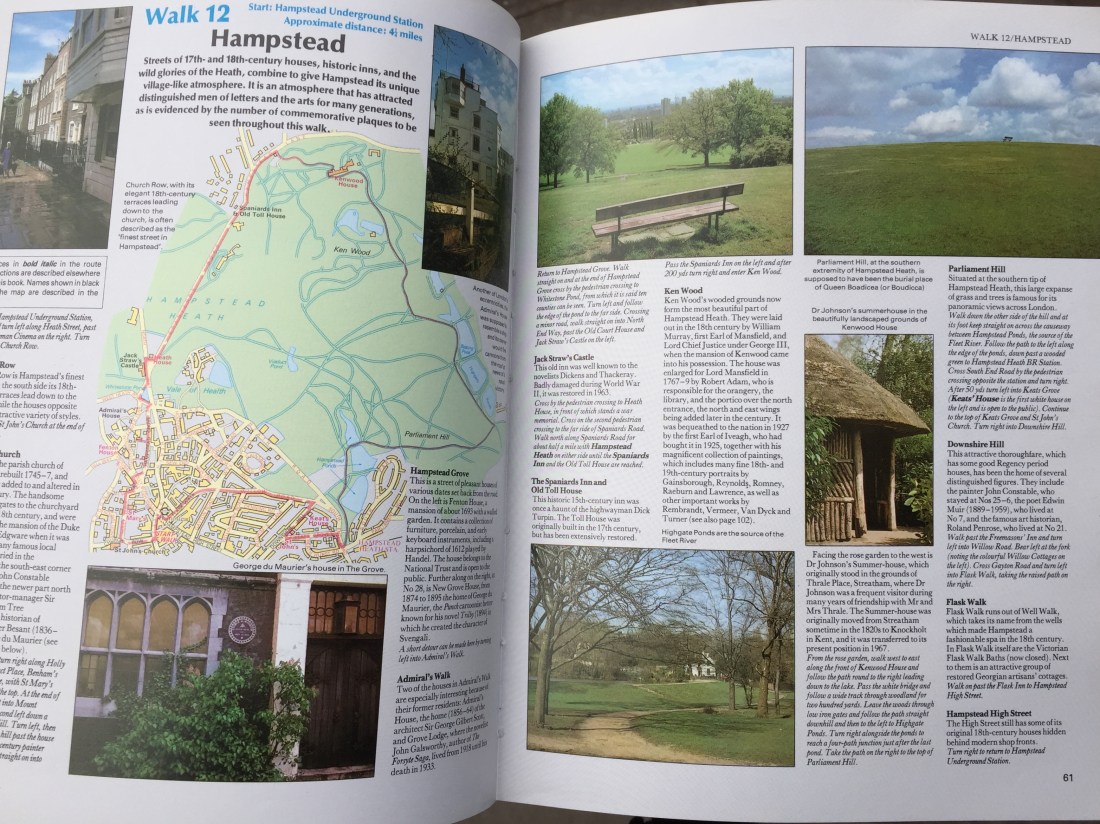
The final walk in this series was around Hampstead, and I completed this on 16 December 2018.

fullsizeoutput_11bd

The walk commenced at Hampstead Station, on the boundary of zone 2 and 3 – making this walk the furtherest out of central London.

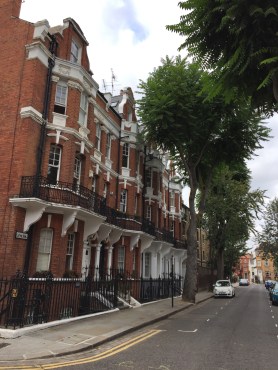
The first stop was Church Row, a street with a number of 18th century terraced houses. At the end of the street was St John’s Church, rebuilt 1746-7.

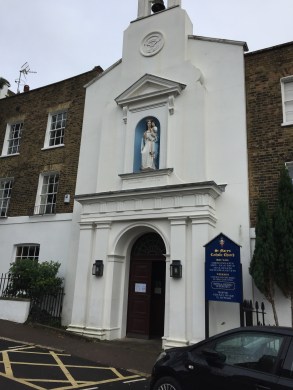
Then the walk took me past St Mary’s Catholic Church on Holy Street, through to Hampstead Grove. Here I got to visit Fenton House, and use my National Trust membership to walk around the property. Fenton House is a 1690s mansion which housed a number of musical instruments and a nice garden.

IMG_4523
St Mary’s Catholic Church.

Next the walk took me to the Admiral’s Walk. On this street can be seen the Admiral’s house, which according to the guide book is “supposed to resemble a ship.”


IMG_4538
The view looking up Hampstead Grove

From here the walk proceeded to Jack Straw’s Castle, known to authors Dickens and Thackeray.

From here I walked up Spaniards Road to the Old Toll House and The Spaniards Inn. I stopped at the latter for liquid refreshments.


After this I walked to the next stop on the tour, Ken Wood. This House and gardens is looked after by English Heritage, which I am also a member of, though entry to the house is free. The House and gardens were laid out by William Murray first Earl of Mansfield, and the house enlarged by Lord Mansfield in 1967.

One feature in the 1980s guide book of Ken Wood that no longer exists is Dr Johnson’s summer house. A replica of this was created in the 1970s(?), and a photo of it can be see in the guide book (see above). When I asked the grounds keepers about this, they said that this summer house burnt down in the early 1980s.

IMG_4564
The site of Dr Johnson’s Summer House. 

From here the walk took me through Hampstead Heath, one of London’s larger and more famous green spaces. This took me to Parliament Hill, where you can get panoramic views of the city.

From here I left the Heath and headed to Downshire Hill, which has Regency period houses and then down Flask Walk.

After this the walk concluded on Hampstead High Street and I caught the tube back from Hampstead underground.

Voting systems – why they matter.

I generally don’t hold New Zealand politics up on a pedestal. However there is one decision made in recent years that I do support, and that is changing the NZ electoral system in 1996. For the last 22 years New Zealand has used the Mixed Member Proportional system (MMP for short) which is explained here. This system was modeled on the German MMP system, and is used in a number of other countries around the world.

In the 2015 Canadian General election, Liberal Party leader Justin Trudeau ran on a platform of electoral reform in Canada. This country uses the First Past the Post electoral system also used in the UK, the US and in New Zealand prior to 1996. Disappointingly, Trudeau after being elected abandoned this policy in early 2017 claiming there was lack of public support for such a change. This is disappointing on two counts. Firstly this is a broken election promise. Secondly the best test of public support for electoral reform is through a binding referendum, just as New Zealand held in 1993.

A few days ago, the UK Make Votes Matter campaign released a clip by John Cleese of Monty Python and Faulty Towers fame in favour of electoral reform. This clip can be seen below:

Cleese makes a compelling argument as to why the current voting system for the Westminster Parliament in broken, and why too many voices are not being heard.

I must admit to struggling to understand why electoral reform is not a bigger issue in the UK. In 1951, The Attlee Labour government lost the general election on seats, despite winning the most votes by a significant margin. In 1974 the Ted Heath Conservative government lost the October election (there was another election in February 1974 which it won) despite winning more votes nationally.

In more recent times, no government has won an overall majority in the UK. Thatchers Conservative Government at the height of its support in 1983 only won 44% of the vote. Then in 1997 when the Blair government supposedly won in a landslide, Labour only won 43% of the vote. As Cleese points out in the clip, the numbers were even worse in the 2005 and 2015 elections, where in both cases a single political party won an outright majority in the house of commons despite only winning 35% of the vote.

In the US, First Past the Post resulted in Trump winning the presidency despite losing the popular vote by 2.5 million votes nationally. Also in 2000 George W. Bush won the presidency despite losing the popular vote by 0.5 million votes, and dodgy maneuvering in Florida. Then there are the issues with House and Senate elections, where again an MMP type system would likely produce a significantly different and probably far more diverse and representative set of results.

In New Zealand the catalyst for change came when the Muldoon National (conservative) government in power from 1975 to 1984 won 3 consecutive terms despite winning fewer votes than the Labour opposition in the 1978 and 1981 general elections. This was followed by two governments which quickly pushed through Neo Liberal reforms despite strong public opposition. Electoral reform was seen as a way holding the two main party’s to account, and ensuring no party that got under 50% of the vote could govern alone.

The New Zealand system isn’t perfect. For example I’d change the threshold that says party’s only get into parliament after winning 5% of the vote unless they get an electorate seat. I’d lower that threshold to say 2-3%, and winning an electorate seat wouldn’t entitle you to additional MP’s if your party got under the threshold.

Despite these niggles, the NZ voting system has worked ok. Yes coalition governments are now normal, and it has forced the two main party’s to compromise (arguably a good thing). However the system has produced stable governments, and in 5 of the 8 MMP elections it has been clear which party or party’s won on election night. In the other 3 elections a government has been formed within a few weeks of the election. It has improved representation with the number of women, Maori, Pacifika, Asian, Queer and other previously under represented groups getting elected to parliament in increased numbers.

No electoral system will fix everything. But it lays the foundation by a strong functioning democracy. Electoral systems like First Past the Post result in too many people not having a voice, and election results that don’t reflect the will of the people.

If you live in the UK you can sign a petition calling for electoral reform here


MENTAL HEALTH IN THE WORKPLACE – NEW HSE GUIDANCE

Very pleased to see that DNG are taking leadership on this important issue.
Through Piko I have worked with DNG in 2018, and fully support the work they are doing in this space.
The below post was originally published on the DNG website:
Mental Health issues for crew are not always visible

MENTAL HEALTH IN THE WORKPLACE – NEW HSE GUIDANCE


The HSE have issued new Mental Health in the workplace guidance. The Health & Safety Executive (HSE) is a UK government agency responsible for the encouragement, regulation and enforcement of workplace health, safety and welfare. Moreover, they undertake research into occupational risks in Great Britain.

Research

In August, they published the results of research into the effectiveness of Mental Health First Aid. Also, now the HSE has updated its guidance on First Aid Needs Assessment, to include specific guidance on making provisions for mental health first aid. It encourages employers to consider ways to “manage mental ill health in your workplace which are appropriate for your business”.

It goes on to say that this could include “providing information or training for managers and employees, employing occupational health professionals, appointing mental health trained first aiders and implementing employee support programmes.”

Where to Start?

As a relatively new subject, it can be difficult to assess how your needs need to be met. In other words, every business is different, and has different needs. Here are a few suggestions, that we as a business are looking at, that we are happy to share.

Train Mental Health First Aiders

MHFA training is available as a full 2 day course, 1 day for a ‘Champion’, and half day for ’awareness’. We now have 3 people trained as Mental Health First Aiders. Our plan is to expand this to other members of our team. As a result, there have already been situations that have directly benefitted from this training. More information available at https://mhfaengland.org/

First Aid Courses Covering First Aid

Further, the HSE guidance says that these courses “teach delegates how to recognise warning signs of mental ill health and help them to develop the skills and confidence to approach and support someone, while keeping themselves safe.” At DNG, we have recently brought our first aid training in house. As a result, this allows us to develop mental health awareness sessions as an introduction.

Provide Information to Staff

Providing information – flyers, posters, newsletters, social media posts, emails, during 1 to 1 sessions, appraisals – all helps to increase awareness and move the conversation forward. Similarly, size and nature of teams dictate how this is best done. Also, we will produce a series of blog posts about various mental health problems.

Music Support Charity

Music Support is a registered charity founded in April 2016. It provides vital help and support for individuals in all areas of the UK music industry suffering from alcoholism, addiction, emotional or mental health issues. They have a helpline available 24hrs a day, and could be a timely and invaluable resource if needed. All their helpline volunteers have personal experience of the music industry and the issues that Music Support covers. You can reach Music Support 24hrs a day on 0800 030 6789, http://www.musicsupport.org/


Mental Health issues for crew are not always visible

Analysis

You can read the full HSE guidance at http://www.hse.gov.uk/firstaid/needs-assessment.htm

So, this is definitely a major step forward, and reflects a much wider conversation about Mental Health within society, as awareness spreads and the taboo lifts.

It is easy to make a business case for looking after our people. MHFA England estimate that “Mental ill health is responsible for 91 million working days lost every year.”

Furthermore, this revised guidance from the HSE goes further. It moves mental health issues into the same category as physical first aid. Most importantly, it is now adequate duty of care to make provisions.

Conclusion

Finally, it is important to note that this has become increasingly pertinent in the workplace. Moreover, the Department of Health advises that one in four will experience mental ill health in our lives. So, lets change the conversation and take action.

VAT vs GST – the tale of two taxes

Benjamin Franklin, famously wrote in a letter in 1789 “in this world nothing can be said to be certain, except death and taxes.”

Tax isn’t an exciting or fun topic. But we all pay them. And we all get benefits of public services because of them. There are many different types of tax policies and regimes throughout the world, some more common and popular than others.

Sales taxes are a common form of taxation. How each country or state runs its sales tax varies considerably. The first time I went to the United States I couldn’t understand why in California they’d advertise a price, then the tax would be on top of that (which you’d find out at the counter once you’d counted out your coins). In Arizona there was from memory no sales tax, whereas neighbouring Utah had high alcohol tax and restrictions on sales (thus you crossed the state line to stock up on beer).

Image result for Sales tax

In New Zealand a Goods and Services Tax (GST) was introduced in the mid 1980s by the fourth Labour Government as part of their Neo Liberal reforms (yes you read that right, a Labour Government in NZ introduced the policies of Thatcher and Reagan back in the 1980s).  This originally started off as a 10% tax on all Goods and Services sold, but shortly afterwards rose to 12.5% and in 2011 was increased to 15%. The argument was at the time and since that a sales tax was the best form of taxation as nobody could avoid paying it. NZ doubled down on this and said that no item at all would be exempt from GST as this would just created administrative headaches.

In the UK there has for many years been a Value Added Tax (VAT). This tax is 20%. When I moved over to the UK a number of people exclaimed that this was such a high rate, and that it must make things more expensive than in NZ. This proved not to be the case. In the UK most supermarket items do not have VAT on them. When I do my weekly shopping, out of say 20 items I might pay VAT on maybe one or two things. Whereas when I recently visited NZ, I was staggered by how expensive everything was. This in part is economies of scale as large supermarket chains in the UK have stronger buying power than NZ. But also 15% tax on milk, bread, apples and other grocery items in NZ all adds up.

Setting up Piko in the UK I made a few initial errors with VAT. Luckily I my helpful accountant Paul Beare who is used to helping international companies move to the UK put me on the right track. I soon discovered that train tickets, taxi’s, rent and many other core expenses have no VAT on them. In NZ all businesses must register for GST, and all items will have GST charged on them. In the UK only businesses with a turnover of above £70,000 need to register for VAT, and between half to two thirds of typical business expenses have no VAT charged. Does this create more administrative work? Yes, especially at first when you don’t know the rules. However, on balance I still believe that the NZ system, while administratively more straight forward is worse.

The biggest argument against any sales tax is that a billionaire pays the same tax on an item as someone on minimum wage. This makes it a regressive tax. This issue is compounded in the NZ model where everything has a 15% tax on it. The significant increases in poverty, rising gaps between rich and poor and the many related social problems NZ has faced in my lifetime are certainly not helped by this tax policy. The Australian GST or UK VAT policy of exempting basic necessities like fruit and vegetables is far more egalitarian. This is not to say either of these countries have it right, or should be held up as examples. But the NZ model of no exemption is very bad in my view.

The big challenge in 2018 to any of these sales tax policies is the significant increase in online shopping, much of which is done across national borders. Increasingly people are and will continue to buy and sell items across the globe. With smartphones this can be done anywhere anytime. Having a tax regime that operates within a nation state is a 19th and early 20th century model, which in the early 21st century is fast becoming obsolete. Yes governments are finding ways to get tax money from these international transactions, and with some success. But it still poses a challenge, and many international transactions go untaxed. Until such time as there is stronger global governance and international cooperation, nation states will continue to struggle with this challenge.

There is no perfect taxation system. And it is easy to criticise one form of taxation as I just have without proposing an alternative. There are alternatives, many have a degree of merit, and people far more qualified than I can and have outlined their arguments for them. What is clear to me is that sales taxes are regressive, and the NZ no exemption model particularly so. Designing equitable, sustainable tax systems appropriate to the 21st century needs to be a priority for policy makers.

Brexit means Brexit.

So Theresa May survived…for now.

IMG_6653
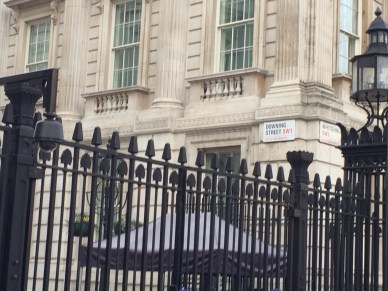
May stays in Downing Street for now. 

Last night a secret ballot of Tory MPs voted 200 to 117 in favour of keeping May on as leader. However as a concession she has now said she won’t contest another general election for the Tories.

Bluntly, I am no fan of Theresa May. But had she lost the confidence vote last night, I really don’t know who in the Conservative Party would have replaced her. And while there is plenty wrong with the exit deal she has negotiated, the reality is the exit deal with the EU was never going to be on strong terms for the UK. Lets recap…

In 2016 a referendum was held in the UK on membership of the EU. Then PM David Cameron and the political establishment didn’t bother to do any modelling of what would happen if people voted to leave, as they arrogantly assumed people would vote to remain. The establishment f%#ked up.

Cameron resigns as PM when the Brexit result is announced. May is elected Tory leader shortly after as the compromise candidate both pro and anti EU Tory MPs could get behind. Contrast that to the “unelectable” Corbyn who most Labour MPs hated, she was seen as a sound option. After months of strong polling in April 2017 May calls an early election, expecting to do what Thatcher did in 1983 – romp home and destroy the Labour Party. What did happen, “unelectable Corbyn” significantly increased Labour’s vote. The how’s and why’s can be argued for hours on how this happened. But the simple facts are that May, her advisors and the establishment in both Labour and the Conservatives thought May would win big and Corbyn would be toast – and once again the arrogance of the political class was shown up by the voting public.

So the last 18 months have been a painful trainwreck where the Tory government are at open war with itself*. Where the DUP (the topic of a future post) are relied on for numbers. Negotiations with the EU are difficult, mostly because the UK is very deeply divided over what should happen. The 27 EU member states by contrast are united in tough negotiation stance, mostly to discourage other EU nations from leaving . May comes back with a deal, and has to delay the vote in the House of Commons she doesn’t have the numbers to get the deal through parliament. Yesterday she survives a confidence vote, but 1/3 of her MPs vote against her.

As yesterday’s post stated, anything could happen now. The parliamentary arithmetic make getting this, or any other EU exit deal through the commons very challenging. Could another referendum take place? Maybe. Would this reverse the 2016 Brexit result? Possibly, but possibly not. Would another campaign of Tony Blair et el telling people how great the EU is actually increase the Brexit vote? Quite probably.

Again the topic for another post, but the impacts of Brexit on Northern Ireland and Scotland, who both voted strongly to remain in the EU, should be considered. Certainly for Scotland, EU membership was a significant factor in the 2014 independence referendum result.

A no deal Brexit would be difficult for the economy. But going into Christmas and the New Year not knowing whether a deal, no deal, a second referendum or some other outcome (eg delaying the March 29th deadline) will happen is doing damage. In many ways its the political instability and lack of clarity which will do the most harm to the UK economy. It would be a brave pundit who predicts now how this will end. But arrogance and the inability to compromise for the greater good will likely continue as themes of this Brexit saga.

*Much could also be written about the internal differences within UK Labour – this again is possibly for another post. 

15 months in London

There has been a bit of gap between posts to this blog lately. This isn’t due to a lack of things to say or write about, but due to being busy with work – a problem I have been very grateful to have.

Yesterday marked 15 months since I moved to London. Its now also roughly a year since I started this blog. My first post on this blog referenced Simon Sinek’s ‘Start With Why.’ This and subsequent posts were me being reflective of where I was and how I got there – and why. From there the blog posts explored my background, including my first campaign at school, and my involvement in politics. Then later my involvement in the Students’ Association and election to leadership roles there.

I’ve also written about current events and topics of the day. These include President Trump, US gun control, the housing crisis in NZ and the UK, and the English council election in May. 

Its not all been politics and social comment on this blog. I’ve done a series of walks through London using my 1980s AA guide book – of which I have now done 11/12 (the last one is coming soon.

In the New Year I will continue the series of self reflective posts. Specifically I will be writing about my time in the Trade Union movement. Those who know me will realise I will have plenty to say on this – and what I think the future holds for organised labour.

Talking about the past is important, and I think reflecting on where you have come from helps you understand where you are and where you are going. Increasingly though, I see this blog focussing more on talking about the future – both mine and society as a whole.

The past 15 months have for me been about establishing myself and my business in London. When I started this blog I’d been in the country a few weeks and much of my time was focused on setting up the basics (bank accounts etc). I was still setting up a UK company heavily based on the model used by the NZ parent company Piko NZ. Piko in NZ is primarily a campaigns and government relations business. My colleagues in NZ have complimentary and in many cases overlapping skill sets and this worked well there. Coming to London, where there is a larger pool of talent, a greater degree of specialisation (something I have already commented on here) and a different market with different needs. The last 15 months have been a journey of me digging deep to see what my strengths and skills really are, and how I use these best to my advantage in London. I haven’t written much about this on my blog, as I feel it best to reflect upon things first then write later. Needless to say 2018 has been a year of significant pivoting and change for me – and I look forward to sharing my reflections in 2019.

As I write this the UK political establishment is in turmoil, trying to manage the Brexit negotiations. It is far from clear what will happen as of today – in fact it feels like anything could happen. I have plenty to say about this and plan to write my thoughts over the next few days. For now I will just say that its an interesting, nervous, exciting and unpredictable time – and I am very glad to be here.

More soon….

Walk 9: The heart of the City

This is the 9th walk from the 1980s AA guidebook. This one started and finished at Bank station and passes through the financial centre of London. This was was done 20/10/2018.

Walk 9: Heart of the City

The first stop was The London Stone – said to be the milestone from which distances were measured on military roads in Roman London. The stone is still on display but is not very prominent.

The next two stops were Laurence Pountney Hill and The Old Wine Shades. The former some great example of early 18th century London Houses, the latter sadly shut when I walked past. The Old Wine Shades survived both the great fire and the blitz.

The Old London Shades

Next was the Monument, designed by Christopher Wren and Robert Hook as a monument to the great fire of London and erected in 1671-7. The views from this monument of central London are really good.

After this I walked past Billingsgate where the old fish market used to be.

From here the tour proceeded to the Tiger Tavern. According to the 1980s guide:

Although rebuilt in this century, this tavern’s history stretches back over 400 years. Every ten years, the lord mayor, sheriffs and aldermen of London take part in an unusual beer testing ceremony here. A sample of the beer is poured on a stool provided by the official tester, and he then sits on it. If his trousers stick to the seat (and they always do), then the beer is pronounced to be of acceptable quality. 

After spending a considerable amount of time trying to find this tavern, google eventually told me that this tavern having survived the great fire and the blitz, could not withstand 21st century development and has now closed. In the UK many of the the old pubs are at risk with many closing each year.

After this sad news I proceeded onto the famous Tower of London. First the tour took me too The Tower Subway, 19th century engineering achievement as the first underground railway tunnel under the Thames.

The tower is one of London’s main tourist attractions. Built by Edward I, it is famous for being where princess Elizabeth was imprisoned in the Bell Tower.

From here the walk took me to the Trinity Square Gardens opposite the Tower. This square was the site of public executions until the 17th century.

Next the walk went up Seething Lane, where diarist Samuel Pepys worked. The church here has skulls on its gateway which Charles Dickens refers to in one of his works.

From here the walk took me to the disused Aldgate Pump. The water was believed to have efficacious qualities. The pump is now disused.

Next to this was The Sir John Cass charity school established in 1710.

After this I passed Bevis Marks Synagogue, the oldest Synagogue in England.

The walk then took me past “the enormous National Westminster Bank.” This building was bombed by the IRA in 1992 after this guide book was published. This is now the site of The Gherkin .

Next to this is St Helen’s Church, which dates back to the 12 century.

The final stop before returning to bank was the Simpson’s Tavern, sadly also closed when I walked past.

The walk then took me past the Stock Exchange and the Bank of England to Bank station.

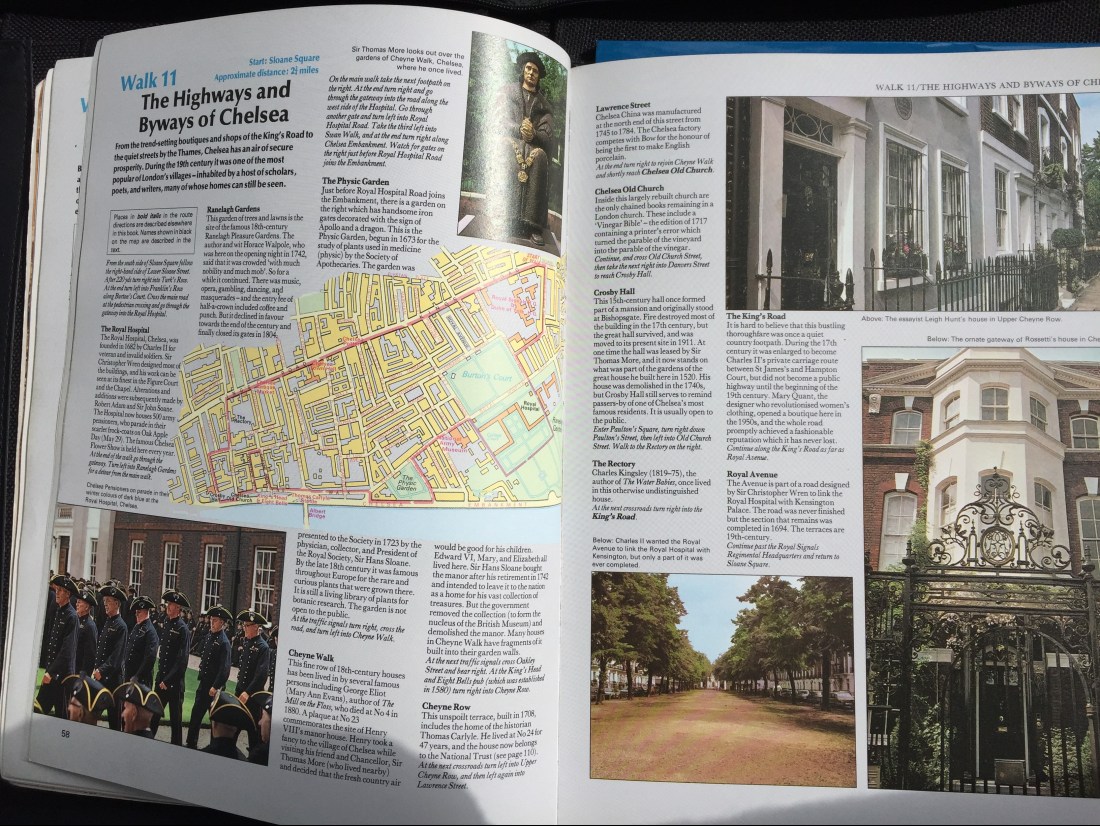
Walk 11: The Highways and Byways of Chelsea

The 11th walk from the 1980s AA guidebook was around Chelsea. I did this on Wednesday 22 August 2018, commencing at Sloane Square.

Walk 11
Chelsea

The first stop on this walk was the Royal Hospital. This institution was founded by Charles II in 1682 and designed by Christopher Wren. For a number of years the hospital has housed army pensioners. This is also the site of the famous Chelsea Flower Show.

Next to the hospital is the Ranelagh Gardens, site of the 18th century Ranelagh Pleasure Gardens, which closed in 1804.

From here the walk took me down to the Physic Gardens via Swan Walk. The 1980s guidebook says these gardens are not open to the public. In 2018 the public can now look around for a small fee.


IMG_1999
Ticket office for the Physic Gardens

Following this the walk heads down to Cheyne Walk, where ‘famous persons’ such as George Eliot lived. Also the site of Henry VIII’s manor house, at the time Chelsea was  a country village out of London.

From here I turned a right into Cheyne Row.

IMG_2003
Cheyne Row

Historian Thomas Carlyle lived at number 24 Cheyne Row. This is now a National Trust building, so being a member I had a quick look through.

From here I proceeded to Lawrence Street, the site where Chelsea China was manufactured from 1745 to 1784.

From here the walk took me down to the Chelsea old Church and Crosby Hall. In front of this is a statue of Sir Thomas More, near where he used to live.

The walk then took me past The Rectory where Charles Kingsley the author of The Water Babies once lived. The book says this house is ‘undistinguished’ and it was.

IMG_2018
The Rectory

Then the walk took me down King’s Road, once the private carriage route for Charles II, now a busy London thoroughfare.

The final stop on the tour was the Royal Avenue, designed by Christopher Wren to link The Royal Hospital with Kensington Palace. This was never finished, but the section that remains was completed in 1694.

Not included in the 1980s guide book, but on the way back to Sloane Square is the Saatchi Gallery. This opened in 1985, possibly after publication of this book.


Remembering Chris Morley

Originally posted on The Standard 

Chris Morley June 2017
Chris Morley, Vice-President of the Wellington Tramways Union, addressing a protest rally outside a Greater Wellington Regional Council meeting 28 June 2017. Chris told those present drivers would not accept cuts to their pay and conditions.

On Friday 27 July 2018, Wellington Tramways Union Vice President Chris Morley passed away after a short battle with Cancer, aged 62. Chris had been a Wellington bus driver since 1978 when public transport in the city was run and controlled by Wellington City Council.

In 2008 I was privileged to be elected to the Tramways Union executive with Chris Morley and Kevin O’Sullivan. Chris was one of the hardest working and dedicated union leaders you could wish to work with. He was also a good friend, who had always had my back.

I made the following video tribute for Chris when he passed away.

Chris wrote for The Standard in 2017, in two articles defending Wellington’s Trolley Bus network and arguing that light rail was not a suitable alternative to Trollies in the Capital:

Wellington’s Trolley Buses – why they should stay

https://thestandard.org.nz/wellingtons-trolley-buses-why-they-should-stay/embed/#?secret=yjhYjgWoLj

Light Rail no Panacea for Wellington transport

https://thestandard.org.nz/light-rail-no-panacea-for-wellington-transport/embed/#?secret=bFsioQl6y7

The Wellington Tramways Union have been at the vanguard of resistance to Neo-Liberalism and attacks on public transport and workers rights since the 1980s. As I summarised in an earlier Standard Post when public transport was deregulated in the late 1980s and privatised in the early 1990s, the union held on to penalty rates and other valuable conditions from the old Tramways Union Award. Penalty rates meant drivers received time and a half for working over 8 hours and for working Saturdays and double time for working Sunday’s. To quote Chris, these conditions allowed drivers control over what they worked, when they worked it and how they worked it. Drivers were given transport to work when they started or finished at unsociable hours when transport wasn’t running. In exchange for keeping these conditions, Wellington bus drivers took a $1 an hour pay cut in 1991 but retained greater weekly earnings to bus drivers in other NZ cities where they gave away penalty rates and transport agreements for a higher hourly rate (a lesson for all unionists about the importance of conditions).

The Wellington Tramways Union held on to these conditions by remaining fully unionised, and by fighting off attempts to remove penalty rates by the employer and the Greater Wellington Regional Council (GWRC). Another reason these conditions were defended, was that the trolley bus network (the last remaining network in Australasia, though still common to see in Europe and other parts of the world) gave the Wellington bus company a monopoly. This made it difficult for competitors to take work off Stagecoach and later NZ Bus, by undercutting on price during tendering then paying drivers less to pay for it.

The decision by GWRC in 2016 to remove the Trolley network, was to allow competitors into the Wellington bus network. Competition would drive drivers conditions and would be cheaper for the council – which was the true motivation of Chris Laidlaw, Paul Swain, Wayne Hastie and co at GWRC.

Chris Morley fought to the very last days of his life to defend both the Trolley Bus network and drivers pay, conditions and jobs. In one of his last conversations to me, he said the stress of the last couple of years had likely contributed to him getting cancer. Chris’s career as a Wellington bus driver ended in July 2018, Chris being made redundant just days before he died.

Chris was a hero of the Trade Union movement, who fought for workers rights till his final breath. The greatest tribute we can pay to Chris is to stop the attacks by GWRC and Tranzit on drivers conditions of employment.

To find out more visit the Thank You Driver page and support the campaign Chris worked so hard for throughout his life. RIP Chris.

Conclusion and Bibliography (History Honours dissertation)

Conclusion

Litigation is an important theatre of struggle in social justice movements. Litigation played a significant role in the campaigns for equal pay in New Zealand, Australia and the United Kingdom. Often the litigation was used to expose the injustices of paying women less than men. The Parker case in New Zealand was the most successful example of litigation being used in this way. The industrial relations frameworks that existed in these jurisdictions made the use of litigation inevitable. Though some variation existed, the political and legal systems had directly descended from the British system.

Governments would respond to equal pay demands in the way that Australian Minister for Labour did in 1953 by saying the Arbitration Court rather than the government was the appropriate body to deal with remuneration issues.[1] This evasive response from governments was also used in response to ratifying ILO convention 100 and 111. The Arbitration systems that existed within New Zealand and Australia upheld the ideology of the male breadwinner. Unions in the early 20th Century subscribed to this breadwinner ideology. When unions took arbitration claims for equal pay as they did for tram conductors during World War 2, this was done explicitly to protect the wages for the men who unions assumed would take these jobs back after the war.

The British campaign had nearly succeeded twice in achieving equal pay in 1936 and 1944. The eventual changes in 1954 to implement equal pay for the civil service were in response to a sustained campaign, where litigation had played a role. The changes in Britain were a significant influence on the New Zealand campaign. The changes in Britain resulted in well attended public meetings in support of equal pay and the movement grew after this change.[2] What made the litigation component of the New Zealand campaign potent as a campaign tool was the response of the state. In demoting Jean Parker to a lower public service role as a result of winning her appeal, the Public Service Commission caused outrage that helped unite those who supported equal pay.

In Australia while NSW passed equal pay legislation in 1958 it was not until the mid to late 1960s that other Australian states followed. In 1969 the ACTU took a case to the Commonwealth Arbitration Court and successfully had the minimum rate for women raised from 25% less than the male minimum.[3] The use of litigation in Australia relied on the union peak body making this issue a priority, quite some time after Australia and New Zealand had passed legislation.

It was assumed that once equal pay had been won in the public sector the gains would then flow onto the private sector. The campaign in New Zealand had followed the advice from British unions and feminists in making the public service their focus.[4] In Britain it was not until 1970 that equal pay legislation covering all women workers was passed, 15 years after the civil service changes. Similarly, in New Zealand women in the private sector had to wait a further twelve years until they too gained equal pay in statute. In Australia while some public service unions had made equal pay a focus, there was not the same priority given to gaining equal pay in the public sector first.

The campaigns in Britain, Australia and New Zealand did result in changes legislatively in the 1950s. These changes were in part aided by the use of litigation that unions took on behalf of female workers they represented. These campaigns, while failing to end the gender pay gap, did fundamentally challenge the male breadwinner ideology. The post-World War 2 equal pay campaigns successfully shifted public opinion against wage rates being determined by the workers gender. Grace du Faur summarised the 1950s campaign this way: “we did not have to chain ourselves to the railings to get equal pay, but it was certainly a lot of work.”[5]


Bibliography:

Primary Sources:

 Archives New Zealand

“Can the country afford equal pay?” The Auckland Star 18 March 1957

”Cost of Equal Pay for women £24 million Mr Holland says” The Dominion 22 September 1956

“Danger in changing system: Equal pay for women is injustice for men” The Evening Post 24 August 1956

“Equal pay, wage parity for women: Findings of British Inquiry The Evening Post 8 November 1946

“Equal Pay for women in Canada” The Dominion 12 June 1956

“Equal Pay for equal work” Public Service Commission paper 29/08/1955

Pan Pacific Women’s Conference papers 1950 – 1955


Dan Long Library

Oral Histories

PSA Equal Pay Campaign Archive Oral Histories

Boyd, Mary, interviewed by Alison Lash, epcas 38, series 38, August 9 1985

Du Faur, Grace, interviewed by Cath Kelly, epcas 38, series 38, August 9 1988

Ferguson, Jim, interviewed by Cath Kelly and Margaret Long, epcas 38, series 38, November 22 1986

Long, Margaret, interviewed by Alison Lash, epcas 38, series 38, August 10 1985

Long, Margaret and Kelly, Cath interviewed by Trevor Richards, interview for the special PSA Journal lift out, 1986

McBeth, Joyce, interviewed by Alison Lash, epcas 38, series 38, August 1 1985

Turnbull, Jack, interviewed by Cath Kelly, epcas 38, series 38, April 19 1986


Papers and Publications

Canadian High Commission letter to the NZ Public Service Association, May 1944

Helen Harrison’s Letter to the Canadian High Commission, May 1944

“Economic Effects of Equal Pay in New Zealand” PSA Equal Pay Conference paper August 1955

“Equal pay for women” PSA Publication 1954

“Equal pay and the Parker case” PSA publication 1956

“The case for equal pay for equal work” Women’s Consultative Committee 04/04/1944

“Two years’ hard Labour!” PSA Publication 1959

“Your rights of appeal and how to exercise them” PSA Publication 27/01/1956


New Zealand Parliamentary debates

New Zealand Parliamentary Debates, 1956, Volume 309

New Zealand Parliamentary Debates, 1960, Volume 325


PSA Journal

The Public Service Journal 1955 – 1960 Volume 42-47, The official organ of the New Zealand Public Service Association 

“200 women at Wellington meeting” PSA Journal Volume 42 Number 3 March 1955 6

“All this in seven years” PSA Journal Volume 43, Number 3 June 1956 6

“ILO and equal pay” PSA Journal Volume 42, Number 5 May 1955 3

“Equal Pay Inquiry Hanging Fire” PSA Journal Volume 44 Number 6 June 1957 1

“Indonesia shows how” PSA Journal Volume 43, Number 3 March 1955 7

“NSW Legislates for equal pay” PSA Journal Volume 45 Number 12 December 1958 9

“Radio talks on equal pay” PSA Journal Volume 43 Number 7 July 1956 7

“Recommendations of Equal Pay Implementation Committee” PSA Journal Volume 47 Number 12 December 1960 1

“The Parker Case” PSA Journal Volume 43 Number 9 September 1956 1

“In the US Civil Service they really mean it! Whole hearted approach to ‘rate for the job’ principle” PSA Journal Volume 44 Number 2 February 1957 1


Trove

Westralian Worker ILO to discuss Equal pay for sexes Perth July 21 1950

Launceston Examiner ILO favours equal pay Page 11 July 2 1951

The Tribune reports Union votes for equal pay Sydney, December 16 1953

The Argus The case for equal pay Melbourne April 22 1941

The Canberra Times Equal Pay bill passes through all stages page 13 December 11 1958

The Northern Star Lismore Equal Pay campaign by unions September 24 1953


Government Publications

Australian Department of Labour and National Service Equal Pay: Some aspects of Australia and overseas practice 1958

Canadian Women’s Bureau Equality in the Workplace. Wage Discrimination and Women Workers: The move towards Equal Pay for Work of Equal Value in Canada Series A, Number 5. Canadian Government Ottawa 1984

New Zealand Government Report of the Equal Pay Implementation Committee Wellington 21 November 1960


Secondary Sources:

Baker, Jeannine Australian Women Journalists and the “Pretence of Equality” Labour History Number 108, May 2015 1-6

Blackburn, Sheila Between the devil of cheap labour competition and the deep sea of family poverty? Seated Labour in time and place, 1840-1914 Labour History Review Volume 17 Number 2 2006 99-121

Brookes, Barbara A History of New Zealand Women Bridget Williams Books Wellington 2016

Cook, Megan Gender and Paid Work in New Zealand, 1950 to 1972 University of Otago, Dunedin 2000

Corner, Margaret No Easy Victory: towards equal pay for women in the government service 1890-1960 New Zealand Public Service Association Dan Long Trust Wellington 1988

Crowley, Mark J ‘Inequality’ and ‘value’ reconsidered? The employment of post office women, 1910-1922 Business History 58:7 985-1007 2016

Daglish, Neil Class and the Civil Service? The case of the Board of Education clerks, LS Selby-Bigge and the MacDonnell Commission History of Education Volume 27 issue 2 1998 141-158

Dalley, Bronwyn Ross, Grace Hilda Cuthberta from the Dictionary of New Zealand Biography. Te Ara – the Encyclopaedia of New Zealand, updated 28-Jan-2014 http://www.teara.govt.nz/en/biographies/5r25/ross-grace-hilda-cuthberta

Derby, Mark White-collar Radical, Dan Long and the rise of the white collar unions Craig Potton Publishing Nelson 2013

Ellem, Brandon Women’s Rights and Industrial Relations under the Post-war Compact in Australia International Labor and Working-Class History Number 56, Fall 1999 45-64

Field, Jacob F Domestic service, gender, and wages in rural England, c 1700-1860 Economic History Review, Volume 66, issue 1 2012 249-272

Frank, Tim Bread Queues and Breadwinners: Gender in the 1930s The Gendered Kiwi, Auckland University Press 1999

Glew, Helen The slow road to victory: the equal pay campaigns from 1939 to 1954 The University of Manchester Press 2016

Grimshaw, Patricia Zelda D’Aprano, Leadership and the Politics of Gender in the Australian Labour Movement 1945-75 Labour History number 104 May 2013 101-118

Gunderson, Morley The Evolution and Mechanics of Pay Equity in Ontario University of Toronto Press 2002

Hagan, J An incident at dawn Labour History Number 8, May 1965 19-21

Henderson, Alan The quest for efficiency: the origins of the state services commission State Services Commission 1990

Hicks, Colin Lewin, John Philip from the Dictionary of New Zealand Biography. Te Ara – the Encyclopaedia of New Zealand, updated 5-Nov-2013 http://www.teara.govt.nz/en/biographies/5l9/lewin-john-philip

Hill, Linda Equal pay for equal value: The case for care workers Volume 27 Number 2 December 2013 14-31

Hyman, Prue Women and Economics: A New Zealand Feminist Perspective Bridget Williams Books Wellington 1994

Ingram, Robin The politics of patriarchy: The response of capital and organised labour to the movement of women into the paid workforce in New Zealand Auckland University December 1988

Johnson, Penelope Gender, Class and Work: The Council of Action for Equal Pay and the Equal Pay Campaign in Australia During World War 2 Labour History Number 50, May 1986 132-146

Kovach, Kenneth and Millspaugh, Peter E Comparable Worth: Canada Legislates Equal Pay Equity The Executive, Volume 4 Number 2, May 1990 92-101

Lake, Marilyn The Independence of Women and the Brotherhood of Man: Debates in the Labour Movement over Equal Pay and Motherhood Endowment in the 1920s Labour History Number 63, November 1992 1-24

Locke, Cybèle Workers in the Margins, Union Radicals in Post-War New Zealand Bridget Williams Books Wellington 2012

Logan, Mary Nordy, Arnold Nordmeyer: A political biography Steele Roberts Publishers 2008

MacDonald, Charlotte The vote, the pill and the demon drink: A history of feminist writing in New Zealand 1869-1993 Bridget Williams Books, Wellington 1993

Markey, Raymond Organisational Consolidation and Unionateness in the NSW Public Service Association 1889-1939 Labour History Number 99, November 2010 97-114

Montgomerie, Deborah Man-powering Women: Industrial Conscription during the Second World War in Women in History 2, Edited by Barbara Brookes, Charlotte MacDonald and Margaret Tennant Bridget Williams Books Wellington 1992 184-204

Niemann, Lindsay Equality in the Workplace. Wage discrimination and Women Workers: the move towards equal pay for work of equal value in Canada Women’s Bureau Labour Canada, Ottawa 1984

Nolan, Melanie Breadwinning: New Zealand women and the state Canterbury University Press 2000

Nolan, Melanie and Frances, Raelene Gender and the Trans-Tasman World of Labour: Transnational and Comparative Histories Published in Labour History by the Australian Society for the Study of Labour History Inc., November 2008

Nolan, Melanie and Ryan, Shaun Transforming Unionism by Organising? An examination of the ‘Gender Revolution’ in New Zealand Trade Unionism since 1975 Labour History Number 84 May 2003 89-111

Osborne, Richard Equal Pay for Equal Work: A study of legislation in the United States, Canada, The United Kingdom and New Zealand University Microfilms International, Ann Arbor Michigan 1976

Paisley, Fiona Glamour in the Pacific University of Hawai’i Press Honolulu 2009

Pat Thane The Women of the British Labour Party and Feminism 1906-1945 British Feminism in the Twentieth Century Edited by Harold L. Smith University of Massachusetts Press Amherst, MA 1990

Patmore, Greg Australian Labour History Longman Cheshire, Sydney 1991

Pickles, Katie Transnational History and Cultural Cringe: Some Issues for Consideration in New Zealand, Australia and Canada History Compass Volume 9, 12 September 2011

Quartly, Marian and Smart, Judith The Australian National Council of Women Australian Feminist Studies 29:82 325-365

Robertson, Stephen Women, Work and the New Zealand Arbitration System 1894-1920 Labour History, Number 61, November 1991 30-41

Roth, Burt Remedy for Present Evils: a history of the New Zealand Public Service Association from 1890 New Zealand Public Service Association 1987

Ryan, Penny and Rowse, Tim Women, Arbitration and the Family Labour History, Number 29, Women at Work 1975 15-30

Sheridan, Tom and Stretton Pat Pragmatic Procrastination: Governments, Unions and Equal Pay, 1949-68 published in Labour History, No. 94 (May, 2008), pp. 133-156 Australian Society for the Study of Labour History, Inc. 2008

Sinclair, Keith Walter Nash Auckland University Press, Auckland 1976

Smith, Harold L British feminism and the equal pay issue in the 1930s Women’s History Review 5:1 1996 97-110

Smith, Harold L The Problem of “Equal Pay for Equal Work” in Great Britain during World War 2 The Journal of Modern History Volume 53, Number 4 1981 652-672

Smith, Harold L The politics of conservative reform: The equal pay for equal work issue 1945 – 1955 The Historical Journal, Volume 35, Number 2 1992

Smith, Harold L The Womanpower Problem in Britain during the Second World War The Historical Journal Volume 27 Number 4, December 1984 925-945

Social Service Review Equal-Pay Convention Adopted by ILO Vol 25, No 4 December 1951 528 Accessed on The University of Chicago Press Journals 7.7.2016

Sullivan, Arthur; Steven M. Shiffrin Economics: Principles in action. Pearson Prentice Hall, Upper Saddle River, New Jersey 2003 324

Stafford, Brigid International Labour Convention on Equal Pay The Irish Monthly Vol 79. Number 938 August 1951 363-364

Sutch, WB The quest for security in New Zealand 1840 to 1966 Oxford University Press, Wellington 1966

Sutch, WB Poverty and Progress in New Zealand, A Re-Assessment AH and AW Reed Wellington 1969

Sutch, WB Women with a cause New Zealand University Press 2nd edition Wellington 1973

Tully, John ‘Nothing but Rebels’: Union Sisters at the Sydney Rubber Works 1918-42  Labour History Number 103, November 2012 59-82

Williams, Kath The Unions and the fight for equal pay Melbourne 20

[1] Sheridan and Stretton 136

[2] PSA Journal 200 women at Wellington meeting Volume 42 number 3 March 1955 6

[3] Patricia Grimshaw Zelda D’Aprano, Leadership and the Politics of Gender in the Australian Labour Movement Labour History number 104, May 2013 111

[4] Margaret Long, interviewed by Alison Lash, epcas 38, series 38, August 10 1985

[5] Grace du Faur, interviewed by Cath Kelly, epcas 38, series 38, August 9 1988