
One of my early projects in London was working on a blockchain/cryptocurrency project for a small start-up in Shoreditch.
In February 2018 I wrote a post on this blog about cryptocurrency, mostly from a political perspective and trying to place it within an historical context. Little did I know that within weeks I would be working in the cryptocurrency world, entering at the tail end of a crypto-boom, only to see its value plunge without rhyme or reason.
I moved to London in 2017 a city whose future at the time seemed uncertain due to Brexit.
A year earlier I had founded Piko with a group of friends in New Zealand, and I naively assumed the British market would be broadly similar. I was soon to discover that while the differences were subtle they were significant, not least the different tax and contracting regimes. I also quickly found that in large economies people specialise, something I was very critical of at first, though now can see both pros and cons of this.
So in February 2018, I posted on the Kiwi’s in London chat page saying I was looking for Project Management roles. Within minutes a young guy named Heremaria Durie said he ran a start-up in Shoreditch and was looking for a Project Manager. Clint Heine who runs the page left a simple one-word response to this exchange “Boom”.
48 hours later I had signed a six-month contract.
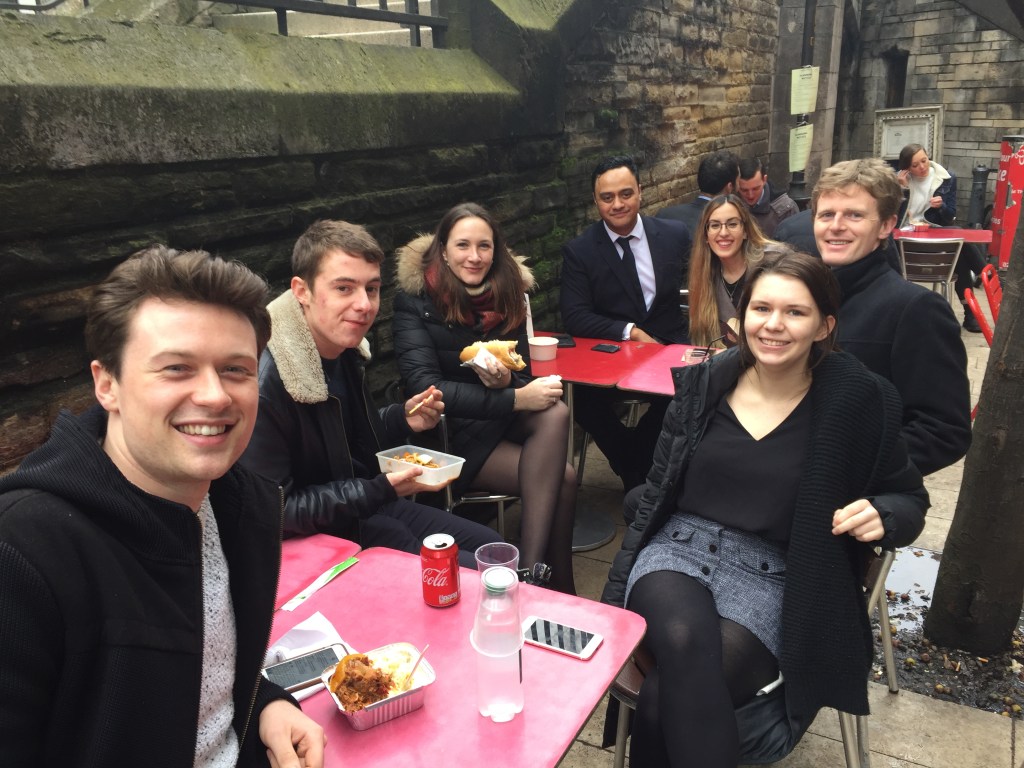
Start-ups are the one part of the London economy where being too specialist can be a disadvantage, especially in their very early days. While you might be a specialist coder, in a three-person start-up you are probably doing all the IT, some of the business and strategy oh and helping move the new furniture Amazon just delivered.
This start-up was in an open-plan office in Shoreditch, the trendy tech start-up hub in East London. In my mid 30’s I was by far the oldest member of my team. Ours was probably the loudest of the start-ups on the floor, but also the ones who tended to work the hardest and stay the longest. Stepping into the office you certainly felt the buzz of creativity and possibility the start-up world provides. Coming from the public sector and having a project and operations focus, it also seemed completely chaotic and at times borderline dysfunctional.
Coming into the role, I had to be upfront about the fact that I had not worked in either crypto or a tech start-up before. What quickly became clear to me was most people working in the world of cryptocurrency had not been involved long. The boom of late 2017 had seen many new players seeking to make their fortune and possibility change the world through crypto. The dream was very short-lived.
I never drank the crypto cool-aid, seeing very early on that its value was derived from pure speculation. At least with fiat currency, there is usually some rationale reason for it gaining or losing value, eg Kwazi Kwarteng’s disastrous mini-budget. For crypto investors, they were looking to make as much money as possible, for as little effort as they could.
The darker side of cryptocurrency is that many use it as a way of hiding dirty money, as most of these currencies are untraceable due to the libertarian ethos that inspired crypto. I was to witness this very early on.
One weekend in my second week on the project I went into the Shoreditch office to get the project plans done. The CEO Heremaia was also in working, and when I arrived he was deeply engrossed in conversation with someone. He was talking to a potential investor who was offering him a considerable amount of money to develop a new coin. When Heremaia correctly asked where this money was coming from, the caller refused to tell him. The caller then went on to tell Heremaia if he did not take the money and kept asking these questions, they would make sure he never worked in the sector again. Heremaia hung up the phone and never spoke to this person again.
Other investors, including the ones involved in our projects, were much more transparent. Our investors came in as a result of a crowdfunding campaign. They were people from the financial markets looking to diversify. Crypto and blockchain were potentially the new big thing, so they wanted a) to make money but also b) to be part of something that was going to change the world.
The dream of what was possible in this space was certainly intoxicating. Whilst I had no illusions about crypto, blockchain or decentralised ledger technology, had the ability to store and communicate vast levels of information, in a much more secure way. With some development it could also quickly communicate information was a far greater degree of accuracy.
It was explained to me that the genius of blockchain is that it is almost counter-intuitive. Instead of data being stored centrally is it stored in thousands of nodes. If one node is attacked, hacked or altered it can be discarded and removed from the blockchain, while the other nodes will still have the correct data stored. Whereas the centralised system may be harder to hack, once it is, game over.
By design, blockchain is meant to secure privacy and allow for untraceable transactions. Yet blockchain could be completely transparent and create an environment where our financial system was much more open and honest. In this, the issue is who owns the technology, and more to the point who is funding its research and development for what purpose.
What made working in this sector exciting, was not what was happening at that time. The excitement was thinking about the better ways this technology could be used. Yes, if the start-up I was working for had cracked this, we’d all end up quite wealthy. But the dream of what was possible was a far stronger motivator.
One of the challenges of working with new technology is finding people with the skills and experience to work on these projects. As a project manager, my inexperience in this sector proved not to be an issue as the tech was still very new. The challenge though, was finding people who had some experience and the ability to build the product that we needed.
We ended up subcontracting other start-ups and individuals from Europe, North America, Central Asia and the UK. We needed specialists in tokenomics (people who understood the economics of cryptocurrencies and how their value is derived – spoiler, there is no real logic to it), coding and platform building, cyber security, legal (very challenging with new technologies that are yet to be regulated), marketing and brand design.
Trying to implement a project plan with at times complicated interdependencies and with contractors from across the globe would inevitably prove difficult. It was also difficult to verify whether these providers really had the experience we needed as often their other projects had only launched recently. Others with more experience were in hot demand and would charge a fortune.
New technology is always challenging and inevitably there will be charlatans claiming to be something they are not. Likewise, many of the contractors we engaged did not trust new start-ups and wanted significant upfront payments before starting work.
At first, it seemed like all of this would be worthwhile as the expected return on investment was so lucrative. The Great Crypto crash of 2018 initially did not seem likely to impact our project as we were not planning to use BitCoin and were instead looking to create a new coin/token, and eventually our own blockchain platform. Yet by mid-2018 our investors were becoming wary. We found ourselves in a chicken and egg situation where we were reluctant to start the next phase of work until money came through, yet investors spooked by what they’d seen happen to crypto wanted to see results before investing further.
At the time it all seemed very stressful and some difficult conversations were had. Looking back, it simply was not the right time to invest in ambitious blockchain projects. Having started working on the project in late February, by May I was personally very invested in its success. Yet the warning signs were there. In a fairly frank conversation with my accountant, his tip to me was; “have fun with the project, but don’t expect it to last”.
By July we had delivered all that we could on the project. My contract was coming to an end, and it become clear that it would be unlikely that investors were prepared to help build a new blockchain platform. In mid-July I finished this contract and went on to work in the events sector and various other short-term contracts, until I eventually found myself working in the House of Lords in early 2020 (which will be the subject of future blog posts).
Blockchain technology is used more and more by mainstream tech companies and has been viewed as having potential in sectors like the Grocery Industry. Yet its links to dodgy crypto-assets and funny money hold it back. Every so often friends or colleagues will talk about investing in cryptocurrency. I hear the familiar lines about it being the next big thing and a way to get uber-rich quick, soon after I hear the equally familiar stories of x coin suddenly losing its value.
Blockchain is more secure and potentially quicker due to its decentralised nature. It also requires a considerable amount of energy to run. From an environmental perspective, this is not great and is another reason why people are still reluctant to invest in it.
None of these barriers are insurmountable and in time we will likely see blockchain used far more widely. While this was not to be in 2018, it was a great experience for me to work on this project and to gain insights into what one day might be possible.
Quick, secure transparent yet also private storage of data to a far greater level than exists today is what blockchain has the potential to deliver. If this can be powered by green energy, it has a real chance of success in the long term. But until this technology can divorce itself from cryptocurrency, it is unlikely people will seriously invest in its development.
 Nick Kelly